True misery doesn’t love company.
It decays the soul in silence.
When someone is complaining, it’s because they still have hope that someone cares enough to listen or respond.
Or even to empathise.
When they give up on these three things, they go silent because they have grown to accept that no one else cares, or understands the state that they’re in.
Too often we see their silence and assume it to be acceptance of their struggles or challenges, meanwhile it often symbolises the slow death of dreams, hopes, and ultimately, a life.
Silence is the silent killer, more than rage.
Listen with both ears and your heart.
Pay attention to the silent ones.
Your noise of ingratitude may just be drowning out their silence of pain.
Find the balance between living loud and loving sincerely.
The one without the other will smother people closest to you.
#silence #death #depression #hope #dignity #dreams #fears #mentalhealth #mentalhealthawareness #mentalhealthrecovery #selfworth #selflove #selfawareness #selfrespect #reflection #mindfulness #validation #affection #affirmation #egosystem #gratitude
Tag: mentalhealthawareness
-

The silent ones
-

Seize the moment…not the day
Tomorrow is not just another day.
Tomorrow is simply today again, only with less time than we had yesterday.
If you’re not focused on what you need to achieve today, you’ll always be trying to finish what you should’ve done yesterday.
That’s how procrastination and misplaced optimism wastes away a good life.
By all means, pace yourself so that you don’t burn out.
But don’t become complacent in the process.
Don’t wait for inspiration to strike.
Inspiration most often hits you in the process of creating something amazing, not in the moments of over thinking what needs to be created.
Show up.
Get started.
Seize the day.
Tomorrow is never guaranteed.
Procrastination doesn’t only steal time, it also steals your dreams.
Embracing your passion in the absence of validation can be quite a powerful source of self-doubt.
Believe in yourself, otherwise how can you expect others to believe in what you’re creating?
#carpediem #procrastination #purpose #optimisticquotes #optimism #hope #expectation #conviction #life #ownyourlife #lifegoals #seizetheday #makeitcount #mentalhealth #mentalhealthawareness #mentalhealthrecovery #lovelife -
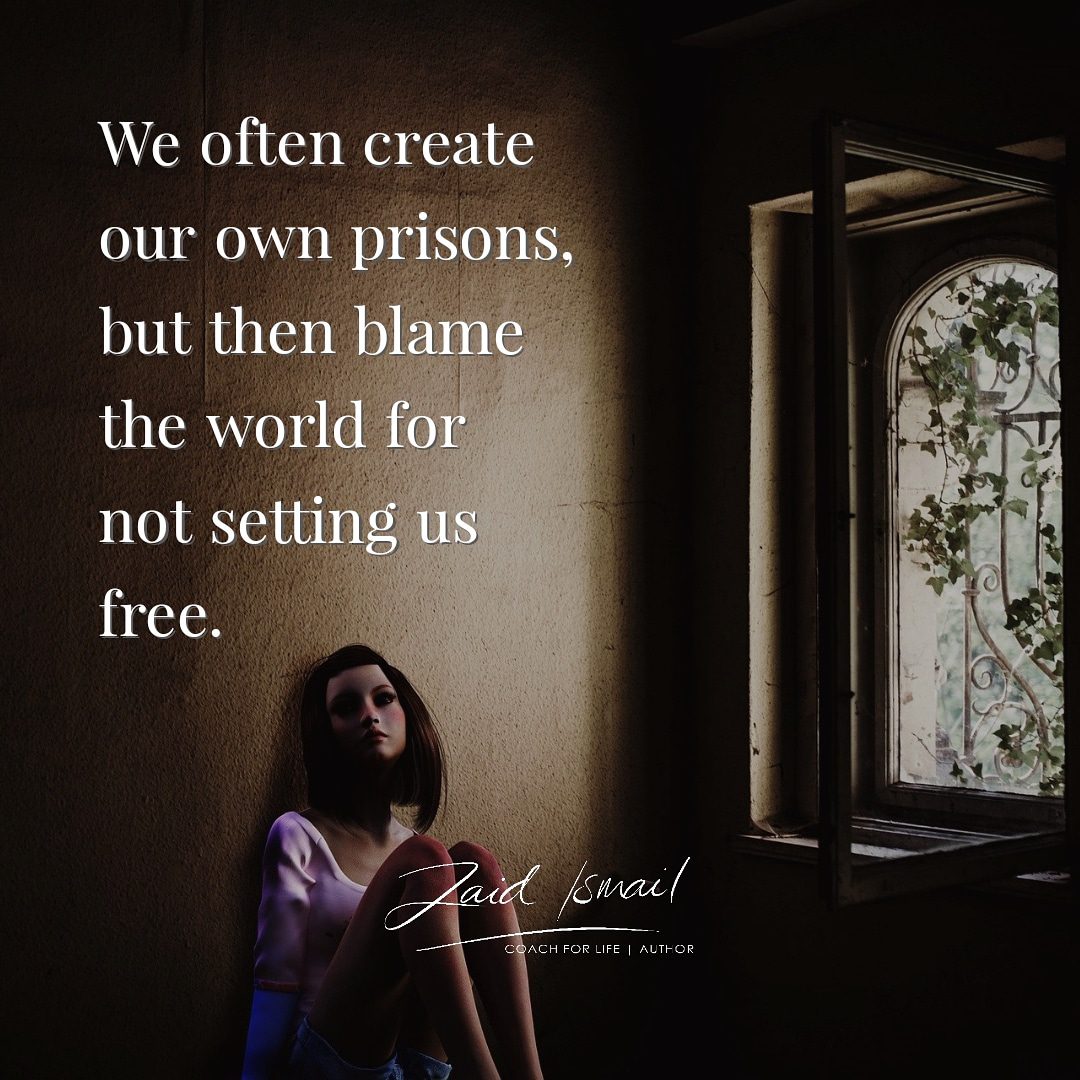
Self-imposed prisons of our mind
We imprison ourselves each time we restrain our natural expression because we’re afraid that it won’t be appreciated, or celebrated.
Our need for approval or validation soon becomes our greatest crutch in life, until eventually it becomes our prison.
We decorate its walls with images and scraps that honour the past, sometimes recalling moments of joy, but often also anchoring us in moments of pain.
We hold those mementoes up as trophies and garlands that need to be revered by others before we’re willing to set them back down, believing that unless someone else knows our pain, we cannot let it go.
Our need to be comforted about the aches and losses of the past is not because we need to be comforted, but because we need to feel as if someone cares for us…for what we’re hurting about.
It’s not always the hurt that’s important. Often, knowing that someone cares that we’re hurting, and that they care enough to want us to stop hurting, is what shackles us to our past, because letting it go also means that we have no way to test if we’re significant to those around us.
The prisons that protect us from experiencing a beautiful life are often just a single moment away.
Sadly, we most often wait for someone else to create that moment of release for us before we’re willing to love ourselves enough to create it for ourselves.
Photo credit : Adobe Stock
#imprisonment #ownyourshit #ownyourlife #theegosystem #mentalhealth #mentalhealthawareness #mentalhealthrecovery #selfworth #selflove #selfawareness #selfrespect #narcissism #narcissisticabuse #lifecoaching #zaidismail -
Waiting to live…
When we are raised in an environment focused on discipline before purpose, or compliance before understanding, we develop the belief that fitting in is more important than who we are.
This same mindset leads us to be bullish in our efforts to uphold the status quo because of the inclusion that it offers, while violently rejecting any opinions that challenge our cultural heritage or traditions.
The need to belong, to be validated by that social structure smothers any passion to contribute towards improving anything, because we’re led to believe that our traditions have already perfected everything.
Thus, the unique expression of the individual is snuffed out, only to be replaced by a militancy of spirit that is celebrated as devout submission.
Critical thinking is abandoned in favour of academic prowess, and without realising it, indoctrination is readily believed to be higher education.
All this leads to the subservient mindset that needs permission before choosing consciously, or seeks permission before thinking independently.
That’s how cycles of abuse are maintained, and the unique contribution of the individual is seen as an offence against the collective.
Everyone must know their place to uphold a power structure that reveres the powerful, while enslaving the minds of the masses.
And that is how the masses, the average soul, grows to believe that unless they have permission to break the bleak and toxic cycles of their lives, they have no choice but to comply quietly for the greater good of society.Photo credit : Adobe Stock
#selfworth #selfawareness #ownyourlife #selfmastery #mindfulness #personalpower #ownyourshit #mentalhealthrecovery #mentalhealth #mentalhealthawareness #lifecoaching #zaidismail #loveyourself #motivation -
Live, and let die…
Sometimes, our setbacks in life can feel as if our world is coming to an end.
In many ways, it does spell the end of a lifetime for us because we reach points where everything that we know to be true comes under question.
Major life events like health issues that compromise our quality of life, divorce, death, or even losing a job all carry with it an impact that could easily derail all our hopes and dreams for the future.
Choosing to hold on to the hurt, or the pain, or the sense of loss from such experiences doesn’t change the reality that it brought with it.
Instead, holding on denies us the opportunity to grow from such experiences, and to continue to build that life that we set out to achieve.
But what is there to learn from bad experiences?
More than the lessons that it taught us about the shortcomings in decisions that we may have made, it is only in the presence of pain that the depth of joy can be appreciated.
It is only through loss that we learn to appreciate what can be lost when we have it.
When we experience loss or tragedy, or even disappointment and betrayal at the hands of others where we have no control over the outcomes despite our best efforts, we must recognise that it is a moment of grounding that will reshape what we take from life from that moment forward.
If we’re not aware of the good that we can take, we will remain invested in the bitterness of the experience as we convince ourselves that remembering is the only way to protect ourselves from feeling such pain ever again.
No. Remembering beyond the lesson learnt doesn’t protect us from such pain in future, it simply holds on to the pain of the past and denies us a future without it.
Embrace the good, learn from the bad, and appreciate the present.
Photo credit : Adobe Stock
#loss #love #betrayal #traumaresponse #ownyourshit #ownyourlife #theegosystem #mentalhealth #mentalhealthawareness #mentalhealthrecovery #selfworth #selflove #selfawareness #lifecoaching #zaidismail #lifelessons #optimism -
What is forgiveness about anyway?
If there is one piece of advice that will help you through the worst of times, this is it.
Internalise this, connect with it, make it your mantra if you must, but understand that forgiveness on its own, without acceptance, will leave you yearning for retribution or justice.
Acceptance is more important than forgiveness, because once we’ve accepted the reality of what is, forgiveness loses relevance.
Accepting things becomes easier when we seek to understand rather than to judge why someone may have treated us badly, or betrayed our trust.
Immediately, the focus is about their weakness and not our significance.
When we learn to accept that people’s actions are a reflection of who they are more than it is about what we mean to them, we’ll have less of a need for forgiveness.
Peace is not possible without acceptance, and acceptance completes the act of forgiving.Don’t only focus on forgiveness, because our need to forgive is driven by a belief that we were the deliberate target of the demons of others.
Understanding their reasons for behaving the way that they did will confirm if forgiveness is warranted, or if understanding is what holds the secret to the peace that we seek.
#forgiveness #acceptance #struggles #weakness #selfworth #selfawareness #pardon #dignity #sincerity #authenticity #mentalhealth #mentalhealthawareness #mentalhealthrecovery -
Two rules for life
There are two rules that I wish more people would apply in their lives.
Rules that will result in more sincerity and less hypocrisy.
More trust, less betrayal.
More wholesome relationships, less infidelity and betrayal.
The two rules are simple.
Firstly, don’t exhaust yourself explaining your behaviour to people who don’t matter. This not only gives you a false sense of your significance when they pretend to listen, it also gives them a false sense of significance in your life when they believe that you’re explaiming yourself because they matter to you.
Secondly, when choosing who matters, be sure that you’re doing it based on who really matters to you. They must be consequential to your happiness and sense of belonging in this world. If not, you’ll surround yourself with anyone and everyone that you want must care, because you need to fill the void of human connection in your life.
Sometimes we think that by being polite we’re treating others with respect. However, when that polite attitude leads people to believe that they’re significant when they’re not, it causes more hurt and betrayal when they realise that you were just being polite, rather than sincere.
That’s how being insincere to avoid hurting someone’s feelings causes more hurt than you would’ve caused had you been honest and sincere in the first place. .
Be sincere, always. Even if it means that you will be unpopular for that moment.
That moment of unpopularity could save you and others from a lifetime of disappointment and pain.
Photo credit : Adobe Stock
#selfworth #selfawareness #ownyourlife #selfmastery #mindfulness #personalpower #ownyourshit #mentalhealthrecovery #mentalhealth #mentalhealthawareness #lifecoaching #zaidismail #fuckit #authenticity #sincerity #relationshipgoals -
Take stock, and reconnect
Stepping back and taking stock requires more than just an arrest of the ego.
It requires a desire to return to a point of sincerity and authenticity in our lives when we were filled with hope about the future, after finding ourselves filled with a longing for the past instead.
Arresting the ego becomes easier if we believe that what we stand to gain is more valuable than having to swallow our pride.
But sometimes, pride is all that defines us.
If you find yourself in that space, know that you’ve abandoned your true self in favour of how you wish to be perceived by others.
Sometimes, pride pushes us to follow through on a bad decision because it sucks to give our enemies something to mock us about.
You know what sucks more?
Living a crappy life because you didn’t want to give your enemies a single moment to mock a bad decision.
Own Your Shit. Own Your Life.
#hope #expectation #sincerity #selfworth #selflove #selfawareness #selfrespect #mindfulness #inspiration #pride #egosystem #ego #takingstock #reflection #mentalhealth #mentalhealthawareness #mentalhealthrecovery