Tag: expectation

  • Resisting the norms

    Resisting the norms

    The relentless pace of society towards retiring those who are no longer contemporary is enough reason to settle into the rhythm of preparing for old age. Just writing that out makes me nauseous.

    To regain my sanity, or at least to push back against the approaching insanity, I remind myself that I have a good 20 to 30 years still left in me should I not succumb to the violence that pervades so many social spaces. 20 to 30 years is a lifetime in itself, which makes it difficult for me to grasp why someone would willingly plan to surrender a lifetime in favour of a belief system that has put out to pasture the wisdom of lives lives and struggles overcome.

    Society is only as strong as the most pervasive weakness that it celebrates. At present, we appear to celebrate mediocrity, sensationalism, materialism, and debilitating comfort. Passion and purpose do not feature in the most important discussions around me, both in my personal domain or in the public domains that I frequent.

    My aversion to such norms has seen me increasingly isolating myself from such spaces leading to a dulling of my spirit that threatens to land me in exactly the state the thought of which nauseates me. Thus, if left to my own devices without a grasp on life itself, I will succumb to the very thing about which I judge others. That has proven to be the only truth about the struggles of my life.

    The judgement that I flirted with in my youth visited me in my adulthood and threatens to define my twilight years. However, I refuse to embrace the twilight. I will marvel at it, and perhaps even taunt it, but I have no intention of embracing it. My irreverence at that sight of social norms creates a tension within me each time I even contemplate fitting in or going with the flow of the river of affluence that stenches up the environment around me.

    An art neglected will be lost. Thus, I find my ability to express myself slowly eroding while the mental clutter of everything that I have grown to despise about mediocrity takes its place. The despicable narrative of the contempt that I hold for the lack of conviction that I am bombarded with takes up more head space than it ever should.

    The absence of a sounding board or an understanding gaze leaves me adrift in a sea of tumultuous currents that have exceedingly brought me closer to tipping over and losing myself to the idealism of a mind fraught with angst at the sight of everything that threatens the wholesomeness that I hope to experience before my final calling.

    When the spoken word is not welcomed, the written word is all that remains of my avenue of protest against a world that celebrates vulgarity and self-aggrandisement rather than the substance and wondrous nature of life itself.

    A distracted clown appears deeply philosophical. A whimsical philosopher appears foolish.

    I must avoid both.
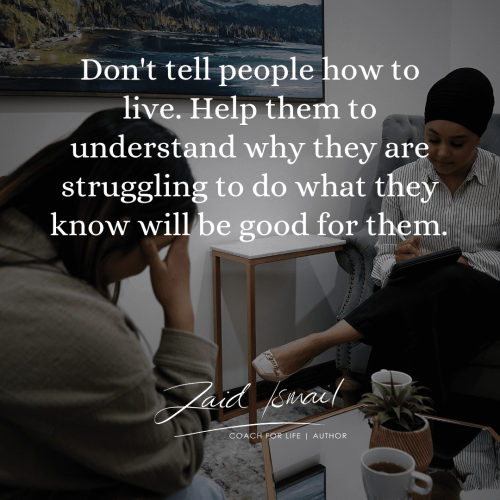
  • Does your therapist stroke your ego?

    Does your therapist stroke your ego?

    You know that old adage about ‘practice what you preach’?

    At some point someone replaced it with ‘those who can’t do, coach’.

    And the world has been worse off since then.

    Yes, I know I identify as a coach, but it would be opportunistic of me to ignore the large number of charlatans using the profession to project their world view on others.

    Too many people are ready to tell the world how to be better, but only so many who try to be better than they were the day before.

    Authenticity is not about the spoken word, it’s about action.

    Everyone has a nugget of wisdom to throw around, but only so many have the conviction to give it life.

    Most often, people already know what they need to change about their lives to be in a better space, but their lack of understanding in how they may be counter productive in their efforts is what holds them back.

    So when you tell them what to change, you’re effectively making them dependent on you for solutions rather than improving their understanding of how life works.

    Good intentions are never enough.

    Understanding the effectiveness of the methods that we adopt is what determines how successful we are at creating the life that we want.

    And because you don’t know what you don’t know, it becomes that much more important to choose your advisors carefully or else you risk getting advice that makes you feel better about your contribution towards the struggles of your life while blaming others for it.

    Are you sure you’re choosing advisors to help you grow, or do your advisors make you feel better about your faults?

    Don’t just preach your philosophy about life, live it.

  • Have you ever truly lived?

    Have you ever truly lived?

    Is your definition of success really your definition of success?

    Or did you perhaps borrow it from society without really noticing?

    Our fixation on appearing successful is so toxic, that we readily give up our hopes and dreams in favour of acceptance.

    Most people don’t have a greater purpose in life beyond achieving what secures their place in society, or in their social circles.

    The chase for acceptance or validation is how we die a million deaths in a single lifetime, but rarely live a single wholesome life before death.

    Do we even know what a wholesome life feels like between all the distractions and our efforts to appease others?

    When was the last time you reconnected with the idealistic teen in you?

    If you had to meet your teenage self, would you be proud or disappointed in who you are now?

    Or were you already wasted to the peer pressure back then that you’ve never known a life beyond that?

    Today is a good day to reconnect with you.

    death

  • Raging into oblivion

    Raging into oblivion

    The rage that we hold within us feels like a justified protest or demand for justice or fairness from those around us.

    But rage is a master of distraction.

    It is born in moments of legitimate duress, but continues long after.

    The rage of being unheard in one moment leads to harshness when we feel misunderstood in a totally different moment.

    Rage is the intensity of our demand to be treated with significance or respect, while not realising that rage undermines both, our significance and the respect we need from others.

    Rage only ever achieves compliance from others while they may fear us in our moments of rage.

    The moment those around us no longer fear us, rage becomes a tool that destroys what we’re trying to achieve, and isolates us from the ones who we wish would see us more clearly.

    But we only rage because we don’t see ourselves clearly.

    And that’s the greatest distraction that rage offers us.

    It convinces us that we’re right and that everything that we see is wrong with others is good reason for us to rage.

    And in those moments, we lose our connection with reality and replace it with a focus on who is taking our pain seriously while not realising that we’re causing pain, leaving them to see nothing more than a brute rather than a hurt soul.

    Beyond the release of the anguish we hold within, rage offers no value at all in securing the peace or harmony that we want with those who matter to us.

    Don’t only try to restrain your rage.

    Instead, seek to understand why you feel that rage at all.

    Otherwise your rage will grow to define you while you may think it’s defining your battle cry to the world.

  • Break the stigma

    Break the stigma

    I think it was Dr Wayne Dyer who said that if you change the way you look at things, the things you look at change.

    This is true both positively and negatively.

    Do you know someone who has a problem for every solution? Who sees doom and gloom at the happiest of moments? Who is preempting a negative outcome despite things going in their favour?

    Do you think they have a mental illness, or have they just been hurt so many times before, that they are afraid to hope for a positive outcome? Are they simply protecting themselves from being let down again?

    This is how we experience life when we finally give up hope about the future, or we give up hope about being appreciated.

    That absence of hope is what causes us to feel depressed. Depression is a legitimate experience of human emotions after we’ve taken one too many hard knocks from life about something important to us.

    The same is true for every other emotional experience.

    Emotions are not deficiencies. They’re the essence of what makes us human.

    If we ever hope to win this battle against a consistently declining quality of life, we need to stop referring to emotions as mental health, and we need to stop defining the duress that we experience in life as a mental illness.

    We need to reconnect with the human behind the pain, instead of dehumanising them by denying the legitimacy of their emotional experience.

    Break the stigma. Stop the labelling. Embrace the humanness.

  • Mental health myth – Social contracts

    Mental health myth – Social contracts

    People will have no reason to remind you about what they’ve done for you if they felt appreciated by you.

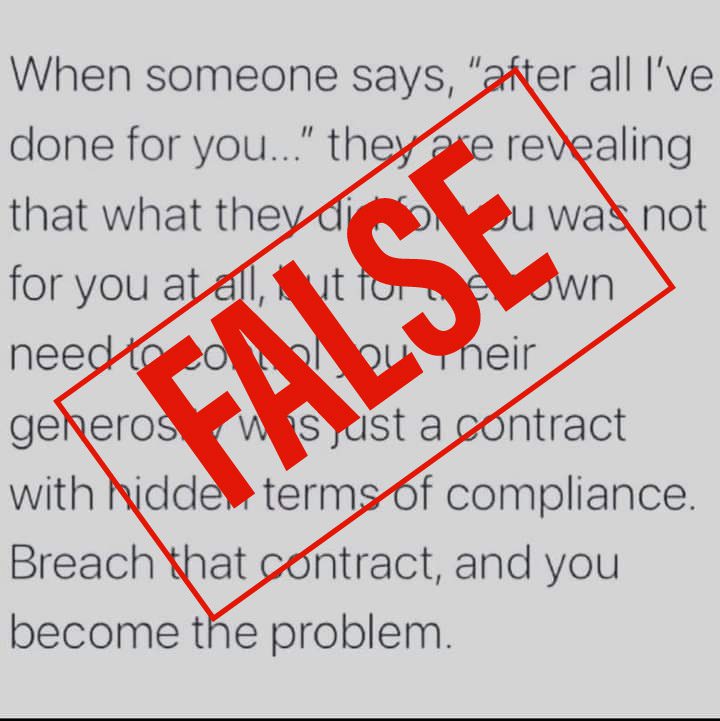
    This popular meme encourages a selfish view of life and convinces us that we’re victims of manipulation rather than giving us reason to question if/how we may have wronged someone, or taken them for granted.

    If this meme were true, then every parent who sacrifices their own joys and advancement in life for the benefit of their children will have no right to feel betrayed if they’re neglected by their children later in life.

    It’s become fashionable to write people off just because we’re not getting what we need or want from them.

    The fact that we feel entitled regardless of what they’re going through is often ignored.

    But the circle of life is such that what we judge others about today, will meet us as a test under very different circumstances tomorrow.

    When you write people off because of what they complain about regarding feeling hurt or betrayed by your actions towards them, you will remember them when someone you are convinced will always have your back turns around and walks away from you because they want something from life that they can’t get from you.

    When someone says ‘after all I’ve done…’, step back, dismount your high horse, and consider why they may be feeling betrayed or used instead of getting defensive and assuming that they’re toxic.

    How you respond to someone in their moment of duress is a reflection of who you are, and what you need from them.

    That’s why abandoning family ties, cutting off parents, demanding divorce, and breaking social bonds has grown to define our self-care routine.

    When we stop needing others, they become optional while we think it’s our right to live our best life regardless of their contribution towards getting us through our worst times when they could have been living their best life.

    Be careful what advice you take from the Internet.

    You could end up living your best life, alone.


  • Respect is not earned

    Respect is not earned

    The old saying of ‘respect is earned’ robs you of self respect and replaces it with entitlement.

    How we treat others is a reflection of who we are, not who they are.

    Our ability to self regulate our offering of respect to those who may treat us badly is a reflection of how much we need them to treat us well before we feel good about who we are.

    In other words, the less grounded we are in who we are, the more likely it is that others will impact our moods, our temper, and our overall emotional wellbeing.

    Trust, on the other hand, is earned through consistency of effort about what’s important.

    Trust cannot be negotiated or contracted.

    If we have reason to doubt someone showing up for us, we won’t trust that they will.

    That reason is sometimes because of them being unreliable, but is also often because of how someone else in the past may have disappointed us or betrayed our trust when we needed a similar thing from them. Like comfort, support, or just being there for us.

    If we go through life trusting recklessly while withholding respect to those who, in our eyes, don’t deserve it, we will find ourselves reeling from betrayal long after it has passed while disrespecting those who don’t understand our pain.

    Problem is, even we won’t understand our pain, so we’ll never be able to communicate it in ways that will allow those close to us to understand why we’re raging.

    It all starts with self respect and self worth.

    Without that, you will need others to treat you well before you treat yourself well.

    Own your life.

  • Check your entitlement

    Check your entitlement

    Expectations breed entitlement.

    Like the entitlement of privileges that weren’t earned, or a free pass to abdicate responsibility because we’ve got it tough. Or entitlement to a homeland that belongs to someone else.

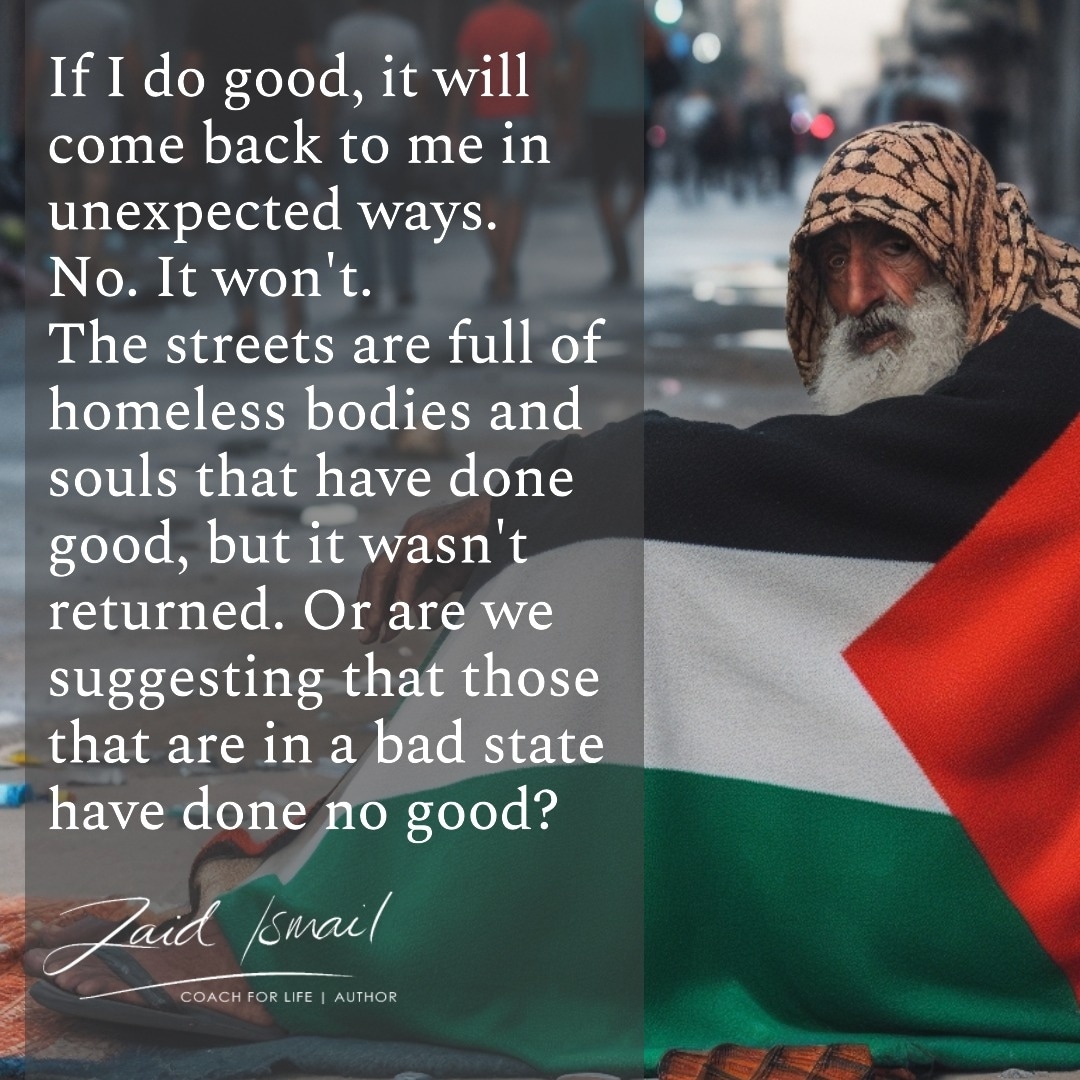
    Conviction and sincerity are lost when we do things hoping for a good return.

    We should do good because of who we are and what we choose to stand for. Not because we expect a return.

    A return on investment is for business transactions, not for moral positions.

    If you choose to fight for a cause, do it because it resonates with your values.

    You honour your value system when you live by it, especially when it’s inconvenient or unpopular to do so.

    When your values are used as a trading commodity with others, they’re not values, they’re tools for manipulation.

    Accountability is a trigger for too many.

    If you feel triggered when someone calls you to account, you have work to do on yourself.

    Our triggers, frustrations, annoyances, anger, and emotional volatility is ours to own.

    We cannot make others responsible for tiptoeing around it just because they ‘don’t know what we’ve been through’.

    Their empathy or compassion towards us is a reflection of who they are, in the same way that ours is a reflection of who we are.

    Outsourcing that or claiming that someone deserves not to receive it from us is an indulgence of our entitlement mentality, and not a defendable moral position.

    Own your life. It always starts with you.