The old saying of ‘respect is earned’ robs you of self respect and replaces it with entitlement.
How we treat others is a reflection of who we are, not who they are.
Our ability to self regulate our offering of respect to those who may treat us badly is a reflection of how much we need them to treat us well before we feel good about who we are.
In other words, the less grounded we are in who we are, the more likely it is that others will impact our moods, our temper, and our overall emotional wellbeing.
Trust, on the other hand, is earned through consistency of effort about what’s important.
Trust cannot be negotiated or contracted.
If we have reason to doubt someone showing up for us, we won’t trust that they will.
That reason is sometimes because of them being unreliable, but is also often because of how someone else in the past may have disappointed us or betrayed our trust when we needed a similar thing from them. Like comfort, support, or just being there for us.
If we go through life trusting recklessly while withholding respect to those who, in our eyes, don’t deserve it, we will find ourselves reeling from betrayal long after it has passed while disrespecting those who don’t understand our pain.
Problem is, even we won’t understand our pain, so we’ll never be able to communicate it in ways that will allow those close to us to understand why we’re raging.
It all starts with self respect and self worth.
Without that, you will need others to treat you well before you treat yourself well.
Own your life.
#hope #expectation #sincerity #selfworth #selfawareness #mentalhealth #mentalhealthawareness #lifecoaching #zaidismail #theegosystem #ownyourlife #narcissisticabuse #narcissist #rage #anger #angermanagement #marriage #divorce
Tag: divorce
-
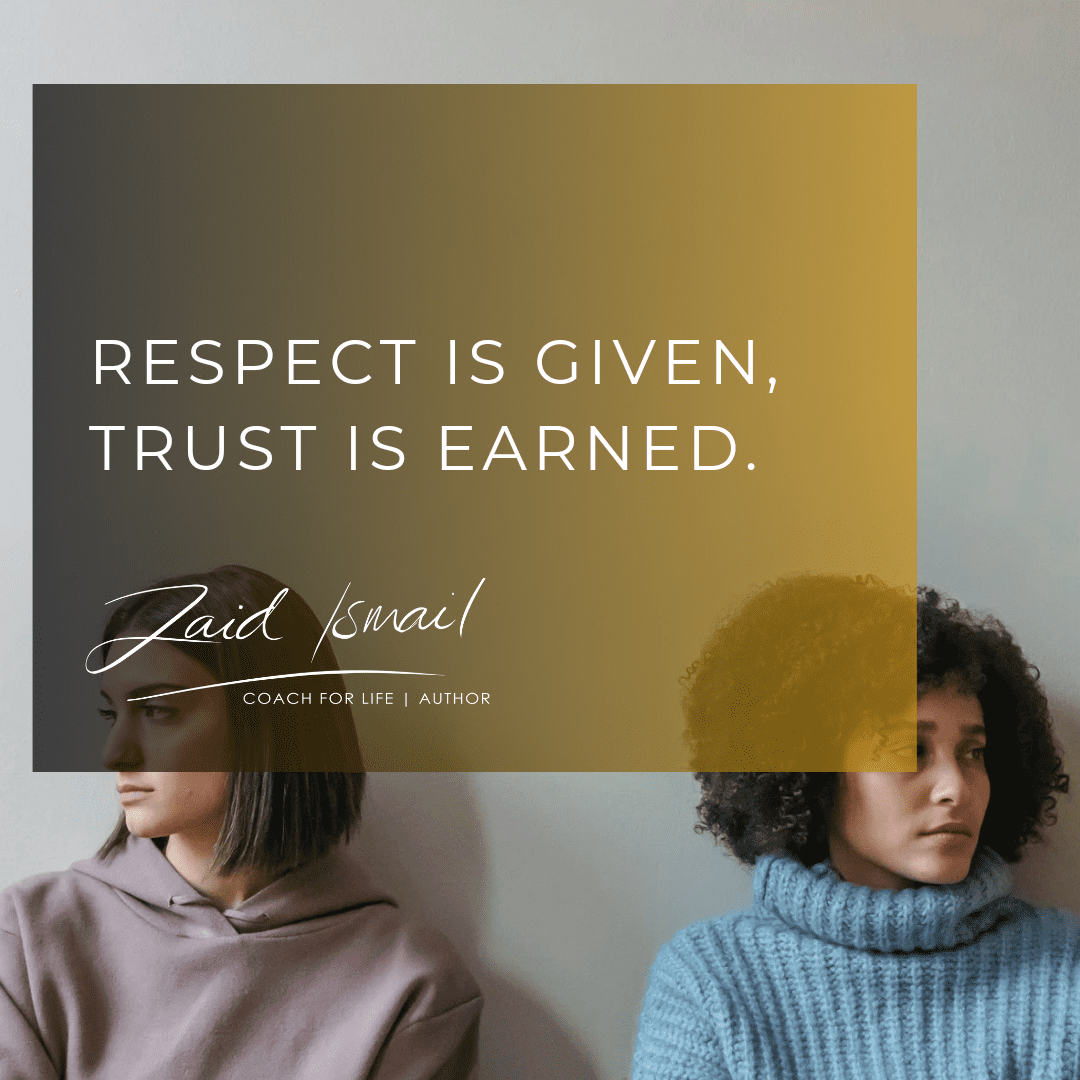
Respect is not earned
-

The absence of drama is not peace
The struggle in countering the influence of a village of idiots will never be truly appreciated until we experience the impact of the dysfunction that it produces in our lives.
That impact usually only becomes evident when we’re facing upheaval that challenges any sensibility that we may rely on about life.
Parenting is largely a lost art with the opportunity to outsource a large chunk of it to social media making it easy to ‘cope’ in that way.
Losing ourselves to our own struggles that rage in our minds blinds us to the impact of our obliviousness to those around us.
The absence of drama is not peace, nor is it wholesome family time.
That is what social media and social distractions offer us. The absence of contention or conflict.
That’s how we lose sight of the values that we’re imparting without meaning to, because on the one hand, we’re validating social media as a legitimate source of learning how life works, while also confirming that such an approach to parenting or to sharing life’s moments and wisdom is all that we have available to offer.
We have greater impact through what we don’t do than what we do.
Unfortunately, we’re mostly too distracted by needing validation for what we do that we lose sight of our abdication of accountability for what we should do more of…or just what we should be doing in the first place. Period.
Our demons that distract us from what others need from us destroys more relationships than any real conflict that exists between two people.
Own your life before you end up destroying someone else’s.
#parenting #divorce #marriage #marriagegoals #lifecoaching #zaidismail #theegosystem #ownyourlife #relationshipgoals #singleparenting -
Don’t raise a tyrant
Understanding right from wrong is the easy part.
How to effectively respond to what is wrong without creating a new problem is the difficult part.
With the emphasis always being on knowing who is right and wrong, but hardly any focus on how to deal with such differences, we raise children who are intolerant or misguided in their fight for what is right.
Learning how life works is about more than just the rules. It’s about knowing how to be firm while still being empathetic, compassionate, and fair.
Every tyrant believes in their own mind that they are justified in what they’re doing.
Every tyrant has reason to compromise on what they believe is right because they are convinced that there is a greater good that is being served through such compromise.
Every tyrant doesn’t accept that they’re being a tyrant. They see themselves as defending a just cause.
If you don’t raise your children with understanding why there is benefit in upholding what is right, and why there is benefit in being gentle but firm about opposing what is wrong, you will raise a tyrant who will turn against you when you challenge them about something that they feel justified about.
That’s how we create Zionists in our own homes, and unleash tyrants into the homes of other people’s children when our children get married.
Understanding why is always more important than simply know what to do.
Without understanding why, we lose critical thinking, empathy, compassion, and worst of all, we lose our humanness.
Go beyond instructing your children about the rules to live by, and demonstrate through meaningful action and participation how it is that they must live by those rules.
Not only will the participation improve their self-worth, but the active demonstration will lead to more credibility behind what they must stand up for.
#parenting #raisingchildren #singleparenting #divorce #lifecoaching #zaidismail #theegosystem #ownyourlife #mentalhealth #mentalhealthawareness
-
Look back with understanding
When you don’t have a gentle hand to guide you, or an understanding structure to support you, life will be shaped through trial and error.
In the same way that we can’t give what we don’t have, nor can others offer us what they don’t have – no matter how much we need it from them, or may have rights to get it from them.
Realising this has been the saving grace of my sanity through a colourful life.
So many of us set out in life knowing who we don’t want to be based on our experiences with those around us – especially our parents.
But we fail to realise that it doesn’t prepare us, or give us anything to work with, in determining how to be who we want to be.
It may sound cryptic, but it’s not.
It’s easy to identify what we want to achieve in life, but if we don’t know how life works, we will keep tripping up on the subtleties that cause havoc in ways that we never anticipated.
No one sets out to destroy their own life, even if they persist in blatantly destructive behaviour.
They do so because they exhausted themselves living life wishfully instead of purposefully.
Such a mindset results from anger about what you don’t have, leading to acting with haste or impatience in striving for what you want.
The only antidote that I’ve discovered for this is to observe, with the intention of understanding, those who let you down or didn’t show up the way you needed them to.
Our trial and error, like theirs, denies others the wisdom and support that they need to learn how life works.
Self-pity or entitlement, and especially anger, will never change that reality, it will only repeat the cycles that may have caused us hardship.
It always starts with you.
#hope #expectation #sincerity #selfworth #selfawareness #mentalhealth #mentalhealthawareness #lifecoaching #zaidismail #theegosystem #ownyourlife #parenting #divorce -
10 Rules for life
If you don’t hold yourself accountable before you hold others accountable, you’re insincere about what you claim to uphold.
If you focus on everyone else’s shortcomings that you think may justify your behaviour, you will be defined by everyone else’s shortcomings.
Is that really the standard by which you want to live?
It always starts with you.
Here are the 10 Rules:
1. If you want to be trusted, conduct yourself with integrity and consistency at all times, not only when things are easy.
2. If you want to be respected, learn to respect others, not only when there’s something in it for you.
3. If you want to be appreciated, show appreciation for what you have and what you receive instead of behaving as if you’re entitled to everything that you need or want.
4. If you want to be treated like an adult, communicate like an adult instead of throwing tantrums or assuming that you’re right so there’s no need for you to convince anyone else about what you believe to be true.
5. If you want to feel cared for, show due care and consideration for others, and not only for people from whom you need things or from those who stroke your ego.
6. If you want the benefit of the doubt, work on your credibility instead of demanding to be treated as if you have credibility, especially if you did something that raised doubts about your credibility.
7. If you want to be heard, listen with the intention of understanding, and not with the intention of responding to prove that you’re right while ignoring the facts presented to you.
8. If you can’t handle the answer to a question, don’t ask the question because you’re looking to hear what you want to hear, rather than being interested in what others have to say.
9. If you don’t want others to assume the worst of you, stop assuming the worst of others.
10. If you want your rights to be respected, fulfil your responsibilities. All of it. Not only the ones that you think you need to or feel like fulfilling.
#hope #expectation #sincerity #selfworth #selfawareness #mentalhealth #mentalhealthawareness #lifecoaching #zaidismail #theegosystem #ownyourlife #justsaying #rulesforlife #relationshipgoals #marriage #divorce -
The past sucks eggs
Life sucks when we take our experiences with others from the past and project it onto the relationship that we have with someone in our present.
Sadly, this applies to all relationships, not just marriage or romantic partnerships.
It applies to the parent-child relationship as much as it applies to spouses.
Especially in times when we have a high prevalence of failed marriages, this plays out in the aftermath of such breakdowns of the home as children grapple with their place between their separated parents, and ex-spouses struggle to find a balance of power in their efforts to co-parent.
A lot of life is wasted as we rage about what we believe to be our justified anger at what happened in the past.
Sometimes, we’re so convinced that we have good reason to rage at what is happening in the present that we don’t notice that it is because of a past experience that the present one incites such rage within us.
The focus should never only be on why we have reason to be angry or to feel hurt.
More importantly, we must focus on whether the intensity of rage or hurt is understandable relative to the current situation.
When we do this, we stand a chance of focusing on resolving the current problem rather than contaminating it further because of how it reminds us of how we were treated badly in the past.
If you don’t own your contribution towards the current problems that you face, you will be owned by the demons of someone else’s past.
It always starts with you.
#hope #expectation #sincerity #selfworth #selfawareness #mentalhealth #mentalhealthawareness #lifecoaching #zaidismail #theegosystem #ownyourlife #marriagecounseling #divorce -
Embrace your demons
Relationships fail when the demons of both don’t play nicely with each other.
But demons are not so easy to recognise.
What feels like a right or a legitimate expectation is often underpinned by a demon from the past when those rights were denied, or those expectations dismissed.
Our innate need to be of significance to those we deem significant stir the demons within when that significance comes under threat.
It gets ever more complicated when the demon is associated with what comes next, and not what is.
Consider this.
Those who play it safe in life are protecting themselves from failure or inadequacy.
What they’re focused on may appear to be their absolute priority, and may even feel like it is their priority to them, without realising that what they’re focused on is to protect them from what it may lead to next.
That’s how success becomes a threat, or emotional availability feels like intense vulnerability.
The fear of abandonment means that we must protect ourselves from growing attached, or the fear of rejection means that we must preemptively reject before we’re rejected.
Thus, self-sabotage leads to self-fulfilling prophecies that convince our demons that we were right to protect ourselves from a threat that no one else understands.
That’s how our demons from the past ruin the promise of a beautiful future.
If you don’t own your demons, your demons own you.
It always starts with you.
#hope #expectation #sincerity #selfworth #selfawareness #mentalhealth #mentalhealthawareness #lifecoaching #zaidismail #theegosystem #ownyourlife #marriageadvice #divorce -
Too good to be true
I’m often asked why is it that someone with a solid self-worth can have their sense of self totally destroyed by a bad relationship.
This is why.
Despite our best intentions, placing someone on a pedestal is never a good idea.
Not only will it blind us to their humanness, it will also distract us from our potential.
Worse than this, it distorts our judgement of ourselves when they don’t respond or react the way we need them to.
Firstly, when we elevate someone in that way, we forget that it’s based on our perception of who they are, and not because they claimed that spot on the pedestal that we built.
Secondly, because of this misplaced belief in their excellence of character or accomplishment, the success or failure of our efforts to earn their praise or affection leaves us questioning our worth because of how much credibility we place on their reactions towards us.
Remember, we placed them on that pedestal, so they probably have no idea why our expectations of them are so high, making it easier for them to fail us without them knowing why.
When they falter, we see them as falling from grace because we assume that they always thought that they were too good for us, meanwhile they never saw themselves that way to begin with.
Worse still, that unreasonable expectation that we place on them could easily provoke their insecurities, resulting in them deliberately resisting what we need from them.
That sets in motion a cycle that destroys an otherwise good relationship when we blame them for not living up to the expectations that we imposed on them, while accusing them of setting such high expectations.
Be mindful of what you take from others versus what they’re offering.
Otherwise you’ll create self-fulfilling prophecies while blaming the world for your misery.
#hope #expectation #sincerity #selfworth #selfawareness #mentalhealth #mentalhealthawareness #lifecoaching #zaidismail #relationshipgoals #marriageadvice #divorce #ownyourlife #theegosystem