Is your definition of success really your definition of success?
Or did you perhaps borrow it from society without really noticing?
Our fixation on appearing successful is so toxic, that we readily give up our hopes and dreams in favour of acceptance.
Most people don’t have a greater purpose in life beyond achieving what secures their place in society, or in their social circles.
The chase for acceptance or validation is how we die a million deaths in a single lifetime, but rarely live a single wholesome life before death.
Do we even know what a wholesome life feels like between all the distractions and our efforts to appease others?
When was the last time you reconnected with the idealistic teen in you?
If you had to meet your teenage self, would you be proud or disappointed in who you are now?
Or were you already wasted to the peer pressure back then that you’ve never known a life beyond that?
Today is a good day to reconnect with you.
#hope #expectation #sincerity #selfworth #selflove #selfawareness #selfrespect #mindfulness #inspiration #goals #mentalhealth #mentalhealthawareness #mentalhealthrecovery #success #reality #failure #life death #ownyourlife #coachzaidismail
Tag: selflove
-

Have you ever truly lived?
-

Are you sure you’re not enough?
I often see people needing to remind themselves that they’re enough.
Some even print out posters proclaiming “I am enough” and place it on their fridge or at their workplace, or on their mirror.
Enough for what? For whom? In what? To achieve what?
We have to convince ourselves that we’re not good enough before anyone can make us feel that way.
When you focus on whether you’re enough, you lose sight of the fact that you’re literally reducing the entirety of who you are to what you think is enough about you in only one domain of your life.
That’s usually in our social spaces.
That’s how we become defined by what we think others think of us, or what we think of ourselves through our self-criticism.
You are enough of whatever you choose to be, but first you need to see yourself clearly.
See yourself realistically, not through rose coloured spectacles, or affirmations of things you know is not true but want must be true.
The problem to solve is not to be enough, it’s to understand what you’re doing that may be counter productive to who you want to be or what you want to achieve.
Start there. Start by observing the effectiveness of your approach, your effort, your strategy, etc.
Then do something about those parts that are not as effective as they need to be.
Now you’re solving the right problems.
Being enough was always just a distraction.
Own your life.
#choices #accountability #conviction #iamenough #selfworth #selfawareness #selflove #gratitude #appreciation #mentalhealth #mentalhealthawareness #mentalhealthrecovery #optimisticquotes #coachzaidismail #ownyourlife -
A bitter end
Holding on to bitterness for a past betrayal is like drinking poison and hoping that your betrayer will die.
Bitterness eats away at your peace while you hope that the intensity of your bitterness will somehow influence the karma of the person who treated you poorly.
If you had that much power, you’d have been able to enforce justice with them already.
The longer you hold on to the bitterness, the more harm you cause for yourself more than any harm that they may have imposed on you.
When you fixate on your reasons to feel bitter, you prevent yourself from considering whether your assumptions about their intentions or motives are true.
You also prevent yourself from seeing the impact of your bitterness on those around you who had nothing to do with that betrayal or hurt caused by someone else.
Sometimes people betray trust because their own fears are stronger than their convictions, and not necessarily because they deliberately wanted to use or hurt you.
Anger in the face of betrayal, even hurt, is understandable.
But just because it is understandable doesn’t mean it’s good for you.
Own how you feel.
Understand what you can do to handle such situations better in future.
Move on.
Life awaits.
#peace #bittersweet #bitterness #selfworth #selfawareness #selflove #selfloathing #selfharm #mentalhealth #mentalhealthawareness #mentalhealthrecovery #justice #remorse #brokenheart #coachzaidismail #ownyourlife -
Feeling triggered?
⚠️ Trigger warning ⚠️ archive post.
Blaming chemicals for your emotional state is like blaming the overflowing rivers for the rain.
Smile, and you generate feel good hormones even if you don’t have a good reason to smile.
That’s science, not conjecture. If you don’t believe me, Google the science of a smile. And while you’re at it, Google neuroplasticity to see how your brain REACTS to new information and experiences, and does not create those perspectives.
Don’t dehumanise the human experience by labelling it as an illness.
Take back your agency by understanding why you may feel the way that you do.
Stop judging yourself or others harshly for being human.
I wish we’d realise that by defining the human experience as an illness, we effectively dehumanise the human experiencing it.
Think about that the next time you convince yourself or others that their reasons for experiencing an intensity of emotions is due to chemicals and not because their life experiences and perspectives warrant such a reaction.
It’s time to start understanding, instead of judging harshly, or abdicating responsibility for who we are.
Every emotional experience has a legitimate basis within the context of our life.
Whether we’re correct or incorrect about why we feel that way doesn’t change the fact that we, in our mind, have reason to feel that way.
Understand that, connect the dots to your experiences, and suddenly an overwhelming emotion becomes a source of information to work with rather than to fear or to suppress it.
Own your life before it owns you.
#mentalhealth #mentalhealthawareness #mentalhealthrecovery #selfworth #selflove #selfawareness #selfrespect #mindfulness #theegosystem #ownyourlife #neuroplasticity #coachzaidismail #zaidismail #traumacounselling -
You’re human. Be human.
We need to be careful with subscribing to a victim mindset.
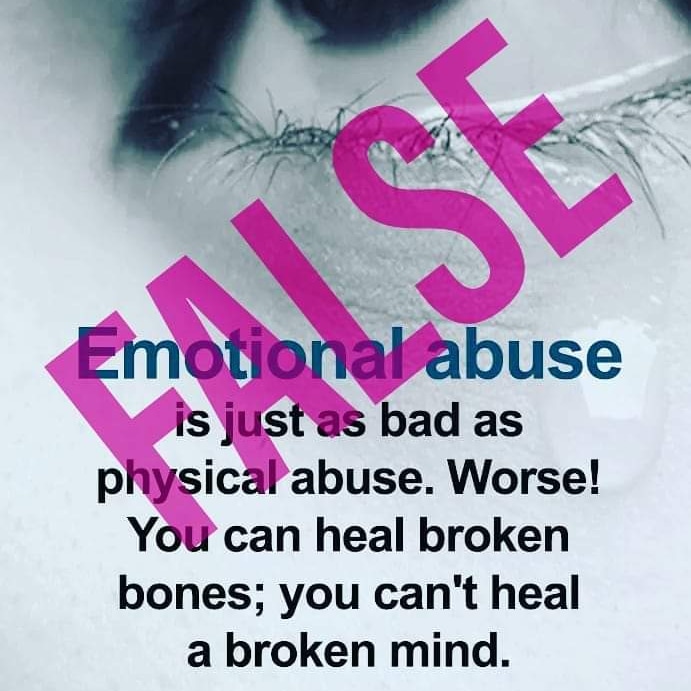
Any form of abuse leaves emotional scars.
But that doesn’t mean it breaks us.
Nor does it mean that it’s impossible to heal from it.
Don’t believe everything you read.
No human is broken.
And every mind can be healed.
When we convince ourselves that we’re broken or that we can’t be healed, we create a self fulfilling prophecy, because what you set out to achieve is what you will achieve.
Besides, it’s not the physical pain of physical abuse that sticks with us, it’s the mental and emotional anguish that it leaves that haunts us.
Memes like the one above are well meaning, but they cause more harm to our mental health than they offer benefit or relief.
Be careful what you take from the Internet.
Good intentions have destroyed many lives.
No matter how elaborate and sincere your effort at solving a problem may be, if you don’t understand the problem well enough, you will go about solving the wrong problem until you eventually convince yourself that the real problem cannot be solved.
There is a solution for every problem except death. So if you’re not figuring it out, it means that you need more information and a fresh perspective of what you’re dealing with.
Remember: No one is broken. No one is damaged. No one is beyond help. It takes a single moment of realisation to turn your entire world around.
#mentalhealth #mentalhealthawareness #mentalhealthrecovery #selfworth #selflove #selfawareness #selfrespect #mindfulness #theegosystem #ownyourlife #motivation #zaidismail #lifecoaching -
Divinely obnoxious?
Godliness is like humility. It is lost when we actively pursue it.
Living by the doctrine to which you subscribe is infinitely more important than preaching it.
People learn from how you treat them, not from how you chastise them.
Judging the faith of another reveals the cracks in your self-worth more than it offers any revelation about the faith of another.
When our self-worth is low, our association with divinity, religion, or other groups will be used to compensate for what we believe we lack in ourselves so that we may get the respect that we need.
When we assume ourselves to be above those that behave worse than us, or those that disagree with us, we grow arrogant in our thinking and our ways, which directly opposes our efforts towards godliness, or piety.
When we speak on behalf of the Almighty, we assume to have knowledge of the unseen because we believe ourselves to be devout enough in our practices and superior in our morals to claim such authority.
Such pride and arrogance causes a decay in the soul that results in harshness, ingratitude, and rigidity, making it increasingly difficult to receive advice from sincere advisors.
All this conflict within us results from a low self-worth, because when your self-worth is low, your life will be focused on compensating for that, rather than living purposefully or sincerely.
Peace lies on the other side of gratitude, and gratitude is impossible if you lack awareness and appreciation for who you are, and who you want to be.
That, right there, is the building blocks of self-worth.
It always starts with you.
#compassion #sincerity #authenticity #mentalhealth #mentalhealthawareness #mentalhealthrecovery #selfworth #selflove #selfawareness #selfrespect #mindfulness #inspiration #ownyourlife #theegosystem #forgiveness rewards #lifecoaching #zaidismail -
You cannot make them rise
I’ve seen, and experienced first hand, the disaster that awaits when we convince ourselves that the demons that others deal with is our responsibility to resolve.
Being kind, compassionate, and even understanding does not mean that we must own the decisions that others have made, especially when those decisions include them choosing to hold on to anger from their past instead of embracing the opportunities of the future.
Remember that you can only offer someone a hand up, you cannot make them rise.
The same way that you must own the consequences of your decisions, you are responsible for giving them every opportunity to own theirs.
That includes not making yourself available as a doormat to them when they’re not owning it.
You’re not a hospital for the wounded egos of others.
Compassion doesn’t mean that you must be a martyr.
Sacrificing yourself to uplift another not only reflects ingratitude on your part for who you are and what you have, it denies your contribution of love to those that have a right to it, including yourself.
Moderation in everything, and everything in moderation.
Embrace your life fully, not only its struggles.
#selfworth #selflove #selfawareness #selfrespect #mindfulness #theegosystem #mentalhealth #mentalhealthawareness #mentalhealthrecovery #lifecoaching #zaidismail #ownyourlife #compassion #sincerity -
The meandering twists of fate
Betrayal is not always a result of harsh words, lies, or cruel action.
We’re often so focused on what we’re not getting from others, that we don’t pause to consider what they may not be getting from us either.
The deepest cuts are those that are inflicted when we trust someone to be there, but they walk away instead.
It’s when our rock in this world goes silent when we desperately need to hear their comforting voice.
The searing edge of the blade of betrayal is when we repeatedly make excuses for others failing us, but we’re discarded the moment we have a moment of weakness.
When there is inaction from those towards whom we look expectantly while recalling the times that they drew on our energy in moments when we barely had enough to sustain our own spirit, we find ourselves holding on, desperately clawing with both hands, to the remnants of the shards of our broken spirit, knowing that only we will be there for us, with the only solace needed being our trust in the One who created us.
People fail us for the same reasons that we may fail others.
It doesn’t make it right.
It doesn’t make it wrong.
It makes us all flawed humans who sometimes succumb to the demons of the past, while oblivious to the demons we just spawned in another because we were distracted.
Striking a balance between recognising their humanness, while allowing ourselves to be human, while protecting ourselves from the impact of their demons, while grappling with our own demons is what defines the struggle of life, and the devastating risk of love.
But we do it anyway, because without it, what would be the point of life?
#mindfulness #inspiration #introspection reflection #ownyourlife #theegosystem #embracingME #mentalhealth #mentalhealthawareness #mentalhealthrecovery #selfworth #selflove #selfawareness #selfrespect #zaidismail #lifecoaching