Tag: gratitude

  • Resisting the norms

    Resisting the norms

    The relentless pace of society towards retiring those who are no longer contemporary is enough reason to settle into the rhythm of preparing for old age. Just writing that out makes me nauseous.

    To regain my sanity, or at least to push back against the approaching insanity, I remind myself that I have a good 20 to 30 years still left in me should I not succumb to the violence that pervades so many social spaces. 20 to 30 years is a lifetime in itself, which makes it difficult for me to grasp why someone would willingly plan to surrender a lifetime in favour of a belief system that has put out to pasture the wisdom of lives lives and struggles overcome.

    Society is only as strong as the most pervasive weakness that it celebrates. At present, we appear to celebrate mediocrity, sensationalism, materialism, and debilitating comfort. Passion and purpose do not feature in the most important discussions around me, both in my personal domain or in the public domains that I frequent.

    My aversion to such norms has seen me increasingly isolating myself from such spaces leading to a dulling of my spirit that threatens to land me in exactly the state the thought of which nauseates me. Thus, if left to my own devices without a grasp on life itself, I will succumb to the very thing about which I judge others. That has proven to be the only truth about the struggles of my life.

    The judgement that I flirted with in my youth visited me in my adulthood and threatens to define my twilight years. However, I refuse to embrace the twilight. I will marvel at it, and perhaps even taunt it, but I have no intention of embracing it. My irreverence at that sight of social norms creates a tension within me each time I even contemplate fitting in or going with the flow of the river of affluence that stenches up the environment around me.

    An art neglected will be lost. Thus, I find my ability to express myself slowly eroding while the mental clutter of everything that I have grown to despise about mediocrity takes its place. The despicable narrative of the contempt that I hold for the lack of conviction that I am bombarded with takes up more head space than it ever should.

    The absence of a sounding board or an understanding gaze leaves me adrift in a sea of tumultuous currents that have exceedingly brought me closer to tipping over and losing myself to the idealism of a mind fraught with angst at the sight of everything that threatens the wholesomeness that I hope to experience before my final calling.

    When the spoken word is not welcomed, the written word is all that remains of my avenue of protest against a world that celebrates vulgarity and self-aggrandisement rather than the substance and wondrous nature of life itself.

    A distracted clown appears deeply philosophical. A whimsical philosopher appears foolish.

    I must avoid both.
  • Be blessed, not entitled

    Be blessed, not entitled

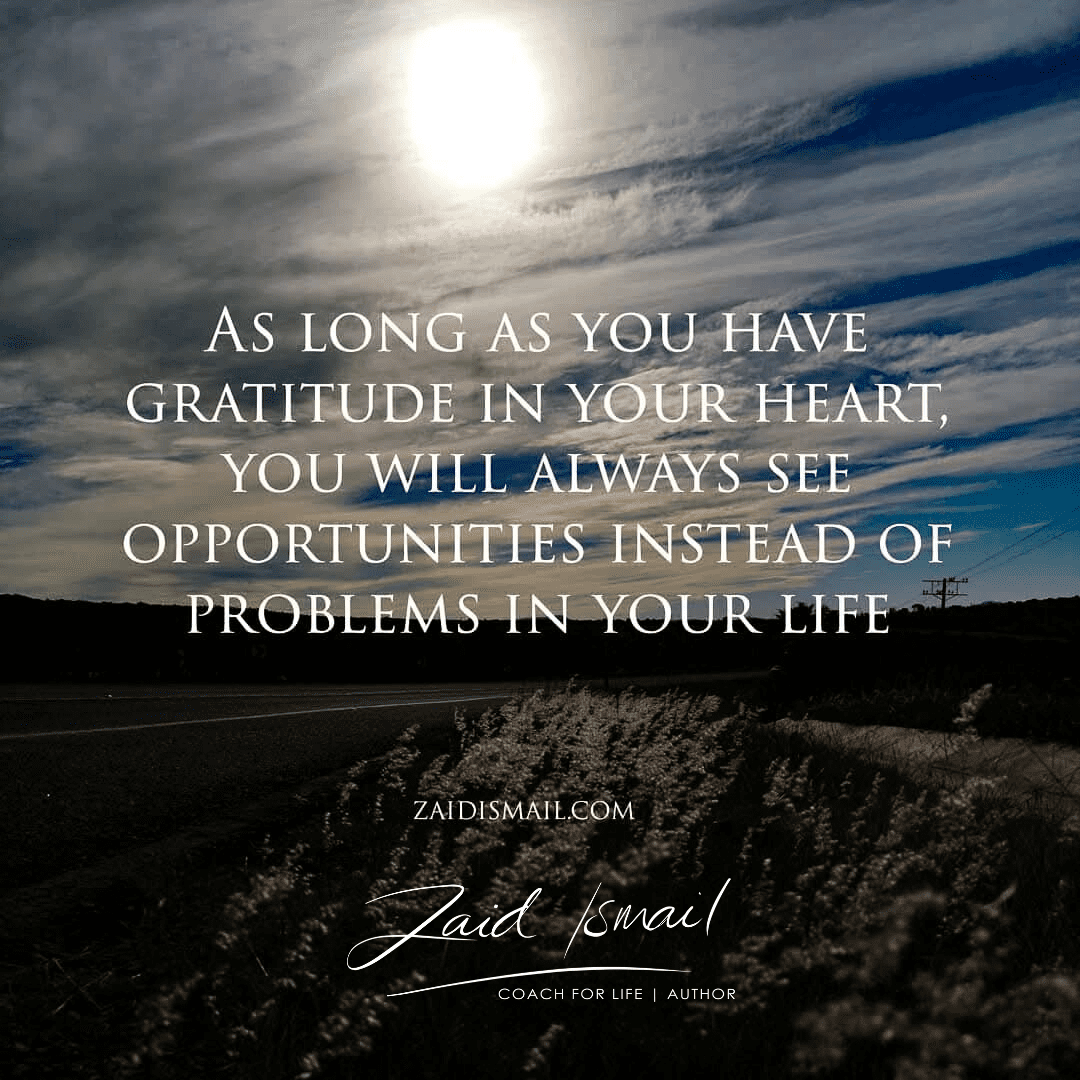
    Appreciation is simply an acknowledgement of what we feel blessed with, while gratitude is reflected in what we claim to appreciate.

    The secret to contentment is found in gratitude.

    But not in an attitude of gratitude.

    It must be more substantial than that.

    Gratitude must be a meaningful connection with what we truly value about ourselves and our lives, and not just appreciation for having more than others.

    Gratitude allows us to focus on what’s good, and realise how much worse things could be.

    It encourages appreciation for what we have instead of envy for what we don’t have.

    Most importantly, it recognises the blessings that most take for granted like good health, free time, youthfulness, good relations, and peace of mind.

    When we lose gratitude for these things, we take it for granted and stop doing what is needed to maintain it.

    That’s when we lose it.

    And if we still don’t recognise our ingratitude at that point, our difficulties become a trial rather than a reminder leading us to believe that we’re cursed or being tested by divine decree.

    Live with gratitude. Always.

  • Are you sure you’re not enough?

    Are you sure you’re not enough?

    I often see people needing to remind themselves that they’re enough.

    Some even print out posters proclaiming “I am enough” and place it on their fridge or at their workplace, or on their mirror.

    Enough for what? For whom? In what? To achieve what?

    We have to convince ourselves that we’re not good enough before anyone can make us feel that way.

    When you focus on whether you’re enough, you lose sight of the fact that you’re literally reducing the entirety of who you are to what you think is enough about you in only one domain of your life.

    That’s usually in our social spaces.

    That’s how we become defined by what we think others think of us, or what we think of ourselves through our self-criticism.

    You are enough of whatever you choose to be, but first you need to see yourself clearly.

    See yourself realistically, not through rose coloured spectacles, or affirmations of things you know is not true but want must be true.

    The problem to solve is not to be enough, it’s to understand what you’re doing that may be counter productive to who you want to be or what you want to achieve.

    Start there. Start by observing the effectiveness of your approach, your effort, your strategy, etc.

    Then do something about those parts that are not as effective as they need to be.

    Now you’re solving the right problems.

    Being enough was always just a distraction.

    Own your life.

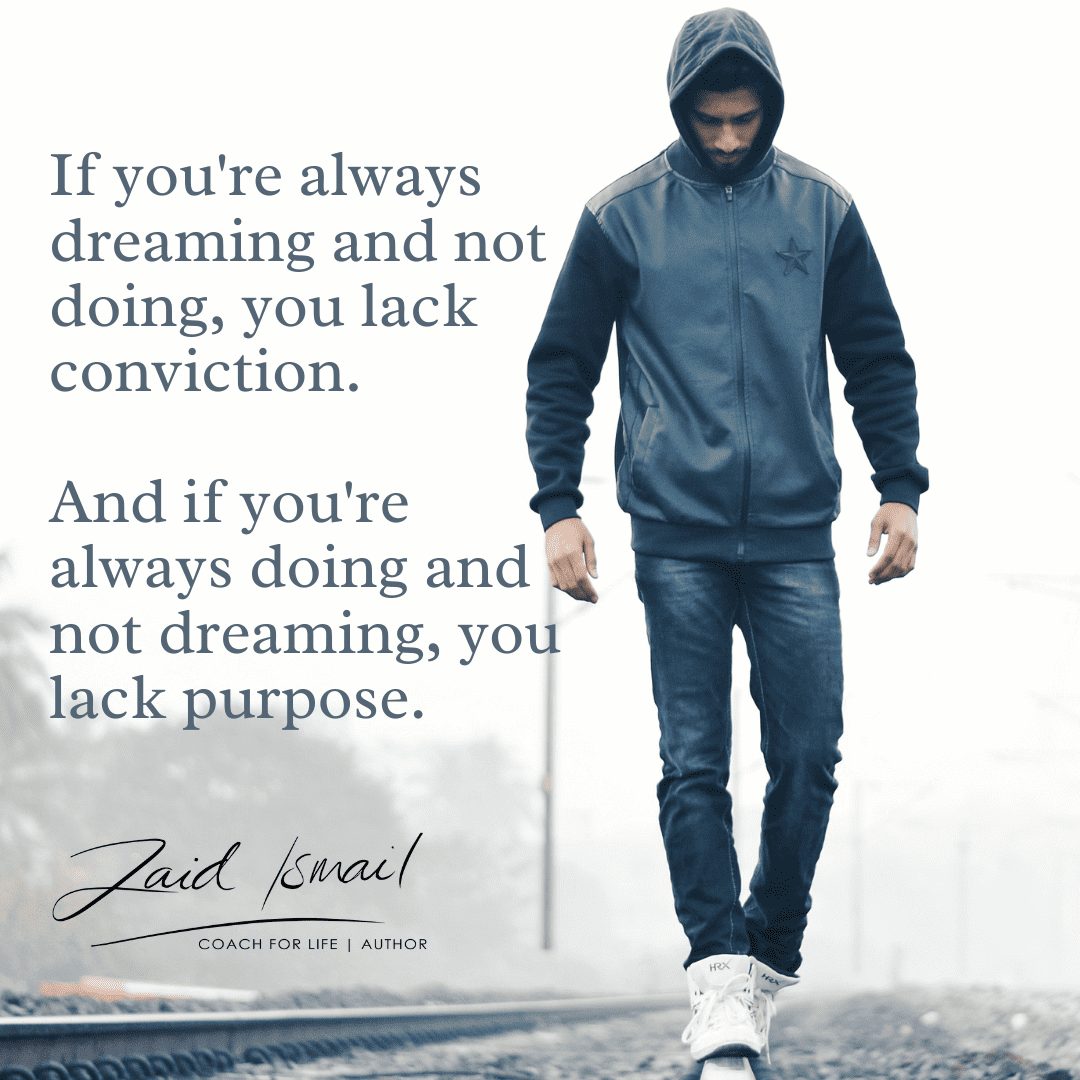
  • Dreamer or doer?

    Dreamer or doer?

    The absence of balance is stress. Emotional duress. Lack of joy. And so much more.

    The fear of not having, not coping, not achieving, or not thriving is what drives most people to exert themselves in what they think is a good effort towards a fulfilling life.

    Unfortunately, fear never inspires sustainable outcomes.

    The craziness about fear as a motivator is that it simply pushes us to do what we we’re already capable of doing.

    Think about it.

    Fear never creates ability or competence. It only gives us reason to act on the ability and competence we already possess.

    But it’s not what you think ability and competence looks like.

    The only true ability that matters is our ability to figure things out, followed by our courage to act on what we’ve figured out.

    Fear is what gets in the way of acting on what we know or believe to be true or what is needed.

    Understand your fears and you’ll find balance.

    React to your fears and you’ll either be a dreamer or a doer, but you will struggle to find peace or harmony, or even fulfilment in anything that you achieve.


  • Are you owning it?

    Are you owning it?

    This is a painful truth for many.

    One of the most prominent trends in people’s lives when things go wrong, is that they surround themselves with those who make them feel better about where they’re at, rather than those who push them to step up and own their life.

    You won’t ever grow beyond your current challenges if you constantly have people telling you how brave you are for living with it.

    Cherish those who hold you to a higher standard, not those who pacify you when you’re wrong.

    Of the rarest of creation, I believe, must be the sincere advisor.

    Too many offer advice because they think it’s good advice and not because they genuinely understand or are invested in supporting or uplifting the one who is experiencing difficulties.

    Such advisors regurgitate advice that worked for them, meaning well, but not realising that they’re making it about them rather than focusing on what you’re grappling with.

    If you find a sincere and credible advisor (emphasis on credible), cherish them, because their commitment is to your upliftment, and not to their own ego.

  • The path to peace is gratitude

    The path to peace is gratitude

    The path to peace, internal peace, is to see yourself clearly through the muck and the mire of the world around you.

    Peace is found in being true to who you are in the midst of a maddening crowd.

    It’s found in knowing that we can only ever choose how we respond to life, and learn from the effectiveness of those choices each time that we are required to make them.

    Peace is found in being content with what we understand to be the reasons for our poorly informed decisions so that we can learn from it, rather than shackle ourselves to our past because of it.

    Peace is found in not creating fragments of ourselves in different carefully hidden spaces of our shame or our sadness, but seeing it as intricate parts of who we are in our entirety.

    Peace is found in resisting the labels and the judgements as defining attributes of our being, but rather using those as input into informing the paths that we choose to follow in our journey of figuring out how life works.

    Peace is found in building on what holds goodness rather than berating ourselves or others in what resulted from poorly informed decisions.

    When we live life towards honouring the life that we have rather than lamenting the life that we don’t have, we find gratitude.

    And gratitude is the antidote for every illness of the heart, and every ache of the soul.

    Gratitude and accountability are roommates, and anger is the unscrupulous landlord that evicts both.

  • Feeling triggered?

    Feeling triggered?

    ⚠️ Trigger warning ⚠️ archive post.

    Blaming chemicals for your emotional state is like blaming the overflowing rivers for the rain.

    Smile, and you generate feel good hormones even if you don’t have a good reason to smile.

    That’s science, not conjecture. If you don’t believe me, Google the science of a smile. And while you’re at it, Google neuroplasticity to see how your brain REACTS to new information and experiences, and does not create those perspectives.

    Don’t dehumanise the human experience by labelling it as an illness.

    Take back your agency by understanding why you may feel the way that you do.

    Stop judging yourself or others harshly for being human.

    I wish we’d realise that by defining the human experience as an illness, we effectively dehumanise the human experiencing it.

    Think about that the next time you convince yourself or others that their reasons for experiencing an intensity of emotions is due to chemicals and not because their life experiences and perspectives warrant such a reaction.

    It’s time to start understanding, instead of judging harshly, or abdicating responsibility for who we are.

    Every emotional experience has a legitimate basis within the context of our life.

    Whether we’re correct or incorrect about why we feel that way doesn’t change the fact that we, in our mind, have reason to feel that way.

    Understand that, connect the dots to your experiences, and suddenly an overwhelming emotion becomes a source of information to work with rather than to fear or to suppress it.

    Own your life before it owns you.


  • Stop looking in that mirror

    Stop looking in that mirror

    We rarely look in the mirror to see ourselves.

    Most often, we look to see what we think others see when they look at us.

    This focus on how we appear distracts us from who we want to be.

    Reflection on the events of our lives that have shaped our expectations and aspirations don’t happen while looking in the mirror.

    At best, the mirror offers a frame within which to judge ourselves, both kindly or harshly.

    But that we need the mirror to judge remains true.

    We change the course of life when we focus on the effectiveness and wisdom that informs our actions.

    Those are most clearly seen through our honest observation of the impact we have versus the impact we hoped to have.

    Falling short of our aspirations is a reason to recalibrate our efforts and methods, never a reason to judge ourselves into giving up.

    Look in the mirror only for as long as is needed to remember who you are.

    Any longer, and you’ll lose yourself to who you want others see when they look at you.

    Or worse, you’ll see yourself through the eyes of those who don’t understand you.

    Stop looking in that mirror and embrace your life.