Tag: mindfulness

  • Resisting the norms

    Resisting the norms

    The relentless pace of society towards retiring those who are no longer contemporary is enough reason to settle into the rhythm of preparing for old age. Just writing that out makes me nauseous.

    To regain my sanity, or at least to push back against the approaching insanity, I remind myself that I have a good 20 to 30 years still left in me should I not succumb to the violence that pervades so many social spaces. 20 to 30 years is a lifetime in itself, which makes it difficult for me to grasp why someone would willingly plan to surrender a lifetime in favour of a belief system that has put out to pasture the wisdom of lives lives and struggles overcome.

    Society is only as strong as the most pervasive weakness that it celebrates. At present, we appear to celebrate mediocrity, sensationalism, materialism, and debilitating comfort. Passion and purpose do not feature in the most important discussions around me, both in my personal domain or in the public domains that I frequent.

    My aversion to such norms has seen me increasingly isolating myself from such spaces leading to a dulling of my spirit that threatens to land me in exactly the state the thought of which nauseates me. Thus, if left to my own devices without a grasp on life itself, I will succumb to the very thing about which I judge others. That has proven to be the only truth about the struggles of my life.

    The judgement that I flirted with in my youth visited me in my adulthood and threatens to define my twilight years. However, I refuse to embrace the twilight. I will marvel at it, and perhaps even taunt it, but I have no intention of embracing it. My irreverence at that sight of social norms creates a tension within me each time I even contemplate fitting in or going with the flow of the river of affluence that stenches up the environment around me.

    An art neglected will be lost. Thus, I find my ability to express myself slowly eroding while the mental clutter of everything that I have grown to despise about mediocrity takes its place. The despicable narrative of the contempt that I hold for the lack of conviction that I am bombarded with takes up more head space than it ever should.

    The absence of a sounding board or an understanding gaze leaves me adrift in a sea of tumultuous currents that have exceedingly brought me closer to tipping over and losing myself to the idealism of a mind fraught with angst at the sight of everything that threatens the wholesomeness that I hope to experience before my final calling.

    When the spoken word is not welcomed, the written word is all that remains of my avenue of protest against a world that celebrates vulgarity and self-aggrandisement rather than the substance and wondrous nature of life itself.

    A distracted clown appears deeply philosophical. A whimsical philosopher appears foolish.

    I must avoid both.

  • Have you ever truly lived?

    Have you ever truly lived?

    Is your definition of success really your definition of success?

    Or did you perhaps borrow it from society without really noticing?

    Our fixation on appearing successful is so toxic, that we readily give up our hopes and dreams in favour of acceptance.

    Most people don’t have a greater purpose in life beyond achieving what secures their place in society, or in their social circles.

    The chase for acceptance or validation is how we die a million deaths in a single lifetime, but rarely live a single wholesome life before death.

    Do we even know what a wholesome life feels like between all the distractions and our efforts to appease others?

    When was the last time you reconnected with the idealistic teen in you?

    If you had to meet your teenage self, would you be proud or disappointed in who you are now?

    Or were you already wasted to the peer pressure back then that you’ve never known a life beyond that?

    Today is a good day to reconnect with you.

    death

  • Elusive peace

    Elusive peace

    What brings you peace?

    If it’s likes, shares, and comments, then I’m afraid that peace escapes you too.

    Reconnecting with the human condition seems to get more difficult by the day with the filters of online life shaping our perceptions and opinions of the struggles or triumphs of others.

    Does an authentic human experience still exist in a connected world?

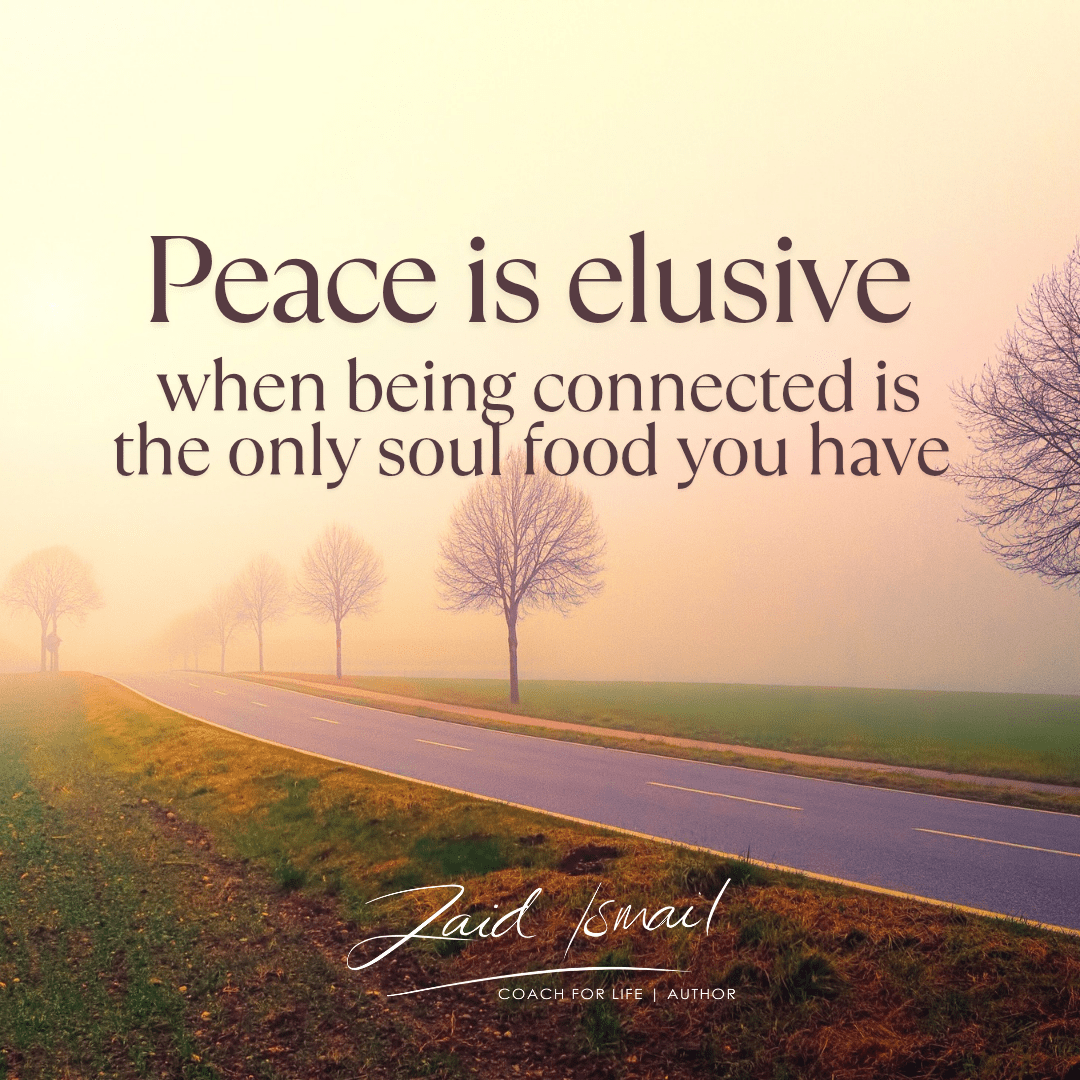
    Peace grows ever more elusive when connecting with others is the only soul food you have.

    They talk of dopamine and convince you that your emptiness or your fulfilment lies in chemical balances because they themselves lack the appreciation of sincere human connection.

    Appreciating the quiet moments becomes more difficult when we lose sight of the value of silence.

    The absence of clutter.

    The presence of endearing company.

    Finding peace in solitude is a gift, and a skill that appears to have been lost to the madness of this world.

    Take time to recede, to allow your very valid concerns and urgencies to suspend its calling for long enough to let the breath reach your soul.

    When last did you lose yourself in the gentle throb of your own pulse?

  • Raging into oblivion

    Raging into oblivion

    The rage that we hold within us feels like a justified protest or demand for justice or fairness from those around us.

    But rage is a master of distraction.

    It is born in moments of legitimate duress, but continues long after.

    The rage of being unheard in one moment leads to harshness when we feel misunderstood in a totally different moment.

    Rage is the intensity of our demand to be treated with significance or respect, while not realising that rage undermines both, our significance and the respect we need from others.

    Rage only ever achieves compliance from others while they may fear us in our moments of rage.

    The moment those around us no longer fear us, rage becomes a tool that destroys what we’re trying to achieve, and isolates us from the ones who we wish would see us more clearly.

    But we only rage because we don’t see ourselves clearly.

    And that’s the greatest distraction that rage offers us.

    It convinces us that we’re right and that everything that we see is wrong with others is good reason for us to rage.

    And in those moments, we lose our connection with reality and replace it with a focus on who is taking our pain seriously while not realising that we’re causing pain, leaving them to see nothing more than a brute rather than a hurt soul.

    Beyond the release of the anguish we hold within, rage offers no value at all in securing the peace or harmony that we want with those who matter to us.

    Don’t only try to restrain your rage.

    Instead, seek to understand why you feel that rage at all.

    Otherwise your rage will grow to define you while you may think it’s defining your battle cry to the world.

  • Feeling triggered?

    Feeling triggered?

    ⚠️ Trigger warning ⚠️ archive post.

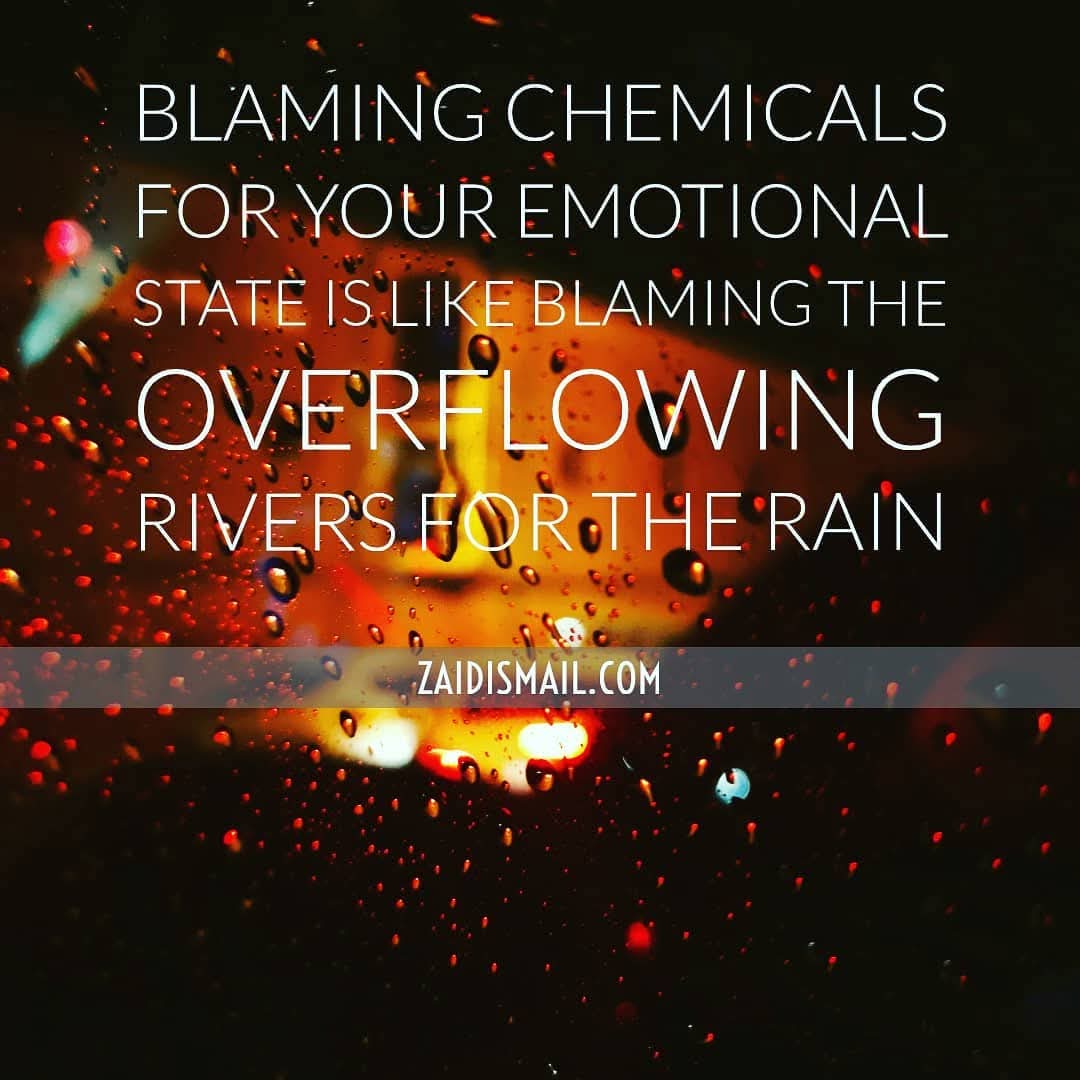
    Blaming chemicals for your emotional state is like blaming the overflowing rivers for the rain.

    Smile, and you generate feel good hormones even if you don’t have a good reason to smile.

    That’s science, not conjecture. If you don’t believe me, Google the science of a smile. And while you’re at it, Google neuroplasticity to see how your brain REACTS to new information and experiences, and does not create those perspectives.

    Don’t dehumanise the human experience by labelling it as an illness.

    Take back your agency by understanding why you may feel the way that you do.

    Stop judging yourself or others harshly for being human.

    I wish we’d realise that by defining the human experience as an illness, we effectively dehumanise the human experiencing it.

    Think about that the next time you convince yourself or others that their reasons for experiencing an intensity of emotions is due to chemicals and not because their life experiences and perspectives warrant such a reaction.

    It’s time to start understanding, instead of judging harshly, or abdicating responsibility for who we are.

    Every emotional experience has a legitimate basis within the context of our life.

    Whether we’re correct or incorrect about why we feel that way doesn’t change the fact that we, in our mind, have reason to feel that way.

    Understand that, connect the dots to your experiences, and suddenly an overwhelming emotion becomes a source of information to work with rather than to fear or to suppress it.

    Own your life before it owns you.


  • Your brain doesn’t have a mind of its own

    Your brain doesn’t have a mind of its own

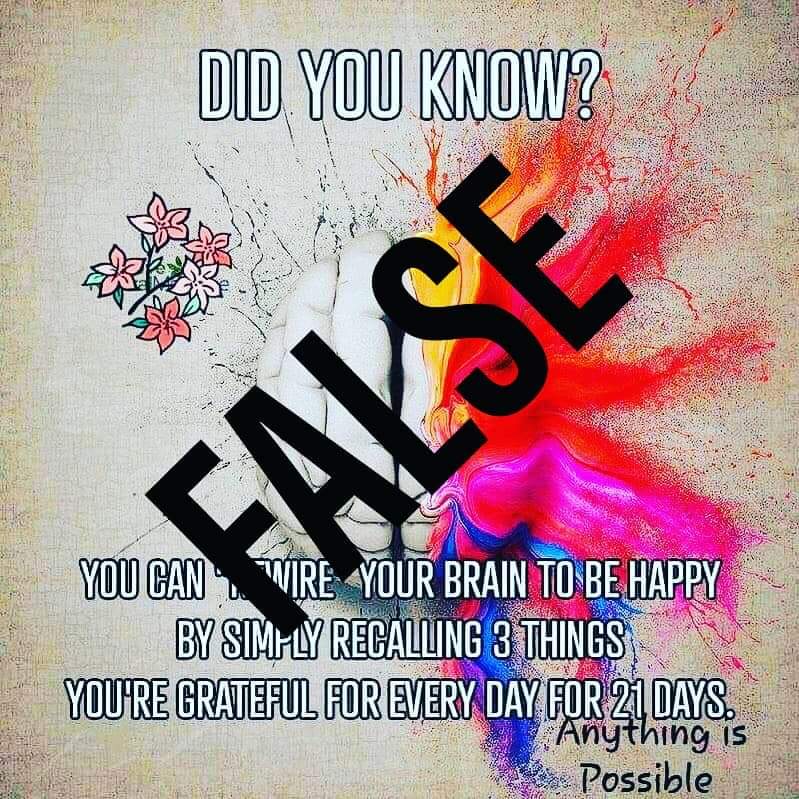
    This is a popular myth. People have been repeating selective truths to themselves for years without seeing a change in their circumstances. Our brains are rewired through experiences, and connecting our reality to the value of an outcome. It’s called neuroplasticity.

    For this reason, courage is needed to attempt something that we have not experienced before.

    Simply stated, we rewire our brains each time we learn something new, or do something new. It adds to our pot of knowledge that guides us through life.

    That’s why people that have tons of book knowledge still struggle to grasp reality.

    Life is about more than whispering affirmations to yourself in the mirror. It’s about action.

    By all means, have the conversation with yourself in the mirror. But, if it’s not followed with action, don’t expect your life to change.

  • You’re human. Be human.

    You’re human. Be human.

    We need to be careful with subscribing to a victim mindset.

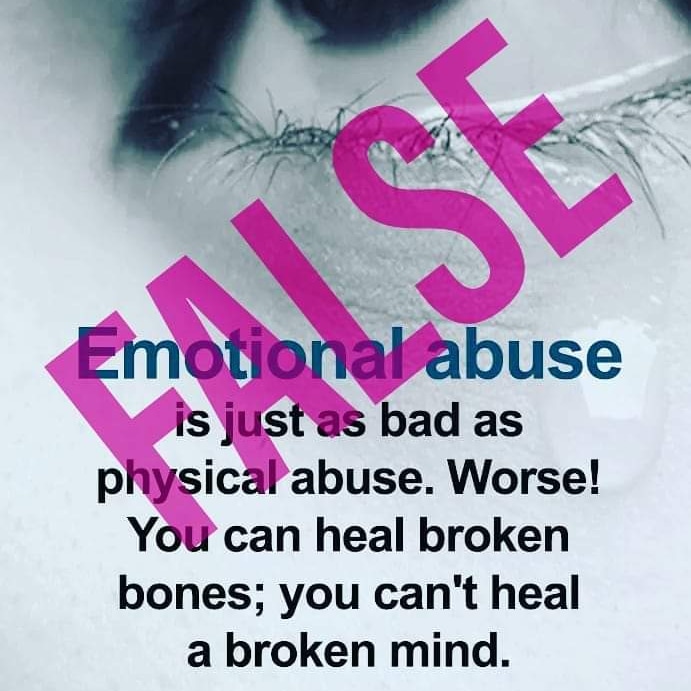
    Any form of abuse leaves emotional scars.

    But that doesn’t mean it breaks us.

    Nor does it mean that it’s impossible to heal from it.

    Don’t believe everything you read.

    No human is broken.

    And every mind can be healed.

    When we convince ourselves that we’re broken or that we can’t be healed, we create a self fulfilling prophecy, because what you set out to achieve is what you will achieve.

    Besides, it’s not the physical pain of physical abuse that sticks with us, it’s the mental and emotional anguish that it leaves that haunts us.

    Memes like the one above are well meaning, but they cause more harm to our mental health than they offer benefit or relief.

    Be careful what you take from the Internet.

    Good intentions have destroyed many lives.

    No matter how elaborate and sincere your effort at solving a problem may be, if you don’t understand the problem well enough, you will go about solving the wrong problem until you eventually convince yourself that the real problem cannot be solved.

    There is a solution for every problem except death. So if you’re not figuring it out, it means that you need more information and a fresh perspective of what you’re dealing with.

    Remember: No one is broken. No one is damaged. No one is beyond help. It takes a single moment of realisation to turn your entire world around.

  • Divinely obnoxious?

    Divinely obnoxious?

    Godliness is like humility. It is lost when we actively pursue it.

    Living by the doctrine to which you subscribe is infinitely more important than preaching it.

    People learn from how you treat them, not from how you chastise them.

    Judging the faith of another reveals the cracks in your self-worth more than it offers any revelation about the faith of another.

    When our self-worth is low, our association with divinity, religion, or other groups will be used to compensate for what we believe we lack in ourselves so that we may get the respect that we need.

    When we assume ourselves to be above those that behave worse than us, or those that disagree with us, we grow arrogant in our thinking and our ways, which directly opposes our efforts towards godliness, or piety.

    When we speak on behalf of the Almighty, we assume to have knowledge of the unseen because we believe ourselves to be devout enough in our practices and superior in our morals to claim such authority.

    Such pride and arrogance causes a decay in the soul that results in harshness, ingratitude, and rigidity, making it increasingly difficult to receive advice from sincere advisors.

    All this conflict within us results from a low self-worth, because when your self-worth is low, your life will be focused on compensating for that, rather than living purposefully or sincerely.

    Peace lies on the other side of gratitude, and gratitude is impossible if you lack awareness and appreciation for who you are, and who you want to be.

    That, right there, is the building blocks of self-worth.

    It always starts with you.

    rewards