The rage that we hold within us feels like a justified protest or demand for justice or fairness from those around us.
But rage is a master of distraction.
It is born in moments of legitimate duress, but continues long after.
The rage of being unheard in one moment leads to harshness when we feel misunderstood in a totally different moment.
Rage is the intensity of our demand to be treated with significance or respect, while not realising that rage undermines both, our significance and the respect we need from others.
Rage only ever achieves compliance from others while they may fear us in our moments of rage.
The moment those around us no longer fear us, rage becomes a tool that destroys what we’re trying to achieve, and isolates us from the ones who we wish would see us more clearly.
But we only rage because we don’t see ourselves clearly.
And that’s the greatest distraction that rage offers us.
It convinces us that we’re right and that everything that we see is wrong with others is good reason for us to rage.
And in those moments, we lose our connection with reality and replace it with a focus on who is taking our pain seriously while not realising that we’re causing pain, leaving them to see nothing more than a brute rather than a hurt soul.
Beyond the release of the anguish we hold within, rage offers no value at all in securing the peace or harmony that we want with those who matter to us.
Don’t only try to restrain your rage.
Instead, seek to understand why you feel that rage at all.
Otherwise your rage will grow to define you while you may think it’s defining your battle cry to the world.
#hope #expectation #sincerity #entitlement #gentleness #life #rage #anger #angermanagement #mindfulness #selfawareness #mentalhealth #mentalhealthawareness #mentalhealthrecovery #selfworth #herdmentality #wisdom #coachzaidismail #ownyourlife
Tag: herdmentality
-
Raging into oblivion
-

Your rage, your loss
If left unchecked, rage eventually clouds our judgement as we seek vengeance from anyone who reminds us of those who treated us badly in the past.
When you find a reason to rage at every assumed threat, peace becomes elusive and bitterness takes over.
Feeling enraged may be human, but acting on that rage is a choice.
Sometimes we get so caught up in our anger at the world that we lose sight of the fact that our anger feeds the very same cycles that we’ve grown to despise.
No one makes you angry.
Anger is your choice of response to someone else’s behaviour because of what they mean to you, or because of what their actions trigger within you, or both.
And that’s because of what you want to mean to them, but are failing at achieving it.
So your anger is your demand for significance when who you are is insufficient to achieve that significance.
Your anger and your triggers are your responsibility.
Making the world responsible for your emotional response to life gives everyone the power to control your behaviour.
If you can influence a positive change in how someone treats you, do it.
If not, walk away.
Insisting on rage after you’ve realised that you are unable to influence positive change is an indulgence of your ego and not a righteous protest.
Choose carefully who you want to be when someone treats you badly, or else you’ll lose yourself to become just like those whom you despise for treating you badly because your rage will cause you to become a source of oppression against those who have nothing to do with your feelings of inadequacy.
Don’t get angry.
It’s not worth it.
#hope #expectation #sincerity #entitlement #gentleness #life #rage #anger #angermanagement #mindfulness #selfawareness #mentalhealth #mentalhealthawareness #mentalhealthrecovery #selfworth #herdmentality #wisdom #lifecoaching #zaidismail #theegosystem #ownyourlife -
Repost: Judging to be safe
Judgement is not always harsh. But, judgement is always focused on an external standard that we think others respect.
Don’t under estimate how much this mindset causes problems in every sphere of our lives.
Before throwing in the towel on that relationship, reconnect you with the reasons that gave you hope in the first place, so that the distractions don’t leave you with regret later on.
External standards give us comfort because we don’t run the risk of making a bad decision by ourselves.
If things don’t go well, we can always say that everyone thought that it was the right thing to do.
More than this, when we live up to a standard that we know others respect, we automatically feel respected.
That way, we don’t have to go through the difficulty of earning respect by ourselves.
This mind set conditions us to judge right or wrong, good or bad, better or worse, rather than to seek understanding of why we, or others, may fall short.
This, more than anything else, undermines the quality of the relationships that we have with others, and especially with ourselves.
And remember, seeking to understand bad behaviour doesn’t mean we condone it. It just means that we have a better chance of addressing the reason for it, rather than responding to its symptoms.
Own Your Life.
It always starts with you.
#hope #expectation #sincerity #selfworth #selfawareness #mentalhealth #mentalhealthawareness #mentalhealthrecovery #socialacceptance #herdmentality #society #understanding #compassion #relationshipgoals #zaidismail #lifecoaching -
Where is your humanity?
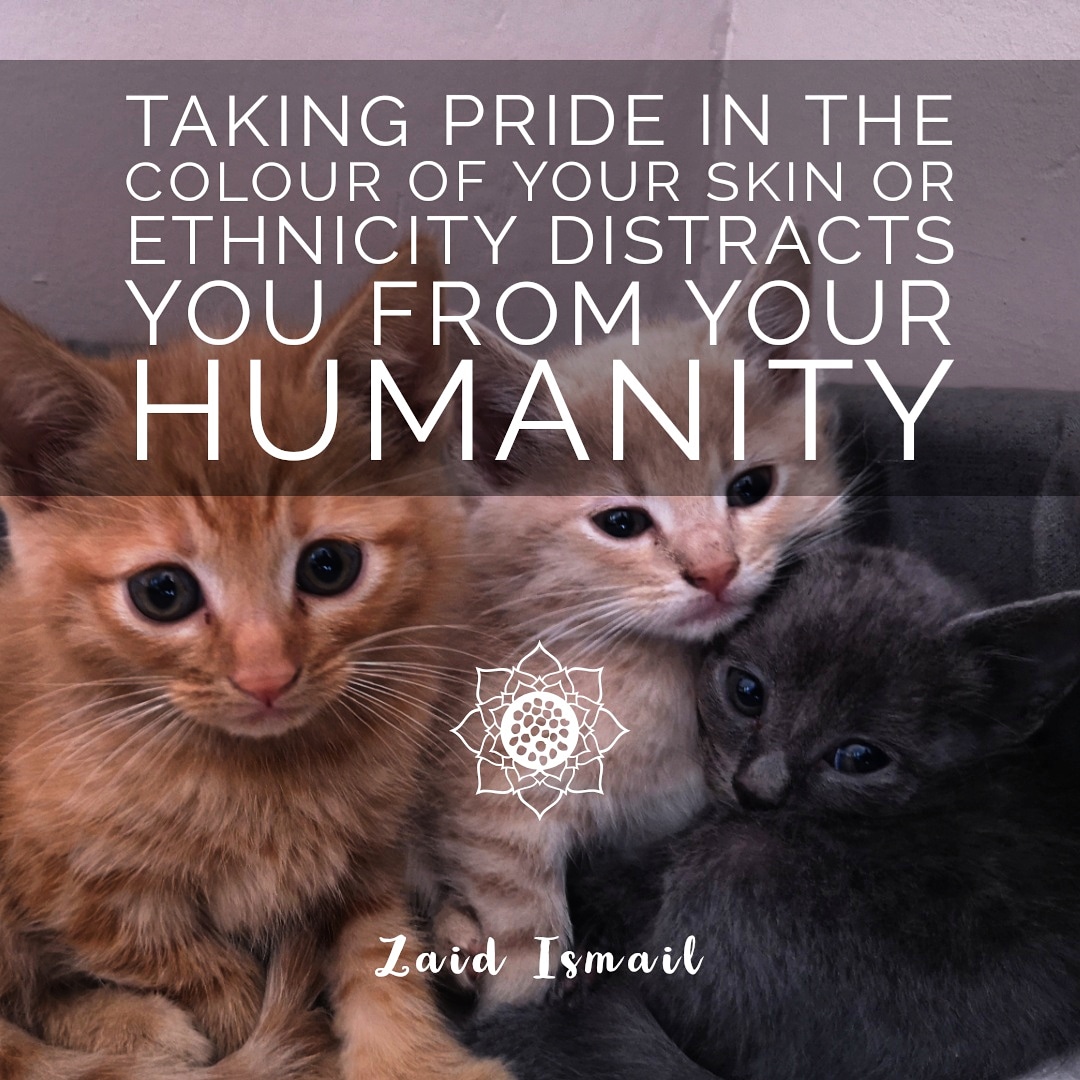
Taking pride in the colour of your skin or ethnicity distracts you from your humanity.
Our humanness, our gentleness, our inclination towards kindness – these are all part of our natural state.
We lose it when our need to be associated with significance or superiority distracts us from this, and replaces it with the fear of being inadequate.
When we lose sight of the fear of inadequacy, responding from a place of fear becomes our new normal.
Everything that threatens the source of our significance – that is, our skin colour, religion, cultural roots, etc. – then feels like a threat to our sense of self.
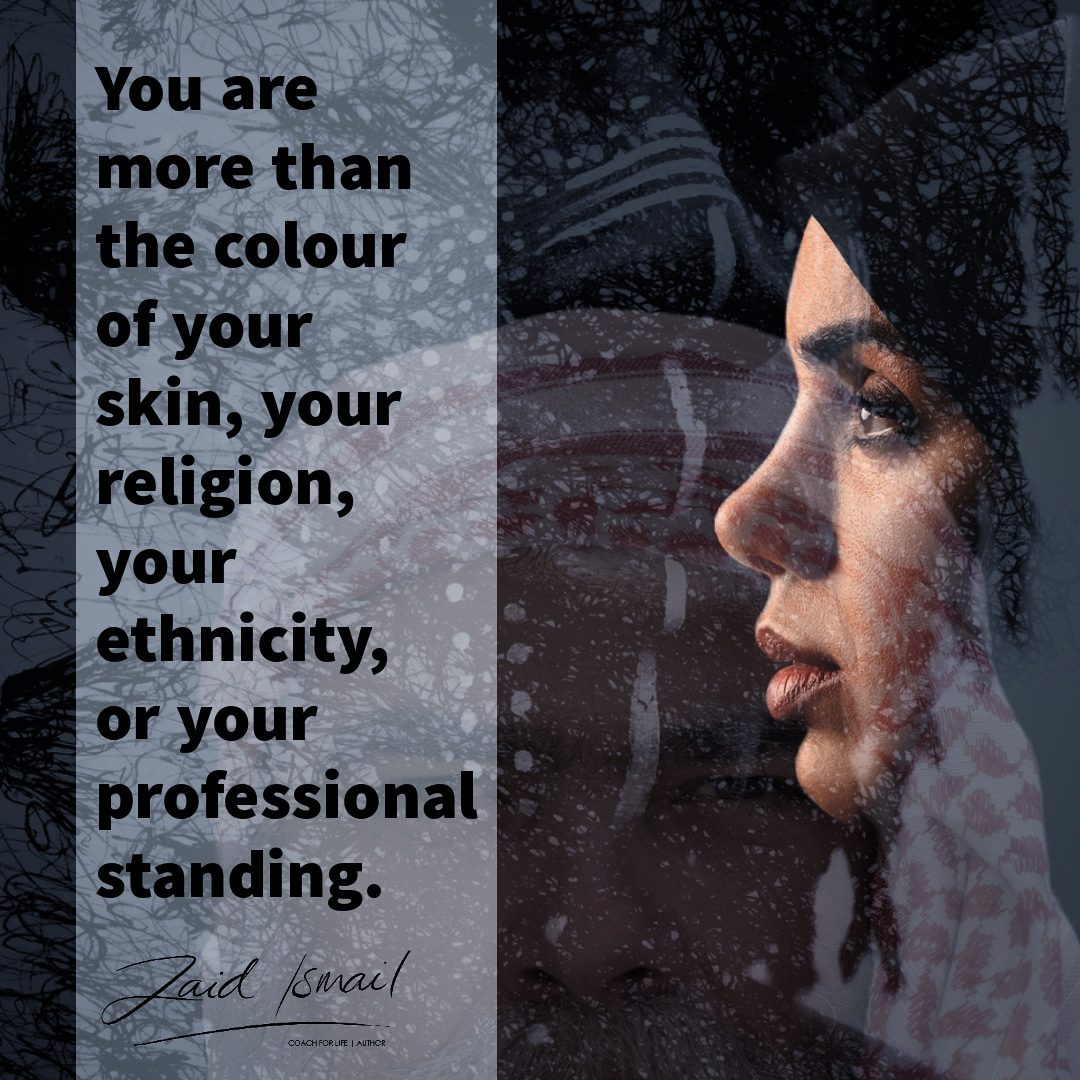
Thus, we feel the anger, resentment, or blind rage that rises when we are judged by the colour of our skin, our religion, our ethnicity, or any other association that makes us feel significant.
But, we grow convinced that we’re standing up for a good cause by protecting what we value, even though the way in which we protect it undermines the very essence of what we claim to stand for.
That’s when it becomes clear that we only stand for what we do because it offers us a place in this world through being associated with the cause.
It offers us significance and protects us from irrelevance.
That’s when we’ve traded who we are, for who we want to be perceived as, because we’re convinced that we are not enough.
Own Your Life.
It always starts with you.
#racism #colourism #religion #culture #prejudice #bigotry #socialacceptance #herdmentality #ownyourshit #ownyourlife #theegosystem #mentalhealth #mentalhealthawareness #mentalhealthrecovery #selfworth #selflove #selfawareness #selfrespect #mindfulness #inspiration #zaidismail -
Seek understanding. Always.
If you find yourself judging, more than understanding, you’re filled with fear about the future. Not hope.
Judgement is not always harsh. But, judgement is always focused on an external standard that we think others respect.
External standards give us comfort because we don’t run the risk of making a bad decision by ourselves. If things don’t go well, we can always say that everyone thought that it was the right thing to do.
More than this, when we live up to a standard that we know others respect, we automatically feel respected. That way, we don’t have to go through the difficulty of earning respect by ourselves.
This mind set conditions is to judge right or wrong, good or bad, better or worse, rather than to seek understanding of why we, or others, may fall short.
This, more than anything else, undermines the quality of the relationships that we have with others, and especially with ourselves.
And remember, seeking to understand bad behaviour doesn’t mean we condone it. It just means that we have a better chance of addressing the reason for it, rather than responding to its symptoms.
If this is something that you or someone close to you is struggling with, reach out. Let’s talk. A fulfilled life is more achievable than it may appear to be at present.
#hope #expectation #sincerity #selfworth #selfawareness #mentalhealth #mentalhealthawareness #mentalhealthrecovery #socialacceptance #herdmentality #society #understanding #compassion #relationshipgoals #zaidismail -
You are more than how you look
Taking pride in the colour of your skin or ethnicity distracts you from your humanity.
Our humanness, our gentleness, our inclination towards kindness – these are all part of our natural state.
It’s our need to be associated with significance or superiority that distracts us from this, and replaces it with the fear of being inadequate.
When we lose sight of the fear, responding from a place of fear becomes our new normal.
Everything that threatens the source of our significance – that is, our skin colour, religion, cultural roots, etc. – then feels like a threat to our sense of self.
Thus, we feel the anger, resentment, or blind rage that rises when we feel undermined because of the colour of our skin, or any other association that makes us feel significant.
In the absence of an awareness of who we are, it is inevitable that our external attributes will be all that feeds our self worth.
#racism #colourism #religion #culture #prejudice #bigotry #socialacceptance #herdmentality #ownyourshit #ownyourlife #theegosystem #mentalhealth #mentalhealthawareness #mentalhealthrecovery #selfworth #selflove #selfawareness #selfrespect #mindfulness #inspiration #zaidismail -
Blind rage
Sometimes we get so caught up in our anger at the world that we lose sight of the fact that our anger feeds the very same cycles that we’ve grown to despise.
Don’t get angry.
If you can influence positive change, do it. If not, walk away.
Insisting on rage after you’ve realised that you are unable to influence positive change is an indulgence of your ego and not a righteous protest.
It’s not worth it.
The rage within often blinds us from the oppression that we impose on others.
The rage starts to build up after we’ve experienced oppression at the hands of others, but if left unchecked, it eventually clouds our judgement as we seek vengeance from anyone that reminds us of those who treated us badly.
When you find a reason to rage at every assumed threat, peace becomes elusive and bitterness takes over.
Find a balance between righting the wrongs and inspiring others to rise above your own experiences, otherwise all you’ll be left with is rage and no fulfilment, nor peace in this lifetime.
#hope #expectation #sincerity #entitlement #gentleness #life #rage #anger #angermanagement #mindfulness #selfawareness #mentalhealth #mentalhealthawareness #mentalhealthrecovery #selfworth #herdmentality #wisdom