You know that old adage about ‘practice what you preach’?
At some point someone replaced it with ‘those who can’t do, coach’.
And the world has been worse off since then.
Yes, I know I identify as a coach, but it would be opportunistic of me to ignore the large number of charlatans using the profession to project their world view on others.
Too many people are ready to tell the world how to be better, but only so many who try to be better than they were the day before.
Authenticity is not about the spoken word, it’s about action.
Everyone has a nugget of wisdom to throw around, but only so many have the conviction to give it life.
Most often, people already know what they need to change about their lives to be in a better space, but their lack of understanding in how they may be counter productive in their efforts is what holds them back.
So when you tell them what to change, you’re effectively making them dependent on you for solutions rather than improving their understanding of how life works.
Good intentions are never enough.
Understanding the effectiveness of the methods that we adopt is what determines how successful we are at creating the life that we want.
And because you don’t know what you don’t know, it becomes that much more important to choose your advisors carefully or else you risk getting advice that makes you feel better about your contribution towards the struggles of your life while blaming others for it.
Are you sure you’re choosing advisors to help you grow, or do your advisors make you feel better about your faults?
Don’t just preach your philosophy about life, live it.
#hope #expectation #sincerity #selfworth #change #embracingchange #livingchange #influence #inspiration #integrity #authenticity #mentalhealth #mentalhealthawareness #mentalhealthrecovery #egosystem #lifecoaching #lifegoals #ownyourlife #coachzaidismail
Tag: authenticity
-
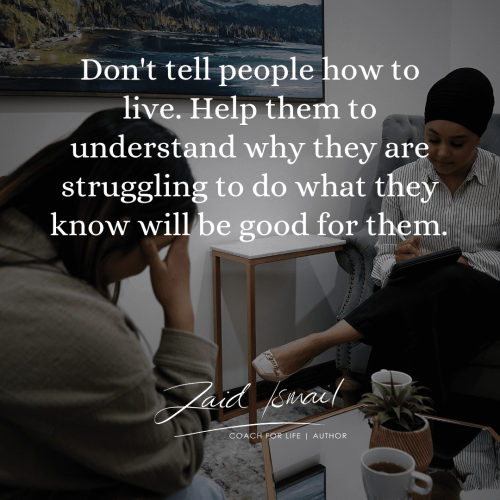
Does your therapist stroke your ego?
-

Forgiveness without understanding is virtue signalling
If there is one piece of advice that will help you through the worst of times, this is it.
Internalise this, connect with it, make it your mantra if you must, but understand that forgiveness on its own, without acceptance, will leave you yearning for retribution or justice.
More than this, acceptance is only wishful thinking if not accompanied by understanding.
We need to understand the motives behind someone’s betrayal of trust, or their indiscretion, or even their neglect of what is important to us or else we’re left with believing that it was intentional towards us.
Most often, we treat others badly because of our demons that are provoked by what they need from us.
Even if we’re justified in treating them that way because of how they treated us, tit-for-tat is an indulgence of the ego and not an investment in rising above that which weighs us down.
Understanding doesn’t mean condoning, justifying, or defending bad behaviour. It simply lifts the burden of not knowing so that making peace with the experience becomes possible.
By seeking understanding, we immediately shift our focus to what they were struggling with rather than grappling with our lack of significance to them.
It is only through such understanding that we learn to accept that people’s actions are a reflection of who they are more than it is about what we mean to them.
And while we’re contemplating all this about others, we need to reflect on our own bad behaviour within the same context or else we will inevitably become like those whom we judge.
Judge less. Understand more.
Peace is within reach.
Otherwise bitterness will be your friend until you meet your end.
#forgiveness #acceptance #struggles #weakness #selfworth #selfawareness #pardon #dignity #sincerity #authenticity #mentalhealth #mentalhealthawareness #mentalhealthrecovery #ownyourlife #coachzaidismail -
Divinely obnoxious?
Godliness is like humility. It is lost when we actively pursue it.
Living by the doctrine to which you subscribe is infinitely more important than preaching it.
People learn from how you treat them, not from how you chastise them.
Judging the faith of another reveals the cracks in your self-worth more than it offers any revelation about the faith of another.
When our self-worth is low, our association with divinity, religion, or other groups will be used to compensate for what we believe we lack in ourselves so that we may get the respect that we need.
When we assume ourselves to be above those that behave worse than us, or those that disagree with us, we grow arrogant in our thinking and our ways, which directly opposes our efforts towards godliness, or piety.
When we speak on behalf of the Almighty, we assume to have knowledge of the unseen because we believe ourselves to be devout enough in our practices and superior in our morals to claim such authority.
Such pride and arrogance causes a decay in the soul that results in harshness, ingratitude, and rigidity, making it increasingly difficult to receive advice from sincere advisors.
All this conflict within us results from a low self-worth, because when your self-worth is low, your life will be focused on compensating for that, rather than living purposefully or sincerely.
Peace lies on the other side of gratitude, and gratitude is impossible if you lack awareness and appreciation for who you are, and who you want to be.
That, right there, is the building blocks of self-worth.
It always starts with you.
#compassion #sincerity #authenticity #mentalhealth #mentalhealthawareness #mentalhealthrecovery #selfworth #selflove #selfawareness #selfrespect #mindfulness #inspiration #ownyourlife #theegosystem #forgiveness rewards #lifecoaching #zaidismail -
Own your own life first
The causes that we’re afraid to fight in our own lives, we fight through proxy in someone else’s life.
When we lack the conviction to apply ourselves to full effect in our own lives, we pacify our conscience by coming to the aid of those whose struggles offer an opportunity for us to find significance in ways that are lacking in our own lives.
Our efforts may appear noble or sincere, and we may even believe that we’re pursuing a noble or sincere cause, but nobility or sincerity cannot be measured in the absence of authenticity.
Authenticity demands that we conduct ourselves in our own lives consistent with how we conduct ourselves in the lives of others.
When such consistency is lacking, authenticity is eroded, and our insecurities grow to define our sense of justice and righteousness.
Thus, the victim mindset causes new problems while believing that we’re solving existing ones.
Any problem left unresolved only grows in complexity and intensity, slowly festering until it becomes intolerable or unavoidable.
At that point, it overwhelms us to the point of hopelessness, giving way to depression, anxiety, and unexplainable fatigue, including chronic illness.
The victim mindset causes more problems than the problems it solves.
It undermines our credibility, while diminishing the significance of those around us.
When we lack the courage to meaningfully tackle the problems in our own lives, we lack the self-worth to hold ourselves accountable for what we claim to stand for.
It always starts with what we think about ourselves long before we formulate any opinions of what we think of others.
Reflect and connect with the resolve that you have for taking action in your own life before you set out to change the world for others.
If there is a difference in how you show up between those two domains of life, you have a crisis of authenticity about who you are.
It always starts with you.
#hope #expectation #sincerity #selfworth #selfawareness #mentalhealth #mentalhealthawareness #lifecoaching #zaidismail #theegosystem #ownyourlife #victimmindset #mindfulness #authenticity -
Gratitude is not appreciation
Gratitude speaks more to our soul than any gift or trinket, or whispers of endearment.
Gratitude is impossible without respect,
and respect is impossible without honesty,
and honesty is impossible without sincerity,
and sincerity is impossible without self-respect,
and self-respect is impossible without conviction,
and conviction is impossible without self-worth…
And so it continues until we realise that expecting gratitude or appreciation from someone that lacks any of these fundamental traits in their character is an exercise in futility.
We cannot give what we don’t have.
Therefore, if we’re falling short in any of the attributes that lead to gratitude, the most we’ll be capable of is appreciation.
And appreciation is not the same as gratitude.
Appreciation is simply the acknowledgment of a blessing or benefit.
Gratitude is reflected in what you do with that blessing or benefit that you claim to appreciate.
It’s like appreciating the fact that you have a job, but putting in only as much effort as is needed to meet your boss’s expectations so that you don’t get fired.
Or appreciating that you have a car, but not maintaining it or using it in a way that reflects gratitude for the value that it creates in your life.
You can have the world to be grateful for, but no one can insert gratitude into your heart.
Gratitude is therefore not what we journal about, or what we praise or acknowledge.
Gratitude is showing up in a way that does justice to the ability we have to show up.
Gratitude is about not living life in half measures, or compromising what we stand for from fear of exclusion or rejection.
Gratitude, if nothing else, is at the heart of peace and contentment, because it connects us purposefully with who we are and what we are capable of, regardless of what others see or don’t see in us.
We can therefore not be grateful of others if we lack gratitude for ourselves.
It always starts with you.
#gratitude #appreciation #happiness #hope #sincerity #honesty #integrity #authenticity #selfworth #selfawareness #mentalhealth #mentalhealthawareness #lifecoaching #zaidismail #ownyourlife #theegosystem -
The arrogance spawned by fear
Fear causes us to fixate on our intentions, while defending the bad behaviour that such fear spawns.
The fear is most often associated with what we think is under threat, or that others won’t understand.
So we begin preempting what they intend towards us, or what threats they present to what we want for ourselves.
When we are driven by fear, we focus on finding all the evidence that validates our fear, and we subsequently ignore all the evidence that proves us wrong.
Because we don’t want to be wrong.
Because being wrong adds to the fear of not achieving our goals.
So we become defensive, aggressive, abrasive, arrogant, rebellious, and more in our efforts to protect what we assume to be under threat.
And in the process, we turn friends into enemies, and supporters into demons.
And when the intensity of the fear passes, or when we achieve our goal at any cost, we expect others to accept our good intentions without accepting accountability for the impact of our fear-driven behaviour on them.
That’s how we diminish the impact of the harm that we cause, when we fixate on our intentions and treat our fear-based assumptions as facts.
And that’s how we become a source of abuse towards others while we are convinced that we were victims of their lack of understanding.
That’s how arrogance is nurtured, and important relationships destroyed.
It always starts with you.
Own Your Life.
#selfworth #selfawareness #ownyourlife #theegosystem #mentalhealth #mentalhealthawareness #lifecoaching #zaidismail #gratitude #relationshipgoals #authenticity -
The demon of self-loathing
We cannot give what we don’t have.
This is a simple truth that cannot be denied.
When we realise what this means for the behaviour that we display towards others, we’ll realise what it says about how we feel about ourselves.
When we take ourselves for granted, we feel entitled to what others do for us out of sincerity on their part, and not obligation.
When we believe we’re unworthy, we’ll treat others as if they need to earn our favour or be grateful for us making time for them.
When we are ungrateful for who we are, we’ll find it impossible to connect with true appreciation for what we have or what we receive.
And so it goes.
But, we always need to remain significant or relevant, because being invisible is the worst feeling ever.
So we develop elaborate coping mechanisms through personality traits and mannerisms that endear us towards others.
Those who don’t see our self-loathing become our targets for ‘niceness’, while those who push us to be sincere and authentic are viewed as enemies.
All because we carry a shame within us about ourselves that they remind us of, so we demonise them while convincing ourselves that those who don’t call us out on our bad ways, or don’t see beyond the facade that we’ve created, are in fact our sincere advisors and friends.
Self-worth is never about what others think of you. That’s why it’s called SELF-worth.
It’s about what you think of yourself.
It always starts with you.
And when you blame others for how you feel about yourself, you create even more distance between who you are and who you want to be.
#ownyourlife #theegosystem #mentalhealth #mentalhealthawareness #lifecoaching #zaidismail #selfworth #selfawareness #selfrespect #authenticity #sincerity -
Do you matter to you?
To be of consequence, or to feel significant, lies at the heart of our inspiration to accomplish anything.
When we connect with conviction to the significance of who we are, and what value we add to the lives of others, we achieve a sense of peace and contentment.
But, when we doubt this, we set out in search of validation through observing how others respond to our efforts to improve their lives. To make them happy.
If we’re fortunate, we’ll find ourselves surrounded by those who willingly and sincerely acknowledge our contribution and our place in their lives.
If we aren’t fortunate enough to have such people around us, we’ll lose ourselves in our efforts to be enough for them, without realising that they’re also not enough for themselves.
It’s an empty cup trying to fill a broken one, where the one who is giving is depleted, and the one receiving is distracted by their own demons.
Chronic illnesses set in, accompanied by rage that is often directed at the self, because we didn’t realise the value of who we are, while hoping to be validated by those who were distracted by their own self-loathing.
Thus, the joys of life are traded for servitude and a living martyrdom, hanging onto faith by a feeble thread, praying that our sacrifices and self-deprecation will be rewarded with everlasting peace when this harsh reality finally ends.
That’s how we harm ourselves long before we allow anyone else to harm us.
Worse still, we forget that through self-loathing, we withhold the best of who we are for the innocents around us, and end up giving them reason to believe that they were never good enough to bring out the best in us either.
That’s how generational trauma is passed down.
It’s not because of what was done to us, but rather because of how we see ourselves through the eyes
of those for whom we were never enough.
#selfworth #significance #conviction #dreams #sincerity #authenticity #mentalhealth #mentalhealthawareness #mentalhealthrecovery #theegosystem #mindfulness #lifecoaching #zaidismail