The victim mindset wreaks the most destruction and creates the worst of oppressors.
The victim mindset is established when we find ourselves nursing wounds of experiences and betrayals that have long since passed.
The victim mindset is nurtured when we are emotionally impacted by the behaviour of those who play no meaningful role in our life.
The victim mindset becomes more deeply entrenched when we expect others to make up for our experiences from long before we ever knew them.
The victim mindset is the most debilitating, demoralising, and destructive mindset of them all because it takes offence from being challenged, insult from observation, or feels attacked when advised.
The victim mindset is set firmly on the belief that we are defined by how others treat us, or treated us.
The victim mindset denies us the mindfulness and accountability needed to own our life because we’re waiting for our perceived injustices to be remedied before we allow ourselves to move on.
The victim mindset confuses meaningful action with blind rage.
The victim mindset destroys, but never creates anything of benefit.
The victim mindset wastes away life while lamenting the past.
The victim mindset is a corruption of the soul that fails to separate the moment of being a victim with what we hold onto from the experience long after the experience has passed.
While we’re caught up in that victim mindset, we lose sight of how many around us become victims of our rage, our neglect, our self-consumed approach to life, and our abdication of responsibility in how we’re supposed to show up for them.
The victim mindset therefore spawns more victims, and the only way to rise above it is to own it and want to be more than that.
When you claim your rights before you honour your responsibilities, you’re in a victim state of mind, and you cause oppression while using your feeling of oppression to justify your behaviour.
It always starts with you.
#hope #expectation #sincerity #selfworth #selfawareness #mentalhealth #mentalhealthawareness #lifecoaching #zaidismail #theegosystem #ownyourlife #victimmindset #narcissism #narcissisticabuse
Tag: victimmindset
-

You are your own worst victim
-

Do you truly respect yourself?
One of the most important questions you could ever ask yourself in any situation is, ‘Who do you want to be?’
Life is quickly defined or tainted by who we think others deserve us to be.
We start out believing, often with good reason, that we need to be a certain way so that we don’t enable or encourage others to treat us badly, or to take us for granted.
That’s when we lose ourselves to the assumptions of what we think others think of us, and along with it we lose our self-respect.
Self-respect must be measured in the same way as what we use to determine if we are respected by others.
If someone treats us in a way that lacks consideration for who we are, if they break their promises to us, if they lie or avoid accountability for what they do to us, or how they affect us, we feel disrespected by them.
Why then do we not feel as if we’re disrespecting ourselves when we treat ourselves in similar or worse ways?
It’s easy to blame others for our reaction of for not following through on commitments that we make to ourselves.
But we need to realise that when we do that, we’re effectively giving up who we are for how we need them to treat us.
That’s what happens when we assume that how others treat us is a reflection of who we are, rather than it being a reflection of what they’re dealing with within themselves.
That’s how life gets complicated, and withholding who we are begins to appear as a needed defence against being treated badly.
Before you go demanding respect from others, consider what it means for your self-respect if you believe that demanding respect is an effective way to be respected.
When you demand respect, you only receive good manners or compliance. Not respect.
Because the one who is disrespectful is only giving what they have.
Have you got enough self-respect to treat others with respect regardless of whether they deserve it, or have you traded your self-respect for anger and self-loathing without realising it?
#selfworth #selfawareness #mentalhealth #mentalhealthawareness #lifecoaching #zaidismail #theegosystem #ownyourlife #victimmindset #mindfulness -
Own your own life first
The causes that we’re afraid to fight in our own lives, we fight through proxy in someone else’s life.
When we lack the conviction to apply ourselves to full effect in our own lives, we pacify our conscience by coming to the aid of those whose struggles offer an opportunity for us to find significance in ways that are lacking in our own lives.
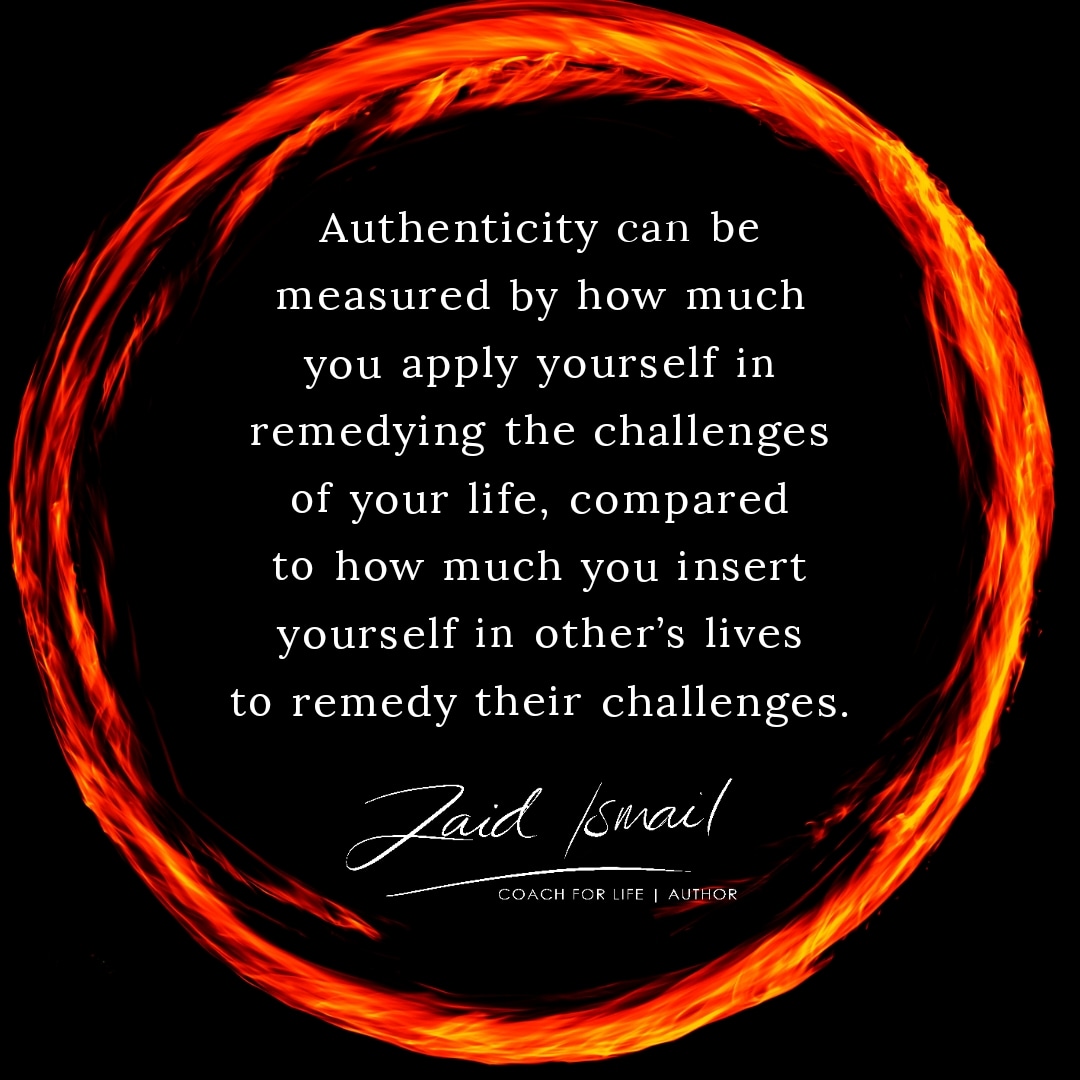
Our efforts may appear noble or sincere, and we may even believe that we’re pursuing a noble or sincere cause, but nobility or sincerity cannot be measured in the absence of authenticity.
Authenticity demands that we conduct ourselves in our own lives consistent with how we conduct ourselves in the lives of others.
When such consistency is lacking, authenticity is eroded, and our insecurities grow to define our sense of justice and righteousness.
Thus, the victim mindset causes new problems while believing that we’re solving existing ones.
Any problem left unresolved only grows in complexity and intensity, slowly festering until it becomes intolerable or unavoidable.
At that point, it overwhelms us to the point of hopelessness, giving way to depression, anxiety, and unexplainable fatigue, including chronic illness.
The victim mindset causes more problems than the problems it solves.
It undermines our credibility, while diminishing the significance of those around us.
When we lack the courage to meaningfully tackle the problems in our own lives, we lack the self-worth to hold ourselves accountable for what we claim to stand for.
It always starts with what we think about ourselves long before we formulate any opinions of what we think of others.
Reflect and connect with the resolve that you have for taking action in your own life before you set out to change the world for others.
If there is a difference in how you show up between those two domains of life, you have a crisis of authenticity about who you are.
It always starts with you.
#hope #expectation #sincerity #selfworth #selfawareness #mentalhealth #mentalhealthawareness #lifecoaching #zaidismail #theegosystem #ownyourlife #victimmindset #mindfulness #authenticity -
Your dignity is yours to claim
Did you notice how some people, when faced with soul destroying realities, are still dignified in how they rise above it.
If you wait for your aggressor or abuser to treat you with dignity before you find reason to respect yourself, you’re doing life back to front.
Expecting recognition of your humanness from the world is like expecting your tormentor to become your mentor.
It’s irrational.
Dignity is not bestowed, it is claimed!
It is undignified to ask to be treated with dignity because that means that your dignity is dependent on how others treat you.
It means that it’s dependent on others agreeing that you’re deserving of dignity.
You either maintain your dignity in the face of them being undignified towards you, or you trade your dignity for inclusion or validation.
However, be sure that you’re offering what you’re demanding from others.
Expecting people to treat you with respect and dignity while you treat them harshly or dismissively is hypocrisy, and hypocrisy is the opposite of dignity.
As always, you cannot give what you don’t have.
If you lack self-respect, you’re likely to demand respect from others so that you can feel better about yourself, while ignoring the fact that you not only treat others with disrespect, but you also treat yourself the same way.
If you lack mindfulness of who you are in moments when your patience is tested, you’ll feel compelled to respond the way that you think they deserve, rather than being able to consciously choose who you want to be in that moment.
It always starts with you.
#selfworth #selflove #selfawareness #selfrespect #reflection #mindfulness #dignity #decency #victimmindset #selfmastery #mentalhealth #mentalhealthawareness mentalhealthrecovery #ownyourlife #theegosystem #lifecoaching #zaidismail -
The death of critical thinkers
Critical thinking is lost when we strive to belong at all costs.
When our need for inclusion overwhelms our objectivity, we give up what we stand for in favour of what the group stands for.
If that group is driven by a collective victim mindset, we’ll buy into it while finding strength in being around others who share our struggle for significance.
The more their views resonate with our emotional needs, the more the pervasive ignorance that drives their behaviour will appear as collective wisdom to us.
The only antidote to such sways of emotion is to have a healthy self esteem.
A healthy self esteem is developed when we hold ourselves accountable for what we stand for, rather than reassuring ourselves that we’re correct because others agree with us.
But that means that our need to stand up for what we believe in is grounded in a value system that we consciously subscribe to, and not one that we blindly inherited because we found our predecessors doing it that way.
And that is where critical thinking is either adopted or abandoned.
When we’re faced with honouring traditions that have long since outgrown our reality, or honouring customs that were developed out of ignorance and are now harmful to the progress of society, we become blind followers who create harm while having good intentions.
Our value system must be grounded in something greater than our opinion of how life works, or what celebrated individuals may think.
It must be grounded in a credible source that is above reproach not because we’re not allowed to question it, but because when scrutinised for credibility, it withstands the test of integrity.
The greatest threat to mankind is the absence of critical thinking, because it places the accountability of the individual in the hands of leaders who may be driven by selfish goals.
Thus, society is corrupted, and religion becomes a tool for control rather than harmonious social bonds.
The greatest gift that you can give to this world is to raise a critical thinker, not a blind follower.
#selfworth #selfawareness #mentalhealth #mentalhealthawareness #lifecoaching #zaidismail #theegosystem #ownyourlife #criticalthinking #victimmindset -
Master patience
Remembering to hold on to hope, and to abandon my expectations of others has always been my saving grace for my sanity and my dignity.
Expectations, whether legitimate or not, are rooted in a sense of entitlement to receive what we need from others.
Expectations are key to a healthy relationship, because when we can trust another to fulfil our expectations from them, it nurtures the bond that exists between us. Provided, of course, that such trust is mutual.
However, if we’re not aware of our level of expectation and why we want it to be fulfilled by that specific other, we’ll become distracted by the feelings of betrayal should they fall short of our expectations.
Worse still, when we’re unaware of the level of expectations that we have from those who are not in our circle of significant others, every acquaintance and every stranger is given power over our emotional state.
Their failure to live up to our expectations feels like betrayal because entitlement is that unwritten social contract that convinces us that we deserve something from another, even if they may not be aware of it.
If the relationship is important, switch to hope and continue to contribute as best as you can. Hope is grounded in the belief that they are capable of being better than who they are in that moment, but understanding that whatever is troubling or distracting them is what they need to first rise above before they can show up the way that we want them to.
Expectations, and entitlement, is reflective of our needs, which when fulfilled, convinces us that we’re significant. Hence the anger or bitterness, or depression that sets in when our expectations are frequently taken for granted, making patience difficult to muster.
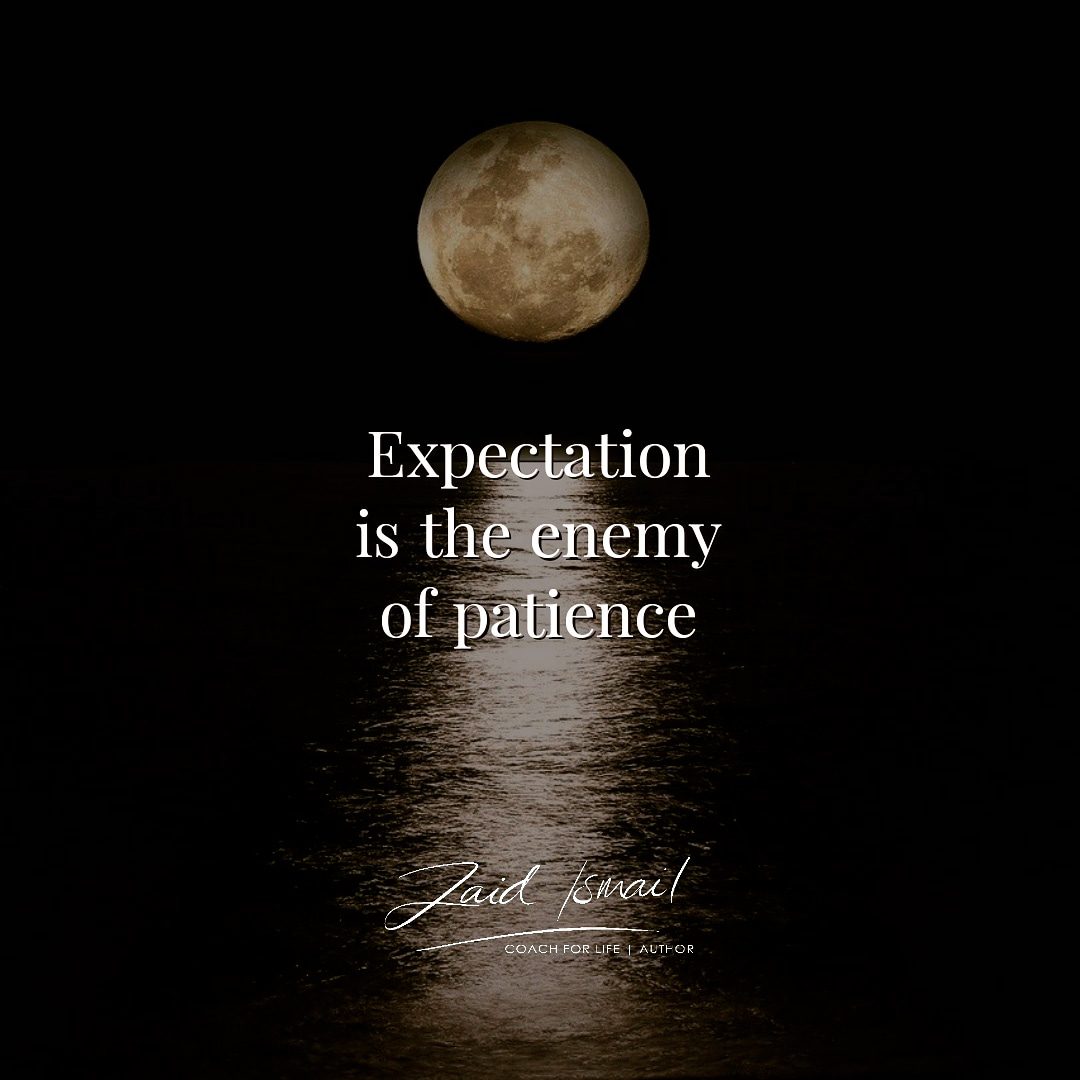
Hope is the nourishment of patience, while expectation is the enemy of patience. So when you find yourself being impatient, check your expectations and consider embracing hope instead.
Photo credit : Adobe Stock
#hope #expectation #sincerity #selfworth #selfawareness #mentalhealth #mentalhealthawareness #mentalhealthrecovery #theegosystem #ownyourlife #ownyourshit #embracingME #zaidismail #victimmindset #lifecoaching #counselling #coachforlife -
Perspective rules
Perspective defines our reality.
Taking the worst from an experience doesn’t diminish the good that it contains. It simply denies us the benefit that is waiting to be experienced.
The opposite being true too. Focusing on the benefit reduces the impact of the bad that we experienced.
Maintaining a healthy balance between the two keeps us grounded. Going to either extreme leaves us flighty and whimsical, or burdened and morbid about the future.
Moderation is key, and maintaining a practical perspective rather than one influenced by fear significantly reduces the stress that we experience in life.
Photo credit : Adobe Stock
#selfworth #selfawareness #mentalhealth #mentalhealthawareness #mentalhealthrecovery #stress #lockdown #ownyourshit #ownyourlife #theegosystem #embracingME #zaidismail #victimmindset #optimism -
It’s not always about you
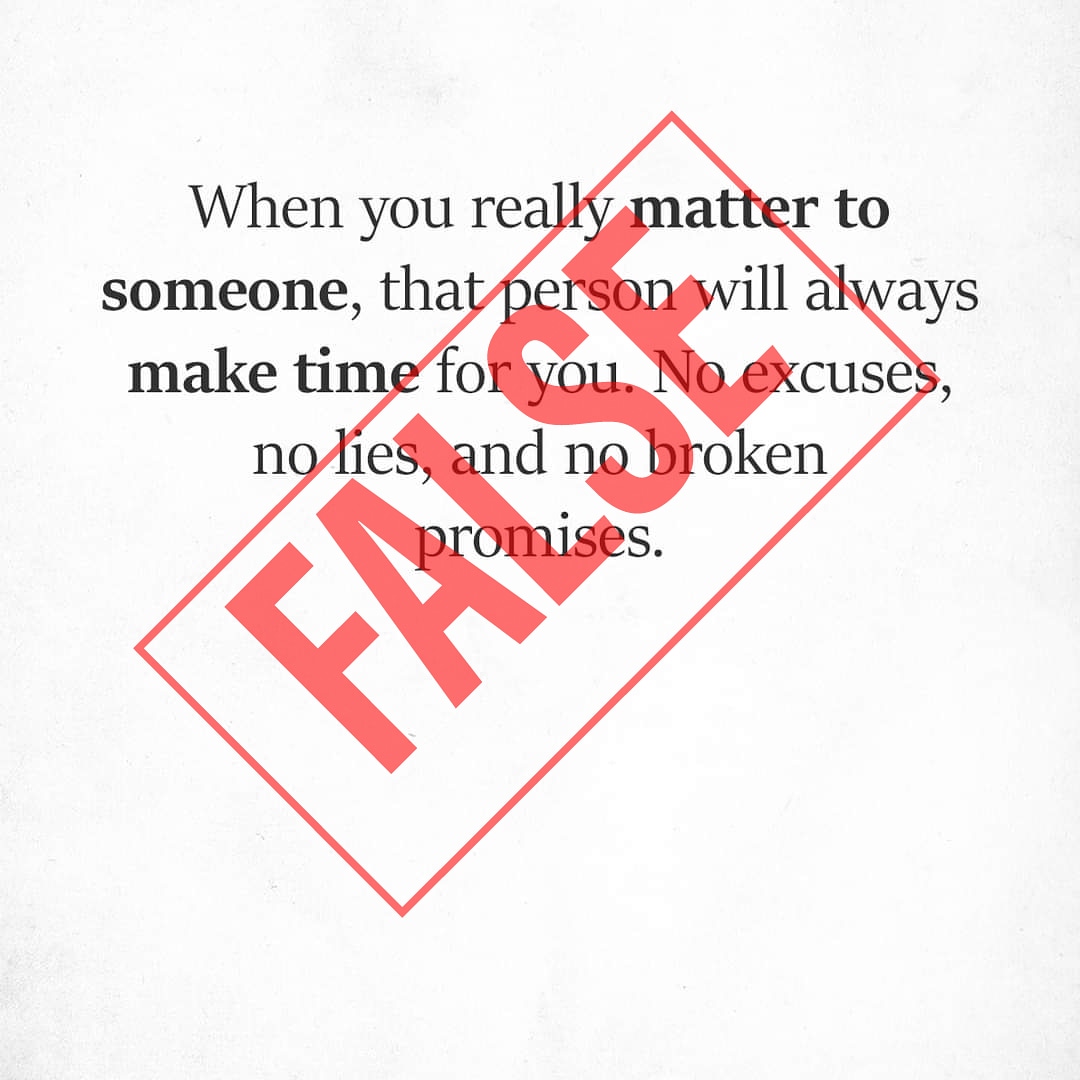
The truth is, if you want to matter that much to someone else, shouldn’t they matter equally as much to you?
If they do, and you find that they don’t have as much time for you as they used to, or are behaving differently to what you know them to be about, do you claim your privilege to be treated better than that, or do you show sincere concern for what they may be dealing with?
Busting mental health myths is essential to break the cycle that feeds toxic victim mindsets.
The problem with this meme is that is encourages self-centered perspectives and denies the struggles that someone else may be going through.
Sometimes the ones we love may be so overwhelmed by what they’re going through that withdrawal from the world is the only way that they believe they can cope.
It’s not about how much you may want them to lean on you, or take comfort from you. Sometimes, their battle with themselves drives them to want to protect others from the impact that it is having on them.
Don’t be so quick to write people off. When you do that, you lose the right to ask others to give you the benefit of the doubt when you’re going through a struggle that no one else understands.
Sacrificing what you need in favour of understanding someone you love, is sometimes the greatest gift of love you could give anyone. Even if they don’t realise it at the time.
It’s about what you want to gift to them, not what you need from them that matters.
#love #loveyourself #relationshipgoals #companionship #soulmates #mybeloved #zaidismail #victimmindset
#victimmentality #mentalhealth #mentalhealthawareness #mentalhealthrecovery #theegosystem #ownyourlife #ownyourshit #embracingME