True misery doesn’t love company.
It decays the soul in silence.
When someone is complaining, it’s because they still have hope that someone cares enough to listen or respond.
Or even to empathise.
When they give up on these three things, they go silent because they have grown to accept that no one else cares, or understands the state that they’re in.
Too often we see their silence and assume it to be acceptance of their struggles or challenges, meanwhile it often symbolises the slow death of dreams, hopes, and ultimately, a life.
Silence is the silent killer, more than rage.
Listen with both ears and your heart.
Pay attention to the silent ones.
Your noise of ingratitude may just be drowning out their silence of pain.
Find the balance between living loud and loving sincerely.
The one without the other will smother people closest to you.
#silence #death #depression #hope #dignity #dreams #fears #mentalhealth #mentalhealthawareness #mentalhealthrecovery #selfworth #selflove #selfawareness #selfrespect #reflection #mindfulness #validation #affection #affirmation #egosystem #gratitude
Tag: affirmation
-

The silent ones
-

A healthy self esteem is the greatest gift
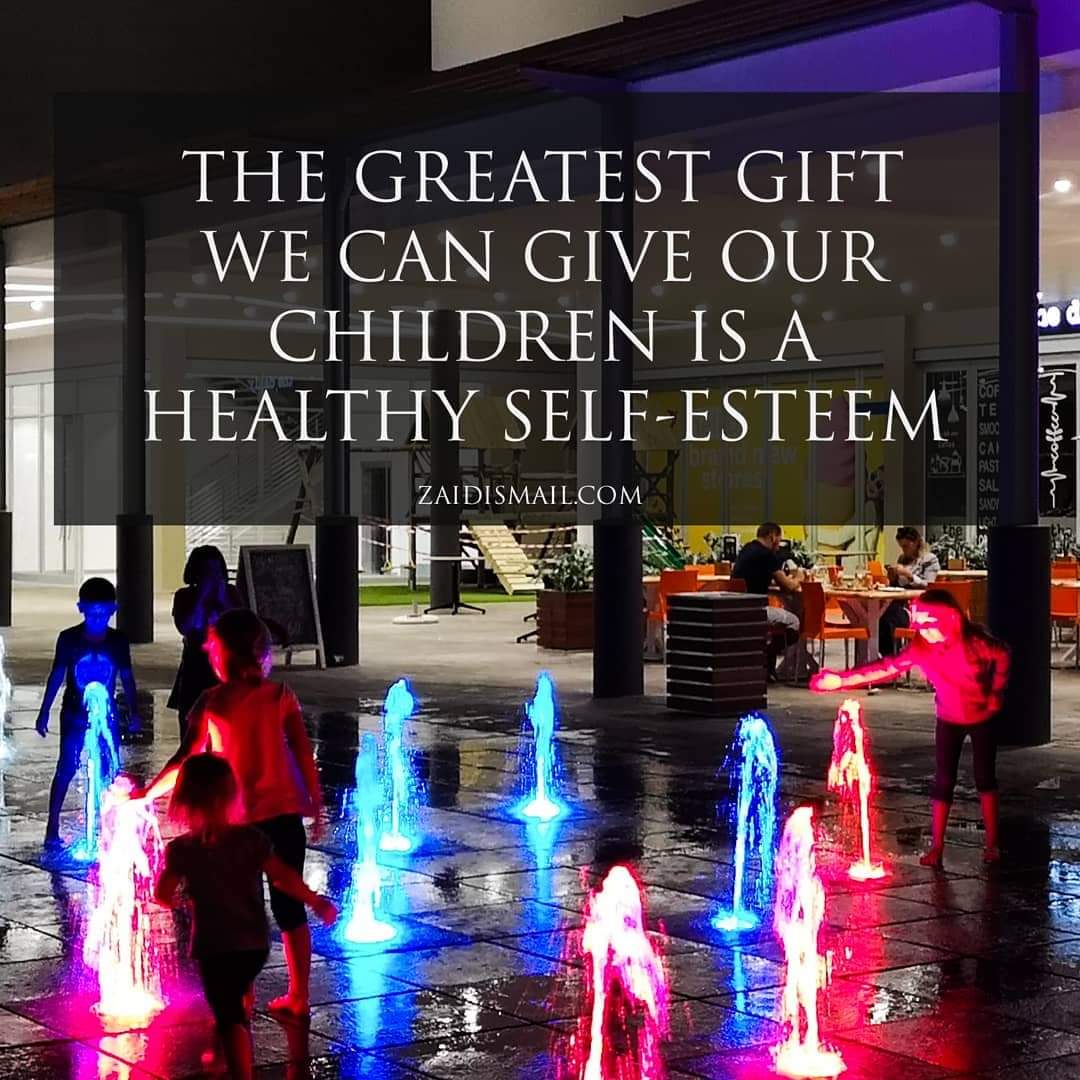
I believe that the greatest gift we can give our children is a healthy self-esteem.
Without it, they’ll seek affirmation from the worst sources in their quest to feel appreciated.
The greatest skill they can acquire is that of observation, which in turn, develops their critical thinking skills.
Without it, they’ll struggle to tell truth from falsehood, sincerity from insincerity, and reality from deception.
The greatest characteristic would be modesty. Because when modesty is gone, we can do as we please because the consequences have no bearing on our conscience and renders dignity and self respect irrelevant.
This is important…especially in light of the masses of failed adults that have abandoned their responsibilities towards their children and their families.
We have failed humanity, which is why this world is in the disastrous state that it’s in.
The only way to change it is to make sure that we don’t pass the failings of our generation onto the next generation.
If you’re reading this, I hope you’re doing right by your family first, and then your extended family, and then society.
If not, today is a good day to start.
#children #parenting #beingadults #raisingadults #mentoring #selfworth #selflove #selfawareness #selfrespect #mindfulness #validation #affirmation #selfesteem #childhood -
When an act of charity becomes business
If I do good, it will come back to me in unexpected ways. No. It won’t. The streets are full of homeless bodies and souls that have done good, but it wasn’t returned. Or are we suggesting that those that are in a bad state have done no good? This transactional view of life is becoming more popular each day, and it does nothing good for the one that holds this view.
We do good because we want others to experience less hardship than we did, not because we want to be repaid in some way with another good. Well, at least that is why we should be doing good. Not to earn a reward, but to reduce someone else’s pain or suffering, or simply to enrich their life. If enough people do this, inevitably it will lead to someone doing good for you as they seek to enrich your life out of sincerity, or they may wish to alleviate your burden because they know what it is like to be in a similar position when they may have had less. But that is something that we have no control over. The way that cycle of paying it forward plays out is entirely dependent on the generosity of every soul involved in that cycle. It is not business. It is not a tit-for-tat exchange of deeds. The moment it becomes an expectation of receiving something in return for what you do, you are transacting for gain. That is not charity, nor is it generosity. It is self-serving.
The selfish motivations that prompts us to give charity so that we can be seen as charitable, or doing good so that we can be seen as benevolent is nothing more than food for the ego, not for the soul. And it’s a poisonous meal as well. Eventually we will find ourselves measuring the value of people in our lives based on what they do for us, rather than how they enrich our lives. The sad part is that most don’t know the difference.
When someone enriches your life, they don’t necessarily contribute directly to your personal needs, but they make a meaningful contribution to how you experience your world. A simple example would be a spouse or family member that expresses love and appreciation for your children. That is not something that replaces your contribution to your children, but it is something that improves your child’s self-worth. That in turn improves the quality of life that you have with them. Although their act of kindness was not directed at you, it enriched your life, so you should not have reason to withhold kindness from them.
The irony is that the ones that perpetuate this myth about the universe returning the good that you do are the same ones that would typically believe that integrity is doing the right thing even when no one is looking. While that may be true about the definition of integrity, it loses its authenticity when we find reason to shout out to the world how much integrity we have.
One lesson that has served me well in life is that you should always be weary of someone that finds every gap to mention their own virtues. They are looking for validation, and people that require validation that badly almost always compromise principles and values to get it. Such people will not think twice about betraying your trust or confidence if it means getting that validation from others. Choose your company carefully. -
The Placebo Effect
I sometimes wish I could speak myself out of an unpleasant situation. I don’t mean a negotiation with someone else, I mean literally talk my mind out of noticing reality for what it is. So I often marvel at those that hold on to mantras and affirmations and repeat that to themselves in times of stress, and suddenly feel a sense of calm or composure that descends on them. Affirmations obviously work for many, otherwise there wouldn’t be such a prevalence of it. But there’s an underlying message that I think is more important.
Here’s the thing about placebos and affirmations that I find interesting. If it was merely the suggestion of recovery that helped us to recover, did we really need to recover from something in the first place? This refers to both physical or psychological imbalance. For example, if I experience palpitations from being unduly stressed about a situation, and I take a lump of sugar to calm down, would I have been able to calm down without that sugar lump? I think the answer is yes. Some would argue that this is not a very good example because sugar water has a reputation of calming panic-stricken subjects. Perhaps they’re right, but does that mean that without that sugar lump the panic-stricken one will not recover except through some form of external physical intervention?
What if the intervention was not physical in the form of sugar or any other medication, but instead, it was in the form of a reassuring handhold, or a hug, or words of comfort to remind them of what is important and what should be focused on instead? If that causes the palpitations to subside, would it still be necessary, or does it prove that beneath all those interventions we were innately capable of overcoming that stressful situation without losing control to begin with?
I have no doubt that this is a touchy subject for most. I’ve seen many lash out with spittle from seething anger when their need for emotional comfort was challenged, or their need for supplements or other medicinal sources was doubted. So the underlying issue of the placebo effect is simply this. If placebos work on us, it means that we’re inherently capable of overcoming whatever it is that we’re facing or struggling with, without any affirmations or placebos being needed, because the ability to overcome was already there to begin with. The placebo or affirmation only convinced us to apply it.
So then I ask myself why it is that we would willingly choose to be dependent when independence is in fact what we mostly desire? I think it’s because behind that need for dependence is a subtle scream that demands that the world recognise our struggle, or our persecution. Persecution isn’t fun if no one marvels at our ability to rise above it. I mean, why do we revel in telling tales of how bad we had it after we’ve overcome it? Why is it that telling the same tales before we’ve overcome it is burdensome to share and repulsive to listen to? When we lack conviction in our self-worth, we pursue distractions that will bolster our offering to the world. The less we see value in ourselves, the more we’ll cry out to the world for recognition or attention. But being pitiful does not suit this purpose, so we become increasingly elaborate and often unconsciously devious in our efforts to present the martyrs in us in a way that appears as heroes instead.
We’re generally victims by default. Of this I am convinced. Being more than this requires effort and conviction. Effort and conviction is lacking in most because we’re too busy waiting to be recognised and appreciated before we do what needs to be done. Yes, those are horrible generalisations, but the horrible state of the world generally bears it out as truths. In this lies the underlying nagging realisation of why placebos and affirmations (which are pretty much one and the same) are redundant. It sounds like a complex issue, but only because we make it so. The more we believe in ourselves, the less likely we will be to need assistance or catalysts to prompt us to face the next hurdle with decisiveness and courage.
But, and yes, there is another but…we risk being exactly what we despise when we shore up that self-belief without substance. In other words, when we focus on affirmations rather than true capability, we lose sight of the capability and become dependent on the affirmation. If we focus on the capability, the emphasis of our efforts will be to hone those capabilities in order to be more effective.
If affirmations stop at the point of being a reminder, rather than a vague reassurance, it’s a helpful tool towards becoming more mindful about what you truly possess as skills and capabilities. Problem is, it mostly becomes a required coping mechanism because we’re simply distracted. Distracted from who we are, what we’re capable of, and appreciating everything we have. When you downplay either of those aspects of being you, you become weak, and therefore dependent on reassurance when in fact decisiveness is all that is needed.
We feel overwhelmed when our assumptions about reality exceed our assumptions of our self. Reduce the assumptions and focus on the substance, and suddenly the world appears much more conquerable than ever before.
-
Fake
The world is full of brave faces. People showing a strong front while internally their world is crumbling, or has already crumbled. Some let in a select few to witness the destruction first hand while they serve a dual purpose of being a shoulder to lean on. Others are too ashamed to admit to such weakness and block everyone out instead, often aggressively so. Despite these differences, both tend to be focused on how they’re perceived in those trying times rather than how they feel, or more importantly, why they feel the way they do.
The embrace that most offer in times of trouble often uplifts the spirit and not much more. That small blessing is great, but only if it’s accompanied by a jolt that prompts us into action. The jolt can be our own realization and courage to be decisive about changing our state, or it could be a needed kick up the butt from someone that we trust. Either way, that jolt is needed. In the absence of that jolt we are left with nothing more than a group pacification of our weakened state where we are often convinced by such gestures that just trudging along is worthy of celebration.
Perhaps, for a short while until the shock and awe subsides, just being able to maintain a semblance of composure is commendable. But it reminds me of something I read once about runners. The level of fitness of a runner is not determined by how far or fast they can run, but instead it is measured by how quickly they can restore their bodies to a state of rest at the end of their run. In other words, how quickly can I stop heaving to catch my breath after the intensity of the exertion has subsided. I think this has relevance in this case as well. The time it takes for us to recover from the shock and awe of life’s less pleasant moments is a reflection of our spiritual resilience in the face of reality.
I digress…again. The fakeness in us becomes most prominent when we become so focused on how we’re perceived, that we lose our way on that path of self actualization because we gauge the measure of our success on how others celebrate our progress. If we consider that the majority of those around us celebrate mediocrity and conformance without even realising that a world exists above such a dreary standard, that gauge of success effectively prompts us towards complacency the moment we believe that we’ve arrived, relative to those low standards.
The fake are the ones that draw you close in a moment of weakness, then push you away when they don’t want to be reminded of that same weakness. They’re the ones that embrace when times are tough, but are aloof when the figment of success enters their minds. They live outwardly what they desire inwardly, but they live inwardly what they hide outwardly.
As obvious as that may seem, most don’t get it. Especially not the fake. It’s easy to miss such important but simple details when the focus of your life is on the perceptions of others. We become prisoners of society despite actively subscribing to such incarceration, yet we complain bitterly when that same society is relentless in its demands for more from us. Conformity to societal whims is a never-ending cycle of trying to appease an insatiable appetite for affirmation. The irony is that those that are fake, desire what they would otherwise receive if only they chose to be authentic. Authenticity begets sincerity, and I’d rather have a single sincere friend than a stadium full of insincere fanatics.
-
Carrots And Sticks
I recall, with some discomfort, a time in my life when I was painfully focused on how I was received by others. I recall simple moments when I made someone laugh quite unexpectedly, and then found myself feeling compelled to continue focusing on possible behaviours or witty statements to solicit more of the same. It took a long time for me to realise that it wasn’t just the laughter that I enjoyed, but the attention.
Being noticed for the same reasons we wish to be noticed is more addictive than any drug you’ll ever find. Ironically, it’s the absence of this validation that drives many to drugs to escape the reality of their insignificance, relative to their needs of course. But that’s not the point of this post. The eventual realisation of what I was getting from such experiences confirmed a painful truth that I only realised was painful much later on. I’m slow like that, fortunately so. It was the realisation that my self-worth, and therefore my actions, we’re largely defined by what I wanted from people rather than what I wanted to contribute.
Being driven by the fickleness of others is a good way to erode any sense of purpose or fulfilment in life. No wonder so many enter their twilight years feeling betrayed and bitter, and often disheartened at the thought of all that they didn’t achieve, or that they don’t have. That’s what being a whore to society does. It robs you of your dignity while you’re trying to appear dignified.
Against that backdrop, I always find it curious when I see people motivating themselves to improve themselves by tying such motivation to someone around them. They’re effectively saying that only if you do x for me, then only will I do the right thing for me. Stated differently, I’m improving myself so that you can be proud of me or accept me for the person I can be, but I’ll stop doing it if you’re not around, or if you reject me because then it’s not worth being a better me. In other words, you will be my carrot and my stick, without which I have no purpose in life.
When you’re focused on acceptance, you become a consumer. Consumers are good for the economy, but they’re rarely the beneficiaries. The same way they make businessmen richer while indulging in trinkets to distract themselves, needing validation makes the attention you receive the trinket that distracts you from being you. I’ve often heard, and said, that many people exist only, and then they die without having lived much at all. I now think that there is a fate worse than this. Many people live a life of subservience to others while fooling themselves into believing that they’re in fact serving humanity, or some other higher purpose. They’re the ones whose eyes light up when they’re showered with attention and affection but become almost entirely mute in its absence.
By design, fulfilment and purpose is only ever realised when we serve a cause greater than ourselves, or larger than our lives. Self indulgence is an insatiable cycle, even more so when we don’t realise that it’s our ego that we serve. Service to a higher calling is what connects us. No one ever connects with others when they’re focused on their own needs before anything else. Just because that pursuit of the self may appear sincere or subservient doesn’t suddenly make it meritorious. In fact, the more adept we are at disguising it, the more detrimental it is to our sense of self.
For me, beauty lies not in being attracted to those that accept me, but more in connecting with those that are passionate about the spheres that I hope to influence, or embrace. Anything else is simply a pacification of my unwillingness to accept my inability to influence change in the world around me.
-
Remnant of a Raging Fire
The world was my oyster. I set out oblivious to the confines of its shell. All I saw was the beautiful lustre and the wild ocean that surrounded it. I set out to tame it. To leave my mark. I remember once witnessing a repeated bickering session between my uncle and his wife when I turned to my cousin and said, “We should show them how it should be done.” I was referring to marriage. We were cocky. He is in his second marriage, and me in my fourth.
Life is easier as an observer. We have all the technology to be professional voyeurs pretending to be philosophers and activists, denying the fact that all we’ve become are armchair critics. But all is not lost. If anything, many surrender to their armchairs because of the heightened sense of self. If nothing else, the social web that we surround ourselves with has provided affirmations of our condition that was impossible just a generation or two ago. My observation of my weaknesses being expressed with passion by faceless bloggers gives me the comfort of knowing that it’s not only me. And if it’s not only me, then it can’t be my fault. There must be something bigger than us that is doing this to us, right?
My perspective is sometimes tainted by this reality of virtual life. It’s that much easier to get drawn into the cycle of complacency and distractions, because losing sight of my drive to overcome my obstacles is easy when faced with the validation of my weaknesses. I see too many that are fearless and fierce in their defence of the under dog but struggle to hide the hints of their own sense of worthlessness in real life. The connectedness makes it so much easier to fill the gaps of life with the artificial reality of the other life. We now have three domains of life it seems. The real life, the other life, and the afterlife. Depending on your spiritual persuasion of course. It’s the other life that seems to dominate our attention span which leave the real life and afterlife quite neglected.
Purpose and grounding cannot be found in a distraction. The shameful truth is that the more connected we are, the less humane we’ve grown. Real tragedies that we witness are easily transformed into notes or likes in the other life. Our desire to be the one to start the trend that others will follow for a few brief moments is that moment in the limelight that we have little hope of achieving in real life. The contamination got worse when those notes and likes started being celebrated in real life. Suddenly my other life gained the validation it needed to be perceived as real rather than as a distraction. So it must be true that my vents, my rants, my passion, and my fearlessness online makes a real difference. It can’t just be a distraction. I am making a difference in real lives. But why then am I still conflicted?
I think the conflict arises when I leave my other world to dash out for a moment of necessity. There, despite my distraction, is a world over which I yield little influence. There before me is my insignificance staring right back at me. That’s when it occurs to me. In real life I am but a remnant of the fire that rages within. I am misunderstood, and often dismissed as a dreamer, despite those dreams gaining so much subscription in my other life. There is a danger in surrounding ourselves with kindred spirits, and that danger is escalated when the ability to connect with them improves in probability due to the technology that we have to facilitate such polarisation. It polarises us further. Not just socially, but we find ever widening gaps between our sense of self-worth and significance in our other life compared to real life. This shapes our behaviour in ways that will cause much destruction in our lives if we fail to notice the chasm that is forming.
Living holistically has just become more difficult, despite the additional comfort that we obtain from those that see us without the social stigmas that we can so easily hide in our other life. Living online while existing in real life is a statement of hypocrisy that will leave us uneasy in both. The moment the distractions subside, the realities of each life appear larger than life, and in that, also more daunting. We’ve added a dimension to life that has enriched it, while creating an even greater challenge to be human. Suddenly we’re mostly able to help only those that are reachable online, while those that threaten our personal physical space are denied our indulgence or compassion from fear of them seeing us too clearly.
Living mindfully is demanded more than ever. Finding congruence between each of my lives has become my new greatest challenge in my efforts to be grounded. My grounding will only ever be manifested in the realisation of being able to apply myself consistently, not just in principle, but in deed, in both my domains of my life, so that my afterlife will not be left wanting. The acid test for me is found in that moment of silence, when I have no technology to distract me, or people to cajole me, and the feeling of consistency or inconsistency descends. When I feel a yearning for one space more than the other, I know that I am a raging fire in one, and merely a remnant in the other. I need to rage in both, or divorce myself from the one that counts less towards my afterlife. But the investment in both is such that I am unwilling to forsake either, and therefore the only option is to ensure that I rage fearlessly in both.
I often wonder how much more wholesome society would be if we were able to express ourselves in person with the same strength and security that we enjoy through anonymity online. I think it’s possible to achieve this. The equivalent of such anonymity would be the rejection of the opinion of others towards shaping your person. Leave behind the need to feel accepted, but instead nurture the desire to express, and it will result in you attracting those that are similarly impassioned in real life as well. The principles are the same, it’s only the courage that differs.
(This is an incomplete thought process)
-
Mother’s Day – An Awkward Moment
I’ve been tempted to ask a few people the kind of question that is often dismissed as being ridiculous or unrealistic. But it’s really a simple question that goes something like this. Apart from Anniversaries, Birthdays, and days like Mother’s Day or Father’s Day, do you believe that you acknowledge or celebrate the contribution of your parents, or other loved ones, sufficiently in your life? If yes, you don’t need to commemorate Mother’s Day, or any of those other occasions. If no, then those occasions are desperately needed reminders for you, and you’re probably a contributor towards the reasons for having a need to set aside a specific day to acknowledge these people in our lives.
I still maintain that living life by predetermined occasions intended to celebrate the contribution of individuals, or even just to acknowledge them is a waste of life and a lie to pacify our own inefficiencies. We can speak idealistically of acknowledging and affirming significant others, but when we wait for the occasion of a birthday or similar event to express such appreciation, then we easily fall prey to the act becoming a ritual rather than a sincere effort. Worse than this, we assume that the person will live long enough for us to acknowledge them when that occasion arrives, because acknowledging them as and when we feel inclined to do so naturally seems to be too burdensome.
I’ve previously expressed my distaste for celebrating birthdays, and similarly, I also spurn the celebration of such token occasions because it encourages the mindset of ‘take for granted now because we can always make up for it later’. Mothers, fathers, and significant others, including our children, must not be conditioned to only expect to receive affirmation or gratitude from us on specific occasions. Nor should they be conditioned to believe that it’s only expected of them to reciprocate in the same way either. Talking about the celebration of life must not just be a romantic notion or an ideal, but instead it should be something that we practice with conviction.
There’s enough tokenism in this world which feeds the cycle of insincerity that plagues almost every human interaction these days. Find a reason to celebrate the people in your life at times when they least expect it. Don’t wait for special occasions. Life is too fragile to take it for granted by assuming that tomorrow will be another day for us to do what we should have done today. But this is not about procrastination. It’s about gratitude. True gratitude is not guided by superficial occasions that celebrate milestones that are meaningless. We’ve placed so much emphasis on the occasions, that we’ve forgotten what the true celebration is about.
Occasions like these have only ever served to appease the conscience of those that fail to celebrate the significant others in their lives the rest of the year. This becomes ever more evident when our parents grow old, which usually coincides with the prime of our lives, at which point the sick mindset sets in that suggests that they had their turn, so now it’s ours, and they should be able to understand that.
The lethargy of society in giving back is a constant source of disillusionment. We’ve taken consumerism and made it an inherent part of our personal relationships as well. I pray that it changes. More than this, I pray that the majority of people that read this post will disagree with me about showing affection, appreciation, or affirmation to their loved ones on predetermined occasions only.