Fear is driven by need.
The moment we give up on the need, the fear subsides.
Our need to be significant to those who are significant to us drives most of the fears that may fan our rage at the world.
But only for as long as we still have hope that there is a chance for us to be significant to them.
When we give up on achieving that status in their lives, the fear subsides and gives way to an emptiness that carries with it no energy at all.
That emptiness feels like peace after a lifetime of struggle. But only until we realise that when that peace entered, hope departed.
Thus, the dulling of the soul begins.
Quietly receding, carefully subduing, and slowly disappearing from the lives of those we once courted.
Until, eventually, we successfully fade from our own life.
Some see it as a cowardly surrender. Or perhaps a convenient choice.
If only it was convenient to be invisible, more would choose that over self destruction, or suicide.
When we stop paying attention to those who seek us out, we surround ourselves with those we seek instead.
If we don’t find a balance between the two, we’ll find the isolation that accompanies being both, looking for a place to belong, but finding none.
Photo credit : Adobe Stock
#selfworth #selfawareness #ownyourlife #selfmastery #mindfulness #personalpower #ownyourshit #mentalhealthrecovery #mentalhealth #mentalhealthawareness #lifecoaching #zaidismail #loveyourself #companionship #soulfood #soulmates #foreverincomplete #fuckit
Tag: fuckit
-

Fanning our rage
-

Know your worth
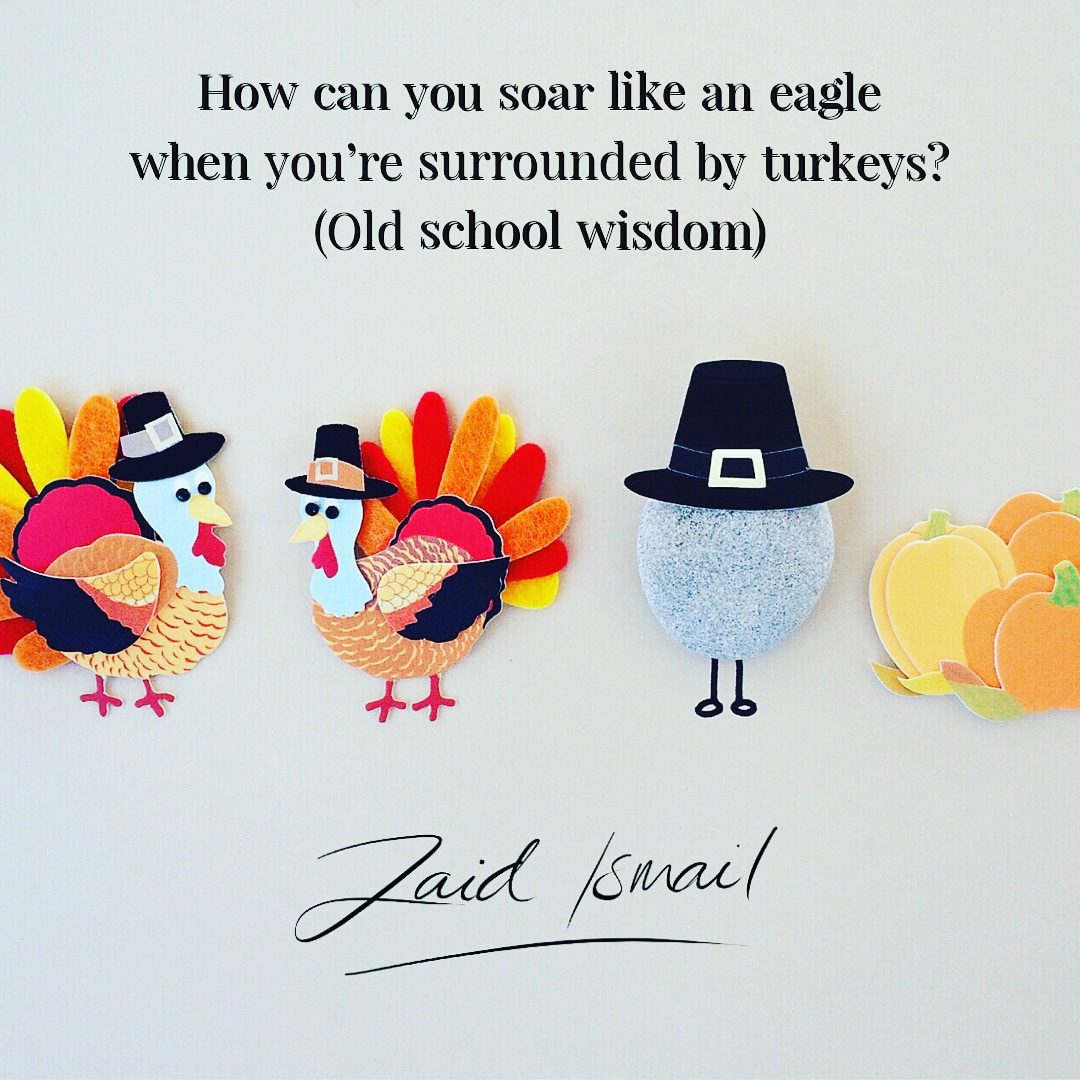
How many of us spend our lives trying to convince turkeys that they’re eagles, and in the process, sabotage our own growth and happiness?
To quote another piece of old school wisdom, birds of a feather flock together.
If you don’t know your own nature, you will associate with those who are not aligned with your goals or your passion in life.
That’s the easiest way to embrace mediocrity while yearning for greatness.
Of course, the downside to that is that if you’re surrounded by turkeys, and you claim your space, you may find yourself embracing loneliness and isolation.
The conundrum of life.
I pray that you are born into a home, a family, or at least a community that shares your passion and inspires your growth.
Photo credit : Adobe Stock
#selfworth #selfawareness #ownyourlife #selfmastery #mindfulness #personalpower #ownyourshit #mentalhealthrecovery #mentalhealth #mentalhealthawareness #lifecoaching #zaidismail #motivation #optimism #lifegoals #soulfood #soulmates #fuckit -
Don’t pay it forward
Vengeance is easier than understanding.
Bitterness is easier than forgiveness.
Mirroring the behaviour of those who treated us badly is easier than rising up to be better than them.
Each time we choose the easier path, we become the very monsters and degenerates that created the hurt and pain in our lives.
Too often, we raise our children with harshness because we are afraid of spoiling them.
Recognise that such fear never inspires moderation or a wholesome approach to life.
If you treat your children the same way that you were treated, understand that you will lose them to the world because they will despise what you stand for and discard any good you tried to teach them.
Your children have more options to choose a different path than you ever did. Give them reason to connect with the value of choosing the path that you believe will be good for them rather than simply demanding compliance with your rules or boundaries.
Parents with unresolved childhood trauma at the hands of their own emotionally inaccessible parents raise emotionally stinted children who need to escape the reality of life rather than embrace its beauty or opportunity.
If you want to break the cycle of abuse, the cycle of generational trauma, the cycle of harshness and detachment, or the cycle of dysfunction, you must first recognise its roots within yourself.
It always starts with you.
Photo credit : Adobe Stock
#selfworth #selfawareness #ownyourlife #selfmastery #mindfulness #personalpower #ownyourshit #mentalhealthrecovery #mentalhealth #mentalhealthawareness #lifecoaching #zaidismail #fuckit #parenting #singleparenting #children #narcissism #narcissisticabuse -
Two rules for life
There are two rules that I wish more people would apply in their lives.
Rules that will result in more sincerity and less hypocrisy.
More trust, less betrayal.
More wholesome relationships, less infidelity and betrayal.
The two rules are simple.
Firstly, don’t exhaust yourself explaining your behaviour to people who don’t matter. This not only gives you a false sense of your significance when they pretend to listen, it also gives them a false sense of significance in your life when they believe that you’re explaiming yourself because they matter to you.
Secondly, when choosing who matters, be sure that you’re doing it based on who really matters to you. They must be consequential to your happiness and sense of belonging in this world. If not, you’ll surround yourself with anyone and everyone that you want must care, because you need to fill the void of human connection in your life.
Sometimes we think that by being polite we’re treating others with respect. However, when that polite attitude leads people to believe that they’re significant when they’re not, it causes more hurt and betrayal when they realise that you were just being polite, rather than sincere.
That’s how being insincere to avoid hurting someone’s feelings causes more hurt than you would’ve caused had you been honest and sincere in the first place. .
Be sincere, always. Even if it means that you will be unpopular for that moment.
That moment of unpopularity could save you and others from a lifetime of disappointment and pain.
Photo credit : Adobe Stock
#selfworth #selfawareness #ownyourlife #selfmastery #mindfulness #personalpower #ownyourshit #mentalhealthrecovery #mentalhealth #mentalhealthawareness #lifecoaching #zaidismail #fuckit #authenticity #sincerity #relationshipgoals -
The hypocrisy of self-loathing
The most toxic plague in the human condition is that of demanding kindness while withholding it.
I watch with morbid curiosity the volumes of memes and quotes shared by many in which we are reminded to treat everyone with kindness because we never know what struggles they are enduring. Yet, those same people are waiting for such kindness to be shown to them before they are willing to share the same with those around them.
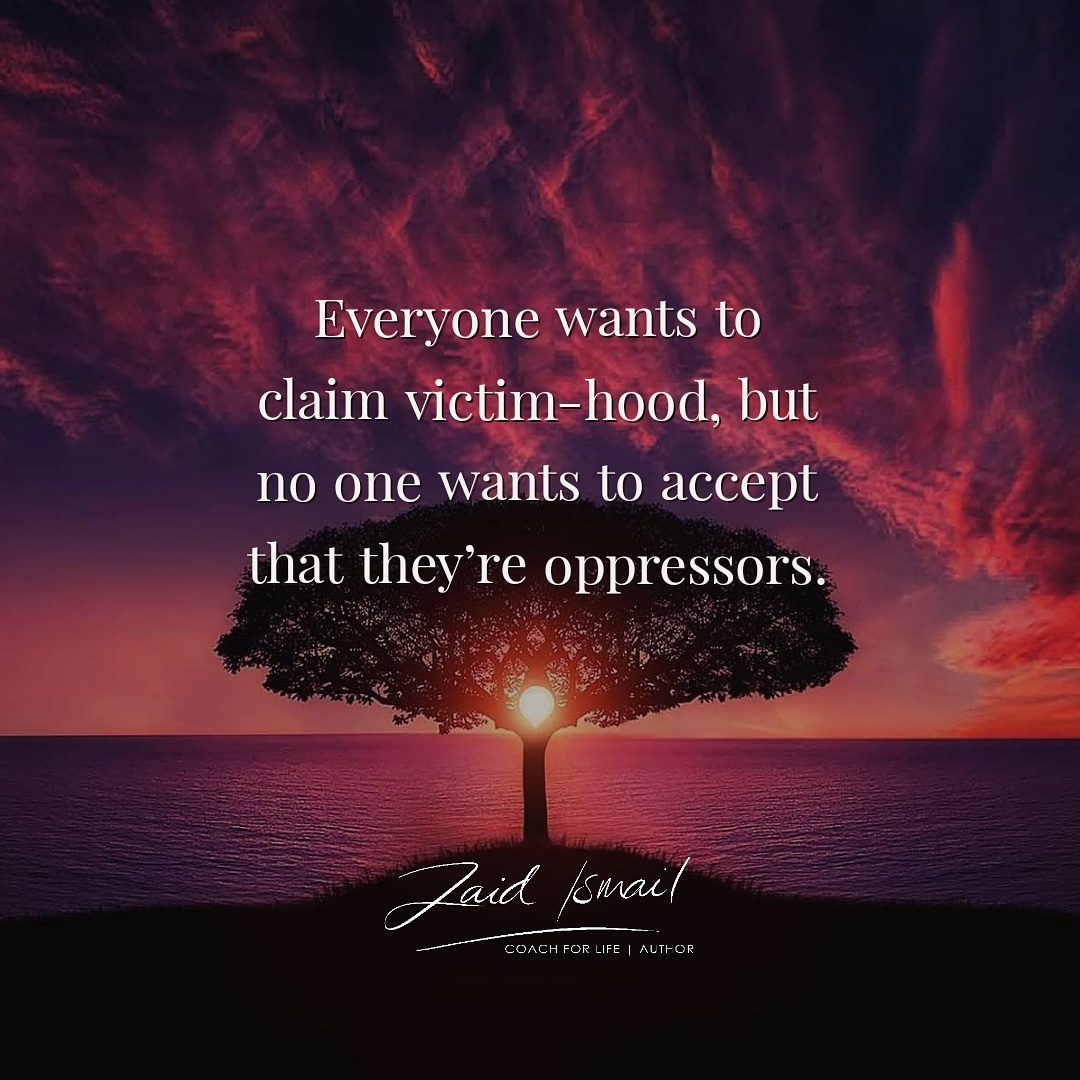
It’s not as complicated as it sounds. Everyone wants to claim victim-hood, but no one wants to accept that they’re oppressors. We all believe that we’re justified in our harsh treatment of others, or in withholding our gentleness from fear of being taken for granted. It’s that same sense of justification that leads us to experience cruelty or callousness at the hands of those we wish would treat us with significance.
But we don’t want to see in ourselves what we despise in others, because we can’t be held responsible for the vile behaviour that we display, because you know, we’re too angelic for that. So it must be because someone else made us that way.
This life is replete with people demanding justice but denying the rights of those around them. People crying for compassion while treating with contempt those who hold them to a higher standard. People who remind others of what kindness looks like, while treating harshly anyone who disagrees with them or calls them out for their double standards.
Life takes on burdensome tones and vapid outcomes when we try to live by a code that is not shared by those we hold dear. My idealism dictates that we must remain true to ourselves or else we risk becoming the very contaminant that leaves us feeling used and discarded. But idealism has exhausted my soul more than any other investment of myself in the lives of others.
Idealism is what courts with madness when my ideals are seen as naive or foolish in the face of the disappearing humanness around me. My madness, however, has never been a cause for the concern of another. When it rears its head, I am quickly discarded. When it is tamed, I am superficially celebrated.
It’s that superficiality that grates away at my reserves. The very fragile reserves that I have to pull me through another tiresome day lacking in warmth, understanding, or even a mildly sincere embrace.
Window shopping rarely reveals the reality of the purchase. We dress ourselves up to appear as wholesome or as nonchalant as we’d have others believe we are, until they reach in to touch the essence that lies beneath that window dressing, not realising that what they caress beneath that facade is in fact the rawness of our self-loathing.
It’s that self-loathing that is revealed in our harsh treatment of others. Our cold, callous ways towards those who would draw us closer out of love, not realising the we don’t know how to return such love. Rather than appear incompetent or lacking, we strike at them with feigned confidence and a dispassionate smile, subtly telling them to get lost while smiling sweetly as if to promise them a beautiful trip when they decide to undertake that journey. That journey of leaving us alone.
What self-loathing doesn’t do is it doesn’t allow us the space to realise that when we despise in ourselves what others admire, we don’t only reject ourselves, we invalidate their love for us as well. And that invalidation leaves them questioning their worth, spawning within them the same self-loathing that we hold within. Thus, paying forward a harshness while reminding the world to treat us with kindness.
The hypocrisy of self-loathing is a source of destruction that will forever be ignored, because our pity for our pathetic condition will forever convince us that the courage it took for another to see in us what no one saw in them is merely their misplaced investment in something that doesn’t exist. Perhaps it’s just their need to convince someone to see in them what they need to have seen.
It’s a circle-jerk of epic proportions. And those who break that circle are ridiculed in moments of ease, but desperately sought out in moments of pain. And as soon as the pain passes, that misplaced confidence once more convinces us that they’re just reading too much into everything, or that they just don’t know how to have fun. Or they’re among those who take life too seriously.
At least that’s what the delusional tell themselves in their efforts to justify their abdication of the responsibility that they have in destroying the self-esteem of those who once loved them. The world is lacking in compassion and understanding because of our self-loathing, not because of the cruelty of a few.
As I’ve said before, the less human we feel, the more inhumane we behave. Those who view themselves with contempt have caused more pain than any other I’ve ever observed.
-
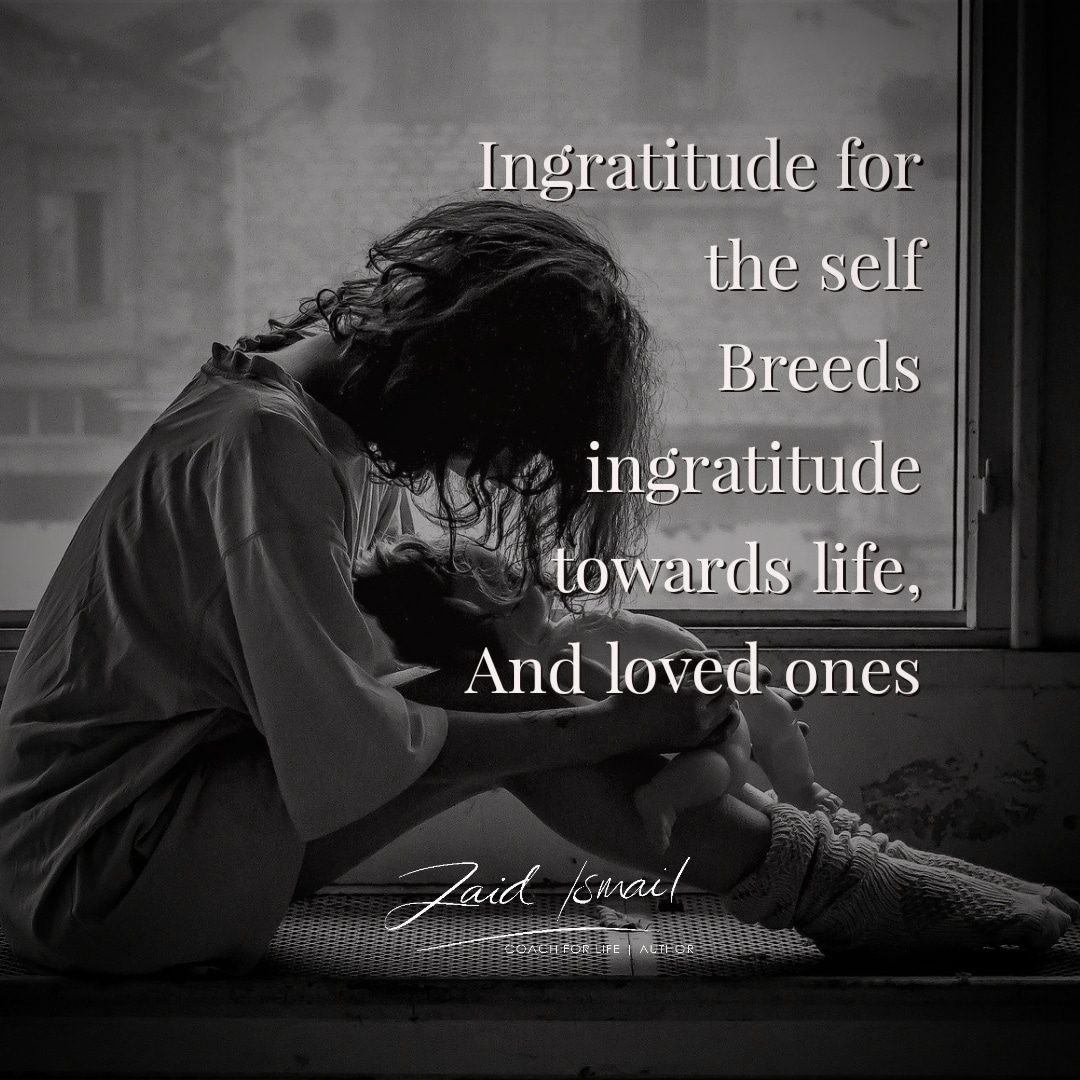
Ingratitude breeds ingratitude
When we’re ungrateful for who we are,
When we deny any good in ourselves that others may see,
When we ignore our beauty because there may exist some ugly,
We protect ourselves from attachment to anything wholesome or beautiful in life.
Our need for such protection is a deeply ingrained fear about never being good enough.
Not good enough for the standards that we hope to live up to, nor good enough for what we think we need to be to those around us.
The self loathing ensures that this conversation remains in our heads, and is only expressed as rage or bitterness, or many times, as deliberate ingratitude.
But ingratitude does more than just take our lives for granted.
Ingratitude convinces loved ones that they’re not good enough either.
Ingratitude distorts good intentions into bad motives.
Ingratitude breeds within others what we loathe about ourselves, while convincing us that it harms no one.
Ingratitude is the real root of evil.
It is ingratitude that destroys hope.
It is ingratitude that destroys love.
And it is ingratitude that destroys gentleness.
You cannot give what you don’t have.
When ingratitude for your self takes hold, the sincerity of any gratitude that you hope to express towards others lacks authenticity and leaves them questioning your sincerity.
Ingratitude is a vicious cycle that destroys every good that it touches, and breaks every soul that may once have been whole.
And that’s how peace becomes elusive.
Photo credit : Adobe Stock
#selfworth #selfawareness #ownyourlife #selfmastery #mindfulness #personalpower #ownyourshit #mentalhealthrecovery #mentalhealth #mentalhealthawareness #lifecoaching #zaidismail #fuckit #gratitude #appreciation #selflove -
To be…
Much of life is wasted in the time spent considering if we should or shouldn’t do that thing that we’re passionate about.
That consideration is most often based on our doubts about what others will think, and rarely because we doubt the value of doing it.
Sometimes, we persevere and find the courage within ourselves to follow through despite the absence of support or encouragement from those around us.
And sometimes we stop wanting to push through because we feel worn down and invisible.
No one can change which choice we make. But the moment we choose that person that we want to share our passion with, without whom we see no point in sharing it, we give them the power to make that choice for us without them realising what power they have over us.
Sometimes, telling them about it endears them towards us.
But sometimes, the burden of expectation that it places on them pushes them further away, leaving us convinced that the value we thought we could share was not of much value at all.
The human condition is a beautifully complicated mess.
Photo credit : Adobe Stock
#selfworth #selfawareness #ownyourlife #selfmastery #mindfulness #personalpower #ownyourshit #mentalhealthrecovery #mentalhealth #mentalhealthawareness #lifecoaching #zaidismail #fuckit #optimism #lifegoals #dreambig #motivation -
A brain dump
Some find solace as the years progress. Some find love. Some find an emptiness where space was once held in hope for a significant other. My contemplations of which applies to me hold no sway any longer.
Writing this post creates a delusion of its own. Although it could be interpreted as gratitude or reflection instead. Its true purpose and intent will always be hidden by the need of the moment. The need is seldom true to the act. Or is that the other way around?
A brain dump is supposed to offload that which is clutter and of little value to hold on to. It’s supposed to create space for peace and calm, while ridding me of the noise of busyness and inconsequence. It does neither tonight.
Tonight it serves as a search for truth. A search for discerning between illusions, delusions, and reality. It’s a tiresome search. To know sincerity from pretence, value from utility, acceptance from tolerance, or love from contempt. The guarded are always the most painful to navigate, and the most expensive to maintain.
In contemplating all of this, I find the fight slowly leaving my soul. This time, seeking to know the difference between wisdom and surrender threatens to disembowel a fragile peace that has accompanied my soul through the storms, until now. But its fragility grows meek and is left wanting in the face of fresh onslaughts.
The battle for sanity, or for space grows tedious. That it is a battle at all is telling in itself. What should be a natural state of calm, accentuated on occasion by disruption, is reversed. The calm only visits in isolation, and isolation leaves a disruption in my soul. Peace finding no place in either, isolation or association.
At times, it feels like life has been a perpetual midlife crisis. That constant search for purpose, or to reconnect with moments past. The questioning of direction, and the conundrum of what action would be most beneficial towards the fluid goals that suggest an abatement in the storm. Drop the mid from midlife and suddenly the scene is much more accurately described.
Are lighthouses ever decommissioned – wilfully decommissioned to allow it a period of graceful rest before its ultimate fall? Or is it expected to serve until it finally succumbs to the erosion of the lifelong yelping of the waves at its feet? No one tries to calm the waves, or to cause the shore to recede. But those who notice share a passing politeness as a token gesture of appreciation for the guiding beacon that is offered.
In many ways, I’ve often felt like a road sign. That critical point at which informed decisions are made by those who encounter it, but whose decisions always lead them away from it. Beyond the lighthouse, I think this is a metaphor that most accurately resonates with the life crisis that I’ve endured. But like lighthouses, road signs are also never willingly decommissioned, except when they become redundant. Otherwise, they’re left to their own devices for as long as they serve a purpose until eventually being replaced with a more purposeful one.
There’s a haunting irony in awakening the soul to the reality that surrounds. While it raises attention to the ephemeral nature of life and love, prompting one to appreciate with intensity its beauty before it passes, it also awakens one to the cold faces of the oblivious. The empty hugs, and empty stares. The vacuous efforts at validation and the consumerist indulgences of privilege. Leaving no human contact behind. Only human consumption.
Some exhaust themselves in wishing for times passed. Others deplete their resources in trying to capture the present moment. But many, like me, are in search of the fast-forward button to bring this charade to a final and quiet end.
No more chasing.
No more hoping.
No more wanting.
No more needing.
The end of expectation and the arrival of certainty.
It seems I have yet to earn the acquisition of such mercy. To know with certainty that you are seen. That you are heard. That you are loved. Not because of what they can get from you, but because of who you are beyond social standing, or relative placement in their lives. Expecting this from the oblivious is nothing more than self-harm. But trying to subdue such expectations is nothing more than an effort at being inhuman.
Perhaps in that lies the ultimate conundrum. Seeking to connect with your humanness so that once you do, you are left with the desolate scape of solitude as you realise that there are no humans looking to connect with your humanness. It’s like flipping the big switch that turns on every fascination of a world harbouring untold beauty, but being rooted to the spot perfectly positioned to only see but not touch such beauty.
The fight is slowly leaving my soul. And with each passing moment, the reality that it doesn’t matter, not now, never before, nor ever, is destroying every romantic notion I’ve ever embraced. The tree that falls silently in the forest disrupts no lives.