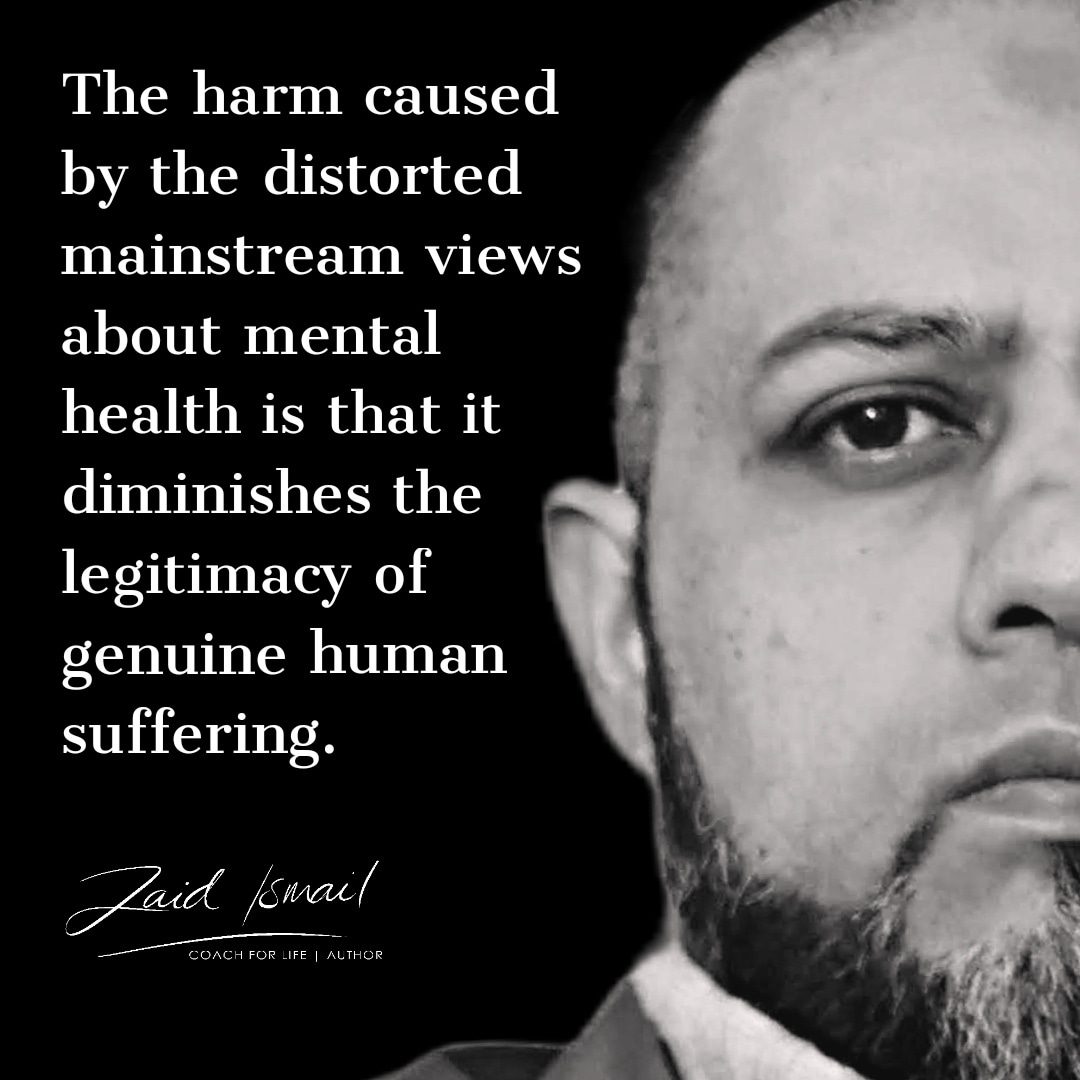
TRIGGER WARNING:
If you prefer a victim mindset, don’t read further.
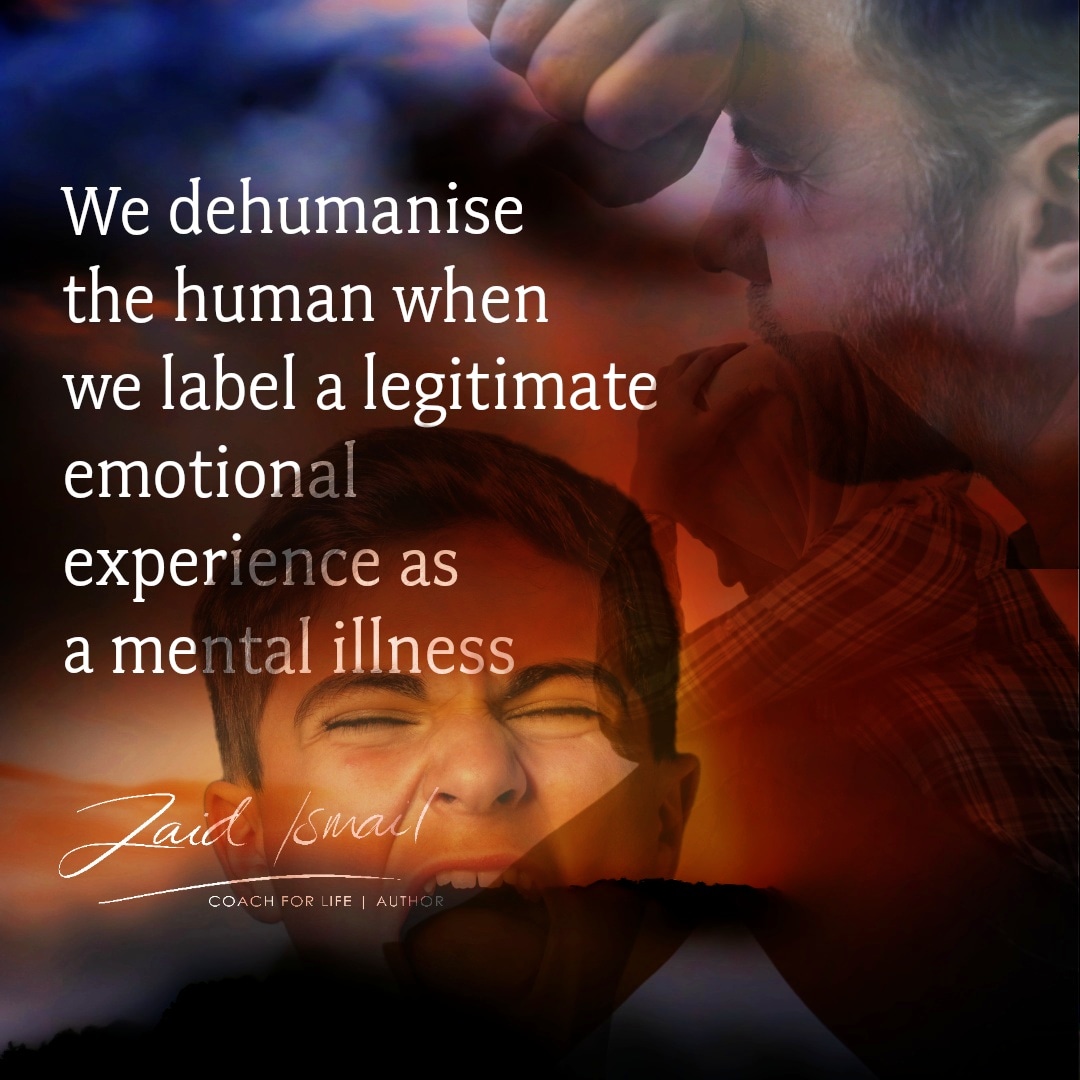
This is an extremely important reminder given the horribly unhealthy mindset that this meme encourages.
There is no such thing as a broken mind.
There is a struggling human, and there is good reason to feel duress, even debilitating duress.
Understanding the reasons for feeling that way empowers you to process it in a healthy and meaningful way, and to rise above it.
The moment you convince yourself that an emotional experience cannot be overcome, you will prove yourself right.
Not because it cannot be overcome, but because you are looking for all the evidence that confirms why it cannot be overcome, instead of looking for evidence that provides insight towards overcoming it.
Perspective is especially critical when it comes to mental health and processing emotional trauma.
No human is broken.
And every mind can be healed.
When we convince ourselves that we’re broken or that we can’t be healed, we create a self-fulfilling prophecy, because what we set out to achieve is what we’ll achieve.
Besides, it’s not the physical pain of physical abuse that sticks with us, it’s the mental and emotional anguish that it leaves that haunts us.
Memes like this are well meaning, but they cause more harm to our mental health than they offer benefit or relief.
Be careful what you take from the Internet.
Good intentions have destroyed many lives.
If you want to learn how to heal yourself, get a copy of Own Your Life and discover the power of understanding your emotions, rather than judging it.
Choose your advisors carefully, and please, for the love of everything sacred, do NOT believe every meme that resonates with your emotional space.
It will destroy you.
#mentalhealth #mentalhealthawareness #mentalhealthrecovery #selfworth #selflove #selfawareness #selfrespect #mindfulness #theegosystem #ownyourlife #motivation #lifecoaching #zaidismail
Tag: mentalhealthrecovery
-

Every mind can be healed
-

Kill the label. Kill the stigma.
⚠ Trigger Warning ⚠
The moment we attach a label to a life experience, we focus on the label and discard the merits of the experience.
We make people invisible when we deny the reality of their experience by suggesting that there is something clinically wrong with them, despite causality of their emotional upheaval being clearly associated with their experiences in life.
When we readily embraces such labels, it disempowers us to make sense of, and to rise above that which weighs us down.
When we create such detachment from the cause of our duress, it denies us a voice in expressing our hurt or pain.
Instead, it convinces us that we’re defective in some way.
When the shame of such labels grows to define how we appear to others, we find familiarity and a common cause with others who suffer a similar struggle, resulting in a victim mindset that focuses on claiming their space as struggling humans who are afflicted with mental illness.
That’s how we break each other down as humans, while building each other up as victims.
You cannot break the stigma of mental health by undermining the humanness of the ones affected by the stigma.
We need to see the human behind the labels that we throw at each other.
Until then, compassion and empathy will continue to be in short supply.
Kill the label, kill the stigma.
#mentalhealth #mentalhealthawareness #mentalhealthrecovery #suicide #suicideprevention #suicidalawareness #suicideawarenessmonth #depression #anxiety #ownyourlife #theegosystem #embracingME #zaidismail #lifecoaching -
Repost: Judging to be safe
Judgement is not always harsh. But, judgement is always focused on an external standard that we think others respect.
Don’t under estimate how much this mindset causes problems in every sphere of our lives.
Before throwing in the towel on that relationship, reconnect you with the reasons that gave you hope in the first place, so that the distractions don’t leave you with regret later on.
External standards give us comfort because we don’t run the risk of making a bad decision by ourselves.
If things don’t go well, we can always say that everyone thought that it was the right thing to do.
More than this, when we live up to a standard that we know others respect, we automatically feel respected.
That way, we don’t have to go through the difficulty of earning respect by ourselves.
This mind set conditions us to judge right or wrong, good or bad, better or worse, rather than to seek understanding of why we, or others, may fall short.
This, more than anything else, undermines the quality of the relationships that we have with others, and especially with ourselves.
And remember, seeking to understand bad behaviour doesn’t mean we condone it. It just means that we have a better chance of addressing the reason for it, rather than responding to its symptoms.
Own Your Life.
It always starts with you.
#hope #expectation #sincerity #selfworth #selfawareness #mentalhealth #mentalhealthawareness #mentalhealthrecovery #socialacceptance #herdmentality #society #understanding #compassion #relationshipgoals #zaidismail #lifecoaching -
Do you remember you?
Sometimes, we lose ourselves to the hopelessness of others.
Sometimes, we lose ourselves to the failed expectations of life.
And sometimes, we lose ourselves because we thought it was our failings that earned us pain, while oblivious to the fact that it was in fact our success that threatened the ones we loved.
In these, and so many other scenarios, our perspective is tainted by our belief that what we wish to achieve with others, is what is important to them to achieve with us.
When this belief proves to be false, we question our self-worth when our best efforts only cause upheaval, and our best intentions are always misconstrued as arrogance or materialism.
If we don’t stop to see the demons that our significant others are battling, we’ll judge ourselves by how they fail to overcome their demons.
That’s when our demons strengthen their hold on us.
Unless we reconnect with who we are, we’ll forever wait for someone else to do right by us before we allow ourselves to find joy in who we are.
Rediscover who you really are, so that you can shake off the debris that you accumulated through the years with each toxic character that convinced you that you were someone you’re not.
The risk of coping with failure or betrayal is that our act of coping grows to define who we think we are.
But that’s when we lose sight of who we were before that moment.
The only way to move beyond it is to recognise that coping is only needed as long as we’re still holding on to the hurt or the disappointment of what could’ve been, but didn’t happen.
Let go of it, and the joy that you experienced before that defining moment will return.
It always starts with you.
#selfworth #selflove #selfawareness #selfrespect #reflection #mindfulness #validation #mentalhealth #mentalhealthawareness #mentalhealthrecovery #thebookofmindfulness #personaldevelopment #growth #growthmindset #gratitude #lifecoaching #zaidismail -
Where is your humanity?
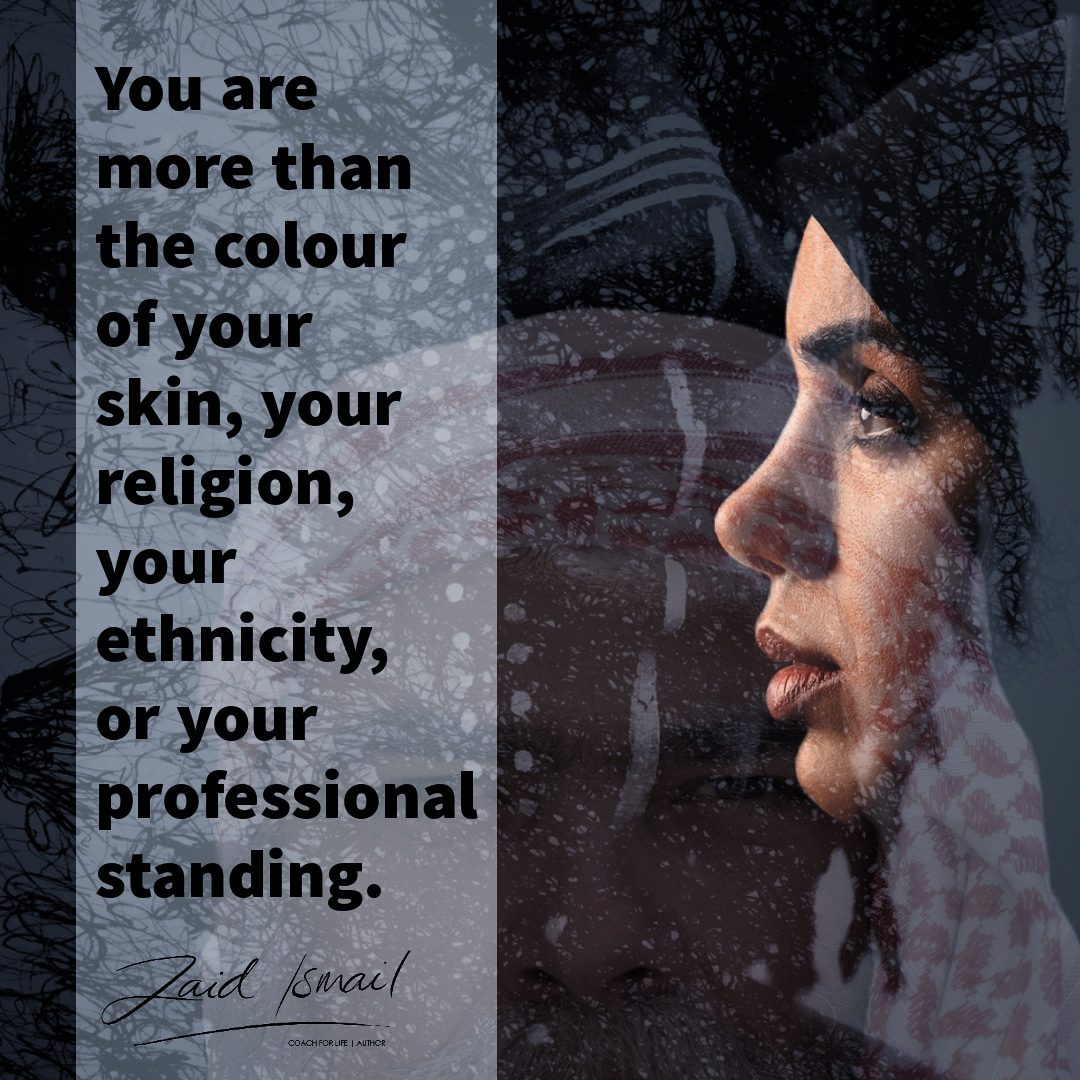
Taking pride in the colour of your skin or ethnicity distracts you from your humanity.
Our humanness, our gentleness, our inclination towards kindness – these are all part of our natural state.
We lose it when our need to be associated with significance or superiority distracts us from this, and replaces it with the fear of being inadequate.
When we lose sight of the fear of inadequacy, responding from a place of fear becomes our new normal.
Everything that threatens the source of our significance – that is, our skin colour, religion, cultural roots, etc. – then feels like a threat to our sense of self.
Thus, we feel the anger, resentment, or blind rage that rises when we are judged by the colour of our skin, our religion, our ethnicity, or any other association that makes us feel significant.
But, we grow convinced that we’re standing up for a good cause by protecting what we value, even though the way in which we protect it undermines the very essence of what we claim to stand for.
That’s when it becomes clear that we only stand for what we do because it offers us a place in this world through being associated with the cause.
It offers us significance and protects us from irrelevance.
That’s when we’ve traded who we are, for who we want to be perceived as, because we’re convinced that we are not enough.
Own Your Life.
It always starts with you.
#racism #colourism #religion #culture #prejudice #bigotry #socialacceptance #herdmentality #ownyourshit #ownyourlife #theegosystem #mentalhealth #mentalhealthawareness #mentalhealthrecovery #selfworth #selflove #selfawareness #selfrespect #mindfulness #inspiration #zaidismail -
Do you matter to you?
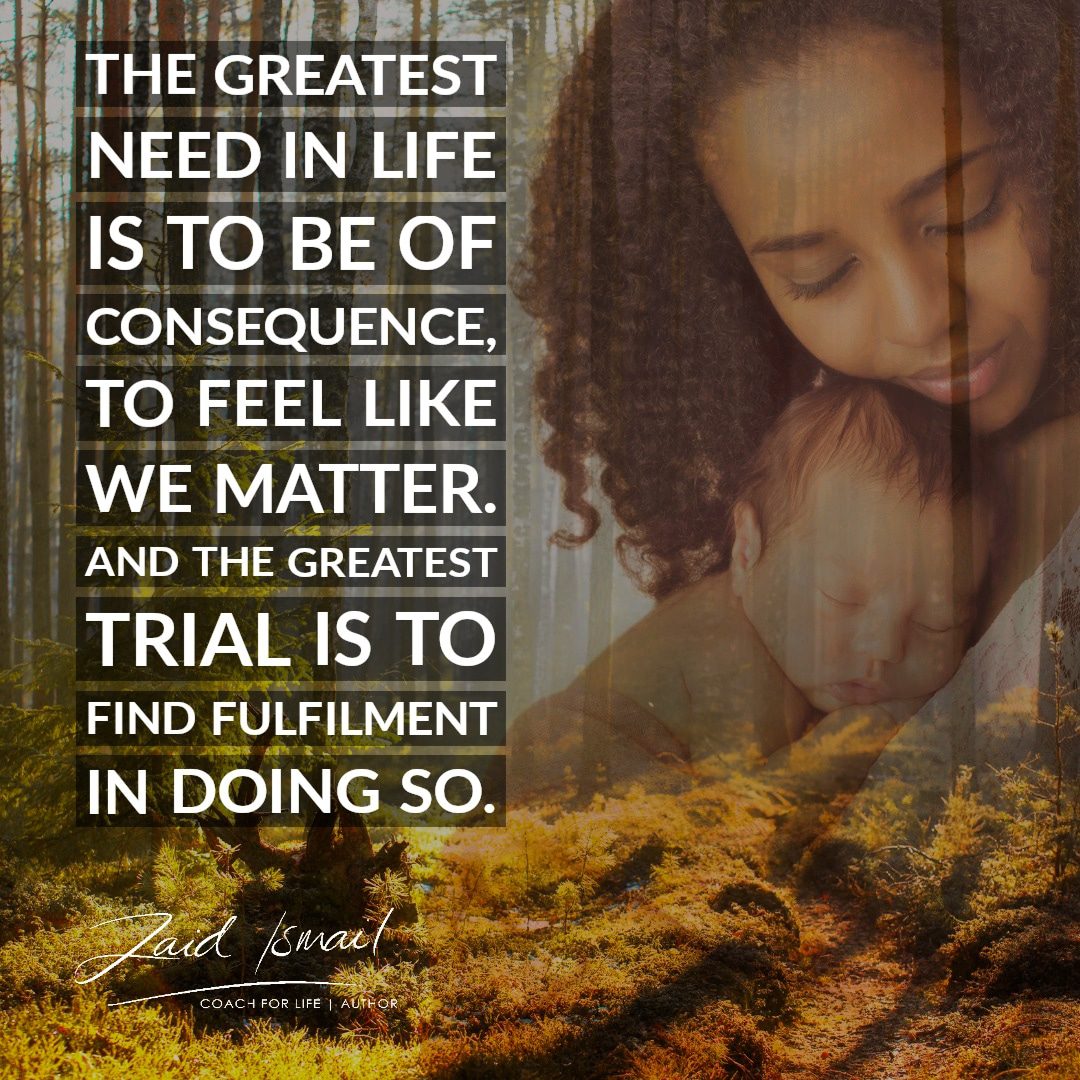
To be of consequence, or to feel significant, lies at the heart of our inspiration to accomplish anything.
When we connect with conviction to the significance of who we are, and what value we add to the lives of others, we achieve a sense of peace and contentment.
But, when we doubt this, we set out in search of validation through observing how others respond to our efforts to improve their lives. To make them happy.
If we’re fortunate, we’ll find ourselves surrounded by those who willingly and sincerely acknowledge our contribution and our place in their lives.
If we aren’t fortunate enough to have such people around us, we’ll lose ourselves in our efforts to be enough for them, without realising that they’re also not enough for themselves.
It’s an empty cup trying to fill a broken one, where the one who is giving is depleted, and the one receiving is distracted by their own demons.
Chronic illnesses set in, accompanied by rage that is often directed at the self, because we didn’t realise the value of who we are, while hoping to be validated by those who were distracted by their own self-loathing.
Thus, the joys of life are traded for servitude and a living martyrdom, hanging onto faith by a feeble thread, praying that our sacrifices and self-deprecation will be rewarded with everlasting peace when this harsh reality finally ends.
That’s how we harm ourselves long before we allow anyone else to harm us.
Worse still, we forget that through self-loathing, we withhold the best of who we are for the innocents around us, and end up giving them reason to believe that they were never good enough to bring out the best in us either.
That’s how generational trauma is passed down.
It’s not because of what was done to us, but rather because of how we see ourselves through the eyes
of those for whom we were never enough.
#selfworth #significance #conviction #dreams #sincerity #authenticity #mentalhealth #mentalhealthawareness #mentalhealthrecovery #theegosystem #mindfulness #lifecoaching #zaidismail -
Emotional wellbeing, not mental health
It is only through our internal wars that we lose sight of reality.
The culture of labeling people dehumanises the very human that is struggling with their humanness.
We focus on our demons so intently, that we become defined by them, bearing them patiently in quiet shame, protecting ourselves from being exposed for what we hold within.
When we judge ourselves with such shame and harshness, we see the world through angry eyes.
But, protocol and decorum prevents us from raging and venting without restraint, so we choose safe spaces in which to release the venom from within, on those who are incapable of opposing or resisting us.
In the public space, we create carefully constructed apologies for our inadequacies, latching onto unhealthy concepts like ‘suffering from…’ whatever emotional torment we’re experiencing.
That’s when we feed the belief that human emotion is an illness, or a disorder, because it’s the only hope we have of making sense of the war within.
All this because we convinced ourselves that being any less than happy must be weak, or dysfunctional.
The sway of human emotions, regardless of how crazy that sway may appear or be experienced, is a legitimate response to very real life experiences.
Labeling the response does nothing to create understanding and healing around that traumatic or overwhelming experience.
Stop labelling people because of their behaviour, and reconnect with your own empathy and compassion so that you may once more see the human behind the human condition.
Own Your Life.
#mentalhealth #mentalhealthawareness #mentalhealthrecovery #lifecoaching #zaidismail #empathy #theegosystem #ownyourlife -
Reclaim your worth
Peace is most ravaged when we convince ourselves that we were treated badly by others, or by someone we trusted, because we weren’t good enough for them.
A betrayal of trust, no matter how noble the person, reflects cowardice on their part.
We only betray the trust that others place in us when we feel burdened by that trust, or we avoid accepting the responsibility that it demands of us.
Either way, it’s a shortcoming on the part of the betrayer, not the betrayed.
Sometimes we’re so focused on getting even with those who betrayed our trust that we fail to notice how that fixation distracts us from fulfilling the rights of others, which in itself is also a betrayal of trust.
Understand the internal struggle of those who treated you badly, so that you will realise that they were simply incapable of being better than that in that moment.
It may not take away the disappointment or the hurt, but that is part of your humanness.
When that disappointment overwhelms your joy in life and steals your enthusiasm for the future, it’s no longer because of how someone treated you,it’s because of how you see yourself because of how they treated you.
It’s that easy to give up your power to influence the outcomes and the happiness that you experience in life.
You do so by believing that how you were treated by troubled souls is a reflection of your worth.
That’s simply ingratitude for who you are.
Misplacing your trust in someone is a mistake made from good intentions.
Discard the mistake after learning from it. Don’t discard the good that inspired that good intention.
It always starts with you.
#truth #trust #betrayal #honesty #sincerity #authenticity #mentalhealth #mentalhealthawareness #mentalhealthrecovery #selfworth #selflove #selfawareness #selfrespect #reflection #mindfulness #dignity #lifecoaching #zaidismail