Sometimes, we lose ourselves to the hopelessness of others.
Sometimes, we lose ourselves to the failed expectations of life.
And sometimes, we lose ourselves because we thought it was our failings that earned us pain, while oblivious to the fact that it was in fact our success that threatened the ones we loved.
In these, and so many other scenarios, our perspective is tainted by our belief that what we wish to achieve with others, is what is important to them to achieve with us.
When this belief proves to be false, we question our self-worth when our best efforts only cause upheaval, and our best intentions are always misconstrued as arrogance or materialism.
If we don’t stop to see the demons that our significant others are battling, we’ll judge ourselves by how they fail to overcome their demons.
That’s when our demons strengthen their hold on us.
Unless we reconnect with who we are, we’ll forever wait for someone else to do right by us before we allow ourselves to find joy in who we are.
Rediscover who you really are, so that you can shake off the debris that you accumulated through the years with each toxic character that convinced you that you were someone you’re not.
The risk of coping with failure or betrayal is that our act of coping grows to define who we think we are.
But that’s when we lose sight of who we were before that moment.
The only way to move beyond it is to recognise that coping is only needed as long as we’re still holding on to the hurt or the disappointment of what could’ve been, but didn’t happen.
Let go of it, and the joy that you experienced before that defining moment will return.
It always starts with you.
#selfworth #selflove #selfawareness #selfrespect #reflection #mindfulness #validation #mentalhealth #mentalhealthawareness #mentalhealthrecovery #thebookofmindfulness #personaldevelopment #growth #growthmindset #gratitude #lifecoaching #zaidismail
Tag: growth
-
Do you remember you?
-

Be true about seeking truth
If you’re sincere about seeking the truth, you won’t be distracted by the source or tone through which it arrives.
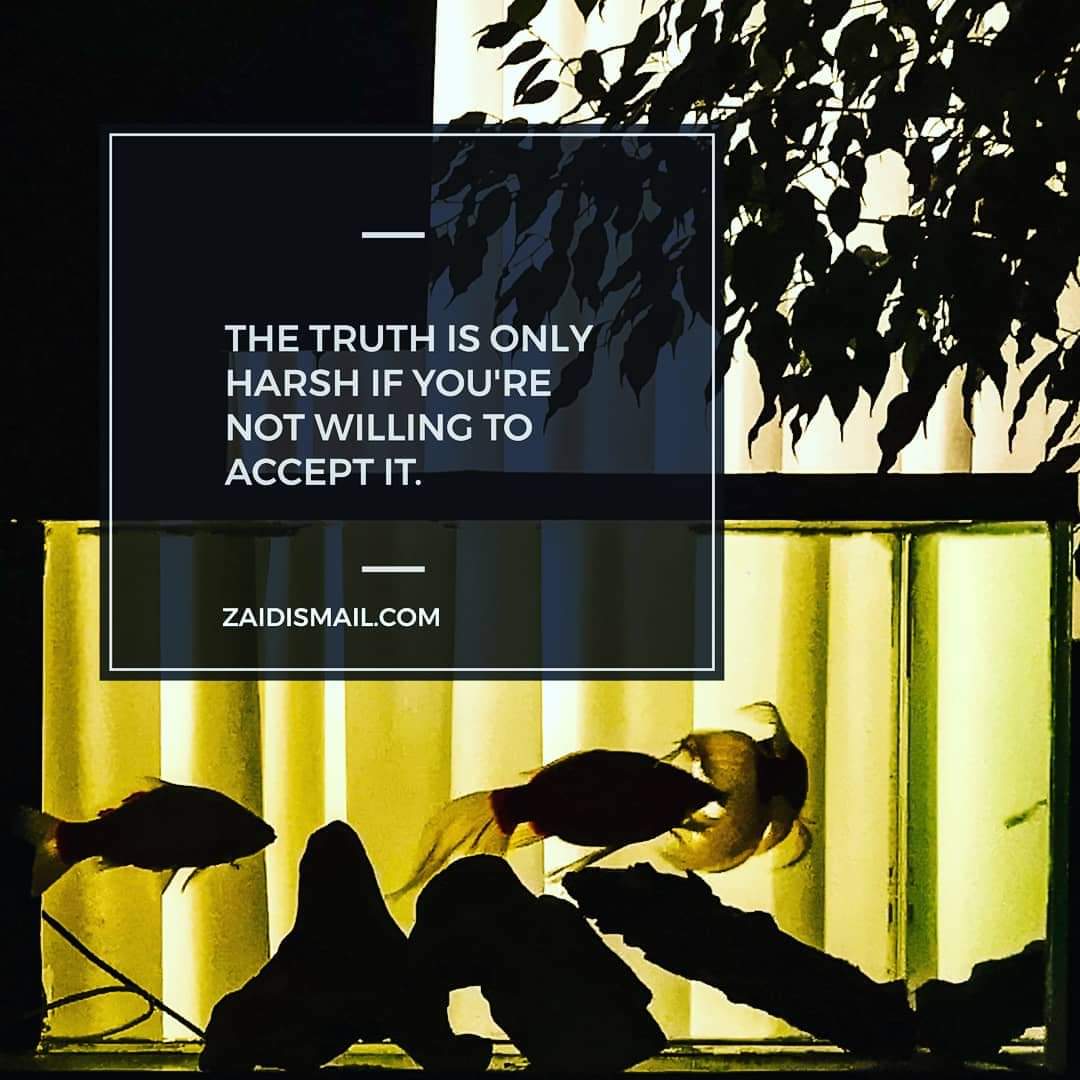
The truth is only harsh if you’re not willing to accept it.
The harshness enters when we need to hear something more palatable or pleasant about ourselves because we need the validation that says that we’re not so bad.
But that’s the problem right there.
We use the truth to judge ourselves instead of grow, that’s why it feels harsh.
If we embrace it, we embrace growth, and growth is never bad, except for the people that you sometimes leave behind because they don’t want to grow with you.
Don’t let that stop you, because when they do decide to grow on their own, they’ll leave you behind.
That’s why you need to own your life, and create opportunities for others to own theirs.
#truth #conviction #growth #optimism #gratitude #growthmindset #mentalhealth #mentalhealthawareness #mentalhealthrecovery #selfworth #selflove #selfawareness #selfrespect #mindfulness #reflection -
Rediscover who you are
The journey of rediscovery of the self is the greatest joy of all.
It shakes off the cobwebs that life tends to accumulate, and breaks the chains that we’ve used to tether ourselves to past experiences.Rediscover who you really are, so that you can shake off the debris that you accumulated through the years with each toxic character that convinced you that you were someone you’re not.
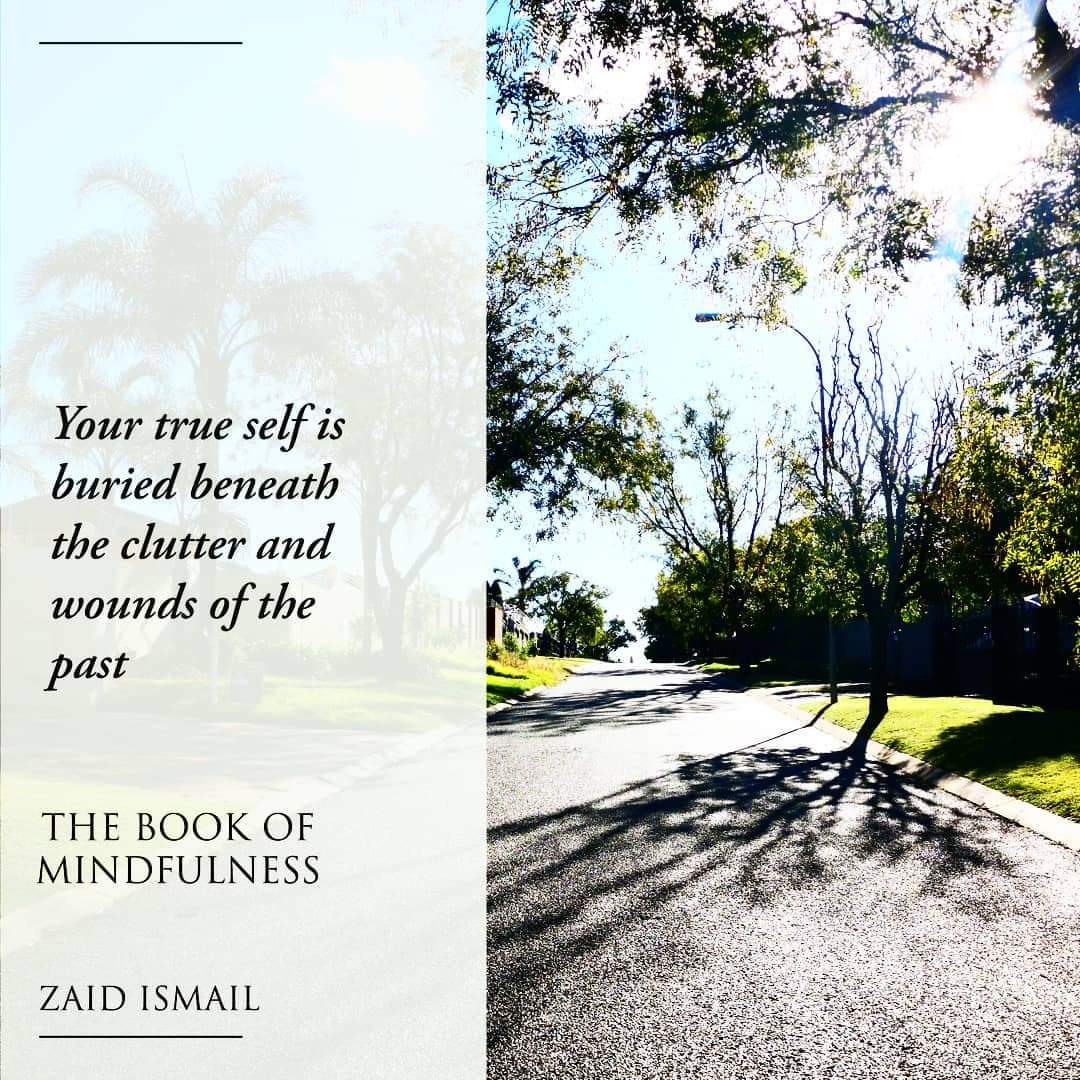
Your true self is buried beneath the clutter and wounds of the past.
The risk of coping with failure or betrayal is that our act of coping grows to define who we think we are.
But that’s when we lose sight of who we were before that moment.
The only way to move beyond it is to recognise that coping is only needed as long as we’re still holding on to the hurt or the disappointment of what could’ve been, but didn’t happen.
Let go of it, and the joy you experienced before that defining moment will return.
#selfworth #selflove #selfawareness #selfrespect #reflection #mindfulness #validation #mentalhealth #mentalhealthawareness #mentalhealthrecovery #thebookofmindfulness #personaldevelopment #growth #growthmindset #gratitude -
Growth is inevitable
This was an important realisation that has carried me through many difficult experiences in life.
What’s even more important to realise is that when we choose a positive growth for ourselves, there is no guarantee that the people around us will choose the same.
Don’t back down from being a better version of you because of it.
All you can do is try to inspire them to be better as well. But the final choice will always be theirs to make.
Trials are there to teach us lessons about what we previously took for granted.
With it, comes a greater level of awareness.
Awareness carries with it a responsibility to either contribute more, or to apply yourself in better ways. That’s how growth takes place.
When you resist such growth, you grow in defensiveness. So you’re effectively exchanging positive growth for negative growth.
Growth is therefore inevitable. You only get to decide in which direction it takes you.
#growth #awareness #trialsandtribulations #life #selfawareness #selfrespect #mindfulness #inspiration #goals #mentalhealth #mentalhealthawareness #mentalhealthrecovery #theegosystem -
Start before you’re ready!
Today I decided to take my own advice. I recorded my first video clip to share with my followers even though I wasn’t ready for it. But I cannot expect to grow in my skill at providing video content if I don’t start. So this was my beginning.
I needed to stop protecting myself from getting it wrong, because as long as I protected myself from that potential outcome, I prevented myself from growing beyond it. Hope you enjoy my first snippet! Much more to come… -
The Lonely Path (II)
That incomplete thought process is hounding me. It feels as if the main point that I tried to convey in the first take on this subject eluded that entire post. The main point was simply this. Before I continue, I am well aware that me using the term simple when explaining what’s going on in my head is quite the oxymoron. So there is no need to snigger about that.
Anyway, the point is, when we choose to pursue a greater calling in life that stretches who we are and what we stand for, we need to realise that the people that are familiar with who we are will no longer know the person that we are striving to become. Under ideal circumstances they will grow with us. But ideals are most often talked about and rarely implemented. So expect to feel a creeping sense of isolation when you push yourself beyond the norms that surround you.
Understand that when you outgrow the environment that you’re in, those that have grown to be defined by that environment will quickly assume that you are trying to be better than them. Or maybe they will assume that you think you are now better than them. Whether that is true is irrelevant. What is relevant is that you are different. You are hopefully a better version of you. But unless you surround yourself with people that appreciate and grow with you, that’s when the lonely path appears before you.
You’ll find yourself growing uneasy as you feel at odds with what used to be familiar and comforting but slowly grows to feel discomforting and somewhat annoying. The comfort of familiarity will be replaced with the realisation of exclusion. Not the exclusion from social circles because that remains consistent for the most part. But the exclusion that leaves you emotionally wanting while physically accepted. An ambivalence sets in that challenges what you believe to be true against what you think may be an assumption of grandeur.
Believing that you are capable of more borders precariously between confidence and delusion. Choose delusion, and you’ll be delusioned about your dreams and aspirations, resulting in an embrace of mediocrity so that the familiar comfort of fitting in continues to stroke your ego. Choose confidence and expect to be tested each time you take a bold step towards being the better version of you. Each time you break away from the norm you risk ridicule or rejection, or both. More importantly, each time you step up, you face self-doubt about your ability to succeed, and your motivation to want to succeed.
Are you still serving that greater purpose or are you serving your ego? Are you pushing yourself to escape complacency or are you courting the admiration of others? The questions that hold you back never cease while the strength to push on is always just out of reach. That’s when you need to stretch yourself into unknown spaces. That’s when doing what feels comfortable and safe threatens to undo every bit of progress that you made up to that point. Even if no one else noticed that progress, you’ll know it was there after you gave it up. Give it up silently and it will haunt you quietly for the rest of your life as you wonder if you would have been able to pull it off. Protect that progress and nurture it into something greater, and you’ll face the reality of success and the horror of failure every few minutes in the back of your mind as you try to focus on what you feel passionate about while trying to subdue the self-doubt that gave you reason to procrastinate for so long.
At that point you’ll slowly begin to realise that life was never about persevering through trials, it was always about facing the fears of success. By focusing on the trials we have something to raise as a trophy just by surviving. Succeeding in moments that trounced others feels like success, but once the moment passes, once the recognition of our struggles and our bravery fades, we’re back to facing off the same questions that taunted us when we grew restless in the first place when we first looked at our life and saw all the gaps we could fill to make it better and improve it beyond meaningless embellishments. You cannot unsee what you stared in the face. The more you try to ignore it, the more exhausting the effort to distract you from it.
The lonely path is the only path that showed others that there is a better way. It is the sacrifice of one that improves the lives of many. Needing the guarantee of reciprocation or reward before setting out to improve this world feeds the transactional greed that defines too many of our interactions. Be like everyone else and you’ll always feel like you belong, except when you’re taking your final breath, or when you’ve aged beyond your fickle social needs. When your energy and your health no longer allows you to pursue with gusto the passion of your youth, desiring to change the world will be nothing more than self-inflicted torture. Building hope on the empty promises of inclusion by society is a foolish way to burn your candle. If you hope to die knowing that the world is better because of your existence, don’t shy away from the lonely path, embrace it.
-
Build, Maintain, or Destroy
The choice to improve our state has always appeared to be a default setting for human nature. Just like the baby that learns to crawl before learning to walk and then run, adults also seek constant progress with the aim to achieve more comfort or fulfilment in their lives. The nature of this world is such that everything, including the human body with all its marvelous designs is in a constant state of entropy. In the absence of entropy, no effort would be needed to maintain or to build on what we hold dear or true.
The desire to build on what we have reflects an appreciation for it, as well as an appreciation for our ability to create more with the skills and resources to which we have access. If we don’t appreciate it, we undermine its value, and in turn allow it to stagnate or deteriorate. Given the constant state of entropy, such stagnation while coupled with an expectation for things to stay the same reflects an entitlement mindset. A mindset that suggests that we did our part, and it is now someone or everyone else’s turn to do their part. Or we live with the expectation that once something is achieved, it will always be there and we end up taking it for granted.
When we take things for granted, it usually deteriorates or disappears completely from our lives. Take people for granted and they’ll find someone else to make them feel appreciated. Take things for granted and we’ll fail to maintain it until it eventually achieves a state of disrepair. Remember entropy? Inaction on our part allows the destruction to gather pace because anything good requires maintenance. Anything bad can simply be left alone to continue its state of natural degradation. That is why when we want something to fail, we simply withhold our contribution towards its success, or maintenance.
But why allow something to deliberately fail if we previously saw value in creating or maintaining it? I think the answer to that question is simple. We start to see the value of our contribution being more than the value of what we experience or receive in return. Sometimes this results in us abandoning this drain on our life, and at other times we keep holding on because we grow to believe that our contribution may not be as valuable as we thought it was.
The moment we start doubting the value of our contribution, or in turn our worthiness of receiving such appreciation for it, the self-doubt starts creeping in and we start edging towards destruction. Destruction of the self before we destroy something external to us is usually the sequence in which it plays out. A healthy self-esteem never wants to be associated with destruction unless such destruction is believed to be necessary to destroy something that we believe is bad for us.
By the same token, an unhealthy self-esteem will result in us wanting to destroy even valuable things because the destruction of good reflects the self-deprecation that we feel in that moment. When we grow to take for granted our value and abilities to contribute towards wholesome outcomes, we are more inclined to destroy than to build.
And that is how we sway from building, to maintaining, to destroying, without stopping to realise that each state simply reflects our level of gratitude for who we are, and what we have. Instead, we find it easier to be distracted by the actions or behaviours of others in using their negative responses to justify our choice to give up on creating something good, so that we don’t have to look within and realise that we gave up on ourselves in the process.
Therefore, gratitude is expressed in a growth mindset, entitlement is reflected in a fixed mindset, and destruction is reflected in a toxic mindset. Each of which is a choice that we make based on what we choose to believe is true about who we are, and what we are capable of.