With all the ‘attitude of gratitude’ narratives, I thought it might be helpful to identify when we’re not being as grateful as we think we are.
Gratitude for the self is reflected in how you value who you are without a need to diminish the value of others.
Sometimes, we convince ourselves that we need to take care of ourselves at the expense of the rights that others have over us, while not realising that this mindset is one of a victim who feels oppressed.
Defensiveness and imbalance in how we deal with life is therefore a common outcome when we lack gratitude for who we are.
Gratitude is not reflected in putting yourself first.
Again, that’s a victim mindset.
Gratitude for the self is reflected in how you feel about yourself when others are grappling with their self-worth while blaming you for it.
As mentioned before, gratitude is what we do with what we appreciate, that’s why the truth of your gratitude for yourself is reflected in how you exercise your abilities to create value in your life and the lives of those around you, despite not being acknowledged or appreciated for it.
So, if you connected with any of the 9 points in the above post, you have some introspection due.
You cannot give what you don’t have.
If you’re lacking in gratitude for yourself, you’re likely teaching your kids and others how to be selfish, or how to be martyrs, but it’s unlikely that you’re teaching them how to be grateful for who they are.
It always starts with you.
#gratitudeattitude #gratitude #growthmindset #ownyourlife #theegosystem #mentalhealth #mentalhealthawareness #lifecoaching #zaidismail #parenting #generationaltrauma #relationshipgoals
Tag: growthmindset
-

Are you sure you have an attitude of gratitude?
-

Do you remember you?
Sometimes, we lose ourselves to the hopelessness of others.
Sometimes, we lose ourselves to the failed expectations of life.
And sometimes, we lose ourselves because we thought it was our failings that earned us pain, while oblivious to the fact that it was in fact our success that threatened the ones we loved.
In these, and so many other scenarios, our perspective is tainted by our belief that what we wish to achieve with others, is what is important to them to achieve with us.
When this belief proves to be false, we question our self-worth when our best efforts only cause upheaval, and our best intentions are always misconstrued as arrogance or materialism.
If we don’t stop to see the demons that our significant others are battling, we’ll judge ourselves by how they fail to overcome their demons.
That’s when our demons strengthen their hold on us.
Unless we reconnect with who we are, we’ll forever wait for someone else to do right by us before we allow ourselves to find joy in who we are.
Rediscover who you really are, so that you can shake off the debris that you accumulated through the years with each toxic character that convinced you that you were someone you’re not.
The risk of coping with failure or betrayal is that our act of coping grows to define who we think we are.
But that’s when we lose sight of who we were before that moment.
The only way to move beyond it is to recognise that coping is only needed as long as we’re still holding on to the hurt or the disappointment of what could’ve been, but didn’t happen.
Let go of it, and the joy that you experienced before that defining moment will return.
It always starts with you.
#selfworth #selflove #selfawareness #selfrespect #reflection #mindfulness #validation #mentalhealth #mentalhealthawareness #mentalhealthrecovery #thebookofmindfulness #personaldevelopment #growth #growthmindset #gratitude #lifecoaching #zaidismail -
Be true about seeking truth
If you’re sincere about seeking the truth, you won’t be distracted by the source or tone through which it arrives.
The truth is only harsh if you’re not willing to accept it.
The harshness enters when we need to hear something more palatable or pleasant about ourselves because we need the validation that says that we’re not so bad.
But that’s the problem right there.
We use the truth to judge ourselves instead of grow, that’s why it feels harsh.
If we embrace it, we embrace growth, and growth is never bad, except for the people that you sometimes leave behind because they don’t want to grow with you.
Don’t let that stop you, because when they do decide to grow on their own, they’ll leave you behind.
That’s why you need to own your life, and create opportunities for others to own theirs.
#truth #conviction #growth #optimism #gratitude #growthmindset #mentalhealth #mentalhealthawareness #mentalhealthrecovery #selfworth #selflove #selfawareness #selfrespect #mindfulness #reflection -
Rediscover who you are
The journey of rediscovery of the self is the greatest joy of all.
It shakes off the cobwebs that life tends to accumulate, and breaks the chains that we’ve used to tether ourselves to past experiences.Rediscover who you really are, so that you can shake off the debris that you accumulated through the years with each toxic character that convinced you that you were someone you’re not.
Your true self is buried beneath the clutter and wounds of the past.
The risk of coping with failure or betrayal is that our act of coping grows to define who we think we are.
But that’s when we lose sight of who we were before that moment.
The only way to move beyond it is to recognise that coping is only needed as long as we’re still holding on to the hurt or the disappointment of what could’ve been, but didn’t happen.
Let go of it, and the joy you experienced before that defining moment will return.
#selfworth #selflove #selfawareness #selfrespect #reflection #mindfulness #validation #mentalhealth #mentalhealthawareness #mentalhealthrecovery #thebookofmindfulness #personaldevelopment #growth #growthmindset #gratitude -
Regret doesn’t change the past
It’s easy to lose ourselves in our efforts to overcome upheaval.
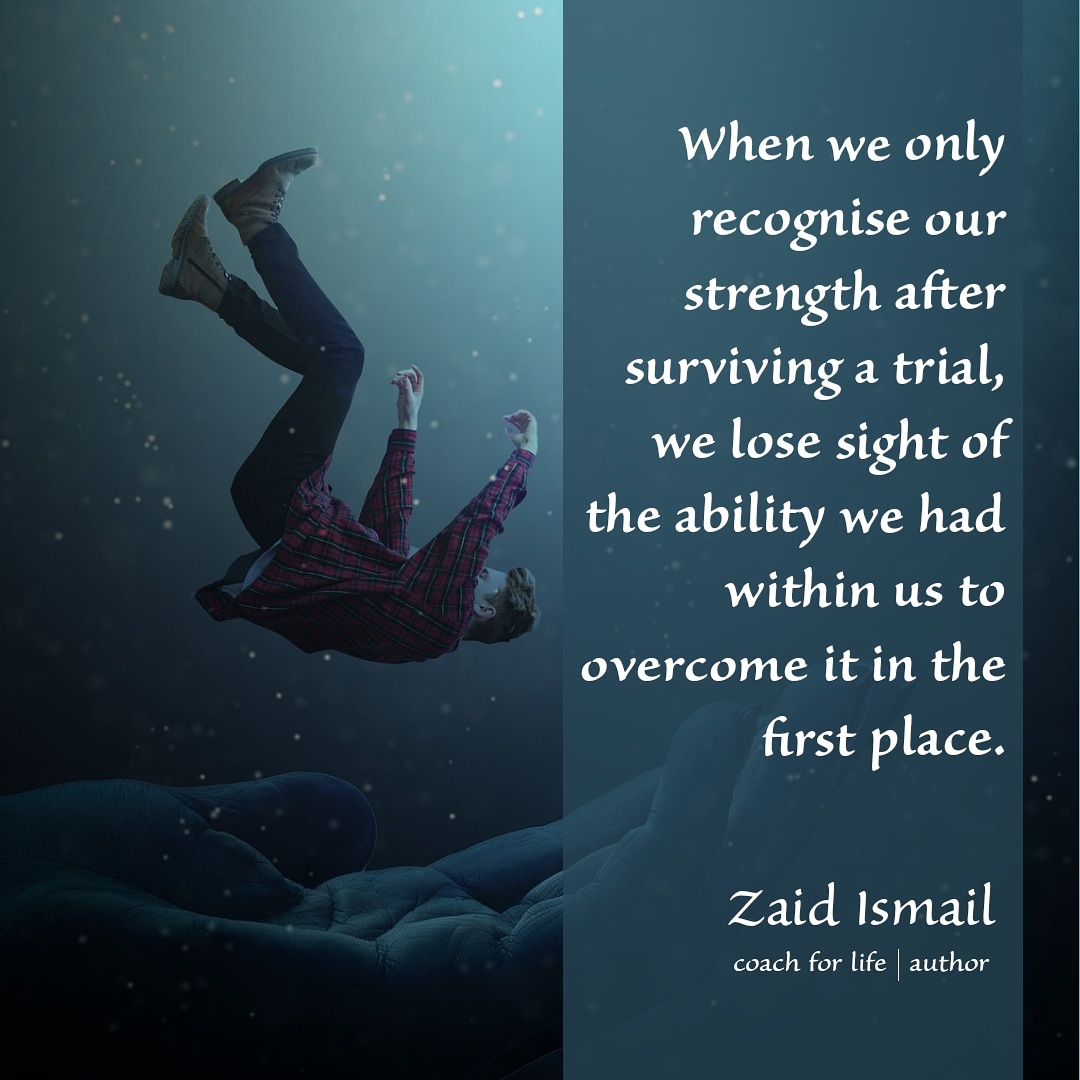
It’s also easy to look back and think that it was the trial that developed the strength or ability to overcome it.
But, what if we had that within us all along, and the trial only revealed it?
We must recognise the difference between our innate abilities, versus the skills we develop by applying those abilities.
Too often, we look at our skills and assume that to be our abilities. But why is this difference important?
It is our ability to acquire skills to overcome trials that are more important than the skills we acquire in that moment.
If we appreciate our ability to learn and to adapt, we’ll find less reason to stress, no need to just cope, and instead, we’ll face trials and challenges with greater confidence and less anxiety.
Strength therefore is found in our appreciation for our ability to acquire new skills, rather than giving in to the fear that the skills we have may be insufficient to overcome what we’re faced with.
Trials are therefore opportunities for growth, but we lose sight of the growth when we succumb to the fear of what we think awaits us on the other side of that trial.
Photo credit : Adobe Stock
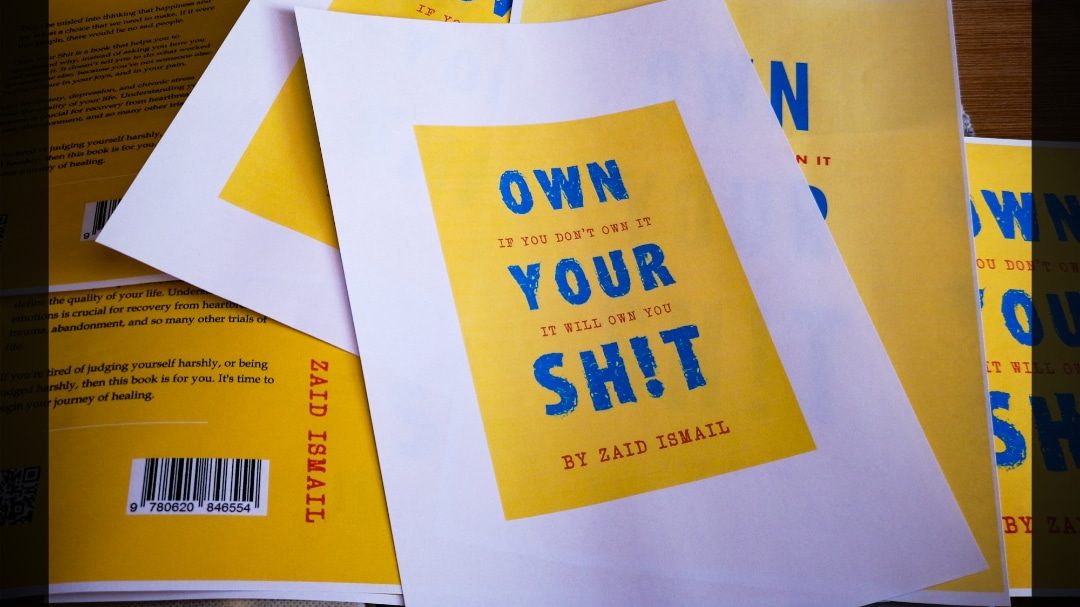
#selfworth #selfawareness #mentalhealth #mentalhealthawareness #mentalhealthrecovery #theegosystem #ownyourlife #ownyourshit #embracingME #growthmindset #zaidismail #narcissism #narcissisticabuse -
Be exceptional
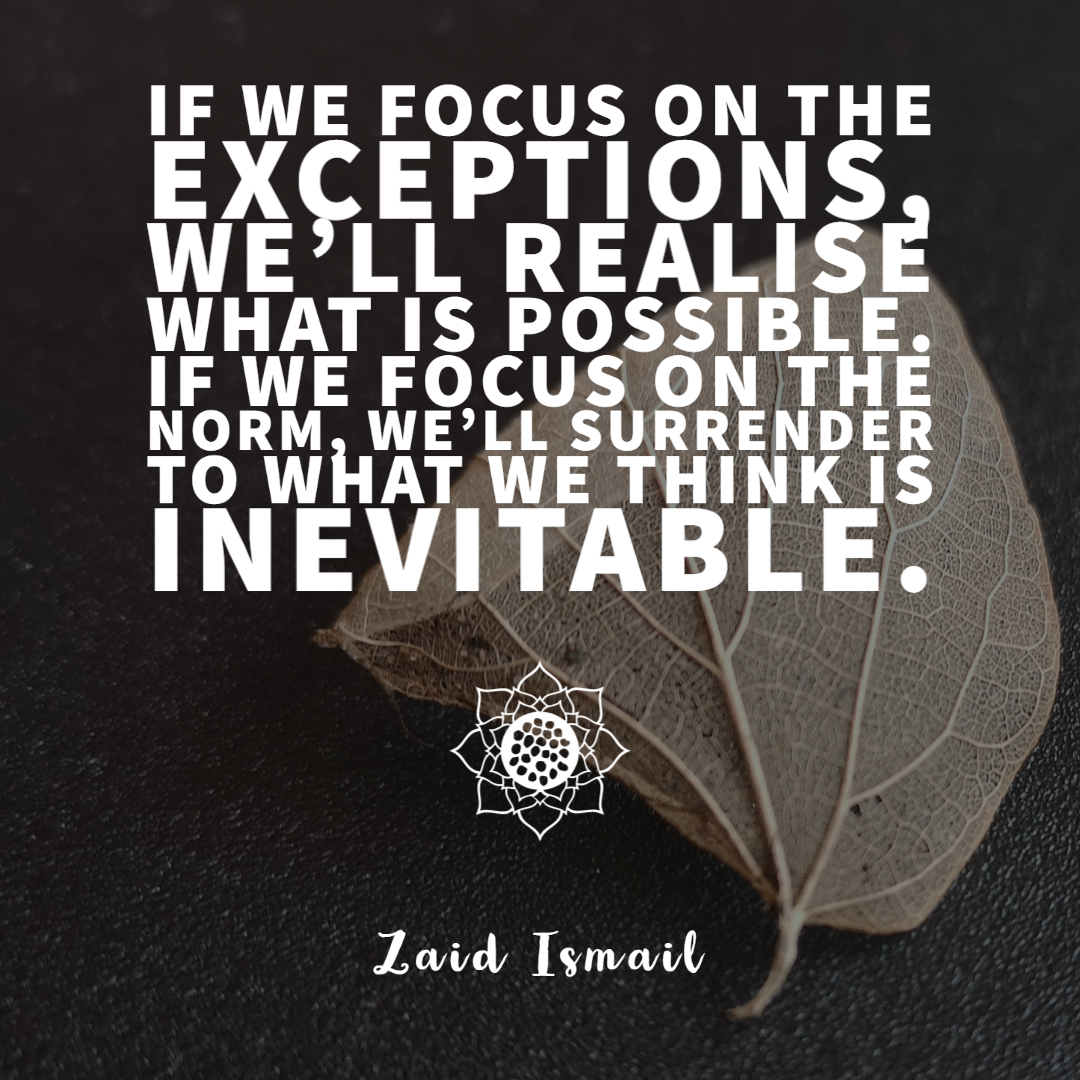
If we focus on the exception, we’ll realise what is possible.
If we focus on the norm, we’ll surrender to what we think is inevitable.
This is at the heart of mediocrity versus excellence.
There are those that look at trends and try to follow, and those that focus on value and pursue a better path. Wanting to lead doesn’t drive their agenda.
Leadership is a natural consequence of acting with conviction in wanting to realise the value that you believe will benefit others.
Stop being distracted by the norms you see around you so that you’ll be able to recognise the potential beyond it.
#leadershipcoaching #careercoaching #mentalhealth #mentalhealthawareness #mentalhealthrecovery #selfworth #selflove #selfawareness #selfrespect #mindfulness #inspiration #ownyourshit #ownyourlife #theegosystem #embracingME #pursuitofhappiness #victimmentality
#growthmindset -
Why we need more idealists
I am an idealist. It attracts mockery, condescension, ridicule and any number of other derogatory and passive aggressive responses from people that want to appear a certain way. But I choose to be an idealist in spite of them. The alternate may be choosing to be a realist. However, experience has taught me that realists are focused on reacting to challenges and working with what they have. Seldom do they strive to create something larger than their current reality. That means they are effective at maintaining the status quo, not at improving the human condition beyond it’s current ideal state.
I could be a pragmatist. Insisting that only what is within my control is what I should assume to hold any influence or control over. Practical realities assume that we know everything about what it is that we’re faced with. We never do. Thus, pragmatists are a hindrance rather than a benefit.
The world is plagued with problems created by realists who demand that the only realistic view of the world is their view because they have tangible evidence to support their view. But, right there lies the problem. The tangible is what distracts us from the greatness that lies beyond it. When we focus on manipulating what we have into permutations of what we know, we lose sight of what more is possible.
I choose to be an idealist because it is our belief in the intangible possibility of being more than we are now that has always spurred us into action. Inspiration does not lie in what is known. What is known is quickly taken for granted because, well, it is known. It is obvious. It is commonly accepted for what it is. But look beyond the known, look at the possibility of creating a new reality out of the dysfunction that exists within the current reality and suddenly we re-frame what possibilities the world holds for us.
Not only do we see purpose beyond duty, but we see duty in being dreamers. Duty in believing that we are capable of more than what we have and who we are. But, we resign such thinking to material gains. To improving quality of life through comforts or accumulation of wealth, or occasionally through philanthropy. All that has its place, but it doesn’t alter the human condition, it only makes it more bearable.
I choose to apply my idealism to the state of the human condition. I choose to use it to inform my choices to see beyond the distractions of apparent evil, and instead to gain sight and understanding of the wounds that drive such evil. But this approach is an approach that is not favoured by many. It finds ridicule, and rejection, just like idealists do, because it rejects the right to vengeance and instead focuses on the need for understanding and correction.
Justice defined by victims will be justice entrenched in vengeance. Rarely do victims consider a reality beyond either vengeance or forgiveness. The entire landscape between those poles is ignored because in seeking to understand, it demands that we accept accountability for the effort needed to reach such understanding. It demands that we set aside our fury and our rage so that we can understand why we were just a convenient outlet for the filth or the abuse or the violence that someone else harboured within them. Provocation is only an acceptable excuse for retaliation in the case of self-defense. Beyond that, provocation is a demand for understanding and justice. Unfortunately, the one blinded by hate or anger is seeking retribution from anyone that resembles the source of their anger and hatred. At that moment, it doesn’t matter that the target is innocent, it only matters that within the mind of the aggressor, the target resembles or represents the threat that robbed them of their humanity at some point. Without seeking to understand this, we will create victims who will become survivors, but will not progress beyond that. That the aggressor must be punished for their aggression is a given. But even that in itself is not enough. That in itself will never fully realise the ideals of justice. For this reason, even when justice is served, many don’t feel the sense of peace that should accompany such justice.
As I stated many times before, survivors don’t enjoy the sweetness of life, they only enjoy the deferral of death. As long as we consider ourselves to be survivors, we remain defined by the event or experience that we survived. Thriving is impossible when we are rooted to a moment in the past. Letting go of that moment becomes difficult when we have yet to experience a sense of justice, or vengeance for what was done to us. For this reason, even those that forgive continue to hold on to the effects of that experience, but through forgiveness have only given up the desire for direct retribution. Often, such retribution is entrusted to a higher power that prevails beyond the realities of this world as we experience it.
There are no easy answers for idealists. But there are simple ones for realists, and pragmatists, because they see things in obvious tones, and absolutes. Anything beyond that is considered an indulgence of ideals that have no value. And perhaps there are moments when this may be true. When urgency demands that ideals be suspended and practical realities take precedence. But, what is the result when such an approach becomes the norm? What happens when the value of that immediacy of response underpins the belief that it is the only value that is achievable? Is that when we set aside humanity in favour of perceived justice? Is that when retribution replaces justice, and balance or harmony is replaced by perceived rights?
I am an idealist because I believe, with conviction, that we are capable of better than who we are today, or who we have been over the generations that passed. I am an idealist because I recognise the value of the principles that spurred on our predecessors that we now idolise, or at times follow blindly, but I do not follow blindly. I choose to reinterpret their principles within the context of my life, because I understand, without doubt, that if something is not growing, it is dying. This is also true for the human condition. As long as we stagnate in our growth by holding on to beliefs from a distant past without appreciating the value of the principles that underpinned those beliefs, our condition begins to wither away. And as it is with all withering, the resultant decomposition of values will reveal the worst of us, because we chose to stop pursuing the ideal of being the best of us.
-
Start before you’re ready!
Today I decided to take my own advice. I recorded my first video clip to share with my followers even though I wasn’t ready for it. But I cannot expect to grow in my skill at providing video content if I don’t start. So this was my beginning.
I needed to stop protecting myself from getting it wrong, because as long as I protected myself from that potential outcome, I prevented myself from growing beyond it. Hope you enjoy my first snippet! Much more to come…