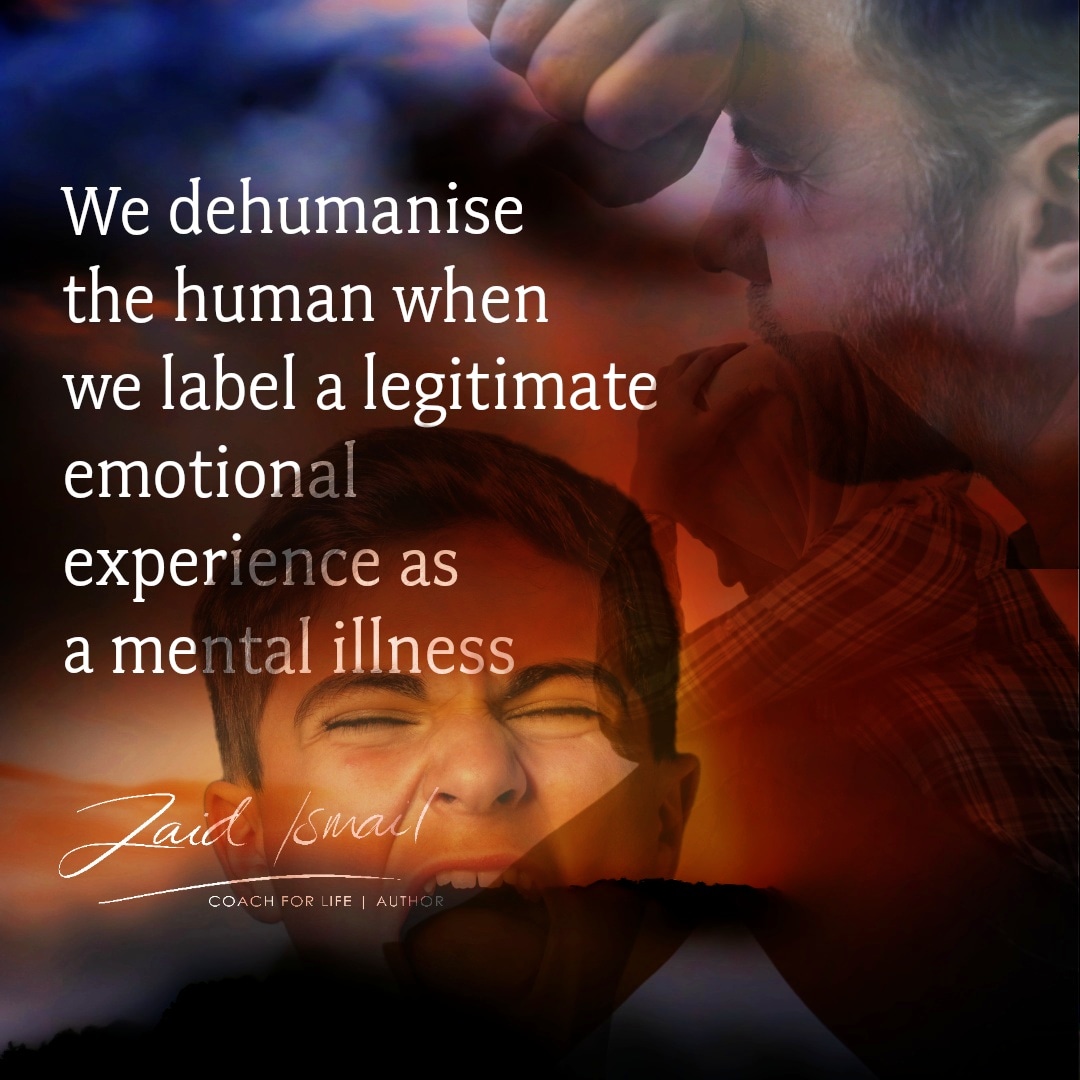
We dehumanise the human when we label their emotional experience as an illness.
The moment we attach a label to a life experience, we focus on the label and discard the merits of the experience.
We make people invisible when we deny the reality of their experience by suggesting that there is something clinically wrong with them, despite causality of their emotional upheaval being clearly associated with their experiences in life.
In other words, there is a clearly troubling or traumatising experience that they’ve endured to explain their emotional duress, yet we diminish their experience by ‘diagnosing’ them with an illness for feeling overwhelmed, anxious, or stressed, etc. simply because they’re affected by it for longer than we think they should be affected by it.
The victim readily embraces such labels because it offers hope where they feel hopeless, and allows them to abdicate responsibility for rising above it.
The oblivious or insensitive ones happily embrace such labels because it demands less emotional investment, or less accountability in their efforts to uplift or support those around them.
Our aversion to embrace the entirety of the human behind the troubled behaviour denies the victim a voice, or an opportunity to understand their painful experiences in life.
These labels are worn with shame because it denies us our humanness and makes us a symptom.
You cannot break the stigma of mental health by undermining the humanness of the ones affected by the stigma.
Kill the label, kill the stigma.
If you stigmatise someone’s real life experience, how can you possibly expect them to feel whole?
#mentalhealth #mentalhealthawareness #mentalhealthrecovery #suicide #suicideprevention #suicidalawareness #suicideawarenessmonth #depression #anxiety #ownyourlife #theegosystem #embracingME #zaidismail
Tag: anxiety
-

Labelling humans
-

Kill the label. Kill the stigma.
⚠ Trigger Warning ⚠
The moment we attach a label to a life experience, we focus on the label and discard the merits of the experience.
We make people invisible when we deny the reality of their experience by suggesting that there is something clinically wrong with them, despite causality of their emotional upheaval being clearly associated with their experiences in life.
When we readily embraces such labels, it disempowers us to make sense of, and to rise above that which weighs us down.
When we create such detachment from the cause of our duress, it denies us a voice in expressing our hurt or pain.
Instead, it convinces us that we’re defective in some way.
When the shame of such labels grows to define how we appear to others, we find familiarity and a common cause with others who suffer a similar struggle, resulting in a victim mindset that focuses on claiming their space as struggling humans who are afflicted with mental illness.
That’s how we break each other down as humans, while building each other up as victims.
You cannot break the stigma of mental health by undermining the humanness of the ones affected by the stigma.
We need to see the human behind the labels that we throw at each other.
Until then, compassion and empathy will continue to be in short supply.
Kill the label, kill the stigma.
#mentalhealth #mentalhealthawareness #mentalhealthrecovery #suicide #suicideprevention #suicidalawareness #suicideawarenessmonth #depression #anxiety #ownyourlife #theegosystem #embracingME #zaidismail #lifecoaching -
Who defines you?
It’s easy to lose ourselves to the outcomes of our lives.
It’s easy to convince ourselves that our achievements, rather than our efforts, are a true reflection of the value we hold within.
It’s a dance with fate that often destroys hope and replaces it with complacency.
In a world saturated with the ungrateful and the insincere, measuring your worth by the behaviour of others is an exercise in self harm..and simply adds you to the ranks of the ungrateful.
If resisting your true nature is the root of unhappiness, then knowing your true nature must be the key to joy.
Therefore, measuring your true worth by the demons of others will lead you away from joy and towards pain, as you convince yourself that how they treated you is all you’re worthy of.
You were not created to pacify the weak.
#selfworth #selfawareness #ownyourlife #selfmastery #mindfulness #personalpower #ownyourshit #mentalhealthrecovery #mentalhealth #mentalhealthawareness #lifecoaching #mybeloved #zaidismail #suicidalawareness #suicideprevention #depression #anxiety -
Sadly depressed
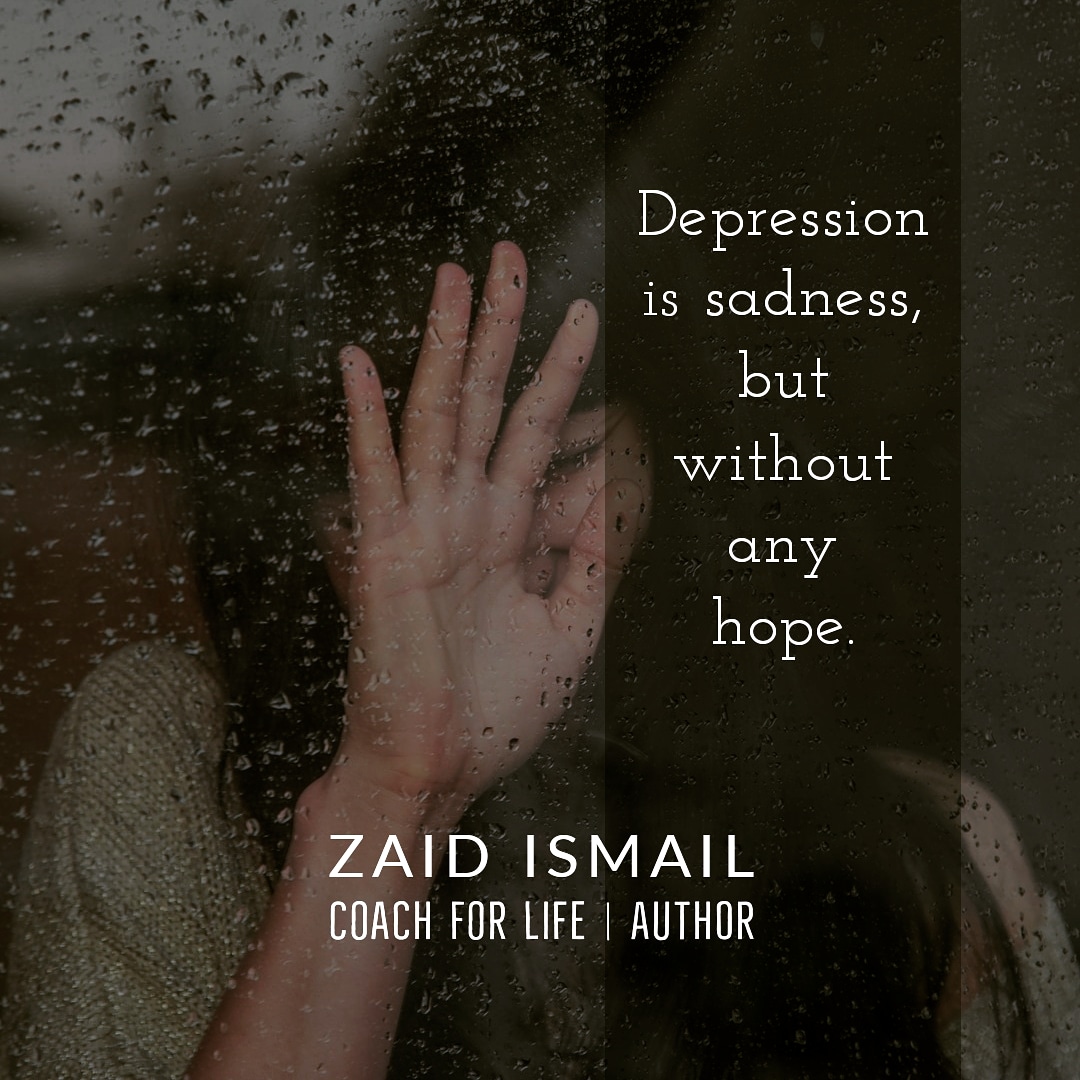
Depression sets in when we look for signs of hope in those things that are important to us, but find none.
It doesn’t mean that there is no hope for anything in our life. It just means that what we choose as a defining relationship or experience to reflect our significance provides us with no reason to believe that we are significant in that way.
This is why from the outside looking in, we may think that people who are depressed are actually happy, or carefree.
Sometimes when we see everything else that they’ve got going in their life compared to others, we consider them to be ungrateful.
But that’s because we’re looking at them through our eyes, and not through their own.
The absence of hope occurs when we insist on receiving from others that which they’re either unwilling or incapable of providing. Their unwillingness often being more about their insecurity than what we’re worth to them.
If you find yourself struggling to reconnect with hope in the most important domains of your life, I can help.
WhatsApp me on +27836599183 or contact me via my website at zaidismail.com. Affordable coaching to clients internationally.
Photo credit : Adobe Stock
#mentalhealth #mentalhealthawareness #mentalhealthrecovery #suicide #suicideprevention #suicidalawareness #suicideawarenessmonth #depression #anxiety #zaidismail #lifecoaching #coachforlife -
Be you…unapologetically
The opinions that others have of us affects us most when we are not convinced about who we are.
It’s self-doubt that creates the space for others to influence how we feel about ourselves.
Be it a troubled relationship with a family member, a partner, an ex spouse, or even a friend or colleague, the moment their words about us weighs more than what we think of ourselves, we need to recognise that we needed validation more than we needed companionship or a healthy relationship with them.
Our disappointment in them when they behave badly should not extend to disappointment in ourselves.
The moment we judge ourselves harshly after they’ve treated us badly, we’re diminishing our self-worth by believing that we’re not even good enough for someone who has questionable values.
That’s how we lose ourselves to the lack of self-respect in others, or in ourselves.
If you find yourself questioning your self-worth or struggling to connect with who you are in the face of the struggles of your life, reach out via WhatsApp on +27836599183 or via my website at zaidismail.com for affordable coaching rates that could be the fresh start that you need in life.
Serving clients internationally.
#selfworth #selfawareness #ownyourlife #selfmastery #mindfulness #personalpower #ownyourshit #mentalhealthrecovery #mentalhealth #mentalhealthawareness #lifecoaching #zaidismail #suicidalawareness #suicideprevention #depression #anxiety #suicideawarenessmonth -
Break the stigma
We dehumanise the human when we label their emotional experience as an illness.
The moment we attach a label to a life experience, we focus on the label and discard the merits of the experience.
We make people invisible when we deny the reality of their experience by suggesting that there is something clinically wrong with them, despite causality of their emotional upheaval being clearly associated with their experiences in life.
The victim readily embraces such labels because it offers hope where they feel hopeless.
The oblivious happily embrace such labels because it demands less emotional investment, or less accountability in their efforts to uplift or support those around them.
Our aversion to embrace the entirety of the human behind the troubled behaviour denies the victim a voice, or a claim to their painful experiences in life.
These labels are worn with shame because it denies us our humanness and makes us a symptom.
You cannot break the stigma of mental health by undermining the humanness of the ones affected by the stigma.
Kill the label, kill the stigma.
Photo credit : Adobe Stock
#mentalhealth #mentalhealthawareness #mentalhealthrecovery #suicide #suicideprevention #suicidalawareness #suicideawarenessmonth #depression #anxiety #ownyourshit #ownyourlife #theegosystem #embracingME #zaidismail -
Always hope
When we focus on the struggles of our lives, we feel defeated.
When we focus on the growth, we feel empowered to overcome future obstacles.
But we’re human. We doubt ourselves and sometimes we feel entitled to peace.
In the process, we create self-fulfilling prophecies by growing despondent when things go wrong, rather than looking for the opportunities to create something better.
We limit our ability to overcome obstacles by telling ourselves that there is a limit to what we’re capable of dealing with.
Rather than embracing the challenges without preempting the outcomes, we end up focusing on how close we are to that limit that we set for ourselves and then grow defensive the moment we believe things are getting too close to it.
That’s how we prevent ourselves from trying beyond a certain point, and that’s how we grow to believe that some things are impossible to overcome.
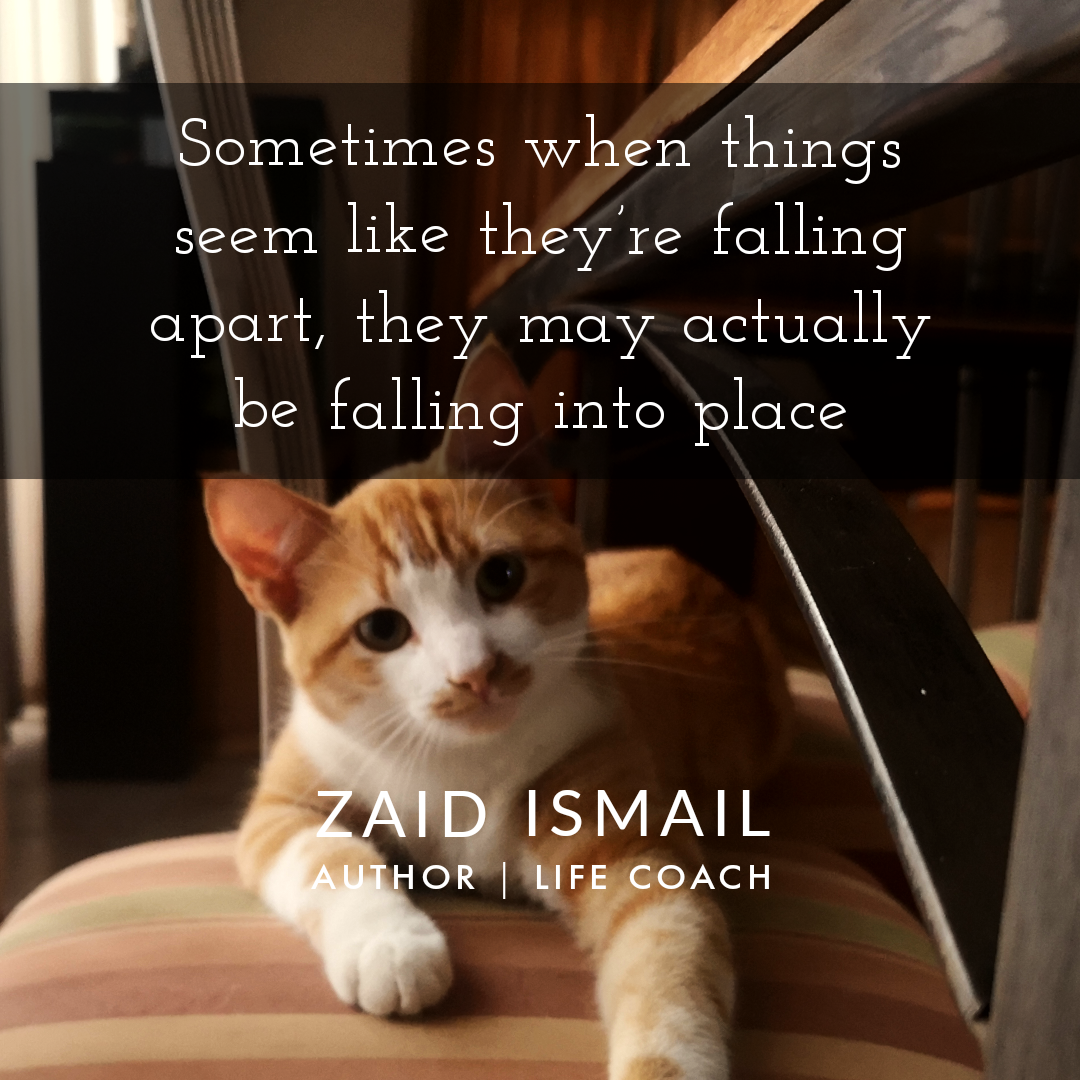
Sometimes, when things seem like they’re falling apart, they may just be falling into place. But when we fixate on what’s falling apart, we deny ourselves the opportunity to see how it may be contributing towards our dreams and goals that were being hindered by what we had in the first place.
Breathe, beloved. And let faith, not fear, guide you through the storm.
#hope #expectation #selfawareness #selfrespect #mindfulness #inspiration #ownyourshit #ownyourlife #theegosystem #mentalhealth #mentalhealthawareness #mentalhealthrecovery #mybeloved #zaidismail #suicidalawareness #suicideprevention #depression #anxiety #suicideawarenessmonth #lifecoaching -
The ultimate rebellion
Living romantically, despite the horrors of life, is the ultimate protest
It’s the obstinate rebellion against those who wish to rage, because they have no peace to give
It is the cry of the lover for his beloved
The anguished heart searching for peace
The lonely soul searching for home
To see beauty when surrounded by pain
Or to be gentle when born of torture
To love despite being surrounded by hate
And to claim dignity when shame is the only language spoken
That is the ultimate protest
Because we must strive for what we wish to create
Rather than rage against what we wish to destroy.
The world is full of rage
Perhaps it needs some romance again.
Join me, beloved
Join the conquest of this madman.
#romance #livingromantically #love #suicidalawareness #suicideprevention #depression #anxiety #suicideawarenessmonth #lifecoaching #mybeloved #zaidismail #authorsofinstagram #anincompletelovestory #rageagainsttheworld