With due to respect to the author of this quote, I totally disagree with this view. This is why.
It’s one thing to let someone know that you were hurt by something that they did or said. But it’s something totally different to blame them for hurting you.
When you make them aware of how you feel about what they did, that’s owning your response and creating an opportunity for them to understand the impact that they have on you.
When you insist that they hurt you, and deny them the right to say that they didn’t, you impose your belief on their intention behind what they did.
Why is this important? Simple. The moment you blame someone else for your emotional response, you don’t own your response and instead, you give up your power to own your life. In other words, you become a victim of everyone else’s actions.
Worse than this, you become the oppressor after feeling oppressed. Or the hurtful one after feeling hurt, because something completely innocent done by someone else becomes tainted with your trigger to that event. Or your bitterness about something that they are not responsible for.
The same way that you want your emotions to be honoured by others, you need to honour their emotions as well. And you do this by trying to understand why they may do something that is hurtful to you without making it about you.
Seek to understand. Like someone once told me, not all who claim to love, seek to understand. So just because you claim to love someone doesn’t give you the right to blame them for your hurt. That’s not love. That’s abuse. Abuse of the trust that they place in you.
You can do better than that.
Tag: selfrespect
-

It’s not always about you
-

Lost moments
The pendulum of time brushes ever so lightly against the arc of eternity, and in that very finite moment of its contact, an entire lifetime is lived. Some are deluded into believing that the pendulum will swing back, realising too late that once the moment is passed, it is lost to eternity.
For some reason, this thought always chokes me up… :'(
Why do people take life for granted and wait for ideal moments before allowing themselves to embrace life more fully and sincerely?
Moments pass so quickly.
The current trends are to catch moments through meditation, long after the moment is lost.
Or to reminisce about why it could have been different if only something else was in place at the time.
The most gut wrenching heartache is caused from moments that held the promise of beauty or peace, but were lost to bad timing, or fear.
I think the secret to living joyfully lies in trusting those who echo the sentiments in your heart.
But such a trust is daunting when it was abused by another, and thus courage becomes a prerequisite for trust.
Discovering the secret of courage then becomes the next pursuit of the heart.
Breathe, beloved…slow deep breaths. And courage will emerge from the depths where it lays dormant after having been subdued by calloused hands.
Photo credit : Adobe Stock
#life #love #mindfulness #selfawareness #selfrespect #selflove #anincompletelovestory #mybeloved #zaidismail #lovestory #authorsofinstagram #romancenovel #ownyourshit #ownyourlife #theegosystem #embracingME -
Don’t label your struggle
Mental health is about hope. The more hope we have for experiencing joy tomorrow, the better our mental health today.
The human experience is not an illness.
The best way to protect your mental health is by recognising your humanness.
Don’t allow your reality to be labelled as something more than your experience of the ups and downs in your life.
When you find yourself with more bad days than good days, it’s because you need to do something differently. You need to break a cycle that is not serving you well.
When you find hope is scarce, or difficult to hold onto, reconnect with your passion and your principles, and trust that it’s not hope that dies, but just our distracted state that makes it difficult for us to sometimes connect with that hope.
Gently clear away the distractions that have grown to define your state, and reconnecting with hope will come naturally.
Be kind to yourself first, and not just in physical self care. If you find that difficult to do, , reach out on WhatsApp at +27836599183 or via my website at zaidismail.com for affordable coaching rates.
Remember, you can’t give what you don’t have. Together, let’s create the life that you’ve always wanted.
#worldmentalhealthday #mentalhealthday #mentalhealth #mentalhealthawareness #mentalhealthrecovery #selfworth #selflove #selfawareness #selfrespect #mindfulness #theegosystem #reflection #hope #dreams #depression #suicideprevention #suicide -
Never stop chasing
The thing about chasing dreams, is that it’s our dreams.
As obvious as that seems, we rarely recognise that no one else will ever have a view of our dreams the way that we have it even if we describe it to them in detail.
They will visualise it within the context of their lives and limitations.
By chasing our dreams with conviction, we must connect with the value that will be created when we achieve those dreams.
It’s that value that will give us the tenacity and resilience to push beyond the doubts and cynicism of those we encounter on our journey.
To believe in that value, you must believe in yourself.
Believing in yourself means to develop an informed opinion of who you are, despite what the world may think of you. Because, again, the opinions that others have of you is based on the context and limitations that they see in their lives, not in yours.
Stop waiting for permission to chase your dreams. Like Barry Hilton said, “It’s your dream to lose.”
#dreams #hope #expectation #selfawareness #selfrespect #mindfulness #inspiration #motivation #optimism #perseverance #ownyourshit #ownyourlife #theegosystem #mentalhealth #mentalhealthawareness #mentalhealthrecovery #zaidismail -
The balance of happiness
Without meaning to, life can become a trading exercise in which we give something with the expectation of receiving something else in return.
That’s when it gets complicated. When the assumptions of one or both becomes entangled in the belief that happiness lies in a like-for-like exchange of sentiment or gifts, or perhaps effort.
Sometimes, happiness is found in the opportunity to love without resistance to it.
The ability to have your expression received graciously and appreciatively, because in such acceptance lies the happiness of the one who gives, and the gracious acceptance forms the expression of love of the one who receives.
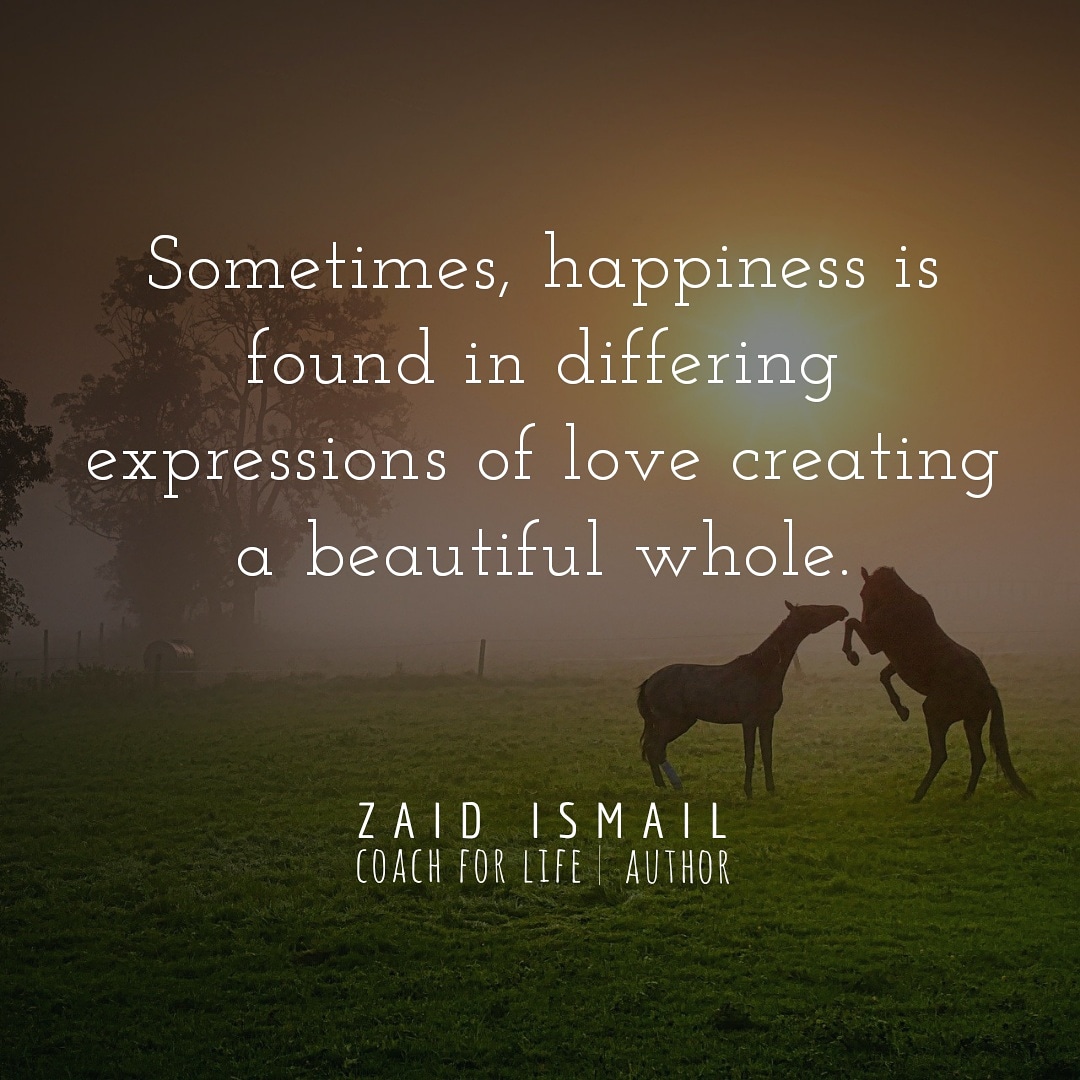
Happiness is found in differing expressions of love creating a beautiful whole.
It’s when servitude meets devotion, or nurturing meets strength that the two complement each other, rather than compete with each other.
Happiness is found in the balance that is born from the two, not in trying to create a singular expression between the two as one.
Too often we assume the happiness of another to be dependent on our active contribution towards them, rather than realising that it is simply our appreciation of their contribution towards us that creates the fulfilment that would calm the souls of both.
Calm souls create beauty, while anguished souls create destruction. Breathe beloved…just breathe…
Photo credit: Adobe Stock
#love #happiness #pursuitofhappiness #relationshipgoals #companionship #soulfood #soulmates #anincompletelovestory #selfawareness #selfrespect #mindfulness #inspiration #mybeloved #zaidismail #authorsofinstagram -
The gratitude paradox
Gratitude is a result of appreciating the absence of something.
That absence doesn’t have to be experienced, it can also be observed.
All that is needed is an event or incident that inspires the realisation of what life would be like without the value that we obtain from something. Occasionally it’s from someone.
It is our aversion to the absence of that value in our life that instils a sense of gratitude for its presence.
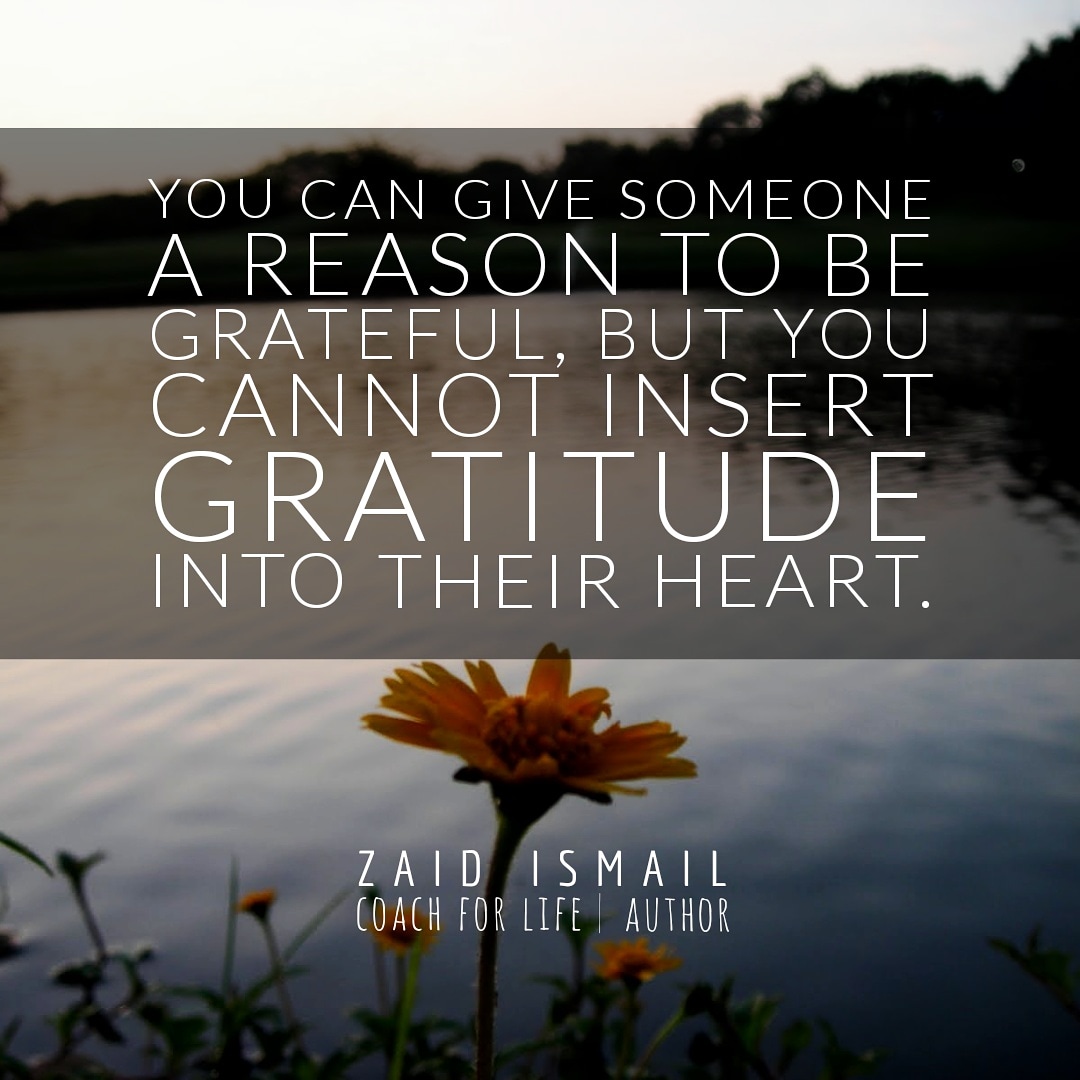
Gratitude is one of those things that apart from it being impossible to insert into another’s heart, it also cannot be given if you don’t have it for yourself.
When one who takes themselves for granted, or undermines their self worth expresses gratitude, it is more an intellectual acknowledgment of the contribution of another, rather than true gratitude.
This is easily revealed when such benefit is removed. The one with true gratitude will mourn its loss or even try to reclaim it, while the one who lacked that gratitude for themselves will find it easier to accept that it is what it is.
Giving up on good is more readily practiced by those who don’t believe themselves to be deserving of such good.
Thus, the absence of gratitude is not to be cursed. Instead, the pain of the soul that lacks it should be considered so that we may offer healing rather than rejection.
#gratitude #appreciation #selfawareness #selfrespect #mindfulness #selfworth #selflove #mentalhealth #mentalhealthawareness #mentalhealthrecovery #theegosystem #ownyourlife #ownyourshit #embracingME #mybeloved #zaidismail -
Understanding vs Judgement
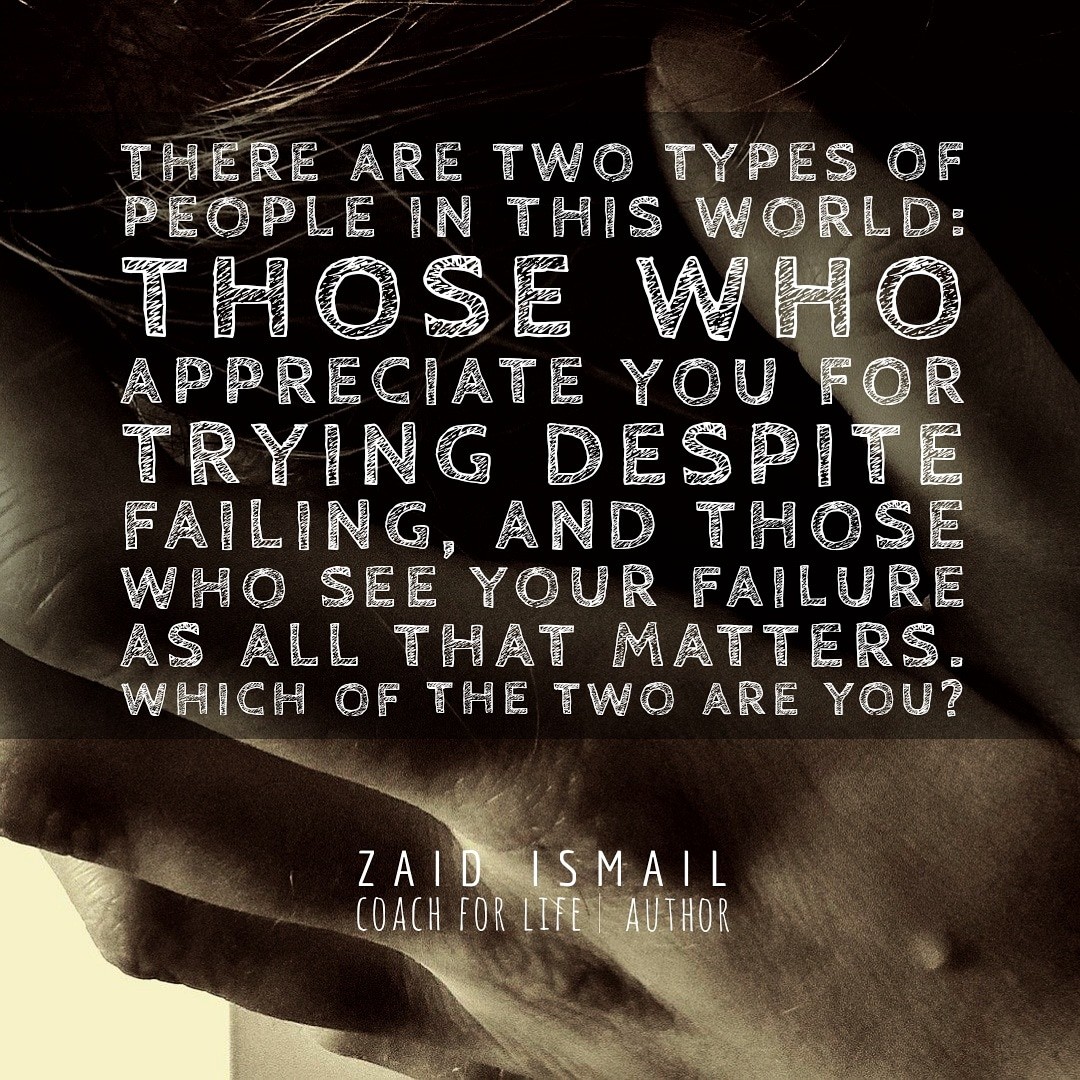
There are two types of people in this world.
Those who appreciate our efforts for trying to achieve good things.
And those who ignore our efforts and judge us for failing.
The ones who appreciate the effort recognise their own path towards growth, and empathise with the struggle and aspirations of others. This inspires them to uplift and guide gently, although firmly at times.
The ones who judge others for failing are bitter about not having had such support when they failed on their path of growth, and therefore feel a need to highlight the shortcomings of others so that they may draw attention to their own successes, or their struggles.
This prompts them to be harsh and uncompromising in their feedback and expectations from others.
Being aware of which one of these you are can shift the dynamic of your life from one of toxic competition, to one of peaceful perseverance.
The choice you make will have a profound impact on the quality of your life, and your relationships with those around you.
Photo credit: Adobe Stock
#bitterness #mentalhealth #mentalhealthawareness #mentalhealthrecovery #selfworth #selflove #selfawareness #selfrespect #mindfulness #inspiration #ownyourshit #ownyourlife #theegosystem #zaidismail #personalpower #personaldevelopment #lifecoaching #leadershipcoach #leadershipdevelopment -
Judging is easy
Judging each other only becomes easy when we assume that we are above the behaviour that were judging.
When we receive the benefit of the doubt from others, we assume that we deserve it, rather than it being a result of their generosity of spirit.
When we’re misunderstood, we may be inclined towards accusing others of misunderstanding us, rather than considering that they had good reason to get it wrong.
Being defensive or judgemental are two traits that originate from the same source. That is, feeling emotionally vulnerable.
Judgement demands compliance with a standard that is larger than who we are, and therefore associates us with something that must be respected or revered.
That’s why it’s easier to judge than it is to understand. Because understanding demands that we set aside such associations and invest of ourselves in assessing the behaviour of others.
Sometimes, that investment means that we must suspend our focus on our rights in that relationship in order to understand. When we’re afraid of being insignificant, suspending such rights feels like an attack on our self worth.
The result…anger or bitterness.
If you need help navigating through such complex relationships in your life, I can help.
WhatsApp me on +27836599183 or reach out via my website at zaidismail.com.
Photo credit : Adobe Stock
#mentalhealth #mentalhealthawareness #mentalhealthrecovery #selfworth #selflove #selfawareness #selfrespect #mindfulness #theegosystem #ownyourlife #ownyourshit #embracingME #motivation #zaidismail #lifecoaching #coachforlife #suicidalawareness #suicideprevention #suicideawarenessmonth