Some promises are broken before they’re even sealed.
Some are honoured before they’re even made.
The promises that are sincere will be blessed in their outcomes, well beyond the obligation that they carry.
But the promise made out of obligation or compromise will always be burdensome and restrained in its fulfilment.
Like apologies, promises are often made to avoid an unpleasant moment, rather than to create a beautiful one.
It is this insincerity more than anything else that destroys what could be a beautifully fulfilling relationship.
It is in the nuances and innuendos of how we honour the commitments that we make that leaves the most defining impression, and not just the fact that we kept our word.
No one wants to feel like a burden or an obligation.
When we lack sincerity in fulfilling our promises, or following through on our apologies, that is exactly what our unspoken words scream at those who cherish us.
It tells them that they’re not important, only us keeping our word matters to us because we value our image more than we value them.
Let your unspoken words reflect sincerity and conviction, and not leave room for doubt or ugliness.
Anything less is a lie.
#promises #commitments #principles #obligation #relationshipgoals #sincerity #selfworth #selfawareness #mentalhealth #mentalhealthawareness #mentalhealthrecovery #theegosystem #zaidismail #mindfulness
Tag: selfawareness
-

Empty promises
-

Be gentle
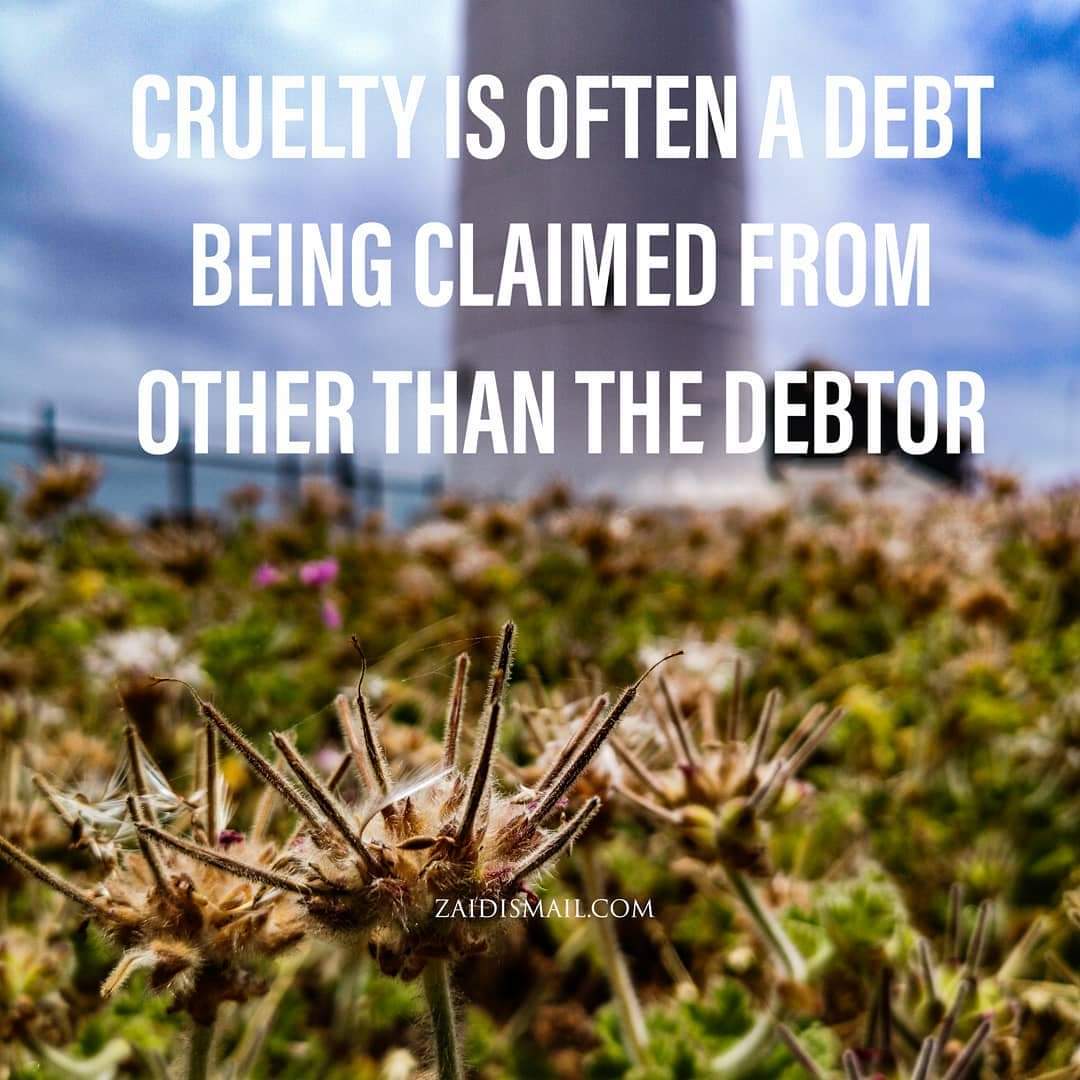
Chances are very good that your harshness or cruelty is directed at the wrong person.
Unfortunately, you’ll only realise this after the damage is done.Cruelty, like anger, is most often expressed to those weaker than us, even though we experience it at the hands of those stronger than us.
Sadly, it is paid forward more often than gratitude or kindness.
The need for vengeance to reclaim our power drives us more to action than the perception of weakness that accompanies a gentle spirit.
Needing vengeance is a sign of a low self esteem because we are more concerned with how others perceive us, than how we perceive ourselves.
For this reason there are no bad people in this world, only weak ones.
Don’t be weak.
Being gentle requires a strength of character that too few have mastered.
Be gentle.
#cruelty #harshness #gentleness #kindness #selfworth #selfawareness #selflove #gratitude #appreciation #mentalhealth #mentalhealthawareness #mentalhealthrecovery #angermanagement #rage -
Be more than your past
Like they say, every saint has a past, and every sinner has a future.
Your past will only ever define your future if you allow it.
They also say that the past may be blemished, but the future is still perfect.
There is a reality between all this idealism that we can’t escape, and that is the impact of the poor decisions that we may have made before.
But don’t let that define any more than your accountability to make it right.
And you must make it right or else you drag your past with you into the future.
Make amends as best as you can, and focus on the road ahead.
Those that support you must be cherished on that journey, and those that don’t must be respected because we can never dictate to others how they must accept or forgive our past mistakes.
Just because we may have chosen to move on doesn’t mean that they are ready to do the same.
Accept this, and be better. You can’t change your past, but you can redefine who you want to be in future.
#hope #expectation #sincerity #selfworth #selflove #selfawareness #selfrespect #reflection #mindfulness #past #future #regrets #startagain #mentalhealth #mentalhealthawareness #mentalhealthrecovery -
In pursuit of a life worth living
We get it wrong so often.
We chase the means to an end and neglect the end.
We find reason to exhaust ourselves in accumulating the trophies of life while discarding life along that journey.
The celebrity lifestyle teaches us that a celebration of our accomplishments is rarely a celebration of who we are.
The accumulation of wealth, the active pursuit of health, or the courting of fame all distract us from the truth of who we are as we grow to be defined by what we achieve.
And in that way, we give others reason to judge us or to embrace us based on those achievements, rather than allowing them to connect with the human behind it all.
A life well lived is one that is an expression of your authentic self.
To know your authentic self, you must reach within before you become defined by what you have around you.
It is through connecting with who we are, appreciating ourselves for the beauty and the flaws birthed from the struggles of our lives, and recognising the resilience of spirit that we possess that instils an authenticity of self that no trial will ever be able to smother.
It is through this realisation of the self that we will apply ourselves with conviction, passion, and purpose in our pursuit of creating value in the lives of others.
It is that value that is uniquely ours to contribute, that creates the fulfilment that feeds our soul, nourishes our body, and creates space for the rewards that such contribution inevitably earns.
Wealth is relative. Contentment is not. Be sure you’re chasing the right one before you lose both. Or worse, before you lose yourself.
Photo credit : Adobe Stock
#selfworth #selfawareness #ownyourlife #selfmastery #mindfulness #personalpower #ownyourshit #mentalhealthrecovery #mentalhealth #mentalhealthawareness #lifecoaching #zaidismail #motivation #optimism #lifegoals -
Looking for love in all the wrong places
The shame that we carry within us about what we believe is lacking about ourselves, sometimes causes us to reject those who embrace us despite knowing the worst side of us.
But because we reject that part of who we are, and are not willing to see our humanness attaching shame to it, we try to escape the embrace of the one who accepts it, so that we can avoid facing it or dealing with it.
That’s how we find ourselves pushing away those close to us, while trying to win favour or earn the affection or validation of someone who doesn’t know that side of us.
Because when we try to escape who we really are, we find it necessary to also escape anything that reminds us of that version of ourselves that we’ve rejected.
Growth and healing is not found in rejecting the scars or the wounds of the past.
Growth is experienced when we dress those wounds with understanding and acceptance, and when we caress those scars with love and affection.
Looking for acceptance from others while rejecting ourselves, creates a tension within us that makes us defensive the moment they get close to revealing the shame that we still hold within us, about ourselves.
It is that defensiveness that destroys yet another good relationship, as we hold them accountable for the very same reasons that we once rejected those who made bad decisions in response to the hurt that we caused in their hearts.
This is how we sabotage the life we’re trying to create, while blaming the world for not accepting us.
Photo credit : Adobe Stock
#selfworth #selfawareness #ownyourlife #selfmastery #mindfulness #personalpower #ownyourshit #mentalhealthrecovery #mentalhealth #mentalhealthawareness #lifecoaching #zaidismail #loveyourself -
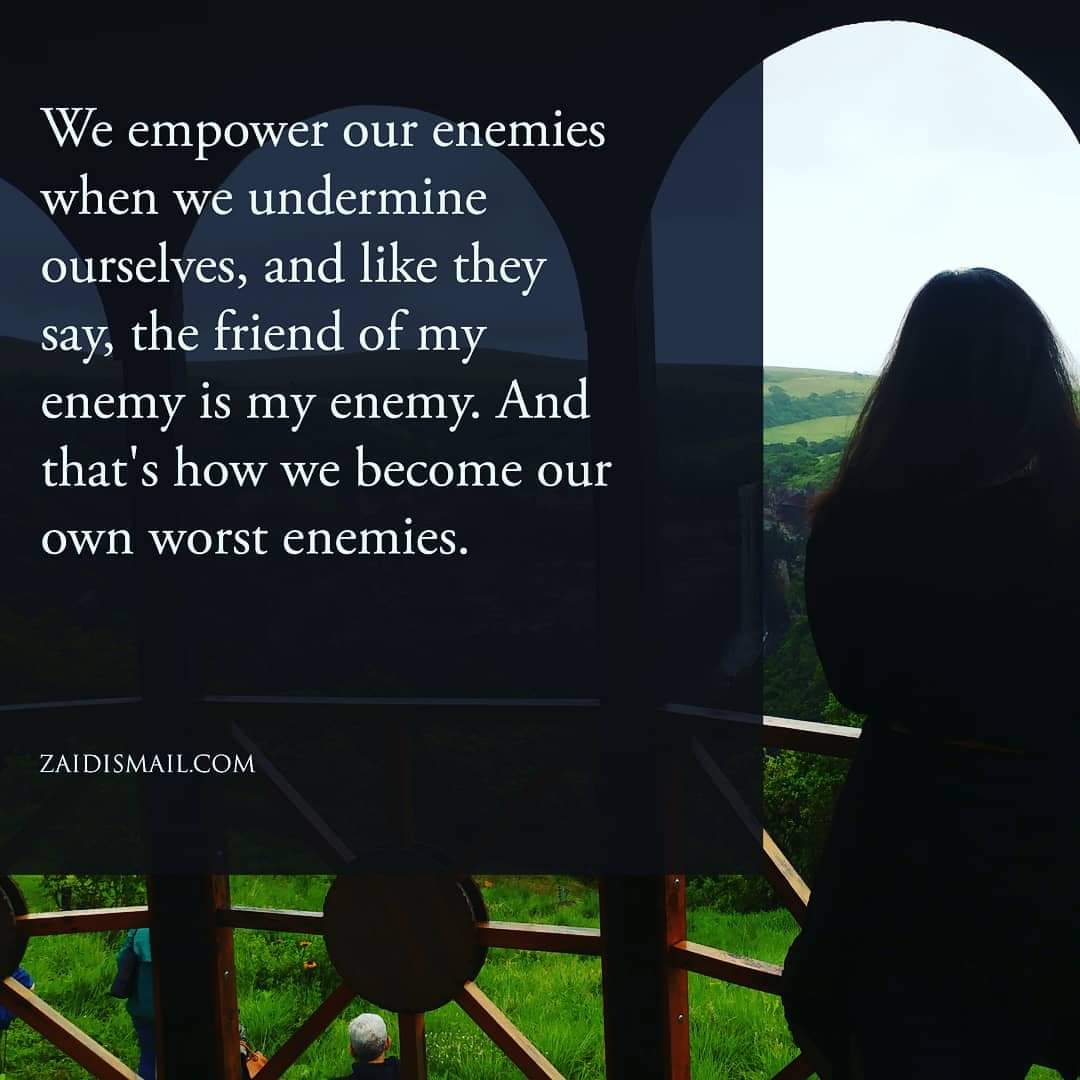
Don’t be your own enemy
You undermine yourself when you doubt your ability to accomplish something for no reason other than fear.
When you allow the uninformed opinions of others, or their disrespect to define how you feel about yourself, you undermine yourself.
When you settle for less because you believe you’re unworthy of better, you undermine yourself.
Each time you shy away from being who you believe you are capable of being, you undermine yourself.
If you find yourself doing these things, don’t complain when you feel like you’re being taken for granted.
You’ve effectively told others that it’s OK because of the way you treat yourself.
Treat yourself with kindness and commitment before you can expect others to do the same.
#kindness #compassion #sincerity #authenticity #mentalhealth #mentalhealthawareness #mentalhealthrecovery #selfworth #selflove #selfawareness #selfrespect #reflection #mindfulness -
Don’t blame destiny
Most often, it is our belief in what we deserve that limits us more than what we actually deserve or are capable of achieving.
It’s like waiting up all night to witness an amazing sunrise only to give up as the first streaks of dawn appear and then convince ourselves that it was our destiny not to see the sunrise.
No. Destiny is the sum total of the choices that you make with the opportunities that present themselves to you.
If you’re too distracted to notice those opportunities, or lack the courage to embrace it, that’s your choice, not destiny.
Destiny is blamed for more failures than our failure to act.
#fate #destiny #happiness #conviction #commitment #confidence #optimisticquotes #resilience #tenacity #mentalhealth #mentalhealthawareness #mentalhealthrecovery #selfworth #selflove #selfawareness #selfrespect #reflection #mindfulness #opportunity -
Soul food doesn’t feed the ego
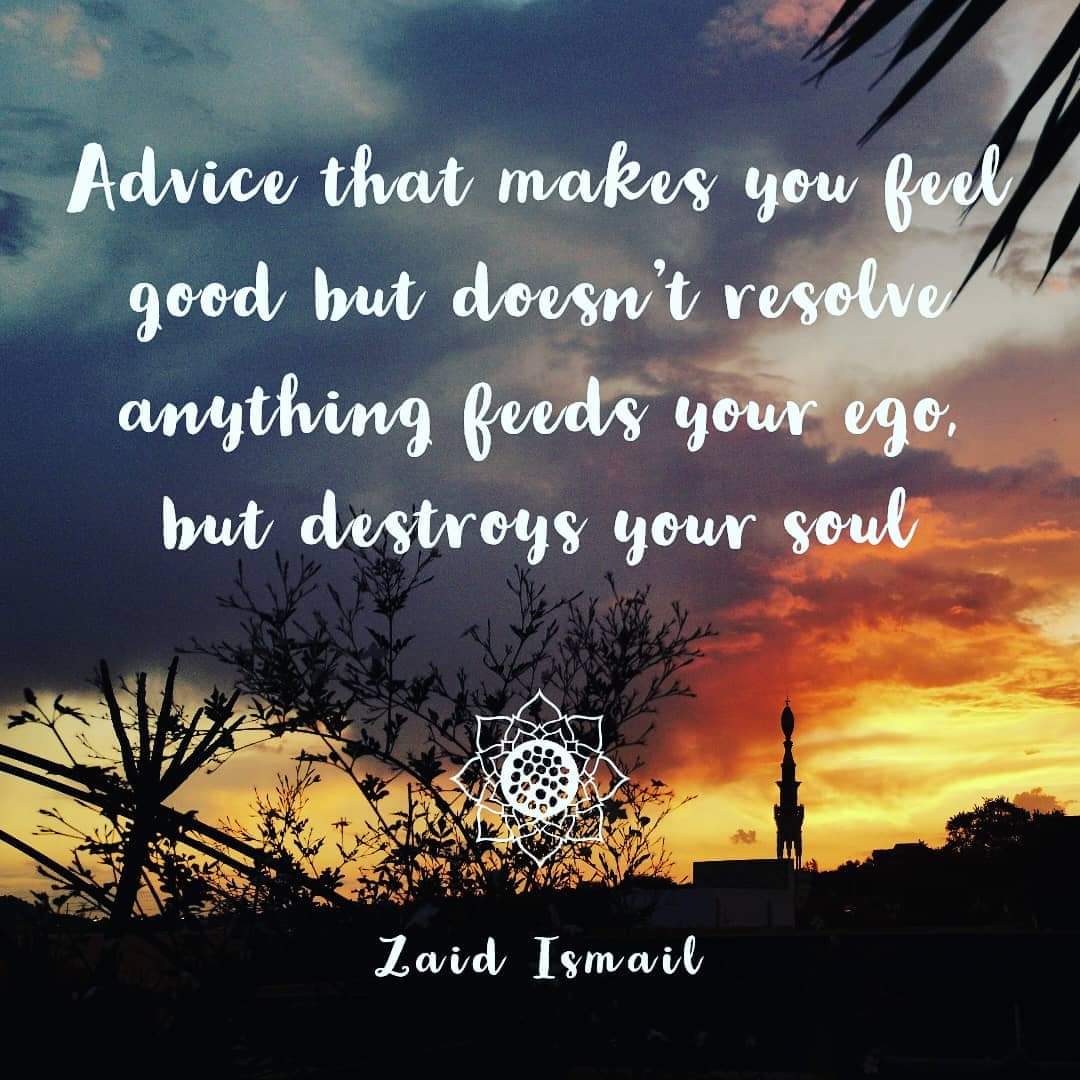
Be careful about advice that makes you feel good but doesn’t resolve anything.
Things that make us feel good either provides us with an emotional high and feeds our ego, or with a spiritual high and feeds our soul.
When we strike a healthy balance between the two, we find peace.
So, be careful of people that only feed your emotional needs, but don’t know how to feed your soul.
Worse still, be careful about confusing emotional fulfilment with soul food. The one makes you feel good about where you’re at, and the other inspires you to grow beyond where you’re at.
Choose carefully.
#selfworth #selfawareness #ownyourlife #selfmastery #mindfulness #personalpower #ownyourshit #mentalhealthrecovery #mentalhealth #lifecoach #soulfood #theegosystem #mentalhealthawareness #selfloathing