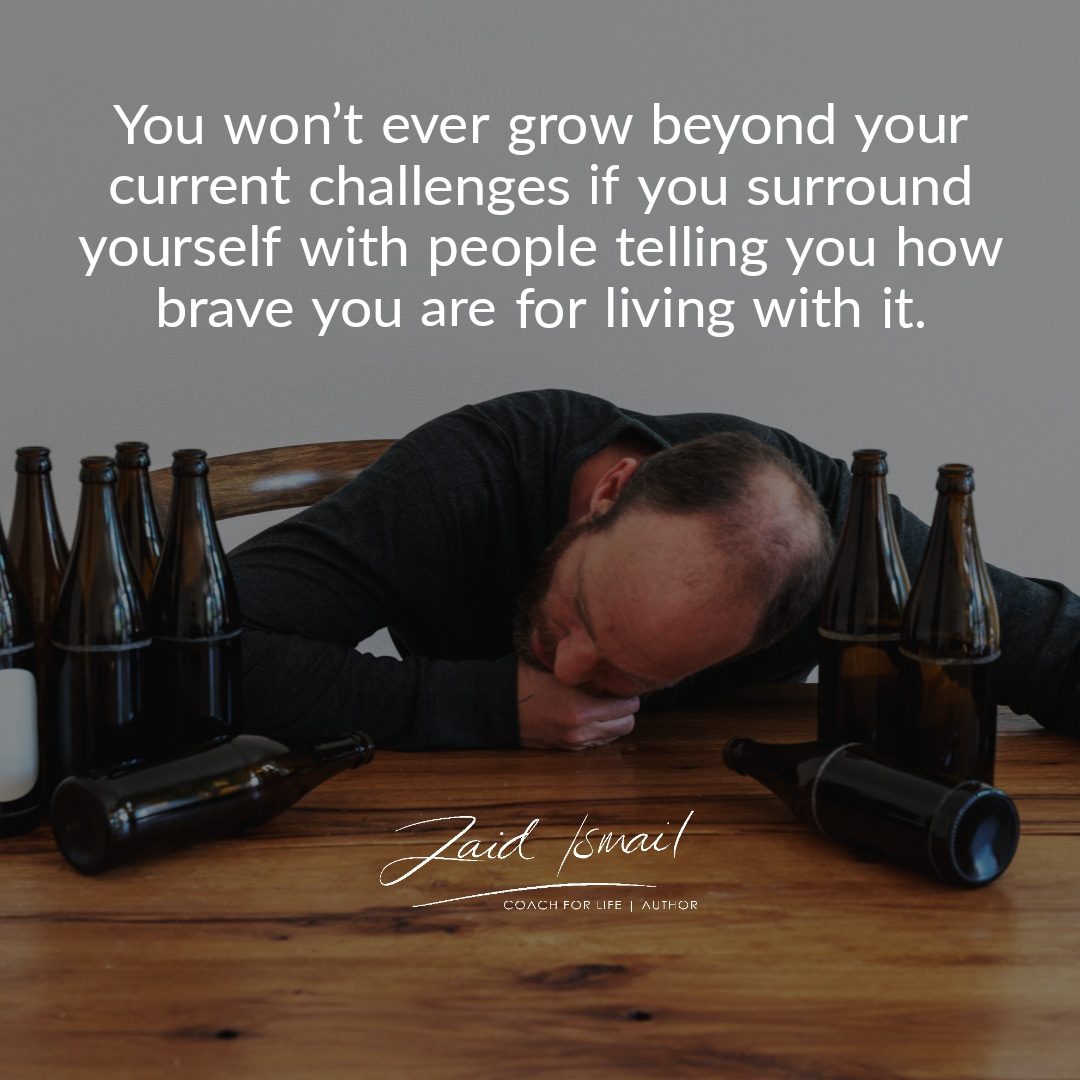
The need to be pacified about the struggles of our life is an indication of how much or how little we believe in ourselves to rise above it.
When we lose sight of our contribution towards our current state, we surrender to destiny or fate, and wait to be saved or celebrated for how strong we are for persevering.
Meanwhile, our inaction at changing, or breaking the cycles in which we’re caught, reflects our self-worth more than it reflects our bravery or resilience.
When the oppressed or the abused remain submissive, they choose to live with shame rather than fight with dignity.
That fight doesn’t have to be confrontational. Especially when we are physically incapable of subduing the other.
However, understanding what we’re doing to feed the cycle that is harming us is the beginning of changing what we contribute to such cycles.
This is not victim blaming. This is victim empowering.
The difference being that we don’t blame the victim for the oppressor’s actions, but we encourage the victim to reclaim their voice and their dignity, which in turn reduces the validation that the oppressor or abuser gains from their abuse.
Understanding the cycle is therefore paramount to effective action.
Action without understanding is like gambling with your life.
Seek to understand before you surrender to your reality.
Otherwise you’ll go through life believing you’re trapped, while not realising that there was always an exit strategy available to you.
It always starts with you.
#hope #expectation #sincerity #selfworth #selfawareness #mentalhealth #mentalhealthawareness #lifecoaching #zaidismail #loveyourself #lifegoals #motivation #optimism #purpose #companionship #relationshipgoals #narcissisticabuse #narcissism
Blog
-
Woe is me…or is it?
-

Wow! Look at me now…
Of all the things that test our resolve, the acquisition of knowledge is the most important.
It’s easy to get lost in the praise and social elevation that accompanies achievements such as professional qualifications, religious standing, or even business success.
And because each of it demands a lot of personal sacrifice and discipline, the feeling of entitlement to its rewards takes root without much effort at all.
Especially since there are many who would treat us with privilege because of their need to be associated with such social standing, or success.
However, that’s when we lose ourselves to the trinkets and luxuries that accompanies such success.
That’s when we lose ourselves to the power and influence that such social standing offers.
That’s when the true tests of our convictions and our value systems present themselves.
Not only does it matter how we treat people after enjoying such accomplishments, but more importantly, how we utilise the resources that we have access to, including the social structures of privilege that we belong to, that determines the true value of our accomplishments.
A healthy self-esteem is the only grounding point to prevent such erosion of values or ethical standing.
A healthy self-esteem, not an inflated ego, is what will keep us focused on how much more good we can achieve, or value we can create for those who cannot benefit us, so that we don’t squander our success or opportunities on self-enrichment or extravagance of lifestyle.
The sweetness of life lies in the upliftment of others.
It’s the only accomplishment that doesn’t leave us chasing for validation or acceptance.
It’s rooted in gratitude for who we are and what we have.
Without such gratitude, we forever chase opportunities to subdue the fear of inadequacy.
It always starts with you.
#greed #ethicalcorruption #corruption #selfworth #selfloathing #mentalhealth #mentalhealthawareness #lifecoaching #zaidismail #philanthropy #charity #abuse #narcissism #narcissiticabuse -
Gratitude is more than an attitude
An attitude of gratitude is not gratitude, because gratitude is not about attitude. It’s about a way of being.
Too often we confuse appreciation with gratitude.
Appreciation is what we express for favours or gifts, or the ease that we experience in our lives or with others.
We appreciate the absence of problems, the presence of happiness, or the good fortune of wealth, etc.
We appreciate such things because we know how much more difficult or challenging life would be without it.
Gratitude, I believe, goes beyond such acknowledgements of blessings.
Gratitude is reflected in how we nurture, protect, maintain, or leverage what makes such blessings possible.
For example, if we have the ability to create good, but we restrain ourselves because it’s not our job or our responsibility, then we’re not grateful for that ability.
That ability is merely a tool that we use in a transactional way.
Like having a car that we appreciate because it enables ease of movement, but we don’t take care of it because the thrill of driving recklessly is more important than the blessing of having a car.
By its very nature, gratitude increases the benefits and blessings of what we have and are capable of, whereas mere appreciation for it only maintains the status quo.
It may seem like a play on words, or a philosophical debate, but the moment we connect with gratitude for who we are, rather than just appreciating what we are or what we have, we’ll find opportunity to be of benefit in every sphere of our lives, rather than waiting to feel appreciated before we create the value that we’re capable of creating.
It always starts with you.
Own Your Life.
#gratitude #gratitudeattitude #appreciation #selfworth #selfawareness #mentalhealth #mentalhealthawareness #lifecoaching #zaidismail #ownyourlife #theegosystem -
Repost: Judging to be safe
Judgement is not always harsh. But, judgement is always focused on an external standard that we think others respect.
Don’t under estimate how much this mindset causes problems in every sphere of our lives.
Before throwing in the towel on that relationship, reconnect you with the reasons that gave you hope in the first place, so that the distractions don’t leave you with regret later on.
External standards give us comfort because we don’t run the risk of making a bad decision by ourselves.
If things don’t go well, we can always say that everyone thought that it was the right thing to do.
More than this, when we live up to a standard that we know others respect, we automatically feel respected.
That way, we don’t have to go through the difficulty of earning respect by ourselves.
This mind set conditions us to judge right or wrong, good or bad, better or worse, rather than to seek understanding of why we, or others, may fall short.
This, more than anything else, undermines the quality of the relationships that we have with others, and especially with ourselves.
And remember, seeking to understand bad behaviour doesn’t mean we condone it. It just means that we have a better chance of addressing the reason for it, rather than responding to its symptoms.
Own Your Life.
It always starts with you.
#hope #expectation #sincerity #selfworth #selfawareness #mentalhealth #mentalhealthawareness #mentalhealthrecovery #socialacceptance #herdmentality #society #understanding #compassion #relationshipgoals #zaidismail #lifecoaching -
Are you who you think you are?
Most people see themselves through someone else’s eyes, without ever realising it.
Without exception, whenever we judge ourselves harshly, it’s because we’re measuring our worth based on what we think someone else will think of us rather than what we think of ourselves.
That someone else is most often a parent or significant other.
And the reason we see ourselves through such judgemental eyes is because we lost sight of who we want to be, and replaced it with wanting to be enough for someone else.
As a rule of thumb, whenever you find yourself reflecting on your achievements or the circumstances of your life within the context of good or bad, right or wrong, acceptable or unacceptable, and so on, it means that you are judging yourself based on an external standard.
When you embrace that external standard as your own aspirational goal, you’ll focus on understanding why you are not as effective as you’d like to be at living your life in that way, so that you can continue to strive towards that aspirational goal, rather than judging yourself harshly for failing to achieve it.
Remember: Judgement is what we think someone else thinks of us, whereas values is what we want to live by.
When you connect with the latter, you’ll be less likely to adopt the demons that accompany the judgement of others about who you are or what you’re worth, and you’ll find peace and joy in your efforts towards continually improving the quality of your life.
It always starts with you.
#selfworth #selfawareness #ownyourlife #theegosystem #mentalhealth #mentalhealthawareness #lifecoaching #zaidismail #loveyourself #lifegoals #motivation #optimism #purpose -
Self-pity is never a recommendation
When we go out searching for safe spaces in which to grow, we’re more invested in hiding the shame that we feel about ourselves, than we are in growing.
Rather than focusing on pushing ourselves into spaces that are uncomfortable, we need to focus on why we feel such shame to begin with.
Shame doesn’t always feel like shame.
But, if we pay attention, we’ll note how difficult it is to talk about what we’re struggling with, or what we think we’re failing at.
That difficulty is because we’re judging ourselves for failing or being inadequate.
So we protect ourselves from that becoming visible by disguising it as our legitimate struggle against everyone and everything that treated us badly.
That’s why we polarise towards those who share such weaknesses, because there is less shame in failing together than there is in failing alone.
That’s how we limit our growth.
If you want to be successful in business, you don’t seek advice from others who have failed at it.
Similarly, if you’re not reaching your goals in life, don’t surround yourself with others who are also messing up theirs.
Choose your role models and your advisors carefully.
If you choose them out of self-pity, they’ll convince you that nothing is your fault and that everyone else is to blame, including the dead.
That may make you feel better in the moment, but it will also keep you stuck in that moment for that much longer.
It always starts with you.
Own Your Life.
#selfworth #selfawareness #ownyourlife #selfmastery #mindfulness #personalpower #mentalhealth #mentalhealthawareness #lifecoaching #zaidismail -
Do you remember you?
Sometimes, we lose ourselves to the hopelessness of others.
Sometimes, we lose ourselves to the failed expectations of life.
And sometimes, we lose ourselves because we thought it was our failings that earned us pain, while oblivious to the fact that it was in fact our success that threatened the ones we loved.
In these, and so many other scenarios, our perspective is tainted by our belief that what we wish to achieve with others, is what is important to them to achieve with us.
When this belief proves to be false, we question our self-worth when our best efforts only cause upheaval, and our best intentions are always misconstrued as arrogance or materialism.
If we don’t stop to see the demons that our significant others are battling, we’ll judge ourselves by how they fail to overcome their demons.
That’s when our demons strengthen their hold on us.
Unless we reconnect with who we are, we’ll forever wait for someone else to do right by us before we allow ourselves to find joy in who we are.
Rediscover who you really are, so that you can shake off the debris that you accumulated through the years with each toxic character that convinced you that you were someone you’re not.
The risk of coping with failure or betrayal is that our act of coping grows to define who we think we are.
But that’s when we lose sight of who we were before that moment.
The only way to move beyond it is to recognise that coping is only needed as long as we’re still holding on to the hurt or the disappointment of what could’ve been, but didn’t happen.
Let go of it, and the joy that you experienced before that defining moment will return.
It always starts with you.
#selfworth #selflove #selfawareness #selfrespect #reflection #mindfulness #validation #mentalhealth #mentalhealthawareness #mentalhealthrecovery #thebookofmindfulness #personaldevelopment #growth #growthmindset #gratitude #lifecoaching #zaidismail -
Where is your humanity?
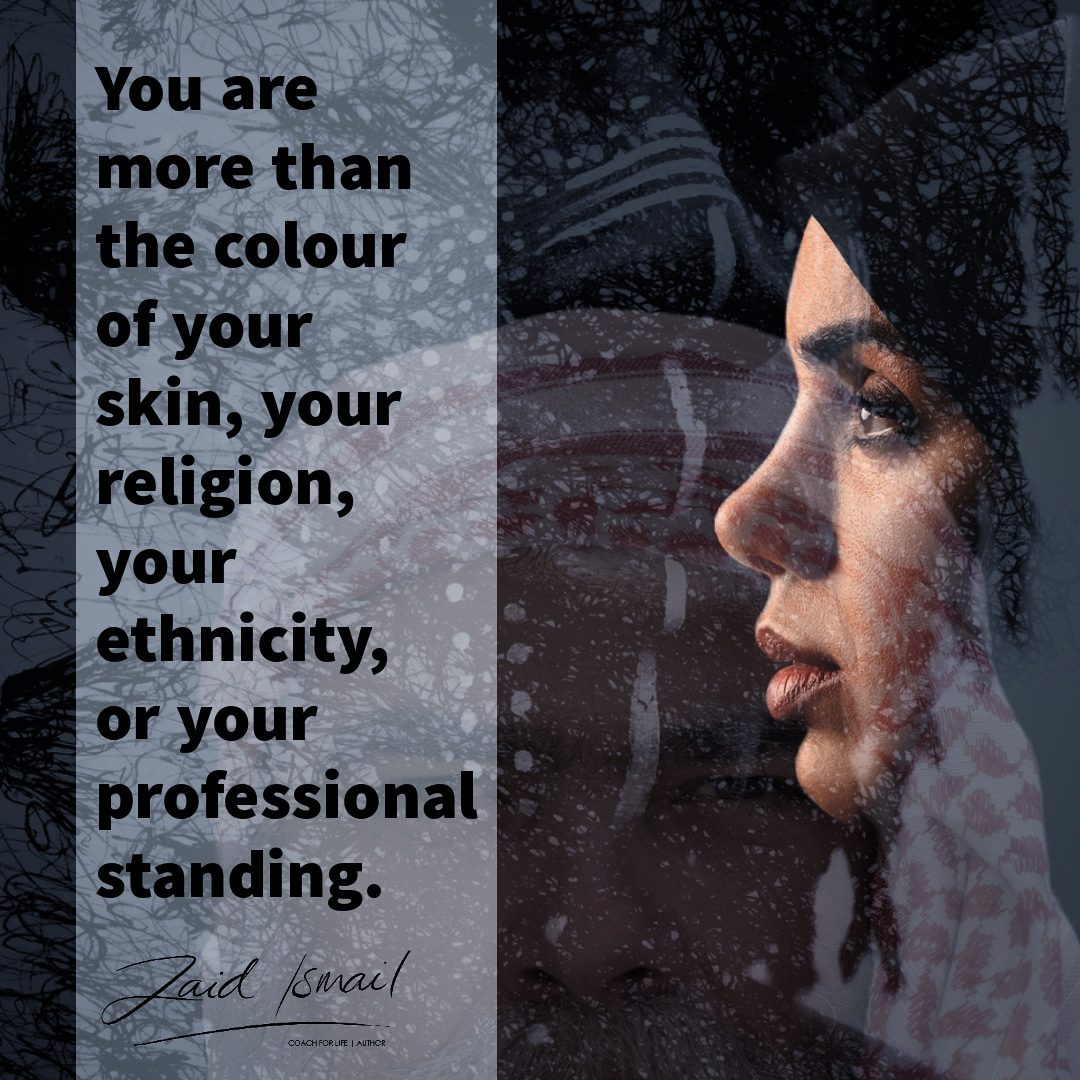
Taking pride in the colour of your skin or ethnicity distracts you from your humanity.
Our humanness, our gentleness, our inclination towards kindness – these are all part of our natural state.
We lose it when our need to be associated with significance or superiority distracts us from this, and replaces it with the fear of being inadequate.
When we lose sight of the fear of inadequacy, responding from a place of fear becomes our new normal.
Everything that threatens the source of our significance – that is, our skin colour, religion, cultural roots, etc. – then feels like a threat to our sense of self.
Thus, we feel the anger, resentment, or blind rage that rises when we are judged by the colour of our skin, our religion, our ethnicity, or any other association that makes us feel significant.
But, we grow convinced that we’re standing up for a good cause by protecting what we value, even though the way in which we protect it undermines the very essence of what we claim to stand for.
That’s when it becomes clear that we only stand for what we do because it offers us a place in this world through being associated with the cause.
It offers us significance and protects us from irrelevance.
That’s when we’ve traded who we are, for who we want to be perceived as, because we’re convinced that we are not enough.
Own Your Life.
It always starts with you.
#racism #colourism #religion #culture #prejudice #bigotry #socialacceptance #herdmentality #ownyourshit #ownyourlife #theegosystem #mentalhealth #mentalhealthawareness #mentalhealthrecovery #selfworth #selflove #selfawareness #selfrespect #mindfulness #inspiration #zaidismail