We’re more inclined to recognise the needs of the weak, than we are of the strong.
Without meaning to, we diminish the humanness of those who persevere without complaint, because they often make it look so easy.
When we’re the strong ones persevering without complaint, we risk diminishing our own humanness as well, because we become defined by being strong for others.
Whether you’re strong or weak, you need to take time to connect with the human behind the strength, or the struggle that you observe in others, and especially within yourself.
If you don’t, you risk becoming the enabler of weakness and dependence, or the enabler of harshness and insensitivity.
Because that’s what happens when we lose contact with our humanness.
We stop expecting, or allowing ourselves and others to be human.
That’s when everything becomes dutiful and focused on rights and responsibilities.
And empathy and compassion, let alone love and affection, leave through the window.
All this because we forgot that we’re human, and that the ones failing us are human too.
We cannot choose differently for how others show up in our lives, but we can choose how we show up for them, and for ourselves.
Focus on that, and let the rest take care of itself.
When you achieve this, you’ll taste the sweetness of life and not just the accomplishment of goals.
Own Your Life.
It always starts with you.
#selfworth #selfawareness #ownyourlife #selfmastery #mindfulness #personalpower #mentalhealth #mentalhealthawareness #lifecoaching #zaidismail #compassion #companionship #relationshipgoals
Blog
-

Are you there for you?
-

Destroying peace to find peace
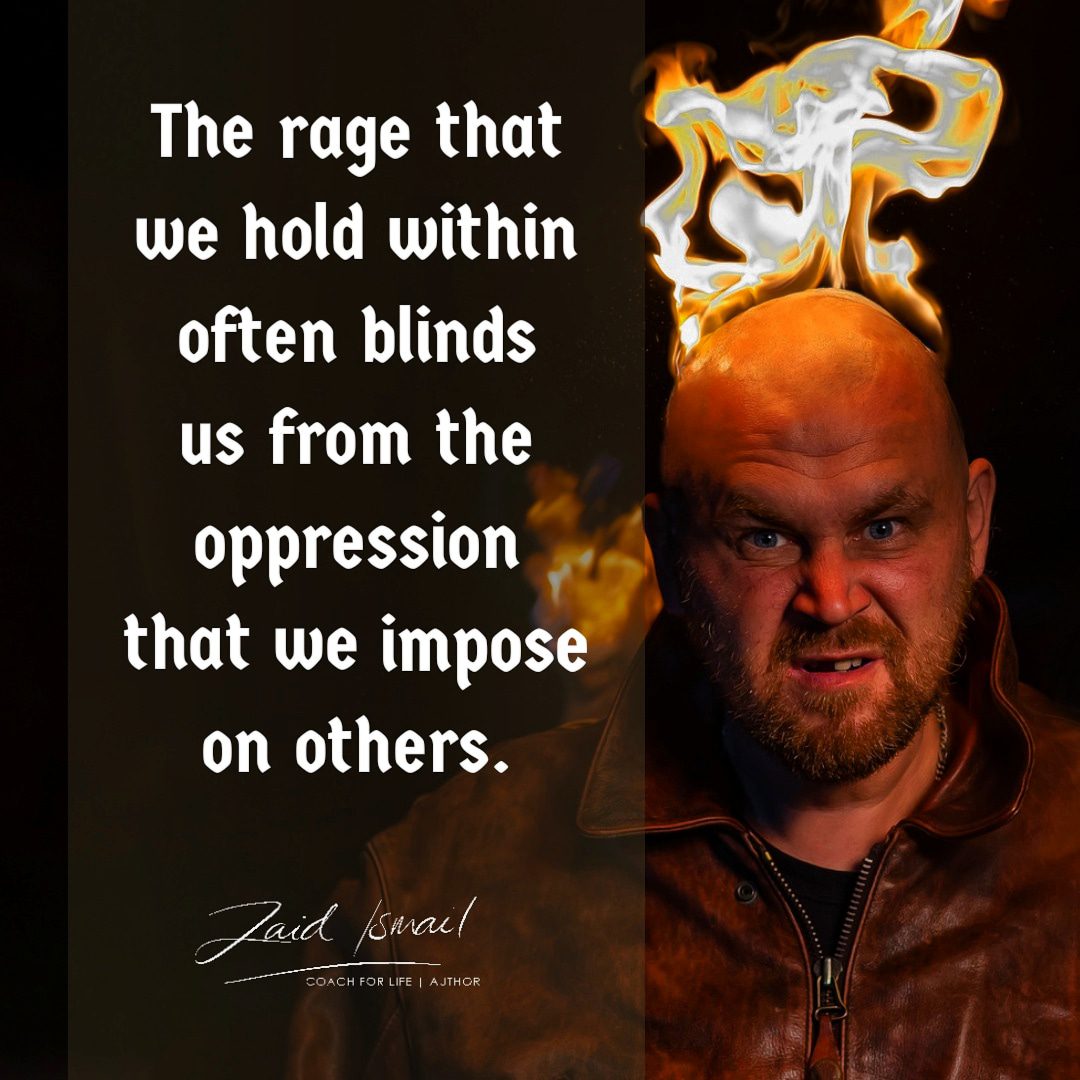
Rage is a destructive demand for significance when we believe that who we are is not enough to be important to those we love.
The anger that spurs on the rage is a defence mechanism to protect ourselves from becoming invisible.
We try, in our own little futile ways, to be enough without being able to express ourselves the way others may expect, which leaves us feeling unappreciated when they don’t realise how difficult even that little expression was for us.
That’s when we feel the rage build up, because we’re reduced to love languages, and token gestures that define how we must express ourselves, when all we want is to just be appreciated for who we are.
But, that feeling of frustration at not being able to express our emotions in a healthier way was instilled in us long before our adult years.
Therefore, the rage at our partners or children is simply years of bottled up anger at never being enough, or never feeling heard or seen, by those we relied on most to make us feel safe, and whole.
It is our invisibility in childhood that creates our demands from the world as adults.
It is our feelings of inadequacy as children, that fans the rage of abuse and marital rape in our adult years.
It is our obliviousness to the value of who we are, despite the failings of our parent/s, that keeps us raging at innocent ones who had nothing to do with the nurturing of our insecurities in childhood.
That’s how we end up repeating the very cycles that destroyed our sense of self.
When you judge your parents harshly for what they didn’t give you, you fail to see their humanness.
The very same humanness that you fail to see in yourself, that causes you to rage at the world, instead of appreciating the beauty and peace that it offers.
You cannot give what you don’t have.
And you cannot grow if you’re waiting for others to treat you right before you let go of the rage.
It always starts with you.
#angermanagement #rage #mentalhealth #mentalhealthawareness #lifecoaching #zaidismail #selfworth #selfloathing #narcissisticabuse #narcissism -
Honourable destruction
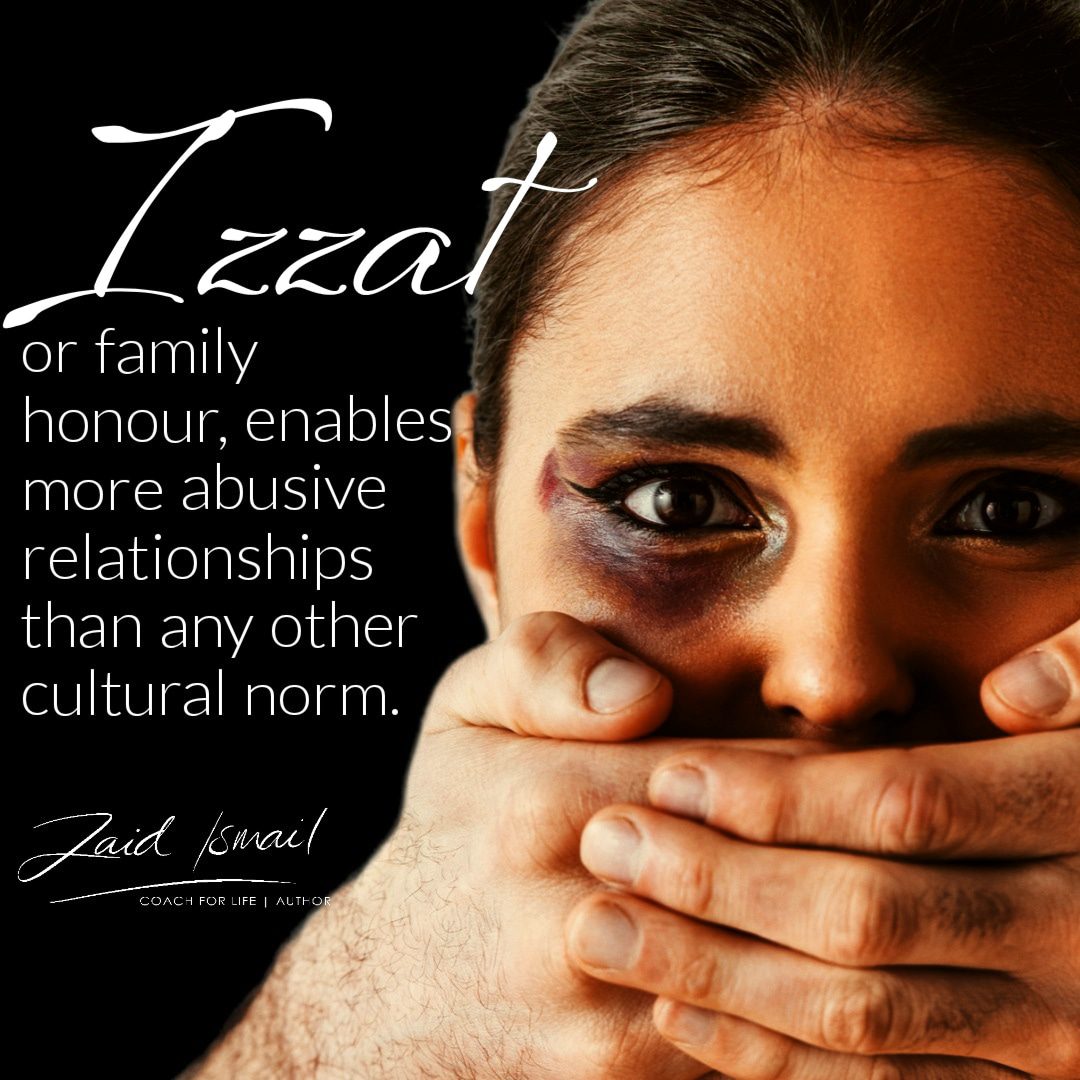
When honour is confused with social standing, abuse becomes an acceptable form of saving face.
Beyond considerations of family honour, this toxic cultural practice convinces the individual that infidelity becomes excusable because divorce is deplorable.
It convinces the brute of the justification of their rage when their partner rejects dehumanising practices by their in-laws.
It replaces ideals of honour and virtue with ideals of being celebrated by the community for the facade that we create of an empty shell of a life.
It teaches our children that what others think of you is always more important than what you think of yourself.
Because we’ve convinced ourselves that it is the village that gives us relevance, we’ve lost sight of how toxic that village has become.
Izzat is the excuse for marital rape, because our rights are infinitely more important than our responsibilities.
Izzat is the excuse for honour killings, because appearing weak is assumed to be caving in to justice, while upholding injustice.
Izzat has eroded the foundation of society, in all societies and not just the Indian culture, because women are seen as symbols of the grandeur of men, and men have grown to be defined by how much his woman raises his stature.
And in the war for self-worth, the physically weak suffer most, while the physically strong destroy the people around them because they don’t know how to deal with their weakness.
Break the cycle.
Own Your Life.
#abuse #maritalrape #honourkilling #honorkilling #mentalhealth #mentalhealthawareness #lifecoaching #zaidismail #relationshipgoals #narcissiticabuse #narcissisticparents #narcissism #cheating -
Do you matter to you?
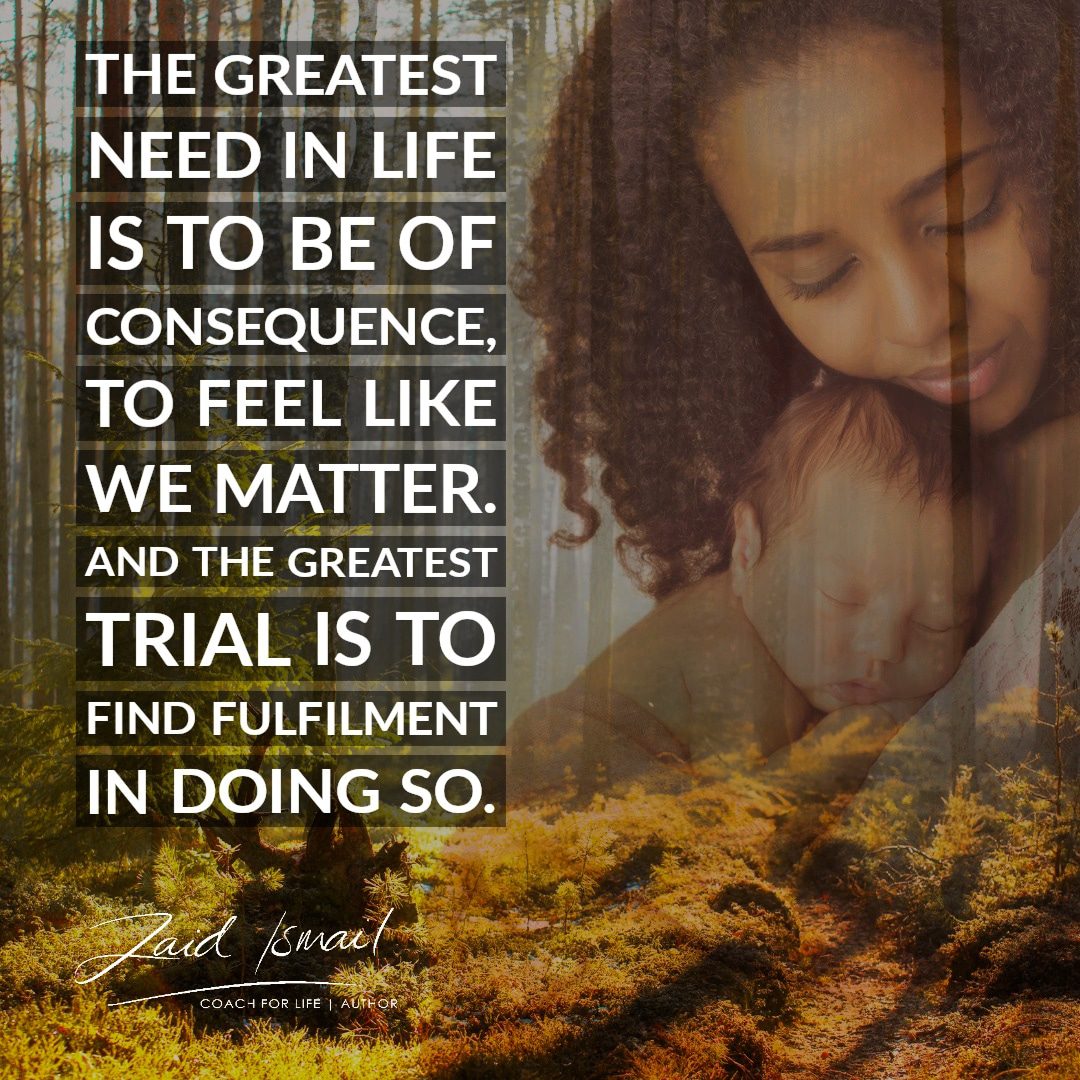
To be of consequence, or to feel significant, lies at the heart of our inspiration to accomplish anything.
When we connect with conviction to the significance of who we are, and what value we add to the lives of others, we achieve a sense of peace and contentment.
But, when we doubt this, we set out in search of validation through observing how others respond to our efforts to improve their lives. To make them happy.
If we’re fortunate, we’ll find ourselves surrounded by those who willingly and sincerely acknowledge our contribution and our place in their lives.
If we aren’t fortunate enough to have such people around us, we’ll lose ourselves in our efforts to be enough for them, without realising that they’re also not enough for themselves.
It’s an empty cup trying to fill a broken one, where the one who is giving is depleted, and the one receiving is distracted by their own demons.
Chronic illnesses set in, accompanied by rage that is often directed at the self, because we didn’t realise the value of who we are, while hoping to be validated by those who were distracted by their own self-loathing.
Thus, the joys of life are traded for servitude and a living martyrdom, hanging onto faith by a feeble thread, praying that our sacrifices and self-deprecation will be rewarded with everlasting peace when this harsh reality finally ends.
That’s how we harm ourselves long before we allow anyone else to harm us.
Worse still, we forget that through self-loathing, we withhold the best of who we are for the innocents around us, and end up giving them reason to believe that they were never good enough to bring out the best in us either.
That’s how generational trauma is passed down.
It’s not because of what was done to us, but rather because of how we see ourselves through the eyes
of those for whom we were never enough.
#selfworth #significance #conviction #dreams #sincerity #authenticity #mentalhealth #mentalhealthawareness #mentalhealthrecovery #theegosystem #mindfulness #lifecoaching #zaidismail -
To be loved
To be seen… Beyond the facade. To have the essence of who we are, known to those we trust and hold dear.
To be heard… Not only when we cry out, but also when we speak gently of the troubles in our heart.
To be loved… For more than how we make others feel, but to be loved for what we need in return, without having to claim it.
In that order, because a voice without an identity is not a voice. It’s only a whisper in the wind.
A face without a voice is only window dressing, or a trophy. And not a complete being.
And love… Love without a reciprocal embrace…an embrace of what we hold within, as well as what we willingly give, is an empty love that taints towards bitterness, rather than beauty.
Love beyond lust or infatuation is rare. True love is never abandoned.
I see you.
I hear you.
I love you.
Three of the most valuable gifts you could ever give.
But, you cannot give what you don’t have.
For this reason, you must first see, hear, and love who you are, before you will be able to share it with another.
#love #romance #companionship #soulfood #soulmates #anincompletelovestory #gratitude #appreciation #zaidismail #authenticity #relationshipgoals #joy -
Emotional wellbeing, not mental health
It is only through our internal wars that we lose sight of reality.
The culture of labeling people dehumanises the very human that is struggling with their humanness.
We focus on our demons so intently, that we become defined by them, bearing them patiently in quiet shame, protecting ourselves from being exposed for what we hold within.
When we judge ourselves with such shame and harshness, we see the world through angry eyes.
But, protocol and decorum prevents us from raging and venting without restraint, so we choose safe spaces in which to release the venom from within, on those who are incapable of opposing or resisting us.
In the public space, we create carefully constructed apologies for our inadequacies, latching onto unhealthy concepts like ‘suffering from…’ whatever emotional torment we’re experiencing.
That’s when we feed the belief that human emotion is an illness, or a disorder, because it’s the only hope we have of making sense of the war within.
All this because we convinced ourselves that being any less than happy must be weak, or dysfunctional.
The sway of human emotions, regardless of how crazy that sway may appear or be experienced, is a legitimate response to very real life experiences.
Labeling the response does nothing to create understanding and healing around that traumatic or overwhelming experience.
Stop labelling people because of their behaviour, and reconnect with your own empathy and compassion so that you may once more see the human behind the human condition.
Own Your Life.
#mentalhealth #mentalhealthawareness #mentalhealthrecovery #lifecoaching #zaidismail #empathy #theegosystem #ownyourlife -
A path to insanity
We work with the assumption that our partners and our children share the same values that we try to uphold in our lives.
This is rarely true.
While we may share the same frame of reference or even the same cultural norms, values are much more personal, and therefore unique.
Our personal value systems are shaped by what we take from life.
Note, what we take, not what we’re taught.
Our teachings form the frame of reference within which we live our lives.
However, what we place emphasis and priority on, and what flexibility we allow ourselves within that frame of reference is what shapes our unique value system.
For this reason, two siblings raised in the same home under the same rules of discipline, and with the same privilege and emotional access to their parents may adopt very different values because of what they assumed to be true about the motives or sincerity of their parents towards them.
The difference between the two is self-worth.
The important thing about self-worth is that it’s about how we feel about ourselves, and not how someone else feels about us.
No matter how much we convince ourselves that we feel how we feel because of how someone else treats us, it doesn’t change this fact.
Self-worth is about how we feel about ourselves.
How we develop this sense of self is a complex process that can change with life experiences, but until we’re aware of what we allow to influence how we feel about ourselves, we’ll blame the world for our unhappiness or misery.
It is this that we must bear in mind when we try to rationalise the behaviour of others when it conflicts with the value system that we thought we shared.
Self-worth or self-loathing is what makes the difference between authenticity and selling ourselves short to gain validation.
It always starts with you.
#selfworth #selfawareness #ownyourlife #selfmastery #mindfulness #personalpower #mentalhealth #mentalhealthawareness #lifecoaching #zaidismail #loveyourself #lifegoals #parenting #singleparenting #pursuitofhappiness -
Do what’s right, or else…
When raised with fear and compliance as the tool to ensure good behaviour, or religious subscription, we create validation-seeking individuals whose willingness to compromise on what is right will be driven by social acceptance.
Instilling values in our children, or living by our own values, must be grounded in a substantial appreciation for why it is valuable, and not why it is right.
When we focus on right and wrong, we focus on judging others rather than understanding them.
Arriving at a conclusion about whether something is right or wrong has its place.
But without understanding and an appreciation for the value of what we want to establish, compassion is lost, and harshness is assumed to be justified to uphold truth or morality.
It is counter-productive to use harshness to teach understanding.
And it’s an exercise in futility to ignore what influences you are working against when trying to instil, or live by such values.
Being mindful of two things is therefore critical towards maintaining your sanity.
Firstly, connect with purpose and substance to the values that you stand for by connecting it to the good that you want to create in the lives of those around you.
Secondly, be aware of your ability to influence the adoption of those values in the lives of those you care for.
Sometimes, the appeal of instant gratification, or social inclusion may render your influence impotent.
When that happens, take the time to plant the seed, but don’t exhaust yourself in nurturing it.
We’re all responsible for nurturing our own seeds of goodness in our lives.
Own Your Life.
#hope #expectation #sincerity #selfworth #selfawareness #mentalhealth #mentalhealthawareness #lifecoaching #zaidismail #loveyourself #lifegoals #parenting #singleparenting #gratitude