I think it was Dr Wayne Dyer who said that if you change the way you look at things, the things you look at change.
This is true both positively and negatively.
Do you know someone who has a problem for every solution? Who sees doom and gloom at the happiest of moments? Who is preempting a negative outcome despite things going in their favour?
Do you think they have a mental illness, or have they just been hurt so many times before, that they are afraid to hope for a positive outcome? Are they simply protecting themselves from being let down again?
This is how we experience life when we finally give up hope about the future, or we give up hope about being appreciated.
That absence of hope is what causes us to feel depressed. Depression is a legitimate experience of human emotions after we’ve taken one too many hard knocks from life about something important to us.
The same is true for every other emotional experience.
Emotions are not deficiencies. They’re the essence of what makes us human.
If we ever hope to win this battle against a consistently declining quality of life, we need to stop referring to emotions as mental health, and we need to stop defining the duress that we experience in life as a mental illness.
We need to reconnect with the human behind the pain, instead of dehumanising them by denying the legitimacy of their emotional experience.
Break the stigma. Stop the labelling. Embrace the humanness.
#hope #expectation #sincerity #selfworth #selfawareness #mentalhealth #mentalhealthawareness #mentalhealthrecovery #theegosystem #ownyourlife #lifecoaching #zaidismail #loveyourself #lifegoals #motivation #optimism #purpose #grieving #death #failure #depression
Category: Philosophy
-

Break the stigma. Stop the label.
-

Cheat old age
We seek safety and comfort in planning our life, our vacations, or careers to the last degree when we are afraid of being out of control, or missing opportunities that may result in regret later on.
Like everything else, there is a place for planning in life.
But, when that planning denies you the spontaneity of grabbing opportunities that present themselves without warning, then it’s no longer planning. It’s a need for control.
And control is a defence mechanism to prevent ourselves from appearing incompetent because we’re afraid of what we don’t know or didn’t plan for.
Spontaneity, impulsiveness, passion. These are the attributes that we embrace when we’re confident that we can navigate life as it shows up.
What they say about travelling is true about life. Plan your trip, but go with the flow.
Look back on your life and notice how much of it was unpredictable. Yet, here you are.
Do you really need to control every aspect of your life, or have you proven, without meaning to, that you’re capable of navigating the unpredictable?
Live. Don’t just exist.
#hope #expectation #sincerity #selfworth #selfawareness #mentalhealth #mentalhealthawareness #mentalhealthrecovery #theegosystem #ownyourlife #lifecoaching #zaidismail #loveyourself #lifegoals #motivation #optimism #purpose -
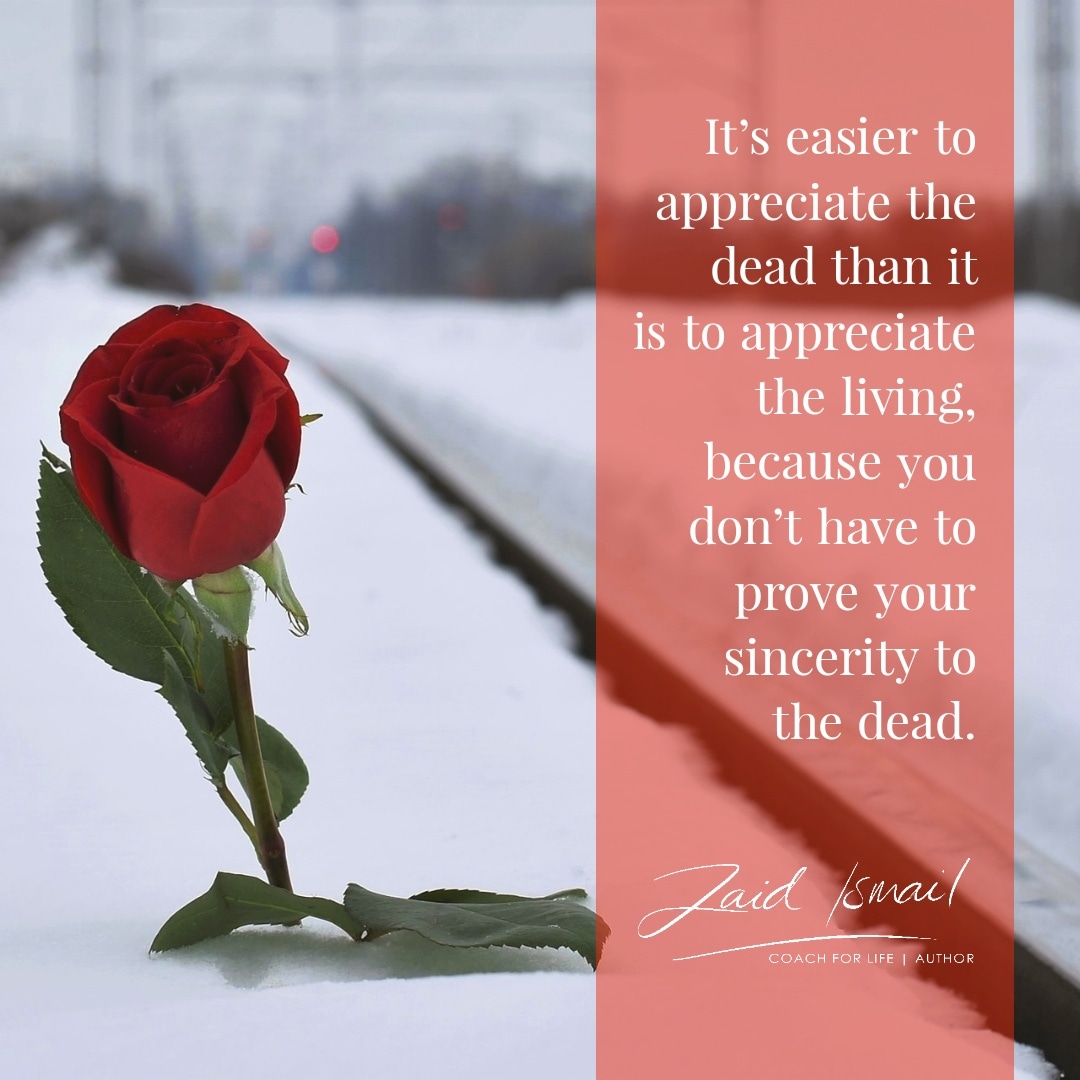
Celebrate the dead. Discard the living.
Ever notice how often people are revered when they’ve passed on, but the same people were neglected, ignored, or even treated badly while they were alive?
Sometimes the reverse is also true. The one who passed on may have left a path of destruction in the lives of those around them, but because of their social standing or their role in their family, they’re revered to the point of exaggerating their good while dismissing the impact that they had on those who were victim to their ways.
Some would have us believe that it’s because we must not disparage the dead. Which is true. We shouldn’t.
But does that also mean that we must exaggerate their good to the point of diminishing the damage or harm that they caused?
The reason we do this is not out of respect for the dead, but more likely because it draws attention to our virtue.
It’s easier to demonstrate such kindness towards the dead, because they have no expectation from us to follow through with sincerity or commitment towards how important we say they are in our lives.
If we were truly committed to establishing good, we would place as much emphasis on remedying the harm that they caused, while remembering the good that they did.
If we don’t, we end up revering the dead to the detriment of the living, thereby reinforcing the harm that the deceased caused, and further oppressing those who are already struggling with the impact of the harm done to them by the deceased.
That’s how we enable generational trauma.
That’s how we create more harm for the victims of those oppressors who have passed on.
That’s how we become part of that cycle of harm.
#hope #expectation #sincerity #selfworth #selfawareness #mentalhealth #mentalhealthawareness #mentalhealthrecovery #theegosystem #ownyourlife #lifecoaching #zaidismail #grieving #death #fatherhood #raisinggirls #parenting -
The need to be godly
Godliness, like humility, is lost the moment we lay claim to it.
It is something that we may exhibit in our conduct or demeanour, but not something that we can directly claim.
It is our ability to manifest the attributes of the divine in our character and in our treatment of others without wanting to appear pious or godly in our approach.
The need to claim such attributes of godliness reflects the insecurity that we feel about our standing among those around us.
The moment we’re focused on how we appear to others, we begin to lose ourselves to their validation.
Similarly, the moment we claim godliness, we lose ourselves to arrogance.
And arrogance is only required to compensate for our insecurities. It is a mask to hide our shame, or to claim our needs because we believe that we’re not significant enough for others to want to care about what we need from them.
That’s why we take, instead of waiting to be offered. Or why we insult or demean rather than advising sincerely.
It’s all a means towards demanding that our virtues be acknowledged because we feel unappreciated by those we care about the most.
If you don’t appreciate who you are, in the absence of validation from others, how can you expect others to appreciate you?
Gratitude begets sincerity, and sincerity fosters brotherhood. Or sisterhood. And claiming divinity or godliness has no place at all.
#compassion #sincerity #authenticity #mentalhealth #mentalhealthawareness #mentalhealthrecovery #selfworth #selflove #selfawareness #selfrespect #mindfulness #inspiration #ownyourlife #theegosystem #forgiveness #rewards #lifecoaching #zaidismail -
Discover your why
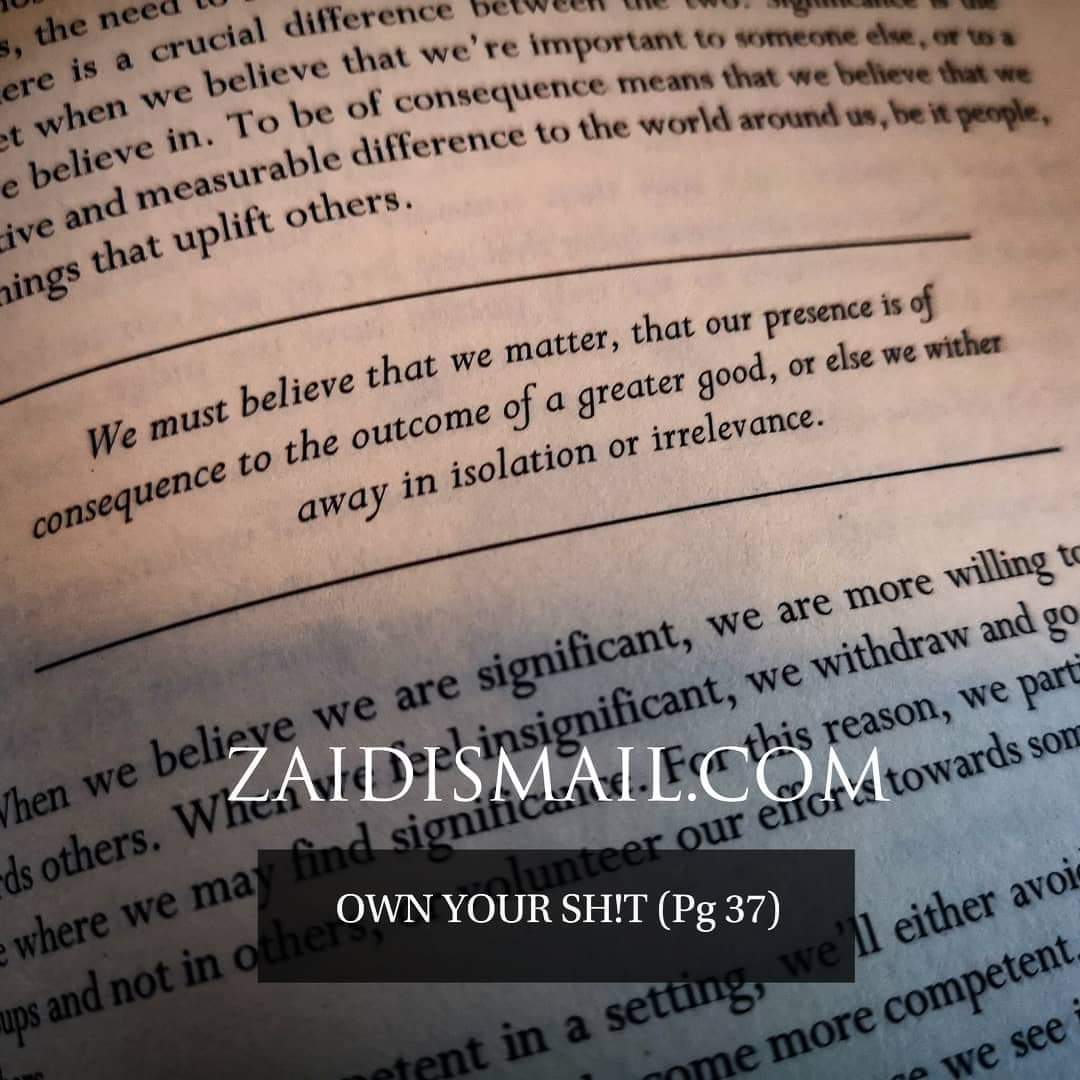
Flipped open the book to a random page and found this.
I don’t think there is anything that drives us towards anger or happiness more than this single principle.
Understanding it within the context of our lives is crucial towards achieving fulfilment in our relationships.
“We must believe that we matter, that our presence is of consequence to the outcome of a greater good, or else we wither away in isolation or irrelevance.”
This is at the heart of misery and joy.
The fear of being inconsequential is what drives both, the most passionate embrace and the most despicable behaviour.
If you don’t understand how this drives or affects you, you’ll be prone to emotional highs and lows that will leave you exhausted or depressed without knowing why.
Reach out via my website at zaidismail.com or on WhatsApp at +27836599183, and let’s figure out your why…
.
Image : page 37 of Own Your Sh!t#selfworth #selflove #selfawareness #selfrespect #mindfulness #reflection #mentalhealth #mentalhealthawareness #mentalhealthrecovery #theegosystem #ownyourlife #ownyourshit #authenticity #emotionalmaturity
-
Never abandon hope
Hope is born in moments when you have no reason to believe in the moment that is to follow, but something good unexpectedly lands in your lap.
It’s born when that unexpected call changes your life for the better.
It’s born when that stranger smiled an understanding smile in that moment that you thought the world was oblivious to your presence.
It’s born when you wake in the morning and discover that despite your worst premonitions, you have a good day.
Hope can be torturous when the events of your life have given you little reason to believe that the good that you experience will last for more than a fleeting moment.
But, knowing that it’s possible for it to last beyond that brief period of joy is what makes it impossible to ignore the hope that bubbles beneath the surface.
Hope is faith. And faith is hope.
Both are intricately woven into the fabric of our struggles.
When we focus on our struggles only, we lose sight of all those moments that planted the seeds of hope in our hearts so many lifetimes before the present moment.
In forgetting, we burden ourselves with more than the burdens of life. We burden ourselves with the burden of ingratitude as well.
Focus on hope, and faith will have your back.
#hope #expectation #sincerity #optimism #perseverance #motivation #goals #ambition #success #selfawareness #selfrespect #mindfulness #inspiration #zaidismail #ownyourshit #ownyourlife #theegosystem #embracingME #mentalhealth #mentalhealthawareness #mentalhealthrecovery -
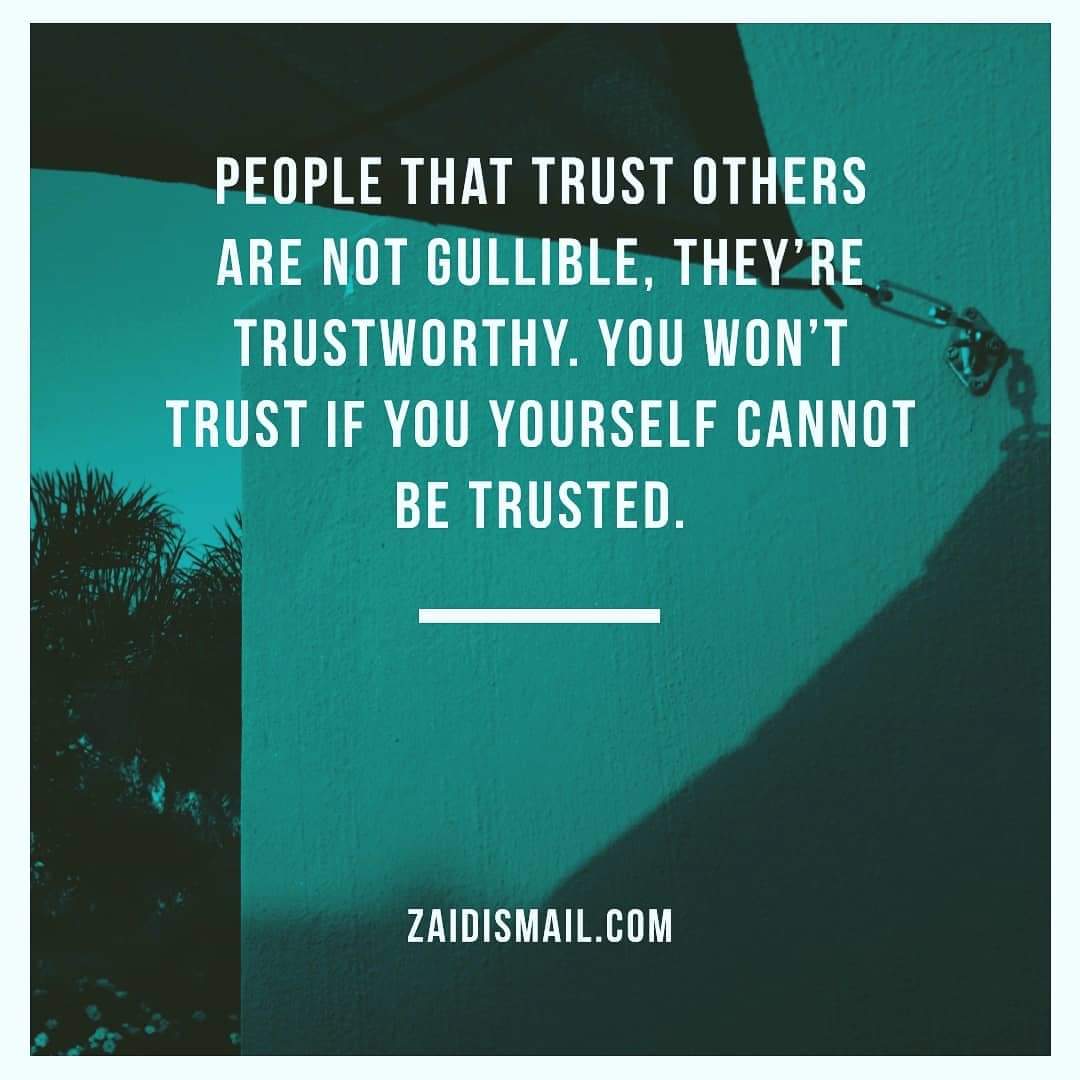
Give trust, before taking it away
Earn my trust!
Earn my respect!
Consider how lofty our opinion is of ourselves when we demand that from others.
If you don’t trust someone for good reason, then no problem.
But if you don’t trust someone just because you don’t know them, then you have trust issues.
That’s how life becomes burdensome because we need to live with our defenses up before we find reason to let our guard down.
When we demand that others must earn our trust or earn our respect before we give them either, it suggests that by default, we are allowed to disrespect and mistrust others through no fault of their own.
Often, such a perspective stems from arrogance or defensiveness because we’re still affected by a past betrayal.
We judge people based on how we judge ourselves.
And we justify their behaviour based on how we believe we would also react in a similar situation.
So when you judge, recognise that it is you first that is being judged, before anyone else.
By all means, allow space for someone to earn your trust on more important issues, but don’t start out by being suspicious.
There is an important difference between assuming the worst and being suspicious of others, versus creating space for someone to demonstrate their trustworthiness without deliberately testing them first.
Learning the difference is what allows for peace, instead of creating opportunity for anxiety.
#selfworth #selflove #selfawareness #selfrespect #mindfulness #judgementalpeople #respect #trustissues #trustworthy #mentalhealth #mentalhealthawareness #mentalhealthrecovery -
Celebrate your humanness
Tears are not weakness because it takes strength to embrace your humanness.
The worst brutes lack the courage to be human because appearing unaffected by others is their idea of strength.
Sadly, such a show of strength seals their hearts to emotion and blinds their eyes to the harshness that they exhale, creating distance between them and those they wish to have closer.
They convince themselves that their cold exterior is needed to protect themselves from hurt while not realising that they created the self fulfilling prophecy that hurts them.
When comparing yourself against such emotional detachment, it’s easy to believe that you’re weak for feeling something that leaves them untouched.
No. The weakness is in them.
Strength is found in knowing that your humanness doesn’t define your resilience.
Being human makes makes resilience a beautiful trait.
Without it, life loses its sweetness, and resilience becomes a cold comfort without fulfilment.
Photo credit : Adobe Stock
#selfworth #selfawareness #ownyourlife #selfmastery #mindfulness #personalpower #ownyourshit #mentalhealthrecovery #mentalhealth #mentalhealthawareness #lifecoaching #zaidismail #loveyourself #emototionalattachment #coldheart