No one sets out to chase money or the high life.
But many convince themselves that such a lifestyle will earn them the happiness and fulfilment that they desire.
Sadly, we easily become distracted by the lifestyle and lose sight of the fulfilment that we seek.
What we need emotionally, and how we need to show up for those around us, is quickly forgotten in the chase to maintain what we have, or to increase it.
When we become defined by the quality of life that we have, we lose ourselves to its pursuit.
Worse still, when we define our quality of life by what we have, we must realise that we have already lost ourselves and the cherished bonds with those around us.
There are many who fiercely defend the accumulation of wealth and luxury as their service to those around them.
They’re the ones who believe that who they are is not enough, hence the need to compensate by providing materially what they lack emotionally.
Gratitude for the self must precede gratitude for our quality of life, or else we’ll find ourselves forever feeling incomplete, being able to choose our misery, but unable to choose our fulfilment.
Choose carefully, before all you’re left with is wasted time and lots of money.
#hope #expectation #sincerity #selfworth #selfawareness #mentalhealth #mentalhealthawareness #lifecoaching #zaidismail #loveyourself #lifegoals #motivation #optimism #purpose #companionship #compassion #relationshipgoals
Category: Philosophy
-

Don’t lose yourself to the chase
-

Know why, or else…
I often have to remind myself that it is not the disregard that others show for what I do that matters, it is my need for them to show regard for what I do that distracts me when they are uninterested or condescending.
Similarly, it’s not the disrespect, or the lack of affection that gets us down, it’s the knowledge that we trusted someone with our need, while they chose not to honour our need, that hurts us.
The hurt often distracts us towards fighting for our needs to be honoured, or our trust to be appreciated, while distracting us from two key things.
We gave trust because we have it to give, and can therefore retract it at will rather than waiting for it to be returned.
And, we offered of ourselves to someone who themselves may not have the same to offer in return.
The choice on how to proceed from that point of realisation is dependent on how much value we place in that relationship, and in that need that we have from them.
Recognising these differences could be the difference between abandoning a relationship for the wrong reasons, or staying in it for the wrong reasons.
The right thing to do only comes to us when we understand why something feels wrong.
Otherwise we end up raging or feeling despondent without knowing why, and then wait for the world to make us feel better about ourselves.
If you make big decisions without understanding why you feel compelled to make such decisions, you will find a lot of regret awaiting you on your path through life.
#hope #expectation #sincerity #selfworth #selfawareness #mentalhealth #mentalhealthawareness #lifecoaching #zaidismail #loveyourself #lifegoals #motivation #optimism #purpose #companionship #compassion #relationshipgoals -
Silent trauma, or peace?
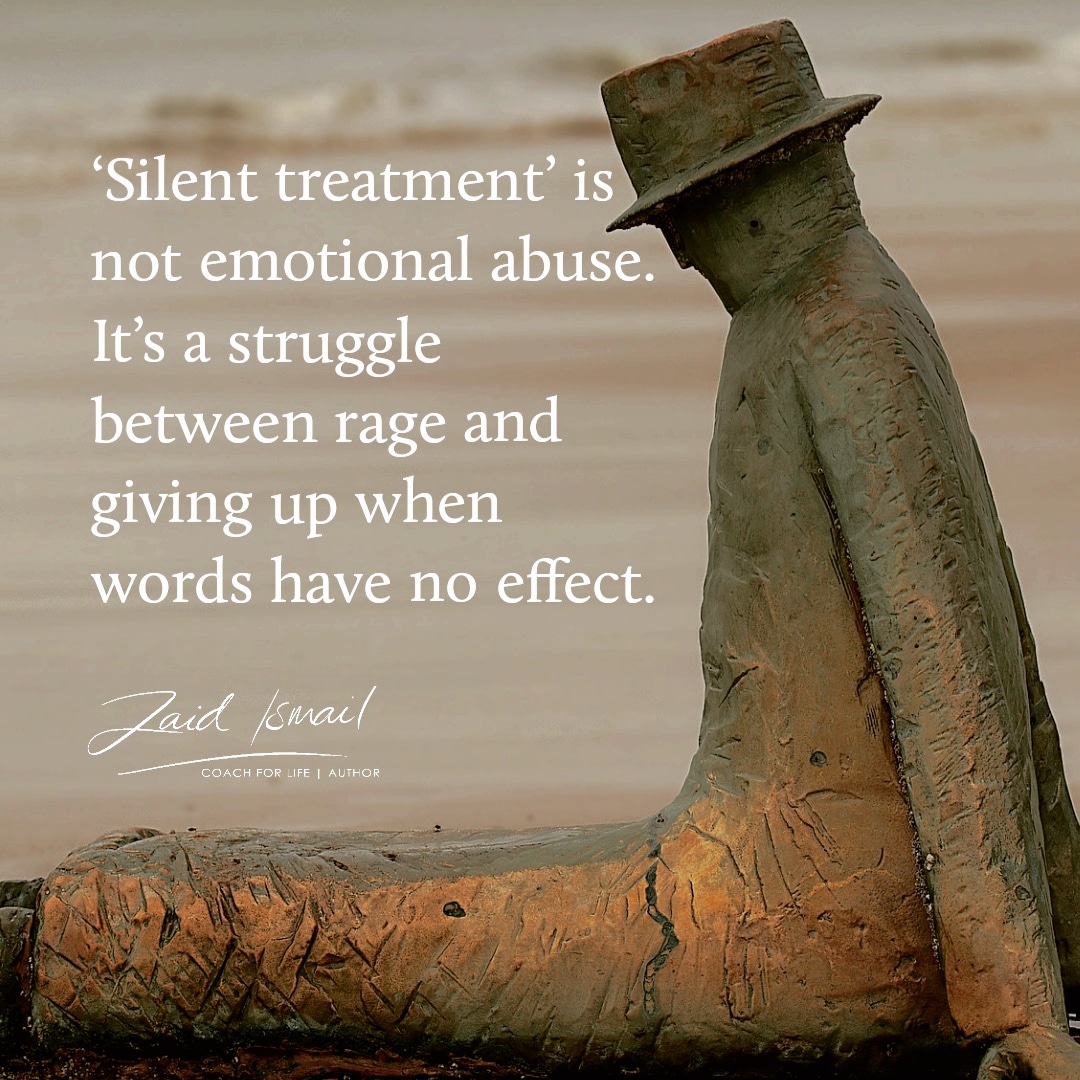
I’ve often seen claims that receiving the silent treatment from someone is the equivalent of emotional abuse – if not abusive itself – and I wondered how it is that doing nothing to someone can be considered abusive?
I once read that what disturbs us is not the disturbance around us, but rather our inability to deal with that disturbance.
The same is true for silence when what we desire are words or communication.
The assumption that we make about the silence from others is that they have reason to believe that their words will have effect, or that it will bring about the understanding that they need or are trying to create.
We also assume that they are capable of articulating what they feel and must therefore be as capable as we are in communicating what they are feeling.
Worst of all, we judge them for being inadequate in their silence because they’re ‘supposed to be an adult’.
Silence only becomes necessary when we have no hope of getting our point across, but do not want to walk away either.
The silence creates space for understanding. But that space will not be used for understanding if the other person is persisting in demanding that they be communicated to in the manner, and at the time that they need to be communicated to.
The real question that we must reflect on is, “Why are we so impacted by the silence from others that we feel rage instead of seeking to understand instead?”
Rage is our defence against being insignificant.
That’s why silent treatment feels like abuse because it provokes our own feelings of inadequacy or insignificance, and not because the silence itself is abusive.
The assumptions that we make about the motives behind someone else’s behaviour is most often based on what we would be motivated by if we were in their shoes.
Think about that the next time you are inclined towards judging someone harshly before having explored opportunities to create understanding.
#hope #expectation #sincerity #selfworth #selfawareness #mentalhealth #mentalhealthawareness #lifecoaching #zaidismail #loveyourself #lifegoals #motivation #optimism #emotionalabuse #silenttreatment -
Do you practice self-serving justice?
The matter of justice doesn’t only apply to matters of criminal behaviour or social conduct, but it’s especially true for how we conduct ourselves within our family units.
It’s the injustices that we experience within our families that result in the misconduct that we express in our lives.
That injustice doesn’t always feel like a blatant abuse. Often, it’s a subtle avoidance of doing what’s right, or speaking out against family norms that are harmful to some.
When we benefit from such injustice, we find it acceptable, or at least defensible, to remain silent.
The way we benefit from it includes enjoying the inclusion or sense of belonging to the family unit.
It includes winning favour with he heads of the family, or earning our place at the table of the family business, or even securing our inheritance.
That’s when we become party to the injustice that affects even us, but from places that we assume to be detached from our family unit.
Injustice in the home is the root of injustice in this world.
First do right by your own before you go out into the world to do right by others.
This is not charity. It is justice in its truest form.
#truth #justice #fairness #equality #mentalhealth #mentalhealthawareness #mentalhealthrecovery #theegosystem #ownyourlife #lifecoaching #zaidismail #parenting #spousalabuse #gbv #relationshipgoals #familyvalues -
Understand. Then accept. Then forgive.
I see so many who claim to have forgiven, but are still weighed down by what was done to them.
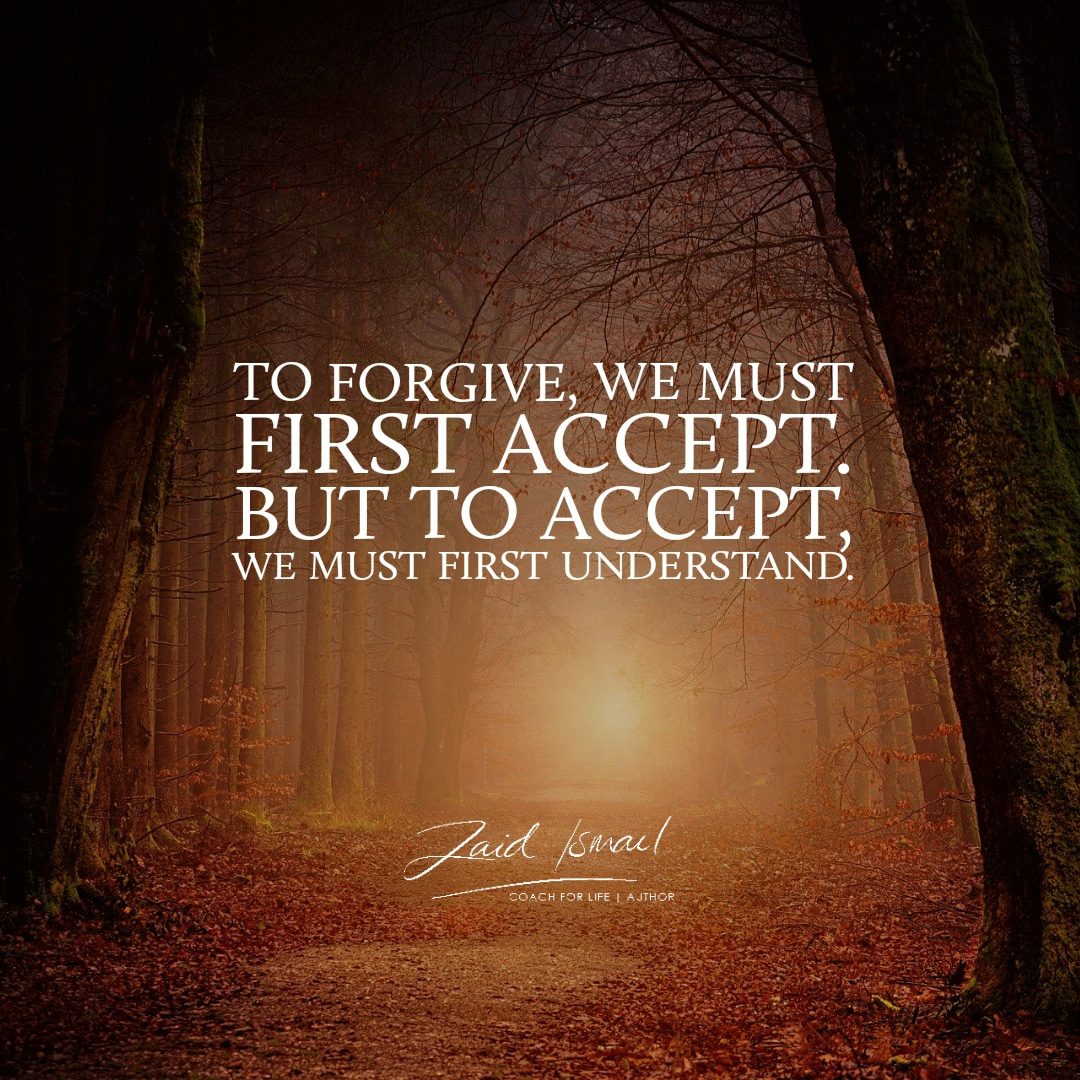
There’s an important difference between forgiving as a means to forego punishing someone or demanding retribution, versus forgiving because you truly understand why someone behaved badly.
When that understanding is lacking, it makes it impossible to accept what they did, because we’ll never be able to reconcile why they did it.
Without understanding why, acceptance becomes superficial, and forgiveness becomes a token gesture.
Forgive and forget is a great notion of noble intent that often lacks any true resolution or peace.
If you want that forgiveness to carry with it the promise of peace beyond that experience, you must seek to understand, without judgement, why someone treated you badly, or committed a dastardly deed.
It’s through that understanding that we’ll discover that their actions were more about their demons, than it was about how they felt about us.
If our sense of significance or self-worth was defined by their validation of who we are, even understanding won’t give us that peace.
But, that’s on us. Not on them. We’re responsible for how we feel about ourselves. And no amount of forgiveness will change that.
It always starts with you.
#hope #expectation #sincerity #selfworth #selfawareness #mentalhealth #mentalhealthawareness #mentalhealthrecovery #theegosystem #ownyourlife #lifecoaching #zaidismail #loveyourself #lifegoals #motivation #optimism #purpose -
Don’t trade your virtues for vices
Don’t withhold the beauty of your spirit just because there is no one around to appreciate it.
Be who you are, and let others be who they choose to be.
The expectation of being treated the way we treat others is what causes much bitterness and anger.
It’s not worth it.
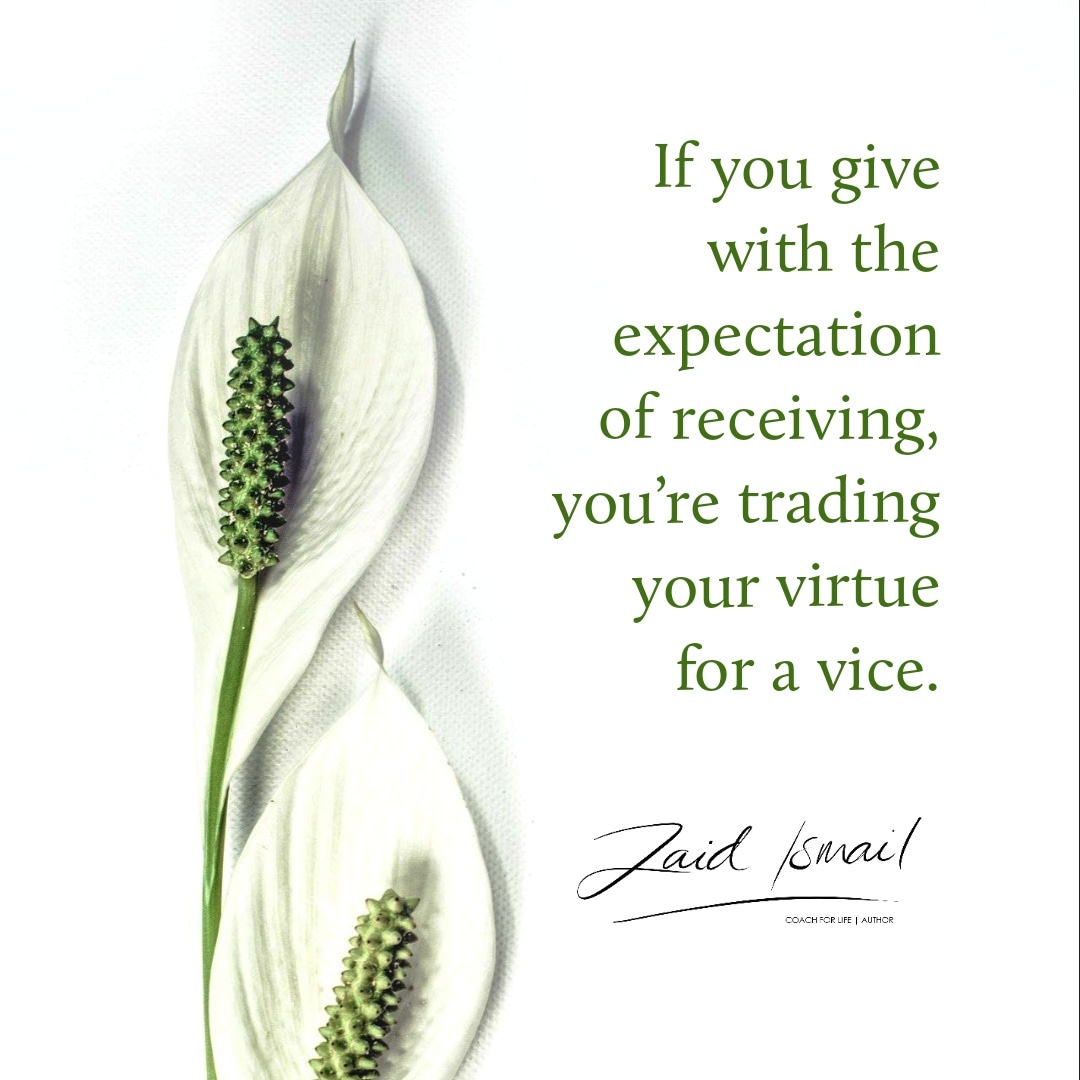
Give without the expectation of receiving. And when you don’t receive, give some more.
Waiting for others to return the favour before we do more, denies us the fulfilment of being who we are, while compromising our values to be who they are.
Remember, we cannot give what we don’t have.
When you withhold your gifts because you’re waiting for others to respond in kind first, you’re assuming that they have within them what drove you to give of yourself in the first place.
It’s a crazy cycle.
Break it by giving without the expectation of receiving from them in return.
That’s the secret to fulfilment and contentment in our lives.
When we expect something in return, we deny ourselves that fulfilment and we turn our good deeds into transactions.
When we transact with our virtues in that way, not only do we diminish the value of what we’ve done and who we are, but we also end up treating others the way that they’ve treated us.
That’s how we lose ourselves to our expectations from others.
It always starts with you.
#hope #expectation #sincerity #entitlement #gentleness #conviction #ownyourlife #theegosystem #mentalhealth #selfawareness #selfrespect #mindfulness #inspiration #philanthropy #generosityofspirit #givingback #lifecoaching #zaidismail #loveyourself #mentalhealthawareness #mentalhealthrecovery #mentalhealthmonth -
Faith is always there
Faith is often associated with spirituality, or religion.
But faith plays a role in our lives in ways we easily lose sight of.
When we trust someone, we have faith in them to do the right thing.
When we mistrust someone, we have reason to fear that they’ll do the wrong thing, meaning that we have more faith in them not doing the right thing.
Faith is always at play the moment we consider what we need from the next moment, the next day, or the next encounter with someone about something important.
If we lose sight of what we’re investing our faith in, we’ll focus on responding to our fear about the outcome potentially not being achieved, and our efforts will be driven towards mitigating the risk of that outcome.
Our faith from a spirituality perspective is our fall back position for when our faith in others may be betrayed.
But, if we only rely on our fall back position, we’ll prevent ourselves from having faith in those around us, giving them little reason to believe that we appreciate or trust them.
That’s how we create distance between ourselves and others, and often, use that as a reason to believe that we were right in not trusting them.
Meanwhile, they didn’t feel trusted. That’s why they created distance between them and us.
Being true to yourself despite the risk of being disappointed when you invest your faith or time in others, is what becomes possible when you truly connect with the value of who you are, and what you are passionate about leaving as your legacy in the lives of those around you.
When self-doubt creeps in, we withdraw our withhold or contribution, because we need others to validate our significance before we believe in ourselves.
It always starts with you. Own your life.
#hope #expectation #sincerity #selfworth #selfawareness #mentalhealth #mentalhealthawareness #mentalhealthrecovery #theegosystem #ownyourlife #lifecoaching #zaidismail #claimyourpower #selfdoubt