Category: Philosophy

  • Resisting the norms

    Resisting the norms

    The relentless pace of society towards retiring those who are no longer contemporary is enough reason to settle into the rhythm of preparing for old age. Just writing that out makes me nauseous.

    To regain my sanity, or at least to push back against the approaching insanity, I remind myself that I have a good 20 to 30 years still left in me should I not succumb to the violence that pervades so many social spaces. 20 to 30 years is a lifetime in itself, which makes it difficult for me to grasp why someone would willingly plan to surrender a lifetime in favour of a belief system that has put out to pasture the wisdom of lives lives and struggles overcome.

    Society is only as strong as the most pervasive weakness that it celebrates. At present, we appear to celebrate mediocrity, sensationalism, materialism, and debilitating comfort. Passion and purpose do not feature in the most important discussions around me, both in my personal domain or in the public domains that I frequent.

    My aversion to such norms has seen me increasingly isolating myself from such spaces leading to a dulling of my spirit that threatens to land me in exactly the state the thought of which nauseates me. Thus, if left to my own devices without a grasp on life itself, I will succumb to the very thing about which I judge others. That has proven to be the only truth about the struggles of my life.

    The judgement that I flirted with in my youth visited me in my adulthood and threatens to define my twilight years. However, I refuse to embrace the twilight. I will marvel at it, and perhaps even taunt it, but I have no intention of embracing it. My irreverence at that sight of social norms creates a tension within me each time I even contemplate fitting in or going with the flow of the river of affluence that stenches up the environment around me.

    An art neglected will be lost. Thus, I find my ability to express myself slowly eroding while the mental clutter of everything that I have grown to despise about mediocrity takes its place. The despicable narrative of the contempt that I hold for the lack of conviction that I am bombarded with takes up more head space than it ever should.

    The absence of a sounding board or an understanding gaze leaves me adrift in a sea of tumultuous currents that have exceedingly brought me closer to tipping over and losing myself to the idealism of a mind fraught with angst at the sight of everything that threatens the wholesomeness that I hope to experience before my final calling.

    When the spoken word is not welcomed, the written word is all that remains of my avenue of protest against a world that celebrates vulgarity and self-aggrandisement rather than the substance and wondrous nature of life itself.

    A distracted clown appears deeply philosophical. A whimsical philosopher appears foolish.

    I must avoid both.
  • Forgiveness without understanding is virtue signalling

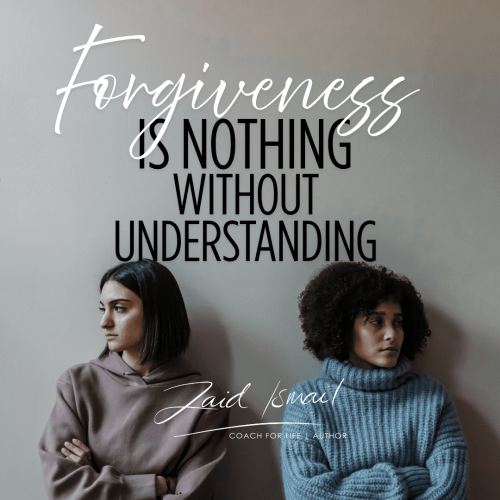
    Forgiveness without understanding is virtue signalling

    If there is one piece of advice that will help you through the worst of times, this is it.

    Internalise this, connect with it, make it your mantra if you must, but understand that forgiveness on its own, without acceptance, will leave you yearning for retribution or justice.

    More than this, acceptance is only wishful thinking if not accompanied by understanding.

    We need to understand the motives behind someone’s betrayal of trust, or their indiscretion, or even their neglect of what is important to us or else we’re left with believing that it was intentional towards us.

    Most often, we treat others badly because of our demons that are provoked by what they need from us.

    Even if we’re justified in treating them that way because of how they treated us, tit-for-tat is an indulgence of the ego and not an investment in rising above that which weighs us down.

    Understanding doesn’t mean condoning, justifying, or defending bad behaviour. It simply lifts the burden of not knowing so that making peace with the experience becomes possible.

    By seeking understanding, we immediately shift our focus to what they were struggling with rather than grappling with our lack of significance to them.

    It is only through such understanding that we learn to accept that people’s actions are a reflection of who they are more than it is about what we mean to them.

    And while we’re contemplating all this about others, we need to reflect on our own bad behaviour within the same context or else we will inevitably become like those whom we judge.

    Judge less. Understand more.

    Peace is within reach.

    Otherwise bitterness will be your friend until you meet your end.

  • Have you ever truly lived?

    Have you ever truly lived?

    Is your definition of success really your definition of success?

    Or did you perhaps borrow it from society without really noticing?

    Our fixation on appearing successful is so toxic, that we readily give up our hopes and dreams in favour of acceptance.

    Most people don’t have a greater purpose in life beyond achieving what secures their place in society, or in their social circles.

    The chase for acceptance or validation is how we die a million deaths in a single lifetime, but rarely live a single wholesome life before death.

    Do we even know what a wholesome life feels like between all the distractions and our efforts to appease others?

    When was the last time you reconnected with the idealistic teen in you?

    If you had to meet your teenage self, would you be proud or disappointed in who you are now?

    Or were you already wasted to the peer pressure back then that you’ve never known a life beyond that?

    Today is a good day to reconnect with you.

    death

  • Don’t serve to be seen

    Don’t serve to be seen

    Don’t only serve others when there’s something in it for you.

    That’s not goodwill or charity, it’s a path to hypocrisy.

    Uplifting others should be done because you want to ease their journey through life.

    Theirs, not yours.

    Not because you want them to worship you, or celebrate your praises.

    To contribute, support, and enrich other’s lives willingly is the root of joy.

    That is what gifts us a night of restful sleep even if spurned by those whom we serve the most.

    When you withhold your service because of the absence of gratitude from them, you step on that slippery slope that will one day lead to you being equally ungrateful for what you have in your life.

    Withholding of service must only ever be done if such service enables its recipient to harm others.

    Like supporting one in times of need who then uses such support to justify their reasons for ill treating or being abusive towards others, or denying the rights of others.

    There is an important line to be drawn between supporting one who is in need of support versus enabling one to avoid accountability for the state in which they find themselves.

    When we need validation for the support that we offer, we are more likely to enable such self-imposed hardship because our need to be of service is what drives our motives to support them.

    That’s how hypocrisy sets in, and how our efforts to improve society become a contributing factor towards the selfish decline of society, leaving us hopeless and exhausted and giving us reason to believe that we’re the only good souls left.

    Be mindful and purposeful about why you are offering assistance, and what your assistance is enabling or else you may end up causing more harm while believing that you’re doing good.

  • Elusive peace

    Elusive peace

    What brings you peace?

    If it’s likes, shares, and comments, then I’m afraid that peace escapes you too.

    Reconnecting with the human condition seems to get more difficult by the day with the filters of online life shaping our perceptions and opinions of the struggles or triumphs of others.

    Does an authentic human experience still exist in a connected world?

    Peace grows ever more elusive when connecting with others is the only soul food you have.

    They talk of dopamine and convince you that your emptiness or your fulfilment lies in chemical balances because they themselves lack the appreciation of sincere human connection.

    Appreciating the quiet moments becomes more difficult when we lose sight of the value of silence.

    The absence of clutter.

    The presence of endearing company.

    Finding peace in solitude is a gift, and a skill that appears to have been lost to the madness of this world.

    Take time to recede, to allow your very valid concerns and urgencies to suspend its calling for long enough to let the breath reach your soul.

    When last did you lose yourself in the gentle throb of your own pulse?

  • Home, is a feeling

    Home, is a feeling

    I was never convinced that home is a place. It’s a feeling.

    I say this because I’ve had many places to call my own, but none of them felt like home.

    I’ve had many places that felt homely, most often when visiting the homes of others, but none that felt like my home.

    Home, in my mind, became that larger than life aspirational goal that continues to fuel everything that I do.

    It’s a vision and a dream, a goal and a purpose.

    But never having truly connected with it, it is an idea, the closest to which I’ve come having been the intense belief that I was created for a place other than this.

    Thus, I adopted the pace and purpose of a traveller, never looking for roots but always feeling grounded.

    The same is true for concepts like peace and feeling safe.

    All nice ideas and beautiful imagery but lacking in substance.

    Born restless. Living restlessly. Hopefully to die peacefully.

    Fully spent. Without a single ounce of energy to spare, or regrets to lament.

    Just a peaceful conclusion to the best effort that I was capable of.

    Perhaps in that lies the promise of all three. Safe, peaceful, and homely at the moment of reaching my final destination.

    Exhale.

  • Do you remember your dream?

    Do you remember your dream?

    What will you be when you give up?

    Sadly, too many live their lives this way resulting in them imposing their expectations on their children to fulfil the dreams that they abandoned.

    Every generation complains about the generation before them and loses sight of such behaviour giving the next generation reason to complain about them.

    We’re a strange bunch.

    We distract ourselves with emotions and abandon practicality, then distort our practical efforts to reclaim our emotions.

    If you lose sight of what is magical in the present moment, you’ll eventually convince yourself that you’re just a dreamy romantic when you find yourself speaking longingly of all the amazing opportunities that you sacrificed to create some life for others.

    Meanwhile, it was an effort to protect yourself from failure or rejection that caused you to sacrifice your dreams, and not any purposeful duty.

    Dreams will remain dreams if there is no purposeful conviction behind it.

    It’s possible to integrate your efforts towards your dreams with the practical life that you must live.

    In fact, it’s essential. How else are our children supposed to experience such conviction about the value of this single life that we have if all they ever witness is the drudgery of labour and duty?

    Can you even recall what dreams you abandoned in favour of acceptance or validation from those around you?

    Strike a balance before the imbalance ravages your peace.

  • Break the stigma

    Break the stigma

    I think it was Dr Wayne Dyer who said that if you change the way you look at things, the things you look at change.

    This is true both positively and negatively.

    Do you know someone who has a problem for every solution? Who sees doom and gloom at the happiest of moments? Who is preempting a negative outcome despite things going in their favour?

    Do you think they have a mental illness, or have they just been hurt so many times before, that they are afraid to hope for a positive outcome? Are they simply protecting themselves from being let down again?

    This is how we experience life when we finally give up hope about the future, or we give up hope about being appreciated.

    That absence of hope is what causes us to feel depressed. Depression is a legitimate experience of human emotions after we’ve taken one too many hard knocks from life about something important to us.

    The same is true for every other emotional experience.

    Emotions are not deficiencies. They’re the essence of what makes us human.

    If we ever hope to win this battle against a consistently declining quality of life, we need to stop referring to emotions as mental health, and we need to stop defining the duress that we experience in life as a mental illness.

    We need to reconnect with the human behind the pain, instead of dehumanising them by denying the legitimacy of their emotional experience.

    Break the stigma. Stop the labelling. Embrace the humanness.