You undermine yourself when you doubt your ability to accomplish something for no reason other than fear.
When you allow the uninformed opinions of others, or their disrespect to define how you feel about yourself, you undermine yourself.
When you settle for less because you believe you’re unworthy of better, you undermine yourself.
Each time you shy away from being who you believe you are capable of being, you undermine yourself.
If you find yourself doing these things, don’t complain when you feel like you’re being taken for granted.
You’ve effectively told others that it’s OK because of the way you treat yourself.
Treat yourself with kindness and commitment before you can expect others to do the same.
#kindness #compassion #sincerity #authenticity #mentalhealth #mentalhealthawareness #mentalhealthrecovery #selfworth #selflove #selfawareness #selfrespect #reflection #mindfulness
Tag: mentalhealth
-
Don’t be your own enemy
-

Don’t blame destiny
Most often, it is our belief in what we deserve that limits us more than what we actually deserve or are capable of achieving.
It’s like waiting up all night to witness an amazing sunrise only to give up as the first streaks of dawn appear and then convince ourselves that it was our destiny not to see the sunrise.
No. Destiny is the sum total of the choices that you make with the opportunities that present themselves to you.
If you’re too distracted to notice those opportunities, or lack the courage to embrace it, that’s your choice, not destiny.
Destiny is blamed for more failures than our failure to act.
#fate #destiny #happiness #conviction #commitment #confidence #optimisticquotes #resilience #tenacity #mentalhealth #mentalhealthawareness #mentalhealthrecovery #selfworth #selflove #selfawareness #selfrespect #reflection #mindfulness #opportunity -
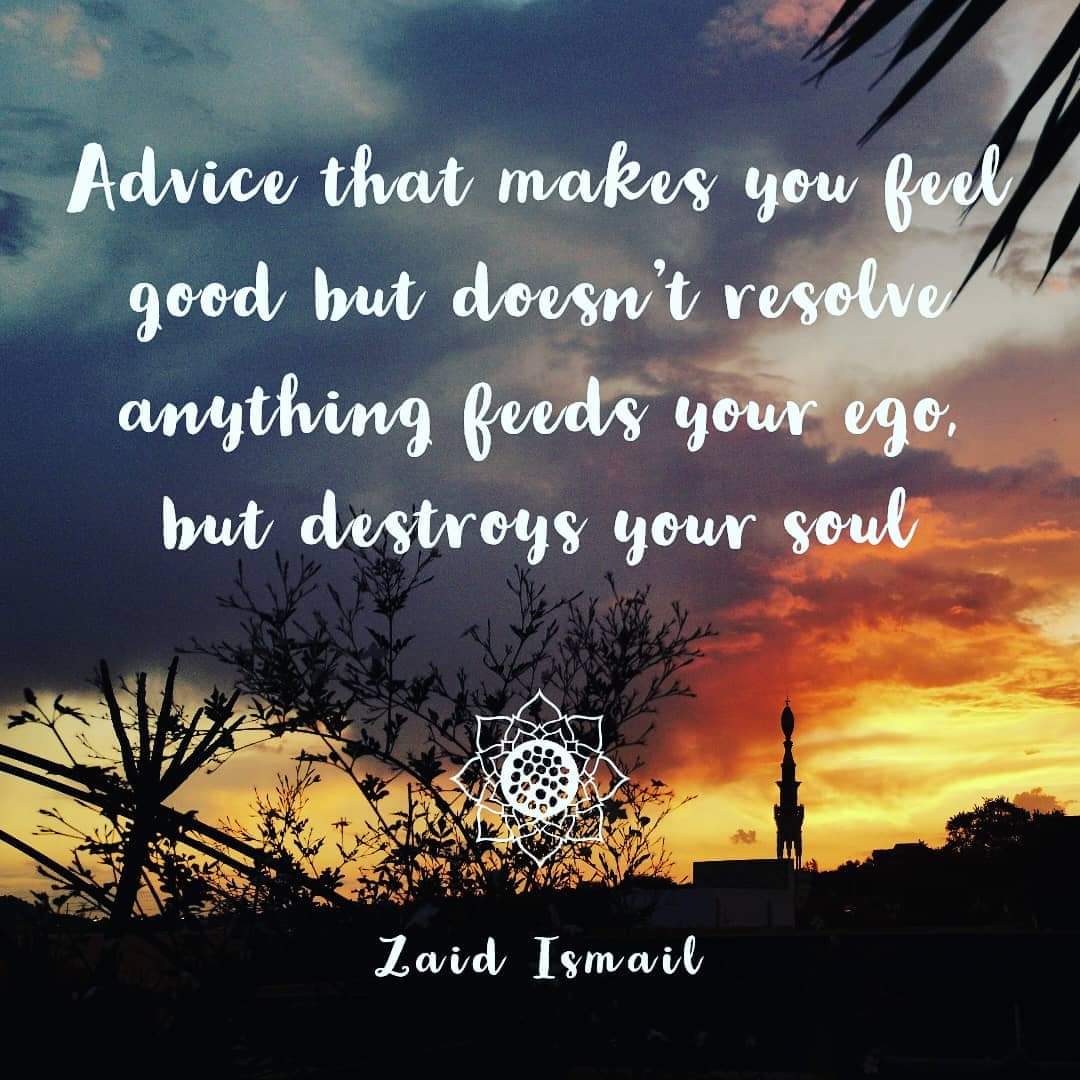
Soul food doesn’t feed the ego
Be careful about advice that makes you feel good but doesn’t resolve anything.
Things that make us feel good either provides us with an emotional high and feeds our ego, or with a spiritual high and feeds our soul.
When we strike a healthy balance between the two, we find peace.
So, be careful of people that only feed your emotional needs, but don’t know how to feed your soul.
Worse still, be careful about confusing emotional fulfilment with soul food. The one makes you feel good about where you’re at, and the other inspires you to grow beyond where you’re at.
Choose carefully.
#selfworth #selfawareness #ownyourlife #selfmastery #mindfulness #personalpower #ownyourshit #mentalhealthrecovery #mentalhealth #lifecoach #soulfood #theegosystem #mentalhealthawareness #selfloathing -
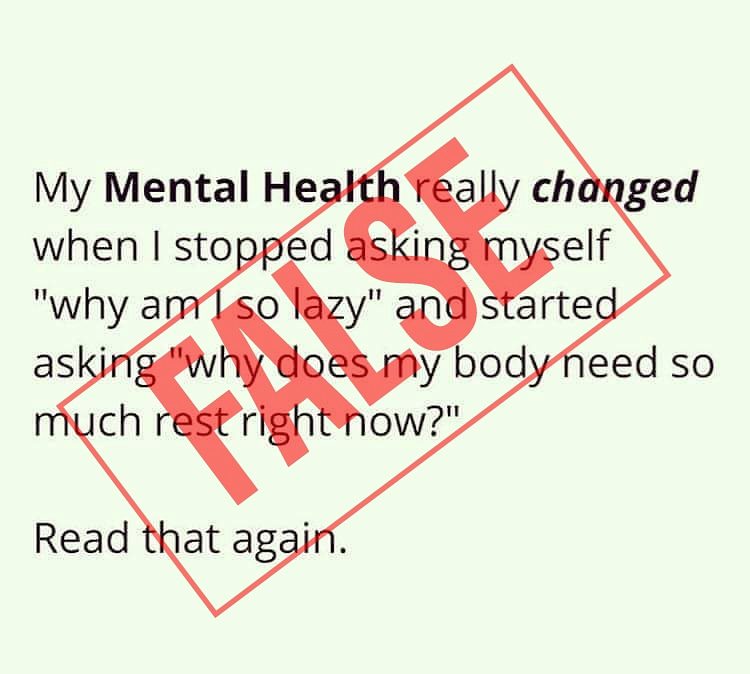
Emotional health before physical wellbeing
As well-intentioned as this is, it is not true.
Our body does not have a mind of its own.
And laziness is not about the amount of rest that we need.
As is clearly experienced by many, getting enough rest most certainly does not guarantee productivity. Nor does it remedy procrastination.
So what is laziness about? And does it actually exist?
Laziness is how we describe the behaviour that we observe or experience when someone lacks the inclination to complete a task or project.
The question we should therefore be asking is not why are we lazy? Or why our body supposedly needs rest. We should be questioning why we’re not committed to the task at hand.
When we don’t believe in the value of the outcome relative to the effort that we need to put into something, chances are good that we’ll avoid it until we can’t avoid it any longer.
Otherwise we’ll do it only if there is a threat of negative consequences for not doing it.
Don’t detach your emotional space from your physical experience. Your body responds to your emotional disposition, it doesn’t define it.
When we lose sight of this, we eee illness or dis-ease taking hold in our body, and we feel emotionally burdened because of it, rather than focusing on our emotional duress that we may be experiencing up to that point, and understanding that our body is simply responding to that duress.
It sounds more complicated than it is. The important take-away from this is that when you experience lethargy or ailments in your body, it’s a sign that you’ve been under emotional duress for an extended period.
Medication may provide temporary relief. But it won’t address the emotional duress, leaving you susceptible to more ailments taking hold in your body.
Do you need help to reverse the physical impact of the emotional upheaval that you’ve experienced in life? Reach out via my website at zaidismail.com or on WhatsApp at +27836599183 to discover how we can reverse the effects of chronic illnesses without medication, while simultaneously improving the quality of your life and your relationships with significant others.
#holistichealth #mentalhealth #mentalhealthawareness #mentalhealthrecovery #ownyourlife -
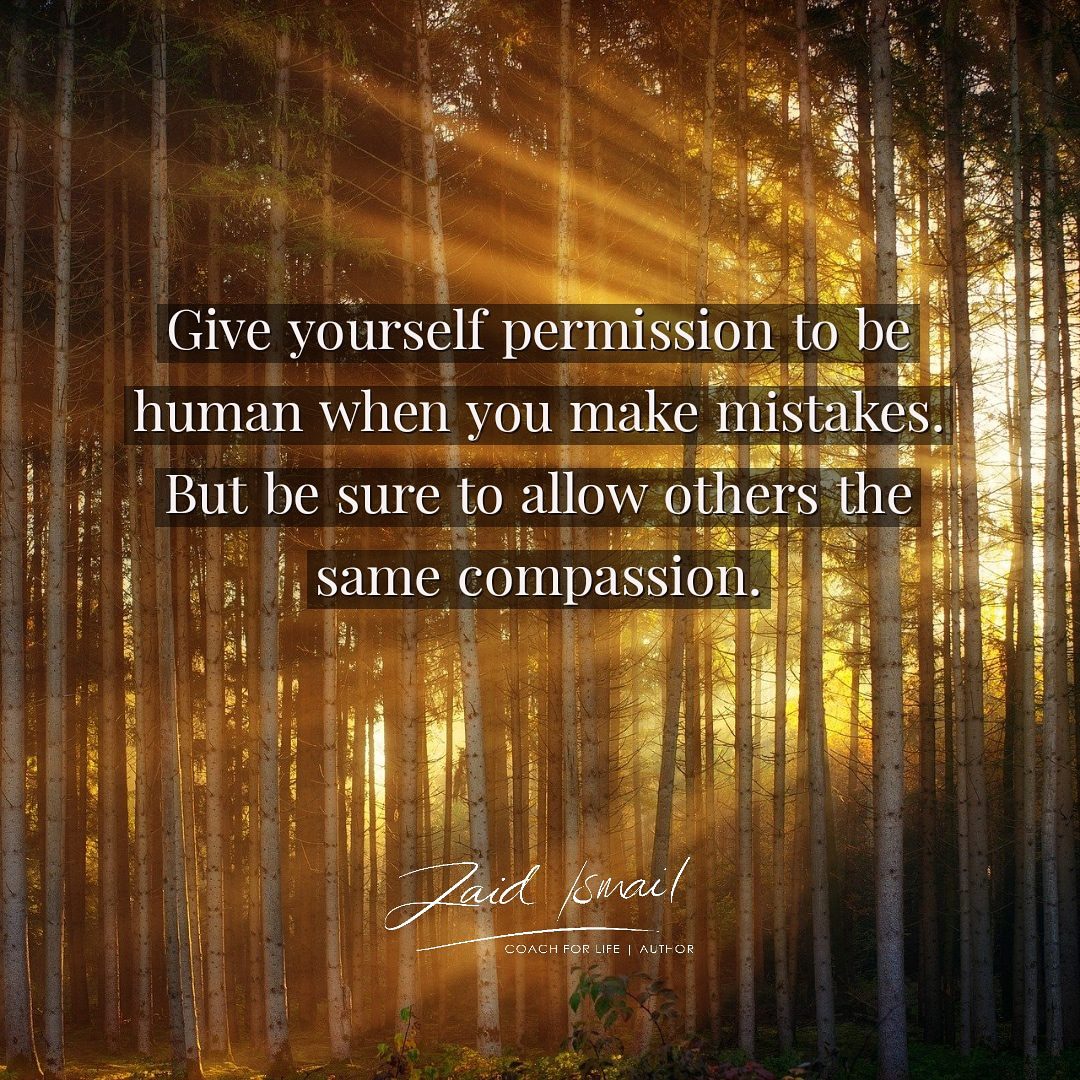
Be what you need
In a world that is demanding attention all the time, it’s easy to get caught up in what we need from others while ignoring what they need from us.
Our humanness is often celebrated for ourselves, but set aside in our expectations from others.
We all need sympathy and compassion, but are hesitant to give others the benefit of the doubt when they fall short in giving us what we need from them.
The same way that we must seek to understand why we sometimes disappoint ourselves or others, we need to afford others the same consideration when they disappoint us.
We all have our demons that we’re fighting, but we each succumb to different ones.
Just because we’ve reigned over one of ours doesn’t mean that everyone else should be able to overcome the same demon in their lives.
The next time you find yourself demanding compassion or understanding from others, pause for a moment to consider why it is that they may seem incapable of being compassionate in that moment.
They may just be struggling with something themselves and don’t have the capacity to do more than they’re already doing.
Photo credit : Adobe Stock
#compassion #understanding #kindness #kindnessmatters #beinghuman #selfworth #selfawareness #mentalhealth #mentalhealthawareness #mentalhealthrecovery #theegosystem #zaidismail #mindfulness #inspiration #motivation #ownyourshit -
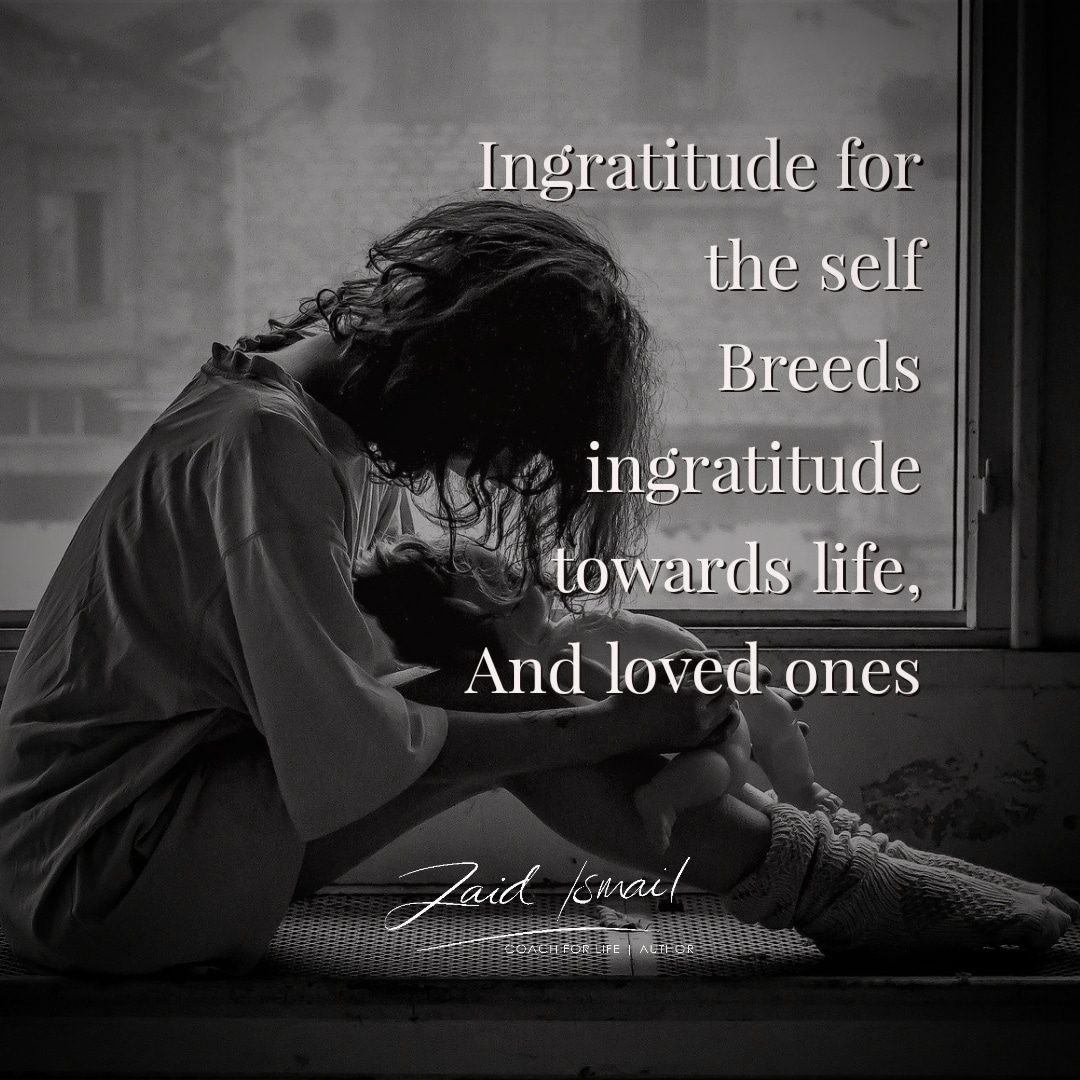
Ingratitude breeds ingratitude
When we’re ungrateful for who we are,
When we deny any good in ourselves that others may see,
When we ignore our beauty because there may exist some ugly,
We protect ourselves from attachment to anything wholesome or beautiful in life.
Our need for such protection is a deeply ingrained fear about never being good enough.
Not good enough for the standards that we hope to live up to, nor good enough for what we think we need to be to those around us.
The self loathing ensures that this conversation remains in our heads, and is only expressed as rage or bitterness, or many times, as deliberate ingratitude.
But ingratitude does more than just take our lives for granted.
Ingratitude convinces loved ones that they’re not good enough either.
Ingratitude distorts good intentions into bad motives.
Ingratitude breeds within others what we loathe about ourselves, while convincing us that it harms no one.
Ingratitude is the real root of evil.
It is ingratitude that destroys hope.
It is ingratitude that destroys love.
And it is ingratitude that destroys gentleness.
You cannot give what you don’t have.
When ingratitude for your self takes hold, the sincerity of any gratitude that you hope to express towards others lacks authenticity and leaves them questioning your sincerity.
Ingratitude is a vicious cycle that destroys every good that it touches, and breaks every soul that may once have been whole.
And that’s how peace becomes elusive.
Photo credit : Adobe Stock
#selfworth #selfawareness #ownyourlife #selfmastery #mindfulness #personalpower #ownyourshit #mentalhealthrecovery #mentalhealth #mentalhealthawareness #lifecoaching #zaidismail #fuckit #gratitude #appreciation #selflove -
To be…
Much of life is wasted in the time spent considering if we should or shouldn’t do that thing that we’re passionate about.
That consideration is most often based on our doubts about what others will think, and rarely because we doubt the value of doing it.
Sometimes, we persevere and find the courage within ourselves to follow through despite the absence of support or encouragement from those around us.
And sometimes we stop wanting to push through because we feel worn down and invisible.
No one can change which choice we make. But the moment we choose that person that we want to share our passion with, without whom we see no point in sharing it, we give them the power to make that choice for us without them realising what power they have over us.
Sometimes, telling them about it endears them towards us.
But sometimes, the burden of expectation that it places on them pushes them further away, leaving us convinced that the value we thought we could share was not of much value at all.
The human condition is a beautifully complicated mess.
Photo credit : Adobe Stock
#selfworth #selfawareness #ownyourlife #selfmastery #mindfulness #personalpower #ownyourshit #mentalhealthrecovery #mentalhealth #mentalhealthawareness #lifecoaching #zaidismail #fuckit #optimism #lifegoals #dreambig #motivation -
Don’t dance with the devil
The devil lives in our doubts, and our demons thrive in our fears.
What we take from life leaves us filled with hope, or ridden with fear.
But because it’s what we take from it that matters, we can always revisit a memory or an experience and find something more wholesome to take from it.
While we cannot change the past, we most certainly can change how it shapes us, and our relationships with those around us.
The most common reason for not wanting to explore a fresh perspective of our past is because we need those doubts and fears to convince us never to expose ourselves to such experiences again.
It’s got nothing to do with questioning our abilities, and everything to do with avoiding disappointment or pain. Because while we may know without a doubt that we’re capable of achieving something great, we’ll avoid even attempting it because of the possibility of the devastation of it being rejected or taken for granted by others.
Don’t entertain the devil, and don’t surrender to your demons.
Life awaits.
Photo credit :Adobe Stock
#selfworth #selfawareness #ownyourlife #selfmastery #mindfulness #personalpower #ownyourshit #mentalhealthrecovery #mentalhealth #mentalhealthawareness #lifecoaching #zaidismail #motivation #optimism #lifegoals #dreambig