The next time you find yourself having a disagreement with someone, consider if the way in which you conduct yourself is to demand that they show you due respect or consideration, or are you trying to establish understanding.
When we feel taken for granted or invisible in something that is important to us, we’re more likely to become defensive, aggressive, or passive aggressive in our efforts to get our point across.
If we’re not aware of our need for significance, we will go in search of significance in almost every setting.
This is how we end up yelling at cashiers, losing ourselves to road rage, and being argumentative with co-workers, as just a few examples.
Understanding why we feel insignificant is the first step towards breaking that cycle.
Understanding why those who are significant to us are not treating us with the significance that we need is the second step.
And the third step towards breaking this cycle of rage or bitterness at the world is to understand why we need such validation to feel significant before treating others in a way that is true to who we are, rather than being driven by the anger or disappointment that we feel.
Emotional mindfulness is core to the above, and having a healthy self-worth is what makes it possible to pace ourselves in our efforts towards creating the understanding and establishing the bonds that we believe will improve the quality of our relationships.
It always starts with you.
If you need help to understand what drives you to be less than who you want to be, reach out via my website at zaidismail.com or on WhatsApp at +27836599183, and let’s get the conversation started.
#selfworth #selflove #selfawareness #selfrespect #mindfulness #theegosystem #mentalhealth #mentalhealthawareness #mentalhealthrecovery #ownyourshit #ownyourlife #compassion #sincerity #authenticity #lifecoaching #zaidismail
Tag: sincerity
-

Peace always starts with you
-

Do you know why?
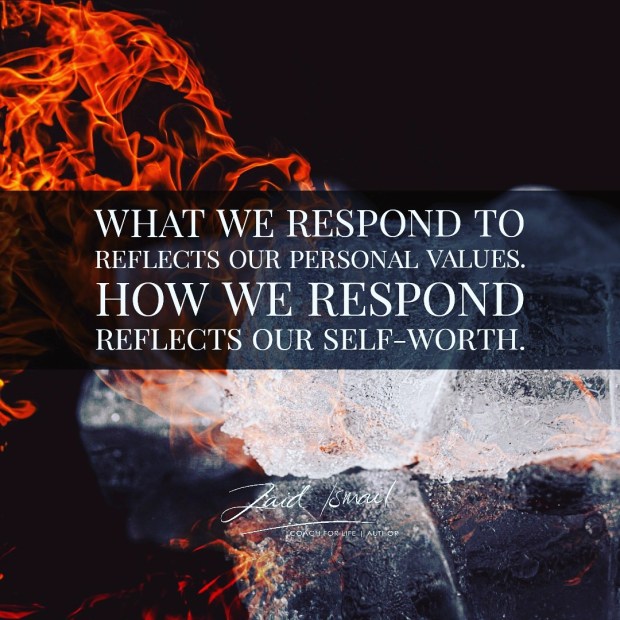
What we choose to respond to is a reflection of what is important to us.
The more important it is, the more intense or passionate our response.
Hence anger that bubbles over, or heartfelt pleas and messages to connect with someone about something.
The tone and demeanour of how we respond is a reflection of our self-worth.
The more aggressive or abrasive we are, the lower our self-worth in that moment and about that setting. And vice versa.
If we’re not mindful about our emotional needs from a given interaction, we’re likely to be distracted by the technical or practical aspects of what we’re dealing with, rather than understanding why it provokes such a strong response from us, or our partner.
Situational mindfulness is the easy part. That’s being aware of WHAT is going on around you so that you can respond appropriately.
Emotional mindfulness is more elusive, because it means that we need to be consciously aware of our emotional bias in that moment, or else we’ll lose sight of our bias when interpreting the actions or words of others. In other words, the WHY of our response.
Understanding your Egosystem that drives you is therefore critical towards improving the quality of your relationships, and your life.
If you’re struggling to understand why you can’t let go of something that appears hopeless, or why you feel so intensely about something that isn’t that important in the bigger picture, get your copy of The Egosystem now, and begin your journey of reconnecting with you, after having been distracted by the struggles of life.
#hope #expectation #sincerity #selfworth #selfawareness #mentalhealth #mentalhealthawareness #mentalhealthrecovery #theegosystem #ownyourlife #lifecoaching #coaching #zaidismail #lifegoals #loveyourself -
Prisons of our minds
Without realising it, we create most of the boundaries and the dependencies that we have on others, often without them being aware of it.
One of the reasons we do this is because that is our code of life that we’re honouring.
It’s our way of respecting or protecting what we see as sacred in that relationship.
However, it’s based on the assumption that our partner shares the same values, and values the same things.
Healthy communication will make such misalignment of expectations easier to deal with, and resolve.
But, the moment we tell someone what we need from them, we create an opportunity for doubt within ourselves about whether they’re doing something out of obligation, or sincerity.
That doubt is the beginning of the prison walls that we erect around ourselves, which slowly isolates us from our partner because we’re expecting them to notice what we need.
But expectations are important in a relationship.
Without it, the relationship loses value and the trust fades.
To avoid this, we need to develop a healthy emotional maturity in the relationship so that issues of trust, expectations, and duty can be discussed in ways that don’t threaten the self-worth of your partner.
More than this, we also need to realise that if we focused on what we’re not getting, and also focused only on what we’re giving, chances are good that we are unaware of what they need from us beyond the assumptions that we’ve made.
Thus, the prisons of our minds become the prisons of our lives.
#hope #expectation #sincerity #selfworth #selfawareness #mentalhealth #mentalhealthawareness #mentalhealthrecovery #lifecoaching #coaching #zaidismail #relationshipgoals #marriage #marriageadvice -
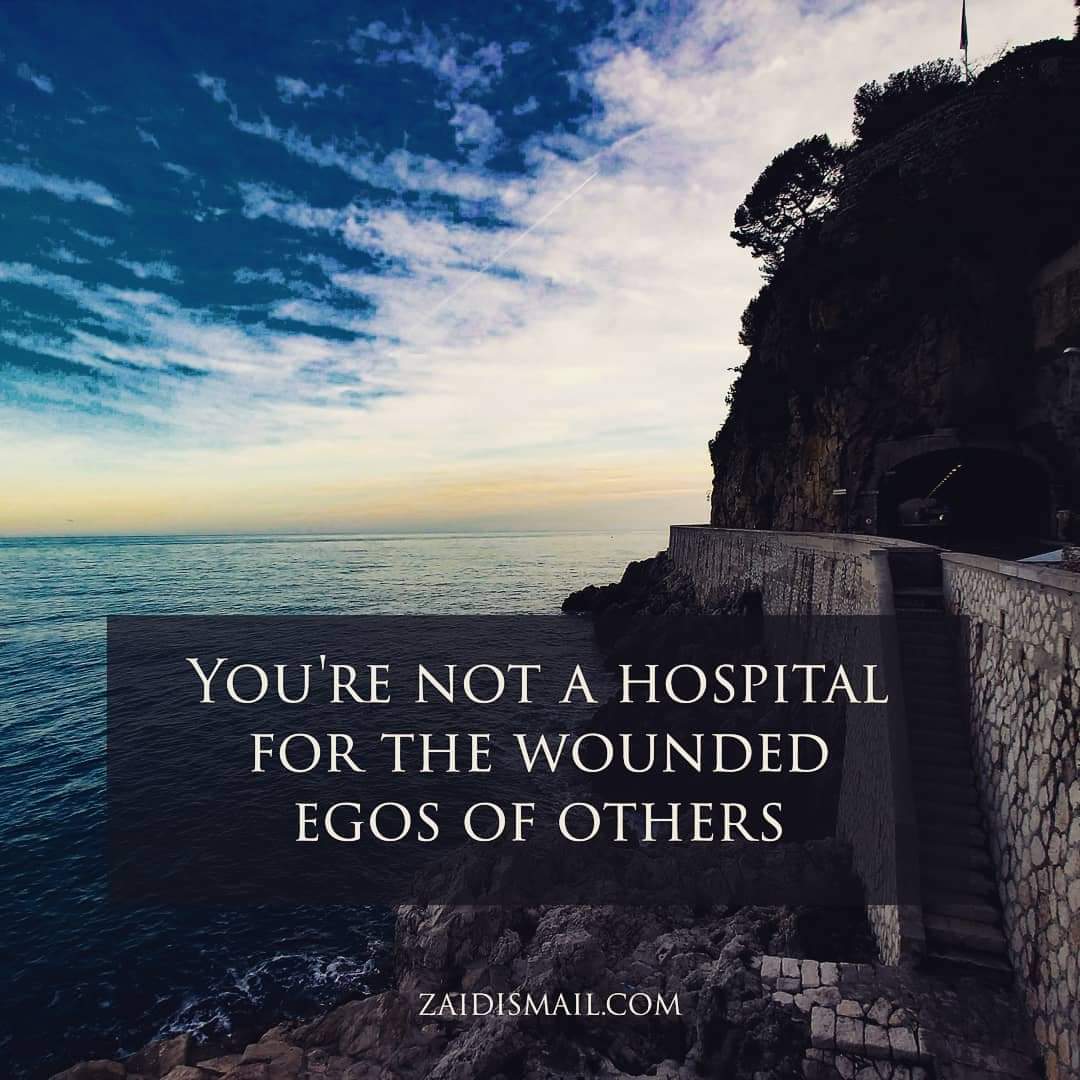
A hospital for dented egos
I’ve seen, and experienced first hand, the disaster that awaits when we convince ourselves that the demons that others deal with is our responsibility to resolve.
Being kind, compassionate, and even understanding does not mean that we must own the decisions that others have made, especially when those decisions include them choosing to hold on to anger from their past instead of embracing the opportunities of the future.
Remember that you can only offer someone a hand up, you cannot make them rise.
The same way that you must own your shit, you are responsible for giving them every opportunity to own theirs.
And that includes not making yourself available as a doormat to them when they’re not owning it.
You’re not a hospital for the wounded egos of others.
Compassion doesn’t mean that you must be a martyr.
Sacrificing yourself to uplift another not only reflects ingratitude on your part for who you are and what you have, it denies your contribution of love to those that have a right to it, including yourself.
Moderation in everything, and everything in moderation.
Embrace your life fully, not only its struggles.
#selfworth #selflove #selfawareness #selfrespect #mindfulness #theegosystem #mentalhealth #mentalhealthawareness #mentalhealthrecovery #ownyourshit #ownyourlife #compassion #sincerity -
Don’t wish away life
Perspective is what makes the difference between feeling trialed, versus experiencing growth.
The narrative that keeps reminding us that it’s a cruel world and that we must struggle to survive, distracts us from our contribution towards that cruel world.
When things don’t go our way, we must remember the times when we were faced with unexpected difficulties and how we overcame them.
But don’t focus on the amount of times you were faced with difficulties and wish that it would stop.
Focus on the fact that despite your unpreparedness, you were able to overcome the difficulties.
We cannot control what life throws at us. We can only do our best to either overcome it and move on, or find opportunity in it to create something beautiful or valuable.
Recognising your abilities and appreciating the resources that you have access to will help you to remain focused on being purposeful rather than feeling burdened.
Life is a passion that must be lived. And passion is never appreciated if it isn’t accompanied by some pain. Otherwise we take it for granted, and it ceases to be a passion of ours.
That’s what wishing away trials and realities do for us. It robs us of our passion, and turns us into meek victims waiting for life to treat us kinder.
Rise above it. Live passionately. Love deeply. And don’t waste life away worrying about could’ve and should’ve.
Make every moment count.
#hope #expectation #sincerity #selfworth #selfawareness #mentalhealth #mentalhealthawareness #mentalhealthrecovery #optimism #lifegoals #ownyourshit #ownyourlife #lifecoaching #zaidismail -
Build your village
We’re bombarded every day with messages that try to convince us to put ourselves first.
To protect ourselves from being taken for granted.
To demand our rights.
To claim our voice.
To claim our space.
And yes, all of that is important. But…
What about what we’re required to contribute?
Who reminds us of our responsibilities before they remind us to claim our rights?
Or to make space for others in our lives before we demand that they make space for us?
Weakness is born in the belief that if we don’t take care of ourselves, no one else will.
Again, while that may have some truth in it, it also entrenches the belief that we must receive before we can give.
It focuses our attention on threats, rather than opportunities to create something new and amazing.
It convinces us that there must be something in it for us, before we are willing to act selflessly towards benefiting others.
Individualism has robbed us of the beauty of belonging to a village. We need to build that village before we can hope to take comfort from what it offers.
Give, create, contribute. Not because you need something in return, but because it is a sincere expression of who you are.
#hope #expectation #sincerity #selfworth #selfawareness #mentalhealth #mentalhealthawareness #mentalhealthrecovery #theegosystem #ownyourlife #ownyourshit #lifecoaching #zaidismail #ubuntu -
Turning pain into beauty
Shortly after I published my novel, An Incomplete Love Story, I remember asking if I finally had permission to post romantic, or mushy stuff. The responses were entertaining and generally positive.
The most common question I get is whether it is based on true life, or is it fiction. Suffice to say it’s a dumbed down version of true life, because as they say, life is often stranger than fiction.
Besides, where would be the fun if you knew for certain what in the novel is true and what is from my imagination?
There are people reading this who still cannot believe that I am capable of romance. The bewildered look on their faces will always be a source of entertainment for me.
Don’t allow the opinions of others to limit what you allow yourself to explore as self-expression, or as life goals.
Here’s a piece I wrote a year ago.
“It is my grasp on the subtlety of beauty, or the hints of romance that breathe between her pauses and between her aches that horror has imposed. My subject of beauty focused on the horror, while I, in my romantic notions, caress with care the breaths and the pauses, seeing in her the divine where she only sees the pain.”
Perhaps this will find its way into the sequel of my novel.
Perhaps the sequel may never be written.
Time will tell…since time holds the secrets to many joys that I hope to encounter in life.When reading the above snippet, don’t only think of someone else. Consider that this may be how someone sees you, while you’re focused on the heartache and pain from your past.
And that’s what is important. Sometimes we’re so fixated on the pain, that we don’t realise what beauty it has unearthed within us.
Until we do, we’ll always honour the pain, and neglect our beauty.
#hope #expectation #sincerity #love #romance #companionship #soulfood #soulmates #anincompletelovestory #zaidismail #lovestory #mybeloved #authorsofinstagram -
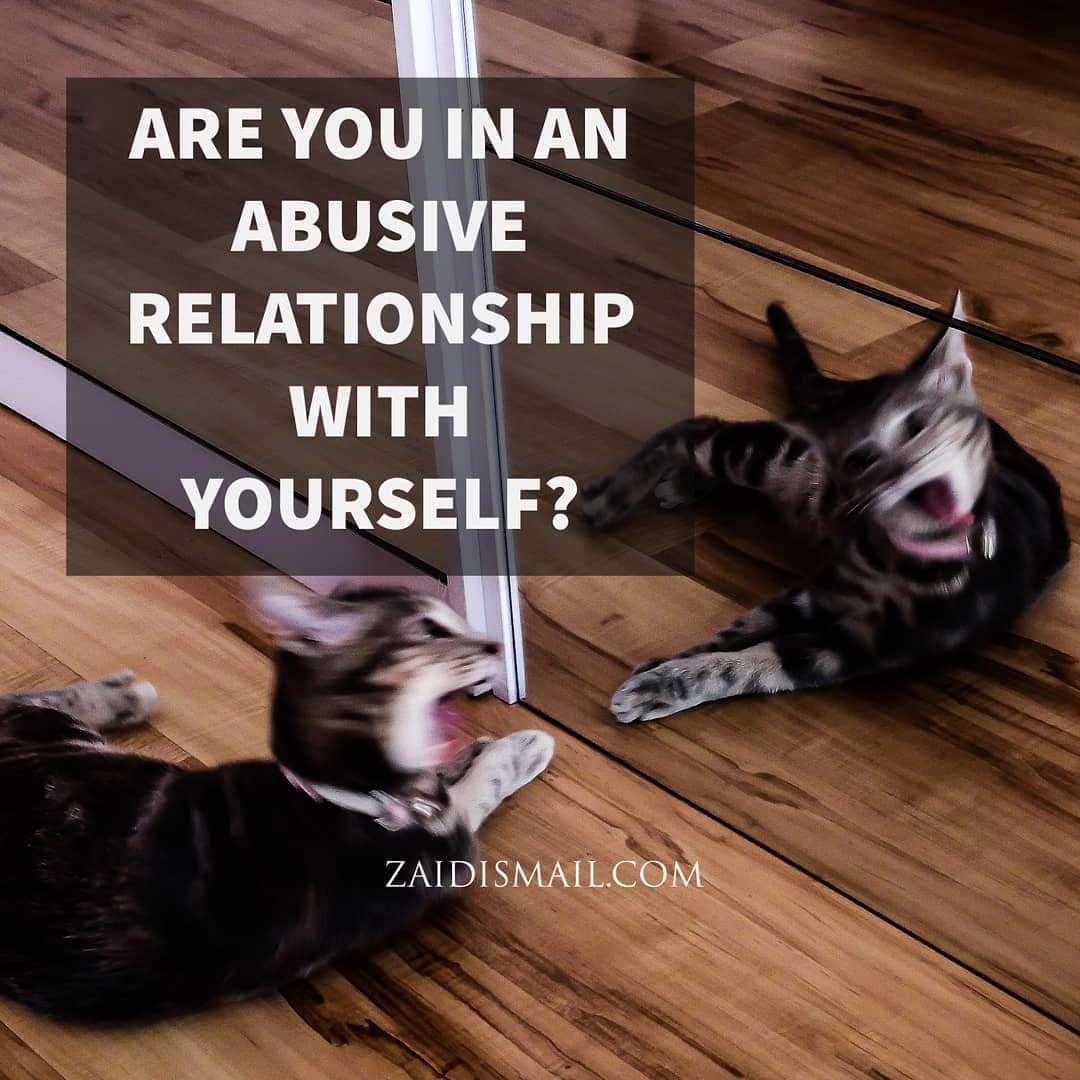
Are you in an abusive relationship…with you?
It’s women’s day in South Africa.
A public holiday dedicated to recognising the value and contribution of women in society.
My hope for this day is that we find the gentleness and nurturing spirit innate in women, and we give it an opportunity to thrive in our own lives, regardless of gender.
Don’t be your harshest critic. Be your most sincere one.
We’re often so focused on how others treat us, that we fail to recognise how badly we treat ourselves.
Is the tone of your internal conversation one of understanding and growth, or harsh judgement and fear?
When you have your internal conversation, do you refer to yourself by your name, or do you say ‘You’?
Recognising these simple points will give you important insights into how you see yourself.
Remember that we cannot give what we don’t have, so if you treat yourself harshly, chances are very good that you’re treating others harshly as well.
Always a good time to reflect and correct the path we’re on.
#ownyourlife #ownyourshit #authenticity #mentalhealth #mentalhealthawareness #mentalhealthrecovery #selfworth #selflove #selfawareness #selfrespect #mindfulness #theegosystem #reflection #kindness #compassion #sincerity