When you don’t have a gentle hand to guide you, or an understanding structure to support you, life will be shaped through trial and error.
In the same way that we can’t give what we don’t have, nor can others offer us what they don’t have – no matter how much we need it from them, or may have rights to get it from them.
Realising this has been the saving grace of my sanity through a colourful life.
So many of us set out in life knowing who we don’t want to be based on our experiences with those around us – especially our parents.
But we fail to realise that it doesn’t prepare us, or give us anything to work with, in determining how to be who we want to be.
It may sound cryptic, but it’s not.
It’s easy to identify what we want to achieve in life, but if we don’t know how life works, we will keep tripping up on the subtleties that cause havoc in ways that we never anticipated.
No one sets out to destroy their own life, even if they persist in blatantly destructive behaviour.
They do so because they exhausted themselves living life wishfully instead of purposefully.
Such a mindset results from anger about what you don’t have, leading to acting with haste or impatience in striving for what you want.
The only antidote that I’ve discovered for this is to observe, with the intention of understanding, those who let you down or didn’t show up the way you needed them to.
Our trial and error, like theirs, denies others the wisdom and support that they need to learn how life works.
Self-pity or entitlement, and especially anger, will never change that reality, it will only repeat the cycles that may have caused us hardship.
It always starts with you.
#hope #expectation #sincerity #selfworth #selfawareness #mentalhealth #mentalhealthawareness #lifecoaching #zaidismail #theegosystem #ownyourlife #parenting #divorce
Blog
-

Look back with understanding
-

10 Rules for life
If you don’t hold yourself accountable before you hold others accountable, you’re insincere about what you claim to uphold.
If you focus on everyone else’s shortcomings that you think may justify your behaviour, you will be defined by everyone else’s shortcomings.
Is that really the standard by which you want to live?
It always starts with you.
Here are the 10 Rules:
1. If you want to be trusted, conduct yourself with integrity and consistency at all times, not only when things are easy.
2. If you want to be respected, learn to respect others, not only when there’s something in it for you.
3. If you want to be appreciated, show appreciation for what you have and what you receive instead of behaving as if you’re entitled to everything that you need or want.
4. If you want to be treated like an adult, communicate like an adult instead of throwing tantrums or assuming that you’re right so there’s no need for you to convince anyone else about what you believe to be true.
5. If you want to feel cared for, show due care and consideration for others, and not only for people from whom you need things or from those who stroke your ego.
6. If you want the benefit of the doubt, work on your credibility instead of demanding to be treated as if you have credibility, especially if you did something that raised doubts about your credibility.
7. If you want to be heard, listen with the intention of understanding, and not with the intention of responding to prove that you’re right while ignoring the facts presented to you.
8. If you can’t handle the answer to a question, don’t ask the question because you’re looking to hear what you want to hear, rather than being interested in what others have to say.
9. If you don’t want others to assume the worst of you, stop assuming the worst of others.
10. If you want your rights to be respected, fulfil your responsibilities. All of it. Not only the ones that you think you need to or feel like fulfilling.
#hope #expectation #sincerity #selfworth #selfawareness #mentalhealth #mentalhealthawareness #lifecoaching #zaidismail #theegosystem #ownyourlife #justsaying #rulesforlife #relationshipgoals #marriage #divorce -
Be the village
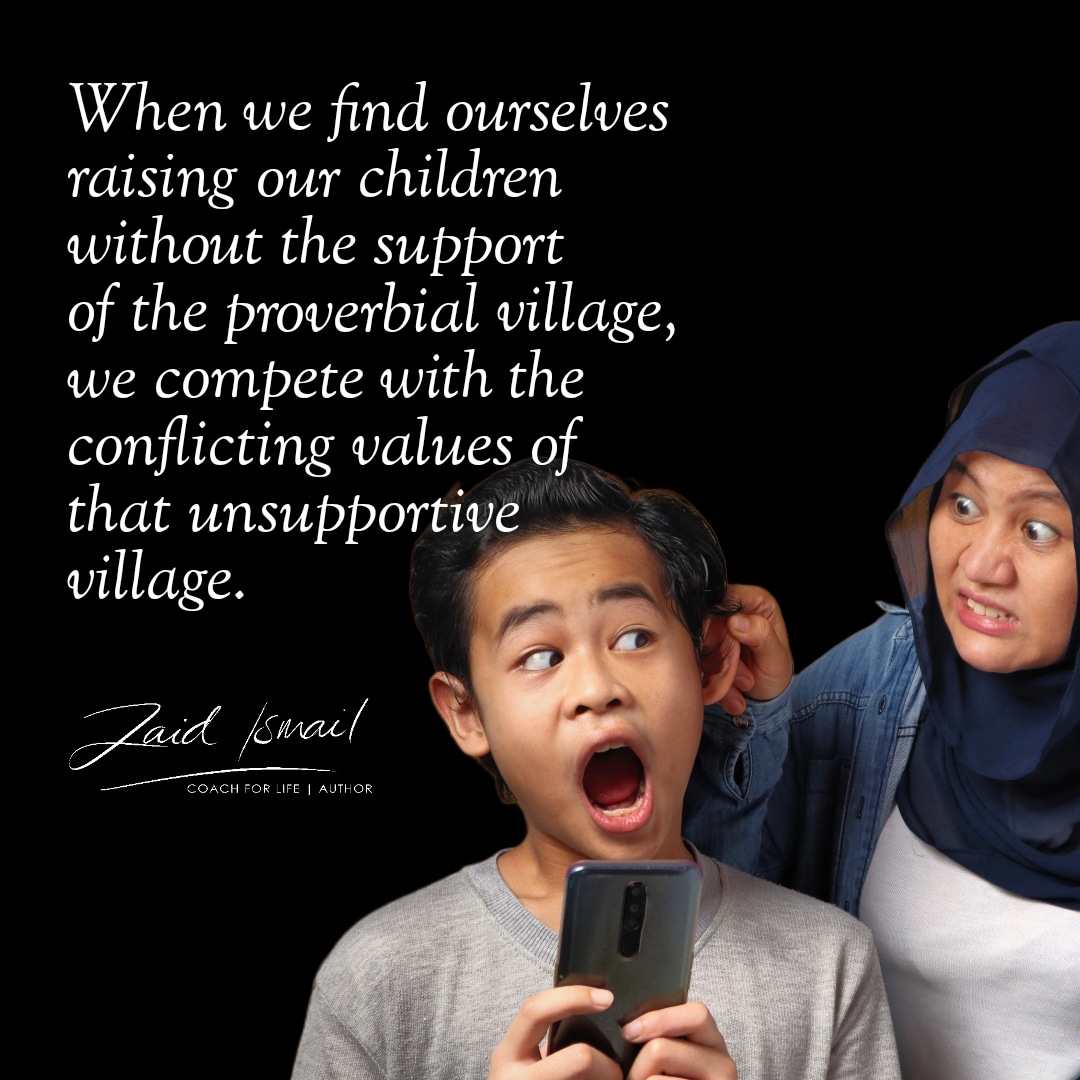
While it takes a village to raise a child, it also takes a village to corrupt a child.
Parenting is a monumental challenge in itself, but becomes infinitely more challenging when being done by a single parent.
Add to the single parenting challenge by having an obstructive co-parent, and the challenge continues to grow ever more insurmountable.
If that’s not enough, throw in the depraved value system of the global village that is available on every Internet connected device that your child has access to, and suddenly you realise exactly what you’re competing with in trying to raise a wholesome, healthy, and grounded human.
But it’s not impossible to achieve, despite those impossible odds stacked against any dedicated parent/s.
Firstly, you need to realise the impact of your role in their life, especially when the self-pity sets in from the extended struggle of trying to be the most prominent influence in their life.
Secondly, you need to understand that wayward behaviour is their fears driving them towards wanting to be significant in their social circles. Focus on understanding those fears, rather than fixating on the bad behaviour.
Thirdly, even if they currently reject the values that you’re trying to instill, you cannot compromise on those values or else you convince them that it’s optional. Standing firm gives them a point of reference for later in life when they will need those values more than ever.
Lastly, parenting is not for those who need instant gratification, nor is it about the parent.
It’s about demonstrating the value and benefit of living life the way that you want them to live theirs, and not compelling them through the fear of consequences to do the right thing.
Fear is never a sustainable motivator to be a good person.
But sometimes it’s a necessary tool to break a harmful cycle.
Be very careful with how you use it.
#parenting #generationaltrauma #singleparenting #ownyourlife #theegosystem #lifecoaching #zaidismail #selfworth #selfawareness #mentalhealth #mentalhealthawareness #mentalhealthrecovery -
Who do you want to be?
Don’t get so lost in trying to find yourself that you lose the opportunity to reinvent yourself.
If you’re struggling to discover who you are and what you should be doing with your life, perhaps it’s time to focus on who you want to be instead?
You cannot be purposeful about life if you don’t have a vision.
Your vision.
Not what you think everyone else wants you to be, or what you think you need to be so that everyone can accept and appreciate you.
Who do you want to be?
Not only in the bigger scheme of things, or in your career, or the role that you play for your significant others.
Who do you want to be in every moment of your life?
When you’re faced with disrespect or ingratitude, do you focus on what the other person deserves from you, or do you focus on living by your values?
The only time you need to pause and reconsider which values you’re upholding is if who you are enables others to cause harm either to themselves or to others.
When you find that being generous inspires laziness in others, then practice moderation in your generosity.
Or if you find that your understanding gives another no cause for restraint or accountability for their behaviour, then practice moderation in your understanding.
Always be mindful of who you want to be and what you want to enable.
Striking a balance between the two is the trial of life that brings peace or problems.
But, if connected to a greater purpose that you wish to serve – your vision of who you want to be – it becomes easier to be composed in the face of bad behaviour from others so that you don’t lose yourself to their demons.
Don’t be selfish, but don’t be a martyr either.
#hope #expectation #sincerity #selfworth #selfawareness #mentalhealth #mentalhealthawareness #lifecoaching #zaidismail #theegosystem #ownyourlife -
Divinely obnoxious?
Godliness is like humility. It is lost when we actively pursue it.
Living by the doctrine to which you subscribe is infinitely more important than preaching it.
People learn from how you treat them, not from how you chastise them.
Judging the faith of another reveals the cracks in your self-worth more than it offers any revelation about the faith of another.
When our self-worth is low, our association with divinity, religion, or other groups will be used to compensate for what we believe we lack in ourselves so that we may get the respect that we need.
When we assume ourselves to be above those that behave worse than us, or those that disagree with us, we grow arrogant in our thinking and our ways, which directly opposes our efforts towards godliness, or piety.
When we speak on behalf of the Almighty, we assume to have knowledge of the unseen because we believe ourselves to be devout enough in our practices and superior in our morals to claim such authority.
Such pride and arrogance causes a decay in the soul that results in harshness, ingratitude, and rigidity, making it increasingly difficult to receive advice from sincere advisors.
All this conflict within us results from a low self-worth, because when your self-worth is low, your life will be focused on compensating for that, rather than living purposefully or sincerely.
Peace lies on the other side of gratitude, and gratitude is impossible if you lack awareness and appreciation for who you are, and who you want to be.
That, right there, is the building blocks of self-worth.
It always starts with you.
#compassion #sincerity #authenticity #mentalhealth #mentalhealthawareness #mentalhealthrecovery #selfworth #selflove #selfawareness #selfrespect #mindfulness #inspiration #ownyourlife #theegosystem #forgiveness rewards #lifecoaching #zaidismail -
Gratitude is not an attitude
What would life be like if you maximised every resource and every opportunity to which you have access?
What would the quality of your relationships be if you built on everything that works instead of focusing on what’s not working?
How would you feel about yourself if you looked at all you’ve overcome instead of being bitter about having had to deal with it all?
Life is not about an attitude of gratitude, or good habits, because gratitude is not an attitude and habits are formed out of desiring efficiency or convenience.
Gratitude is an outcome.
Gratitude is a result of being aware of everything that’s good and right about life, despite there being so many things that could be better, or should be better.
Gratitude is about understanding what is within our ability to change or influence for the better, and holding ourselves accountable for taking action on that, rather than sitting back and complaining about it.
Gratitude is not about transacting based on who deserves what. It’s about considering what we wish to enable or what we wish to challenge because of the values by which we strive to live.
Gratitude, when applied to ourselves, is reflected in how we seek to understand why we are who we are, rather than judging ourselves with shame because of who we’re not.
Gratitude is reflected in our ability to rise above the anger or bitterness of others, rather than to lose ourselves to it or get drawn into their bitterness because of how they treat us.
Gratitude is practiced when we approach others with empathy and compassion because we see their struggle with their own demons, instead of judging their inadequacy because we don’t struggle with the same demons.
Gratitude is not a choice.
Gratitude is a result of remembering our journey of growth, and owning every step that we took on that journey, both good and bad, while being mindful of the steps that we’re still taking every single day as we work towards our aspirational goals without feeling entitled to having what we strive for.
#hope #expectation #sincerity #selfworth #selfawareness #mentalhealth #mentalhealthawareness #lifecoaching #zaidismail #theegosystem #ownyourlife #gratitude -
You are your own worst victim
The victim mindset wreaks the most destruction and creates the worst of oppressors.
The victim mindset is established when we find ourselves nursing wounds of experiences and betrayals that have long since passed.
The victim mindset is nurtured when we are emotionally impacted by the behaviour of those who play no meaningful role in our life.
The victim mindset becomes more deeply entrenched when we expect others to make up for our experiences from long before we ever knew them.
The victim mindset is the most debilitating, demoralising, and destructive mindset of them all because it takes offence from being challenged, insult from observation, or feels attacked when advised.
The victim mindset is set firmly on the belief that we are defined by how others treat us, or treated us.
The victim mindset denies us the mindfulness and accountability needed to own our life because we’re waiting for our perceived injustices to be remedied before we allow ourselves to move on.
The victim mindset confuses meaningful action with blind rage.
The victim mindset destroys, but never creates anything of benefit.
The victim mindset wastes away life while lamenting the past.
The victim mindset is a corruption of the soul that fails to separate the moment of being a victim with what we hold onto from the experience long after the experience has passed.
While we’re caught up in that victim mindset, we lose sight of how many around us become victims of our rage, our neglect, our self-consumed approach to life, and our abdication of responsibility in how we’re supposed to show up for them.
The victim mindset therefore spawns more victims, and the only way to rise above it is to own it and want to be more than that.
When you claim your rights before you honour your responsibilities, you’re in a victim state of mind, and you cause oppression while using your feeling of oppression to justify your behaviour.
It always starts with you.
#hope #expectation #sincerity #selfworth #selfawareness #mentalhealth #mentalhealthawareness #lifecoaching #zaidismail #theegosystem #ownyourlife #victimmindset #narcissism #narcissisticabuse -
Labelling humans
We dehumanise the human when we label their emotional experience as an illness.
The moment we attach a label to a life experience, we focus on the label and discard the merits of the experience.
We make people invisible when we deny the reality of their experience by suggesting that there is something clinically wrong with them, despite causality of their emotional upheaval being clearly associated with their experiences in life.
In other words, there is a clearly troubling or traumatising experience that they’ve endured to explain their emotional duress, yet we diminish their experience by ‘diagnosing’ them with an illness for feeling overwhelmed, anxious, or stressed, etc. simply because they’re affected by it for longer than we think they should be affected by it.
The victim readily embraces such labels because it offers hope where they feel hopeless, and allows them to abdicate responsibility for rising above it.
The oblivious or insensitive ones happily embrace such labels because it demands less emotional investment, or less accountability in their efforts to uplift or support those around them.
Our aversion to embrace the entirety of the human behind the troubled behaviour denies the victim a voice, or an opportunity to understand their painful experiences in life.
These labels are worn with shame because it denies us our humanness and makes us a symptom.
You cannot break the stigma of mental health by undermining the humanness of the ones affected by the stigma.
Kill the label, kill the stigma.
If you stigmatise someone’s real life experience, how can you possibly expect them to feel whole?
#mentalhealth #mentalhealthawareness #mentalhealthrecovery #suicide #suicideprevention #suicidalawareness #suicideawarenessmonth #depression #anxiety #ownyourlife #theegosystem #embracingME #zaidismail