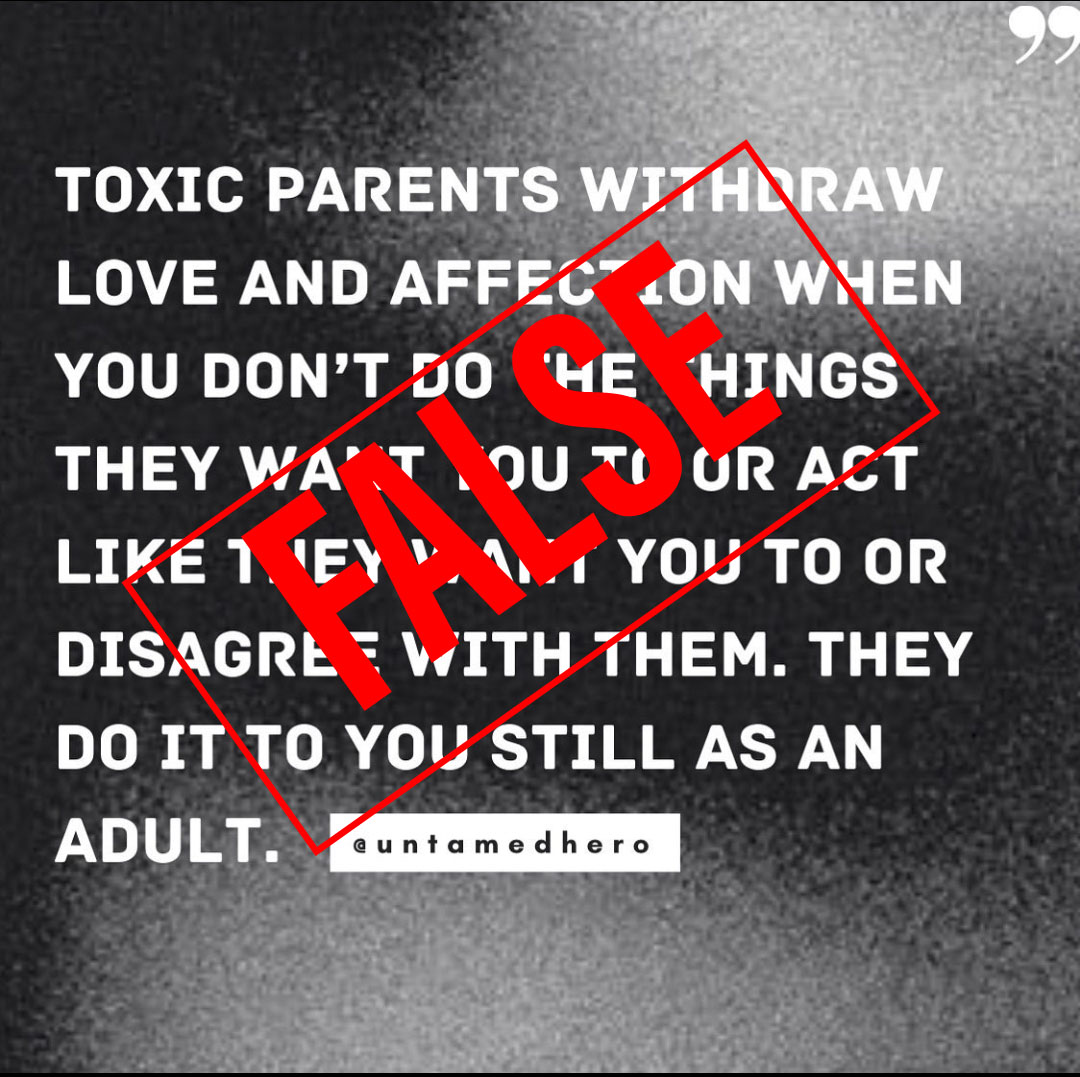
The belief that people are toxic is self-serving.
The belief that parents are toxic is a sign of ingratitude.
The belief that others are not allowed to change how they behave towards you when you don’t honour what is important to them is entitlement.
The belief that what is important to us is more important than those who raised us is probably the closest thing to a toxic trait that we’ll find.
Societies that have withstood the test of time are the ones who honoured their elders and embraced the wisdom that was passed down to them.
Adapting that wisdom to solve contemporary problems is the failing of the current generation of parents and children.
People, not just parents, withdraw from relationships when they feel rejected, betrayed, dishonoured, disrespected, taken for granted, and more.
If you hold your parents to that standard of supposed toxicity, be sure to apply the same definitions to your own behaviour.
If you truly understood the effort, self-sacrifice, compromise of dreams and aspirations, and duress that a present parent must overcome to show up as a parent, you might understand why betrayal of trust, disrespect, or rejection hurts them enough to want to withdraw from the life of the child that they spent their life serving up to that point.
It’s fashionable these days to judge parents harshly while believing that the new generation has a better understanding of what’s needed to make life work.
Sadly, the current state of society proves otherwise.
How does your judgement of the people who raised you stand up to the scrutiny of the ‘toxic’ label that you’re so willingly throwing around these days?
You will be tested by that which you judge others about. Be careful.
Arrogance is a slippery slope.
#hope #expectation #sincerity #selfworth #selfawareness #mentalhealth #mentalhealthawareness #lifecoaching #zaidismail #theegosystem #ownyourlife #parenting #gratitude
Blog
-
Toxic blah blah
-

Deluded confidence
We treat others the way that we treat ourselves.
If you struggle to understand what drives the emotional currents that you experience within yourself, look at the feedback that you’re receiving from those who stand to gain nothing from your downfall.
Remember: The most important feedback is non-verbal.
When we hold ourselves accountable for what we do or don’t do, we will hold other’s accountable for the commitments or claims that they make.
When we give ourselves an easy pass, we’ll allow others to be flaky about their commitments towards us.
We give what we have and we accept what we want must be tolerated about us.
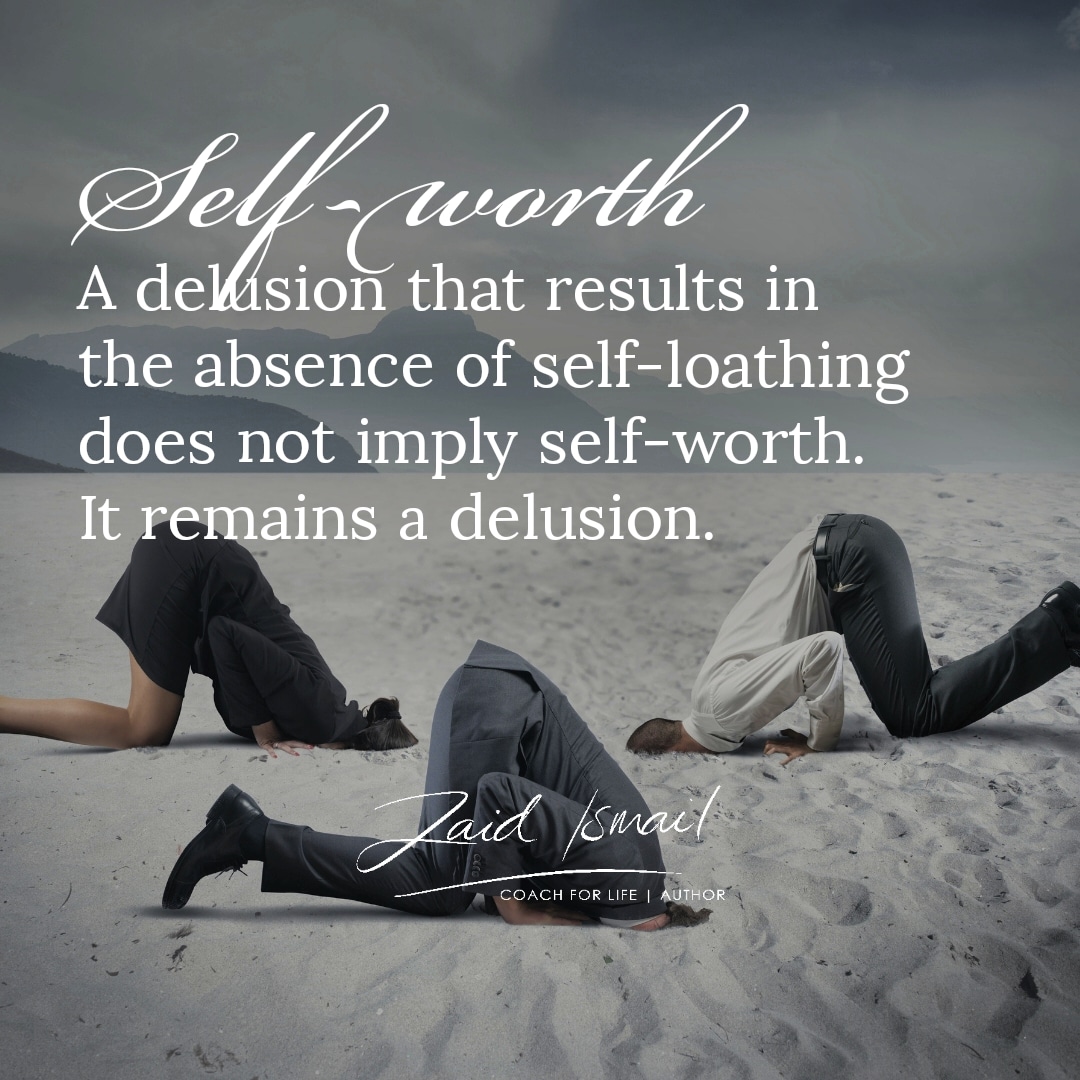
So when we are filled with self-loathing while pretending to be at peace with and claim to be grateful for who we are, we will be harsh or unforgiving towards those who question our behaviour while being exceedingly gentle and generous with those who affirm our delusions.
This is not about who is right or wrong, good or bad, noble or despicable.
This is simply the way life works.
You cannot give what you don’t have.
Expecting it to be different will result in contention and stress within yourself as you struggle to find answers to what should not be problems, and it will strain relationships that matter because you will be that much more difficult to be understood.
That lack of understanding from others, when observed through your delusions about who you are, will seem like rejection or confrontation because when we are unwilling to hold ourselves accountable for the state in which we find ourselves, we will feel attacked by anyone else holding us accountable for our contribution towards any problems in our relationship with them.
The reasons for holding onto delusions, especially while knowing that those delusions conflict with reality, is a topic for another day.
But first, we must be willing to test our assumptions about life and about others to ensure that we’re not deluded to begin with.
It always starts with you.
#hope #expectation #sincerity #selfworth #selfawareness #mentalhealth #mentalhealthawareness #lifecoaching #zaidismail #theegosystem #ownyourlife -
While you were raging
A poem about rage, by Zaid Ismail While you were raging
The world moved on
The ones who struggle
Are the ones who scorn
Who find comfort in your pity
To honour their own
Who pacify your regrets
To deflect from their ownWhile you were raging
Your world moved on
As you trusted the pitiful
You discarded your home
Inevitable was the outcome
Of being alone
What you sought to avoid
Became your new homeWhile you were raging
You destroyed your home
You traded your peace
For an unfortunate loan
A debt you’re claiming
From one who is gone
Imposed on the living
Your rage found a homeWhile you were raging
You discarded your home
Neglected the living
While honouring those gone
The living receded
The dead grew real
As you scorned at what is
But yearned for what’s lostWhile you were raging
You lost your soul
You traded your beauty
For a whimsical song
You traded your blessings
You traded your peace
And exchanged your sincerity
To be a devilish pawnWhile you rage
The world moves on
The world doesn’t care
About your scorn
The world has enough
Enough of its own
Adding to its rage
Only destroys your homeStop raging
It wastes you away
It doesn’t convey
What you wish to relay
It only repulses
Whom you wish would listen
If only you knew
What you possess withinThere’d be no need to rage
No need to damage
No need to destroy
No need to ravage
You’ll discover understanding
Empathy, and grace
Compassion will return
And gentleness too
And best of all
You’ll spare some for you.If you choose to rage
The world will simply move on…
Without you.Zaid Ismail
-
The victim-hood of self-loathing
No good deed goes unpunished. I was reminded of this in recent days when the bitterness of a self-loathing human distracted me from what is important about life. It’s not the bitterness that was jarring. It’s the intensity, and the immensity of the self-loathing that has become the battle cry of too many that jarred me most.
The delusion that doing good attracts goodness adds to the mind-numbing effort of being human. We don’t attract what we do or what we give, we attract those who are most in need of what we’re offering.
That’s why the vapid seek the wholesome.
The weak seek the strong.
The self-loathing seek the grateful.
And the cursed seek the blessed.
But the twist is a terrible one. Just because you’re self-loathing doesn’t mean that you’re not blessed. It just means that you will not see in yourself what others see in you.
It’s easy to lose yourself to the bitterness of a world full of ingrates disguised as humans parading as the wounded selfless ones. But in that lies the clue to recognise the twist of that dagger of self-loathing before it is inserted into your tender flesh.
The selfless, the truly selfless, never parade.
The ones who wear their heart on their sleeves, their struggle on banners of goodness and humility, and their inaction as a claim to exhaustion from their reality are the ones who are ungrateful for who they are and what they have. That’s why they look for validation for what they parade in sometimes subtle tones, but most often in blatant distortions of their reality.
Naivety is the knife that you drive into your own gut when you trust blindly, serve loyally without question or wisdom, and when you surrender who you are for who you believe you must be.
Joy is ephemeral when not shared. It becomes a fleeting moment celebrated privately when what we honour comes to pass, but is just as quickly set aside because it doesn’t really matter if we don’t matter. It is this core of being human that turns our humanness into a frailty that is exploited by the self-loathing.
Self-loathing is born from our assumption that we are incapable of what is needed to earn affection or inclusion. Such an assumption demands that we must present our best case to defend our pitiful state before others see us as pitiful or lacking. That’s when our struggle grows to define us. That’s when we need everyone to revere our struggle and not dare to advise us to rise above it because rising above it becomes a threat to our sense of self.
If we don’t recognise the self-loathing in others, we’ll exhaust ourselves to the point of depletion in our efforts to be enough for them, or to inspire them to be better, or to believe in them until they begin to believe in themselves, while never holding them accountable for their ingratitude for everything that the have, and all that they are.
If we don’t recognise the self-loathing in others, we’ll assume that they’re victims of life, while losing sight of the victims of their carnage as they go through life taking from everyone but always having reason not to reciprocate in equal measure. That’s how a healthy self-esteem in one who is sincere in uplifting another can easily be exchanged for crippling self-doubt after struggling to understand why we may never be enough for one who seems so full of potential if only…If only they see themselves the way that we see them.
Self-loathing doesn’t create space for such realisation because self-loathing is the abdication of accountability for who we choose to be. Without accountability, there can be no healthy self-esteem because we need accountability to take a stand for what we stand for before we will ever experience the self-respect that results from standing for something that we believe to be important, rather than chasing things that make us important to others.
Self-loathing is the ultimate barometer of gratitude, or more accurately, ingratitude. If we can’t be grateful for who we are, how can we possibly be grateful towards others for what they do? We cannot give what we don’t have. Which means that we can only give what we have. That is how our behaviour, when understood clearly, reflects the light or the darkness that we court within.
-
You’re human. Be human.
We need to be careful with subscribing to a victim mindset.
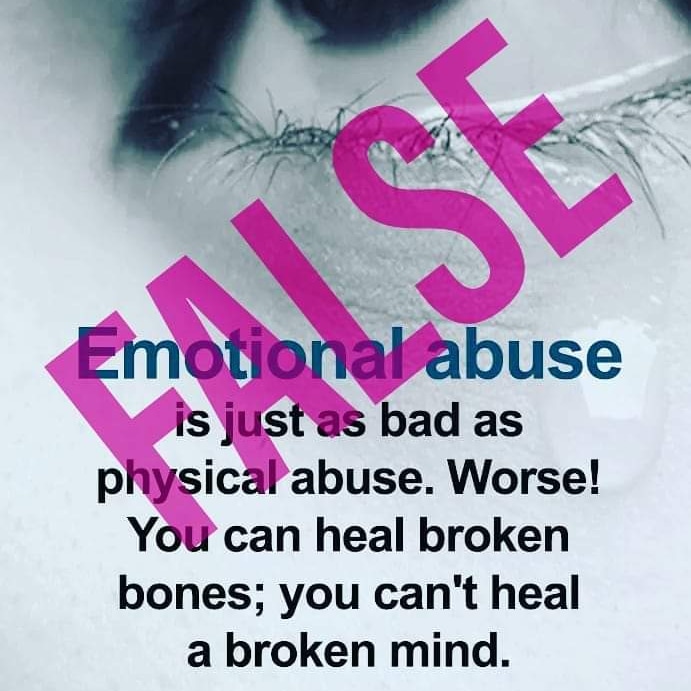
Any form of abuse leaves emotional scars.
But that doesn’t mean it breaks us.
Nor does it mean that it’s impossible to heal from it.
Don’t believe everything you read.
No human is broken.
And every mind can be healed.
When we convince ourselves that we’re broken or that we can’t be healed, we create a self fulfilling prophecy, because what you set out to achieve is what you will achieve.
Besides, it’s not the physical pain of physical abuse that sticks with us, it’s the mental and emotional anguish that it leaves that haunts us.
Memes like the one above are well meaning, but they cause more harm to our mental health than they offer benefit or relief.
Be careful what you take from the Internet.
Good intentions have destroyed many lives.
No matter how elaborate and sincere your effort at solving a problem may be, if you don’t understand the problem well enough, you will go about solving the wrong problem until you eventually convince yourself that the real problem cannot be solved.
There is a solution for every problem except death. So if you’re not figuring it out, it means that you need more information and a fresh perspective of what you’re dealing with.
Remember: No one is broken. No one is damaged. No one is beyond help. It takes a single moment of realisation to turn your entire world around.
#mentalhealth #mentalhealthawareness #mentalhealthrecovery #selfworth #selflove #selfawareness #selfrespect #mindfulness #theegosystem #ownyourlife #motivation #zaidismail #lifecoaching -
Honour yourself
Self-respect is more about who you want to be, rather than what you are willing to tolerate.
Claiming your space while diminishing the contribution of others in your life is not self-respect, it’s unintended ingratitude.
Self-respect is reflected in how you hold yourself accountable for the impact of your actions on others, and not just for your intentions towards them.
It’s about showing up beyond words or explanations, and ensuring that your actions reflect your intentions, especially when the feedback you receive confirms that how you treated others is not what you had intended.
But none of this is possible if you don’t have your own internal compass by which you hold yourself accountable.
That compass is the values that you claim to stand for.
When you lack that internal compass, you will be driven by how you feel in the presence of others.
When our feelings dictate our reasons, we hold others accountable for what we took from them, or from life, without stopping to consider that maybe we were wrong.
Maybe we understood things poorly, or interpreted things incorrectly.
When feelings drive rationality, our struggle becomes our war cry and everyone around us becomes responsible for honouring how we feel regardless of the merits of our reasons for why we feel that way.
That’s when we become oppressors while feeling oppressed.
Self-respect is born when we choose who we want to be regardless of what bad behaviour others may deserve because of how we think they treated us.
In that choice lies peace and the promise of contentment.
Anything less will leave you a slave to society, or an oppressor towards those who fear your outbursts.
Who do you want to be?
#selfworth #selfawareness #mentalhealth #mentalhealthawareness #lifecoaching #zaidismail #theegosystem #ownyourlife #narcissisticabuse #narcissist #relationshipgoals -
Stop judging. Be human.
⚠️ TRIGGER WARNING
This meme showed up on my timeline earlier and highlighted everything that is wrong with the way in which we treat each other.
There are a few terms that I generally disagree with (sometimes very strongly) if used to describe people.
These terms include broken, damaged, toxic, and basically anything that reduces a human to a single repulsive notion.
We lose our humanness when we see someone’s bad behaviour and assume that to be the totality of who they are.
No one is toxic. We may have destructive behaviours, or dysfunctional perspectives and so on. But that doesn’t make us toxic.
It makes us a human that is struggling to find our humanness in the absence of understanding or compassion from someone significant.
What’s more ‘toxic’? A single person that is allowed to define the tone of an entire family, or a family that lacks any conviction in their own self-worth to be defined by a single person?
Enjoin what is right and forbid what is wrong, not only when it’s fashionable or easy, but especially when it’s difficult.
If we give up our ability to create good with those around us, we lose our right to complain about them letting us down.
If someone is angry or bitter, they’re feeling unappreciated.
Reduce a person’s sincere efforts towards fulfilling their part in a relationship to nothing more than duty and minimum expectation, and you’ll very quickly inspire ‘toxic’ behaviour on their part.
Drop the labels and start seeing the human behind the behaviour.
There will come a time when you will need others to show you the same empathy and compassion.
Just because you’re struggling to strike a balance between enabling bad behaviour versus understanding it doesn’t mean that the bad behaviour is toxic. It just means that you are not equipped or are not the right person to influence the positive change that you’d like to see in them.
Stop judging. Be human.
#emotionalabuse #mentalhealth #mentalhealthawareness #mentalhealthrecovery #selfworth #selfawareness #lifecoaching #zaidismail #theegosystem #ownyourlife #narcissist #narcissisticabuse -
Do you see you?
Life conditions us to look at what we’re getting, rather than what is given.
That means that we focus on what we’re giving, and not what others are receiving from us.
That’s how we end up misinterpreting the signals that we get from them, while they also misinterpret the signals that they get from us.
The result: A lot of avoidable misunderstandings that break down good relationships.
The reason why everything is tainted or beautified by your self-worth is because that is the lens or the filter through which you view life.
When we have an unhealthy self-worth, life seems dreary and morbid without any hope that what’s important to us will be important to anyone else.
When our self-worth is healthy, we see opportunity to create value, and find reason to uplift others rather than wait to be uplifted.
Self-worth is often over complicated.
Simply put, it’s our belief in our ability to add value to the world and to the lives around us.
When we doubt this, or become distracted when our efforts to add value were rejected by someone significant, we question our value first, before we consider that they may have been going through their own difficulty that caused them not to see or believe in what we were offering.
That distraction is what leads to self-loathing.
Self-loathing therefore sets in when we stop seeing ourselves for who we are, and start seeing ourselves the way we think others see us.
Perhaps this is just another reason why the eyes are the windows to the soul.
When last did you see you and not what you think society thinks of you?
#hope #expectation #sincerity #selfworth #selfawareness #mentalhealth #mentalhealthawareness #lifecoaching #zaidismail #theegosystem #ownyourlife #mentalhealthrecovery