Blog

  • Heal yourself before you heal the world

    Heal yourself before you heal the world

    When we’re in a problematic relationship, it becomes easy to focus on what others are doing wrong.

    This may be justified, or maybe not. Either way, it distracts us from our contribution towards that situation that we’re party to.

    That’s the important part. To recognise that we are either enabling or sustaining the cycle in which we’re caught.

    Focusing on what others need to change is only productive if we’re having a meaningful discussion with them about how we’re affected by their behaviour.

    Beyond that, it serves as nothing more than a distraction from how we conduct ourselves in response to their behaviour.

    The moment you go into such a situation assuming that you’re right and they’re wrong, you become part of the problem, if not the problem itself.

    Relationships are about finding a balance, not about finding a compromise.

    Compromises lead to scorekeeping and bitterness if either person thinks that they’re contributing more than the other.

    Stop compromising and start focusing on what you’re both wanting to create together.

    If you need them to make you feel complete, you’re horribly distracted from what you find lacking in yourself.

    Healthy relationships are formed when two people own their contribution towards the joint goals of the relationship and create space for each other relative to their strengths and weaknesses without judging each other for the same.

    If that sounds like a mouthful, or if it sounds complicated, then chances are very good that you’re getting it wrong, or you’re not acknowledging your contribution towards whatever frustrations or challenges you’re experiencing with your partner.

    Everyone wants to feel heard.

    Everyone wants to feel seen.

    Everyone wants to feel appreciated.

    Not just you.

    Keep that in mind the next time you approach addressing an issue with your partner and hopefully the outcome will result in understanding and a commitment towards mutual goals that will create a bond between you that you never experienced before.

  • Don’t raise a tyrant

    Don’t raise a tyrant

    Understanding right from wrong is the easy part.

    How to effectively respond to what is wrong without creating a new problem is the difficult part.

    With the emphasis always being on knowing who is right and wrong, but hardly any focus on how to deal with such differences, we raise children who are intolerant or misguided in their fight for what is right.

    Learning how life works is about more than just the rules. It’s about knowing how to be firm while still being empathetic, compassionate, and fair.

    Every tyrant believes in their own mind that they are justified in what they’re doing.

    Every tyrant has reason to compromise on what they believe is right because they are convinced that there is a greater good that is being served through such compromise.

    Every tyrant doesn’t accept that they’re being a tyrant. They see themselves as defending a just cause.

    If you don’t raise your children with understanding why there is benefit in upholding what is right, and why there is benefit in being gentle but firm about opposing what is wrong, you will raise a tyrant who will turn against you when you challenge them about something that they feel justified about.

    That’s how we create Zionists in our own homes, and unleash tyrants into the homes of other people’s children when our children get married.

    Understanding why is always more important than simply know what to do.

    Without understanding why, we lose critical thinking, empathy, compassion, and worst of all, we lose our humanness.

    Go beyond instructing your children about the rules to live by, and demonstrate through meaningful action and participation how it is that they must live by those rules.

    Not only will the participation improve their self-worth, but the active demonstration will lead to more credibility behind what they must stand up for.

  • Your brain doesn’t have a mind of its own

    Your brain doesn’t have a mind of its own

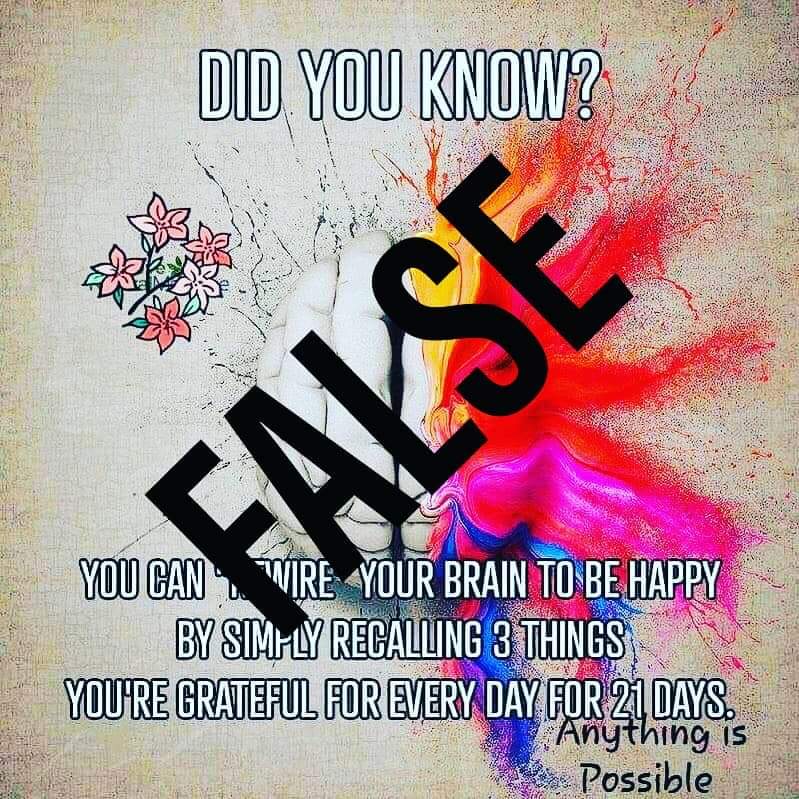
    This is a popular myth. People have been repeating selective truths to themselves for years without seeing a change in their circumstances. Our brains are rewired through experiences, and connecting our reality to the value of an outcome. It’s called neuroplasticity.

    For this reason, courage is needed to attempt something that we have not experienced before.

    Simply stated, we rewire our brains each time we learn something new, or do something new. It adds to our pot of knowledge that guides us through life.

    That’s why people that have tons of book knowledge still struggle to grasp reality.

    Life is about more than whispering affirmations to yourself in the mirror. It’s about action.

    By all means, have the conversation with yourself in the mirror. But, if it’s not followed with action, don’t expect your life to change.

  • Don’t outsource your dignity

    Don’t outsource your dignity

    Dignity is the ultimate social currency.

    With dignity comes accountability and self awareness.

    Or perhaps dignity is only possible through self awareness and accountability.

    But accountability is an outcome of self respect and integrity which in turn demands that we care more about who we are and what we stand for than what we want others to think of us.

    That’s when it gets complicated.

    It gets complicated when we focus on what we are likely to lose from others if we take a stand about what we believe to be important.

    But that complication is not because the issue is complicated.

    It’s because we complicate our lives by contaminating it with what we want others to see in us instead of being true to our values and principles regardless of what they think.

    Dignity demands that we be open to correction because of the shame we feel when we are dishonest.

    It demands that we protect the dignity of others because we must not be able to live with ourselves if we willingly and consciously look away when another is treated poorly.

    What we would want from others in our time of need or vulnerability is what we must offer.

    If not, we sow seeds of hypocrisy in our hearts which eventually contaminate the entirety of our being because dignity is lost and validation from others becomes the only peace we will know.

    Your dignity is yours to claim.

    Don’t outsource it in exchange for popularity or personal gain.

  • Check your entitlement

    Check your entitlement

    Expectations breed entitlement.

    Like the entitlement of privileges that weren’t earned, or a free pass to abdicate responsibility because we’ve got it tough. Or entitlement to a homeland that belongs to someone else.

    Conviction and sincerity are lost when we do things hoping for a good return.

    We should do good because of who we are and what we choose to stand for. Not because we expect a return.

    A return on investment is for business transactions, not for moral positions.

    If you choose to fight for a cause, do it because it resonates with your values.

    You honour your value system when you live by it, especially when it’s inconvenient or unpopular to do so.

    When your values are used as a trading commodity with others, they’re not values, they’re tools for manipulation.

    Accountability is a trigger for too many.

    If you feel triggered when someone calls you to account, you have work to do on yourself.

    Our triggers, frustrations, annoyances, anger, and emotional volatility is ours to own.

    We cannot make others responsible for tiptoeing around it just because they ‘don’t know what we’ve been through’.

    Their empathy or compassion towards us is a reflection of who they are, in the same way that ours is a reflection of who we are.

    Outsourcing that or claiming that someone deserves not to receive it from us is an indulgence of our entitlement mentality, and not a defendable moral position.

    Own your life. It always starts with you.

  • Hopefully…

    Hopefully…

    Hope is not hope when it is rooted in futility. That is simply wishful thinking.

    Hope is born from the belief that things can change.

    It is not predicated by statements of ‘if only’ or ‘I wish’, but rather inspired by focusing on the probabilities and the opportunities that we have.

    Hope is born when we focus on what we can do to uplift ourselves or change our state, rather than focusing on what we need from others before things can improve.

    Hope is the most powerful statement of gratitude without having to claim being grateful.

    It is not an attitude, nor is it blind faith.

    It is awareness of who we are and what we’re capable of, so that what we discover to be our limits creates a yearning in us to acquire the skills, knowledge, understanding, and resources to push beyond those limits.

    Hope is always present.

    But when we surrender, we invest that hope in someone else saving us, because we gave up hope in our ability to rise above what we are facing.

    Fear is the enemy of hope, and conviction is hope’s armour.

    If you desire relief from an oppressor more than you desire to destroy the oppressor, you invest your hope in the benevolence, or the mercy of the one who oppresses you.

    That is surrender, no matter how rebellious you may appear in your response.

    If your optimism is not followed by meaningful and decisive action, you’re lying to yourself about being optimistic.

    Where and in whom is your hope invested?

    If you say that it’s invested in the Almighty, then be true to exercising the abilities and competence that He has endowed you with, instead of praying for Him to exercise it for you.

  • Fallacious philosophies

    Fallacious philosophies

    This is incorrect on many levels. Most importantly, it suggests that our thoughts inspire the actions of others.

    That is patently incorrect.

    It also suggests that if we focus on positivity, we’re guaranteed to attract positivity.

    That is dangerously incorrect.

    We all wear masks of some kind.

    When someone offers us an opportunity to fill the gaps in our lives that those masks are intended to hide, we are attracted to them, and vice versa.

    A healing spirit will attract a hurt soul, and hurt souls often attract the generosity of a healing spirit.

    But that doesn’t mean that the one that is hurt will choose to be healed.

    Many find comfort in the affection and care that their hurt attracts.

    When that comfort defines their self worth, they will respond aggressively when expected to rise above it, or encouraged to heal from it.

    That’s when the masks fail them and the relationship breaks down.

    This law of attraction thinking is a fallacy that will harm more than it will heal.

    Be careful of what philosophy you buy into.

  • Own your life

    Own your life

    There are many unflattering adjectives that have been used to describe me over the years.

    Before life got real, it used to trouble me to think that others had a negative opinion of me despite my best efforts to be a decent human.

    It was a distraction that sometimes still gets the better of me. Fortunately, only in short bursts these days.

    I don’t assume that I’m never any of what they accuse me of.

    I know I’m entirely capable of being a difficult person, or even an abrasive and opinionated fool.

    But, I only reconsider my actions if I receive such feedback from someone who is willing to engage beyond the insult or the negative assumption.

    Everyone is opinionated. Many just don’t have the courage to speak plainly from fear of rejection or being unpopular.

    Those are the ones that I ignore.

    Not because I think I’m better than them, but because they have nothing of value that I can work with in my efforts to be better than who I was the moment before they shared their opinion about me.

    Without such a mindful consideration of what people think of me, I literally would have been six feet under in an unmarked grave from having taken my own life because of the bitterness that others project onto me when they’re not willing to face their own demons.

    My sanity and my life is mine to own.

    If I give up that accountability, I will be no more than an attention whore praying for acceptance by the spineless.

    Life is too short for such frivolity.

    Own your life. If you’re not owning it, someone else is.