Taking pride in the colour of your skin or ethnicity distracts you from your humanity.
Our humanness, our gentleness, our inclination towards kindness – these are all part of our natural state.
We lose it when our need to be associated with significance or superiority distracts us from this, and replaces it with the fear of being inadequate.
When we lose sight of the fear of inadequacy, responding from a place of fear becomes our new normal.
Everything that threatens the source of our significance – that is, our skin colour, religion, cultural roots, etc. – then feels like a threat to our sense of self.
Thus, we feel the anger, resentment, or blind rage that rises when we are judged by the colour of our skin, our religion, our ethnicity, or any other association that makes us feel significant.
But, we grow convinced that we’re standing up for a good cause by protecting what we value, even though the way in which we protect it undermines the very essence of what we claim to stand for.
That’s when it becomes clear that we only stand for what we do because it offers us a place in this world through being associated with the cause.
It offers us significance and protects us from irrelevance.
That’s when we’ve traded who we are, for who we want to be perceived as, because we’re convinced that we are not enough.
Own Your Life.
It always starts with you.
#racism #colourism #religion #culture #prejudice #bigotry #socialacceptance #herdmentality #ownyourshit #ownyourlife #theegosystem #mentalhealth #mentalhealthawareness #mentalhealthrecovery #selfworth #selflove #selfawareness #selfrespect #mindfulness #inspiration #zaidismail
Tag: ownyourlife
-
Where is your humanity?
-

Are you there for you?
We’re more inclined to recognise the needs of the weak, than we are of the strong.
Without meaning to, we diminish the humanness of those who persevere without complaint, because they often make it look so easy.
When we’re the strong ones persevering without complaint, we risk diminishing our own humanness as well, because we become defined by being strong for others.
Whether you’re strong or weak, you need to take time to connect with the human behind the strength, or the struggle that you observe in others, and especially within yourself.
If you don’t, you risk becoming the enabler of weakness and dependence, or the enabler of harshness and insensitivity.
Because that’s what happens when we lose contact with our humanness.
We stop expecting, or allowing ourselves and others to be human.
That’s when everything becomes dutiful and focused on rights and responsibilities.
And empathy and compassion, let alone love and affection, leave through the window.
All this because we forgot that we’re human, and that the ones failing us are human too.
We cannot choose differently for how others show up in our lives, but we can choose how we show up for them, and for ourselves.
Focus on that, and let the rest take care of itself.
When you achieve this, you’ll taste the sweetness of life and not just the accomplishment of goals.
Own Your Life.
It always starts with you.
#selfworth #selfawareness #ownyourlife #selfmastery #mindfulness #personalpower #mentalhealth #mentalhealthawareness #lifecoaching #zaidismail #compassion #companionship #relationshipgoals -
Emotional wellbeing, not mental health
It is only through our internal wars that we lose sight of reality.
The culture of labeling people dehumanises the very human that is struggling with their humanness.
We focus on our demons so intently, that we become defined by them, bearing them patiently in quiet shame, protecting ourselves from being exposed for what we hold within.
When we judge ourselves with such shame and harshness, we see the world through angry eyes.
But, protocol and decorum prevents us from raging and venting without restraint, so we choose safe spaces in which to release the venom from within, on those who are incapable of opposing or resisting us.
In the public space, we create carefully constructed apologies for our inadequacies, latching onto unhealthy concepts like ‘suffering from…’ whatever emotional torment we’re experiencing.
That’s when we feed the belief that human emotion is an illness, or a disorder, because it’s the only hope we have of making sense of the war within.
All this because we convinced ourselves that being any less than happy must be weak, or dysfunctional.
The sway of human emotions, regardless of how crazy that sway may appear or be experienced, is a legitimate response to very real life experiences.
Labeling the response does nothing to create understanding and healing around that traumatic or overwhelming experience.
Stop labelling people because of their behaviour, and reconnect with your own empathy and compassion so that you may once more see the human behind the human condition.
Own Your Life.
#mentalhealth #mentalhealthawareness #mentalhealthrecovery #lifecoaching #zaidismail #empathy #theegosystem #ownyourlife -
A path to insanity
We work with the assumption that our partners and our children share the same values that we try to uphold in our lives.
This is rarely true.
While we may share the same frame of reference or even the same cultural norms, values are much more personal, and therefore unique.
Our personal value systems are shaped by what we take from life.
Note, what we take, not what we’re taught.
Our teachings form the frame of reference within which we live our lives.
However, what we place emphasis and priority on, and what flexibility we allow ourselves within that frame of reference is what shapes our unique value system.
For this reason, two siblings raised in the same home under the same rules of discipline, and with the same privilege and emotional access to their parents may adopt very different values because of what they assumed to be true about the motives or sincerity of their parents towards them.
The difference between the two is self-worth.
The important thing about self-worth is that it’s about how we feel about ourselves, and not how someone else feels about us.
No matter how much we convince ourselves that we feel how we feel because of how someone else treats us, it doesn’t change this fact.
Self-worth is about how we feel about ourselves.
How we develop this sense of self is a complex process that can change with life experiences, but until we’re aware of what we allow to influence how we feel about ourselves, we’ll blame the world for our unhappiness or misery.
It is this that we must bear in mind when we try to rationalise the behaviour of others when it conflicts with the value system that we thought we shared.
Self-worth or self-loathing is what makes the difference between authenticity and selling ourselves short to gain validation.
It always starts with you.
#selfworth #selfawareness #ownyourlife #selfmastery #mindfulness #personalpower #mentalhealth #mentalhealthawareness #lifecoaching #zaidismail #loveyourself #lifegoals #parenting #singleparenting #pursuitofhappiness -
‘Sorry’ isn’t the hardest part
The only thing worse than an insincere apology is the apology that is offered with a demand that it be accepted.
The most important part of an apology is not that it is made, but that it is authentic.
Not just sincere. Authentic.
If an apology is limited to a text message, or a few words uttered, but has no meaningful effort behind it to remedy the offence or harm that was caused, then it isn’t an apology. It’s manipulation.
When we demand that our apology result in a change in attitude from the one that was offended because the apology is supposed to put the offence behind us, it’s not an apology, it’s manipulation.
When we apologise but take offence or become defensive when the impact of our behaviour needs to be discussed by the one we offended, then we didn’t apologise, we were just ‘doing the right thing’. That’s manipulation.
When we are sincere in regretting the harm or offence that we caused, an apology will be the smallest action that we take to make up for what we did.
If we’re sincere, an apology will only mark the first step in our effort to regain the trust and confidence, or the good standing that we had with someone, because they are important to us, and not just because they didn’t deserve what we did, or we feel self-righteous in owning up to being wrong.
On the flip-side, needing someone to admit fault and repeatedly apologise for something that they’ve already shown remorse for is not accepting their apology. Nor is it sincere reciprocation of their efforts to remedy the breach in the relationship.
It’s revenge aimed at inflicting the same harm or offence that we felt from their behaviour.
Whether justified or not, it reflects what we value more. The relationship that we have with them, and how much we value who they are, or being seen as the victim of their mistake.
Be authentic. If not, you’re simply manipulating your way through life.
It always starts with you.
#selfworth #selfawareness #ownyourlife #theegosystem #mentalhealth #mentalhealthawareness #lifecoaching #zaidismail #authenticity #apologize #apologies #narcissism -
That war within
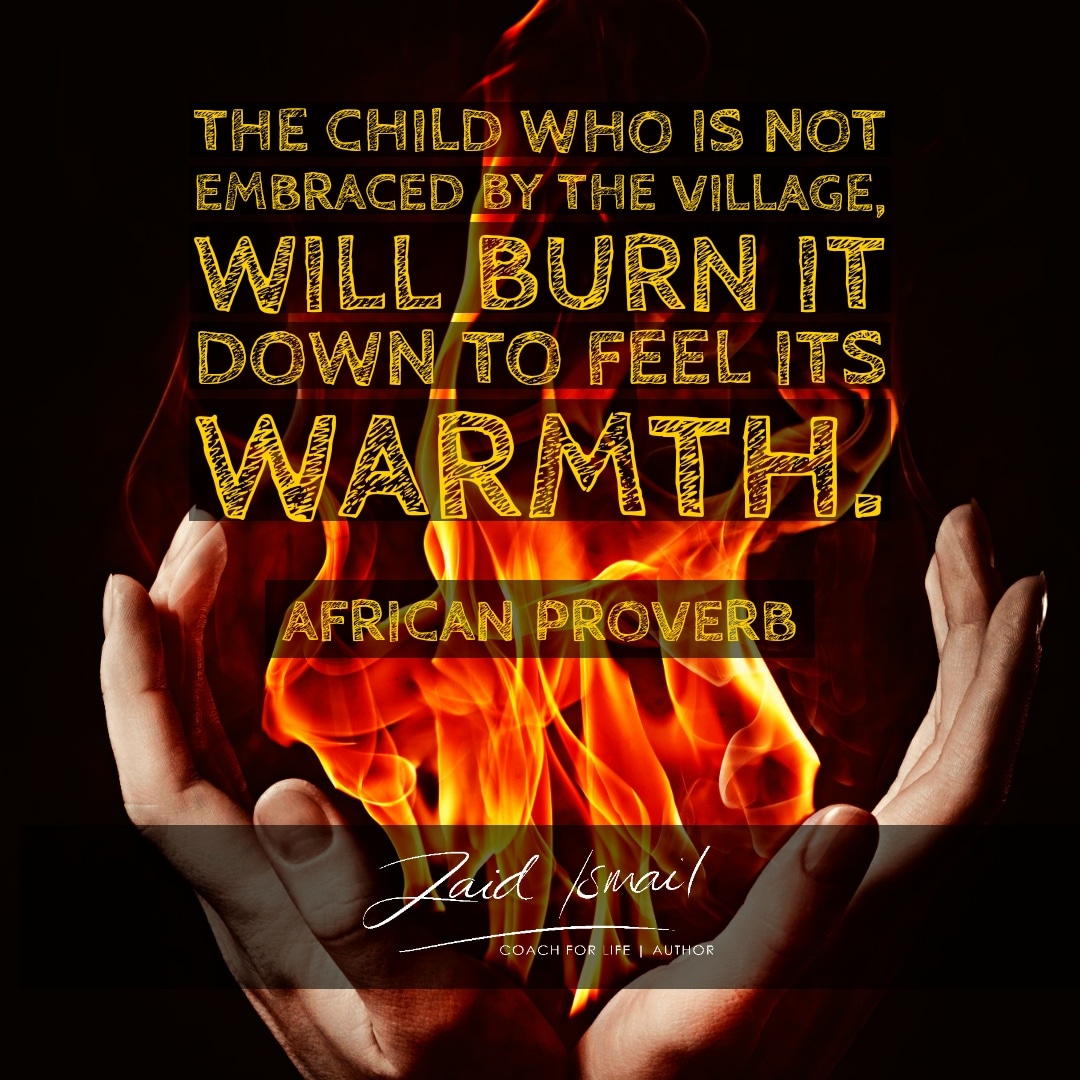
Sometimes that village is a family, sometimes it’s a group, and sometimes it’s just one person who represents everything that the village stands for.
That child grows into the raging adult who destroys every wholesome thing, because they feel like no one deserves peace if they were denied love and acceptance.
When you treat the vulnerable, or the gentle one’s, with contempt, you create the same monsters that made you.
That’s how the raging adult spawns more troubled souls that are driven towards burning down their village, with each generation growing more destructive, until someone chooses self-respect over self-loathing.
The distraction of their rage prevents them, and us, from seeing their plea for love and acceptance.
It’s a war within that rages without, because what they feel is at odds with what they need, and despite their best efforts, they don’t know how to achieve it.
So, the shame that bubbles beneath the surface – the shame that they hide from the world about that internal war – drives them to behave in ways that appear to claim what they believe others will not care to give them.
Thus, they project their rage on any innocent being that expects them to be better than that, because they’re no longer children…and only children throw tantrums.
Adults don’t throw tantrums because they don’t need someone else to destroy for them.
They destroy others to feel significant, not because they want the destruction, but because it at least gives them reason to believe that they’re not invisible.
That they still have an impact.
That they will be taken seriously…or else…
Your anger at the world is yours to tame.
You either rage at those who don’t have what you need, or you create it yourself through the alchemy of your soul.
Because that’s what makes us human.
Not that we hurt, or that we love, but that we can create love in the midst of hate, and calm in the midst of chaos, without any aides but the attributes of who we are beyond the rage.
It always starts with you.
#ownyourlife #theegosystem #mentalhealth #mentalhealthawareness #lifecoaching #zaidismail #loveyourself #parenting #singleparenting #selfworth #selflove #selfloathing -
Silent screams
Crying, or a show of emotion, is still a sign of hope that things can be different.
It’s a means to communicate our dissatisfaction because we believe that our dissatisfaction matters.
Our emotional expression is exactly that. An expression.
No one expresses unless there is an expectation of a response.
That response may be from others, or even from within yourself.
Expressing ourselves to others is driven by the belief that they may still care.
Expressing ourselves to ourselves is driven by the hope that we will find relief in exhaling that pain.
It’s when we lose hope of both, others caring about what vexes us, and finding relief through expression even in our private space, that silence seems like the only fitting tribute to the pain we have no hope of resolving.
Silence is the absence of expectation, and the absence of hope.
Don’t always look for signs of hopelessness, because the most intense form of hopelessness isn’t accompanied by a sign. It is accompanied by isolation and loneliness.
It is silence.
#hope #expectation #silenttreatment #mentalhealth #mentalhealthawareness #lifecoaching #zaidismail #ownyourlife -
That self-loathing demon
Ingratitude for the self is reflected in how much time we spend self-loathing.
But self-loathing is disguised in many creative ways.
The above list of 10 common points is only the tip of the iceberg.
Self-loathing is rarely, if ever, a result of our current circumstances, and almost always a result of how we felt about our place in our parent/s home.
The less space they made for us in their lives, the less worthy we feel as humans.
This is especially true for problematic relationships with our fathers, but often extends to criticism or insensitivity from our mothers as well.
Because that shapes our sense of self early in life, it’s difficult to realise its impact because it just feels normal for us.
That’s when we grow to believe that our partners are responsible for how we feel about ourselves, or that they’re responsible for our enthusiasm towards our dreams.
That’s how we grow harsh and cruel, or rigid and abrasive towards them, not realising that we’re holding them accountable for how we feel about ourselves because we had one, or both, parents who were emotionally inaccessible when we needed to feel like we were worthy, or like we belonged.
Self-loathing, beyond our early years when we didn’t know better, is a testament of ingratitude for who we are, and what good we have access to.
Until we start owning how we feel about ourselves, we’ll always have reason to rage at the world, and at the innocent ones around us.
Own Your Life.
It always starts with you.
#selfworth #selfawareness #ownyourlife #selfmastery #mindfulness #personalpower #mentalhealth #mentalhealthawareness #lifecoaching #zaidismail #loveyourself #lifegoals #motivation #optimism #purpose #companionship #relationshipgoals #selfloathing