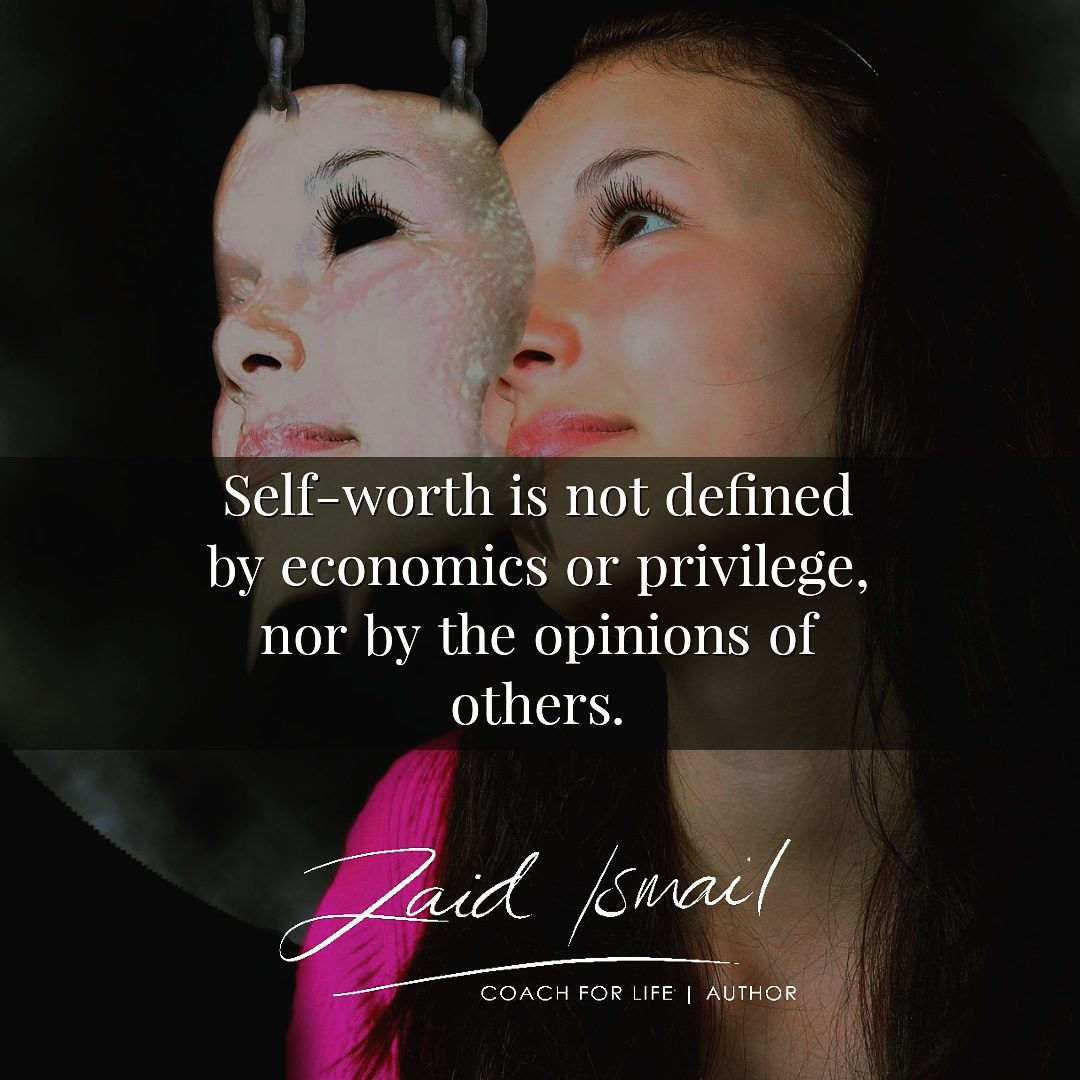
As romantic as it seems, needing someone to complete you means that you’re not at peace with yourself.
It’s not about whether it’s right or wrong. Instead, it’s about being aware of the demands that you’re placing on your partner, most likely without realising it.
If both are equally invested in such an approach to the relationship, no problem.
However, it also means that they need to experience emotional growth at the same rate, or else the one will outgrow the other, leaving their partner feeling abandoned or betrayed.
Expectations from, or of your partner is a good thing.
But, without mindfulness and understanding of what drives such expectations, and why they may or may not feel comfortable with such expectations being placed on them, relationships end up breaking down for all the wrong reasons.
The most critical factor in making a relationship work is ensuring that you’re both similarly emotionally mature.
When emotional maturity, and in turn self-worth from both sides, is in a healthy space, contentious and sensitive issues can be discussed and resolved with relative ease.
That’s when you’ll move from completing each other, to complementing each other.
The difference between the two is that you allow each other to be uniquely beautiful in the relationship without either one feeling threatened or smothered the moment there is a difference in the growth that either experiences.
If you’re contemplating walking away from someone you once loved and dreamed of making a future with, pause to consider if the reasons you’re leaving are really the reasons that your relationship is not what it used to be.
#mentalhealth #mentalhealthawareness #lifecoaching #zaidismail #silenttreatment #relationshipgoals #marriageadvice #companionship #expectation #narcissism
Tag: narcissism
-

Navigating relationships – 5 of 5
-

Dehumanising struggling humans
Trigger warning ⚠
As destructive as narcissistic behaviour is, it is not the entirety of any person’s being.
Narcissism is a result of intense insecurity about the self.
To compensate for this insecurity, the one who is insecure about their worth to others will always focus on hiding their shame, rather than admitting their vulnerability.
That’s why they’re so quick to preemptively defend themselves or to direct blame at others when things go wrong.
It’s simply a result of being exhausted from never having been enough, or significant enough to significant others in their lives.
People often assume that narcissistic behaviour is selfish because people who tend towards such behaviour come from privileged backgrounds, or always got what they wanted.
That’s part of the problem.
Having privilege doesn’t mean that we feel heard as human beings. Or that we feel seen.
Narcissistic behaviour is real, but it’s not something that cannot be changed, nor is it something that is consistent in every sphere of their life.
The worst thing for narcissism is to be coupled with someone who is needy or also insecure themselves.
If you’re insecure about who you are, your needs from someone who is struggling with narcissistic insecurities is like a threat to their feelings of inadequacy.
That’s why an insecure individual will be more affected by narcissistic behaviour than one who is grounded in their self-worth.
We must stop dehumanising humans by labeling them based on how we experience their behaviour.
Instead, we must seek to understand, with compassion and empathy.
But we can only do that if we have it within ourselves, for ourselves.
You can’t give what you don’t have.
#hope #expectation #sincerity #selfworth #selfawareness #mentalhealth #mentalhealthawareness #lifecoaching #zaidismail #loveyourself #narcissism #narcissiticabuse -
Success at what cost?
The core of being human is the need to be significant to others, especially with significant others.
Our efforts to be successful feel empty and unfulfilling if we have no reason to believe that it positively impacts the lives of those around us.
So, we set out to be successful so that we can be valued, so that we can feel fulfilled or at least have reason to believe that we’re making a meaningful contribution towards the good around us.
But, what happens when we have an unhealthy self-esteem?
Our focus shifts from wanting to be of benefit, to being afraid of not being good enough.
To compensate for the fear of not being good enough, we focus on equipping ourselves as best we can to avoid failure.
Ethics and integrity become optional when what feels like survival overtakes our better judgement.
And in this way, our low self-worth becomes the basis on which we raise our children, convincing them about the importance of education, while setting loose boundaries for integrity.
Thus, by not understanding the state of their self-worth, we raise what appears to be narcissists while believing we’re raising responsible adults.
All because we exaggerated the importance of education compared to the emphasis that we placed on self-esteem and integrity.
No one intentionally or deliberately raises children with a low self-worth, but we cannot give what we don’t have.
That’s why, when we’re lacking in self-worth as adults, we compensae for it by focusing on equipping our children to fit into the world around them, rather than to define that world.
That’s how we place education and success above honesty and integrity, or sound character, while only intending good for our children. Or for ourselves.
This is yet another reason why the best gift you can give your child is not a good education, it’s a healthy self-esteem.
The rest will take care of itself.
#hope #expectation #sincerity #selfworth #selfawareness #mentalhealth #mentalhealthawareness #lifecoaching #zaidismail #loveyourself #lifegoals #motivation #optimism #purpose #education #parenting #narcissism -
Don’t trade your best for their worst
There is rarely a day that passes without me reading or hearing about someone who invested years, if not decades of their life, to people who were not invested in the relationship.
When the reality of that betrayal finally hits home, it destroys our spirit and convinces us that we’ve sacrificed the best years of our life while having nothing more to look forward to.
Nothing could be further from the truth.
The same way we were able to create beauty in such a desolate landscape, we must recognise that the best of us that we gave was simply the truth of who we were. And are.
The moment we discard that because it was discarded by an ingrate who was looking for servitude of their ego when they could have had love for their essence, we become ingrates just like them.
Don’t trade who you are for who they were. It’s never a fair trade. You owe yourself more than that.
And self-pity will only ever prevent you from being true to yourself.
Embrace the beauty of who you are despite the ugly of who they were.
That’s how we take back the gift that they discarded so that we may be able find a more fitting recipient.
As long as you’re breathing, there’s always hope.
#selfworth #selfawareness #ownyourlife #selfmastery #mindfulness #personalpower #mentalhealthrecovery #mentalhealth #mentalhealthawareness #lifecoaching #zaidismail #betrayal #narcissism #narcissisticabuse #relationshipgoals -
Don’t pay it forward
Vengeance is easier than understanding.
Bitterness is easier than forgiveness.
Mirroring the behaviour of those who treated us badly is easier than rising up to be better than them.
Each time we choose the easier path, we become the very monsters and degenerates that created the hurt and pain in our lives.
Too often, we raise our children with harshness because we are afraid of spoiling them.
Recognise that such fear never inspires moderation or a wholesome approach to life.
If you treat your children the same way that you were treated, understand that you will lose them to the world because they will despise what you stand for and discard any good you tried to teach them.
Your children have more options to choose a different path than you ever did. Give them reason to connect with the value of choosing the path that you believe will be good for them rather than simply demanding compliance with your rules or boundaries.
Parents with unresolved childhood trauma at the hands of their own emotionally inaccessible parents raise emotionally stinted children who need to escape the reality of life rather than embrace its beauty or opportunity.
If you want to break the cycle of abuse, the cycle of generational trauma, the cycle of harshness and detachment, or the cycle of dysfunction, you must first recognise its roots within yourself.
It always starts with you.
Photo credit : Adobe Stock
#selfworth #selfawareness #ownyourlife #selfmastery #mindfulness #personalpower #ownyourshit #mentalhealthrecovery #mentalhealth #mentalhealthawareness #lifecoaching #zaidismail #fuckit #parenting #singleparenting #children #narcissism #narcissisticabuse -
Self-imposed prisons of our mind
We imprison ourselves each time we restrain our natural expression because we’re afraid that it won’t be appreciated, or celebrated.
Our need for approval or validation soon becomes our greatest crutch in life, until eventually it becomes our prison.
We decorate its walls with images and scraps that honour the past, sometimes recalling moments of joy, but often also anchoring us in moments of pain.
We hold those mementoes up as trophies and garlands that need to be revered by others before we’re willing to set them back down, believing that unless someone else knows our pain, we cannot let it go.
Our need to be comforted about the aches and losses of the past is not because we need to be comforted, but because we need to feel as if someone cares for us…for what we’re hurting about.
It’s not always the hurt that’s important. Often, knowing that someone cares that we’re hurting, and that they care enough to want us to stop hurting, is what shackles us to our past, because letting it go also means that we have no way to test if we’re significant to those around us.
The prisons that protect us from experiencing a beautiful life are often just a single moment away.
Sadly, we most often wait for someone else to create that moment of release for us before we’re willing to love ourselves enough to create it for ourselves.
Photo credit : Adobe Stock
#imprisonment #ownyourshit #ownyourlife #theegosystem #mentalhealth #mentalhealthawareness #mentalhealthrecovery #selfworth #selflove #selfawareness #selfrespect #narcissism #narcissisticabuse #lifecoaching #zaidismail -
The hypocrisy of self-loathing
The most toxic plague in the human condition is that of demanding kindness while withholding it.
I watch with morbid curiosity the volumes of memes and quotes shared by many in which we are reminded to treat everyone with kindness because we never know what struggles they are enduring. Yet, those same people are waiting for such kindness to be shown to them before they are willing to share the same with those around them.
It’s not as complicated as it sounds. Everyone wants to claim victim-hood, but no one wants to accept that they’re oppressors. We all believe that we’re justified in our harsh treatment of others, or in withholding our gentleness from fear of being taken for granted. It’s that same sense of justification that leads us to experience cruelty or callousness at the hands of those we wish would treat us with significance.
But we don’t want to see in ourselves what we despise in others, because we can’t be held responsible for the vile behaviour that we display, because you know, we’re too angelic for that. So it must be because someone else made us that way.
This life is replete with people demanding justice but denying the rights of those around them. People crying for compassion while treating with contempt those who hold them to a higher standard. People who remind others of what kindness looks like, while treating harshly anyone who disagrees with them or calls them out for their double standards.
Life takes on burdensome tones and vapid outcomes when we try to live by a code that is not shared by those we hold dear. My idealism dictates that we must remain true to ourselves or else we risk becoming the very contaminant that leaves us feeling used and discarded. But idealism has exhausted my soul more than any other investment of myself in the lives of others.
Idealism is what courts with madness when my ideals are seen as naive or foolish in the face of the disappearing humanness around me. My madness, however, has never been a cause for the concern of another. When it rears its head, I am quickly discarded. When it is tamed, I am superficially celebrated.
It’s that superficiality that grates away at my reserves. The very fragile reserves that I have to pull me through another tiresome day lacking in warmth, understanding, or even a mildly sincere embrace.
Window shopping rarely reveals the reality of the purchase. We dress ourselves up to appear as wholesome or as nonchalant as we’d have others believe we are, until they reach in to touch the essence that lies beneath that window dressing, not realising that what they caress beneath that facade is in fact the rawness of our self-loathing.
It’s that self-loathing that is revealed in our harsh treatment of others. Our cold, callous ways towards those who would draw us closer out of love, not realising the we don’t know how to return such love. Rather than appear incompetent or lacking, we strike at them with feigned confidence and a dispassionate smile, subtly telling them to get lost while smiling sweetly as if to promise them a beautiful trip when they decide to undertake that journey. That journey of leaving us alone.
What self-loathing doesn’t do is it doesn’t allow us the space to realise that when we despise in ourselves what others admire, we don’t only reject ourselves, we invalidate their love for us as well. And that invalidation leaves them questioning their worth, spawning within them the same self-loathing that we hold within. Thus, paying forward a harshness while reminding the world to treat us with kindness.
The hypocrisy of self-loathing is a source of destruction that will forever be ignored, because our pity for our pathetic condition will forever convince us that the courage it took for another to see in us what no one saw in them is merely their misplaced investment in something that doesn’t exist. Perhaps it’s just their need to convince someone to see in them what they need to have seen.
It’s a circle-jerk of epic proportions. And those who break that circle are ridiculed in moments of ease, but desperately sought out in moments of pain. And as soon as the pain passes, that misplaced confidence once more convinces us that they’re just reading too much into everything, or that they just don’t know how to have fun. Or they’re among those who take life too seriously.
At least that’s what the delusional tell themselves in their efforts to justify their abdication of the responsibility that they have in destroying the self-esteem of those who once loved them. The world is lacking in compassion and understanding because of our self-loathing, not because of the cruelty of a few.
As I’ve said before, the less human we feel, the more inhumane we behave. Those who view themselves with contempt have caused more pain than any other I’ve ever observed.
-
Contaminating the self
Self-worth is contaminated when we try to define it by the way we think others perceive us.
Whether their perception is correct or not is irrelevant.
The fact that their perception has more sway over our self-worth than our perception of ourselves is what determines the difference between a healthy self esteem, and an unhealthy one.
Many struggle to connect with who they are in the absence of an external voice validating them.
That external voice is not always aware of the validation that they provide because the one in need of such validation invests themselves in inspiring others to feel accomplished and amazing. [This is important!]
When that investment is not well received, or is credited to someone other than the one making the investment, the self esteem of the investor is destroyed.
That’s how we lose ourselves to servitude. We lose sight of our ability to serve, and become defined by how our service is appreciated, or rejected.
Thus, are arrogant ones created. Arrogance being nothing more than a proclamation of the good in us that we need others to acknowledge.
Photo credit : Adobe Stock
#selfworth #selfawareness #ownyourlife #selfmastery #mindfulness #personalpower #ownyourshit #mentalhealthrecovery #mentalhealth #mentalhealthawareness #lifecoaching #zaidismail #authenticity #loveyourself #narcissism #narcissisticabuse #theegosystem