Nostalgia is a beautiful thing, if we connected with the joy in those moments.
Otherwise, it is torturous, as we remind ourselves of what we’ve lost, while losing the present moment along with those memories.
Mindfulness of the blessing of the present moment is the only way to live a fulfilled life without courting regret.
Unfortunately, we spend so much time taking the hurts from the past, using it to interpret what’s going on in the present, while projecting the outcomes on the future, that we forget to even live in the moment.
That’s when bitterness sets in as we wait for others to recognise our struggle, or to empathise with our state.
The impact of life is what we choose it to be.
The moments of hardship or loss are only ever single moments.
What we take from those moments are the choices we make based on how we see ourselves, and what we want others to see in us.
The less aware we are of this, the more we lose ourselves to the struggles of life, resulting in an obliviousness of the present moment that causes us to make uninformed decisions which lead to more regret.
Living inside your head is never a recipe for a fulfilling life.
Connect with the present moment, and when you have the last time of a good thing, it may be bitter sweet. But it will be more sweet than bitter.
#hope #expectation #sincerity #selfworth #selfawareness #mentalhealth #mentalhealthawareness #lifecoaching #zaidismail #loveyourself #theegosystem #ownyourlife #nostalgia
Tag: loveyourself
-

Bitter sweet nostalgia
-

Own your misery
Miserable are the ones who compete with their companions, and then go searching for companionship among those that will ruin them.
Self-pity and self-loathing are the marks of ingratitude that turn your greatest supporters into your greatest distractions.
All because you think that they see the inadequacy and shame with which you view yourself.
That’s why at times, when someone believes in us, we convince ourselves that they’re simply trying to humiliate us.
Such is the seeds of ingratitude and self-loathing, that we end up taking advice from enemies, and discarding advice from those who care most about our success.
Your self-loathing is your ingratitude for who you are.
Stop blaming the world for you getting in your own way.
It always starts with you.
#selfworth #selfawareness #ownyourlife #selfmastery #mindfulness #personalpower #mentalhealth #mentalhealthawareness #lifecoaching #zaidismail #loveyourself #lifegoals #motivation #optimism #purpose #companionship #selfpity #selfloathing -
Woe is me…or is it?
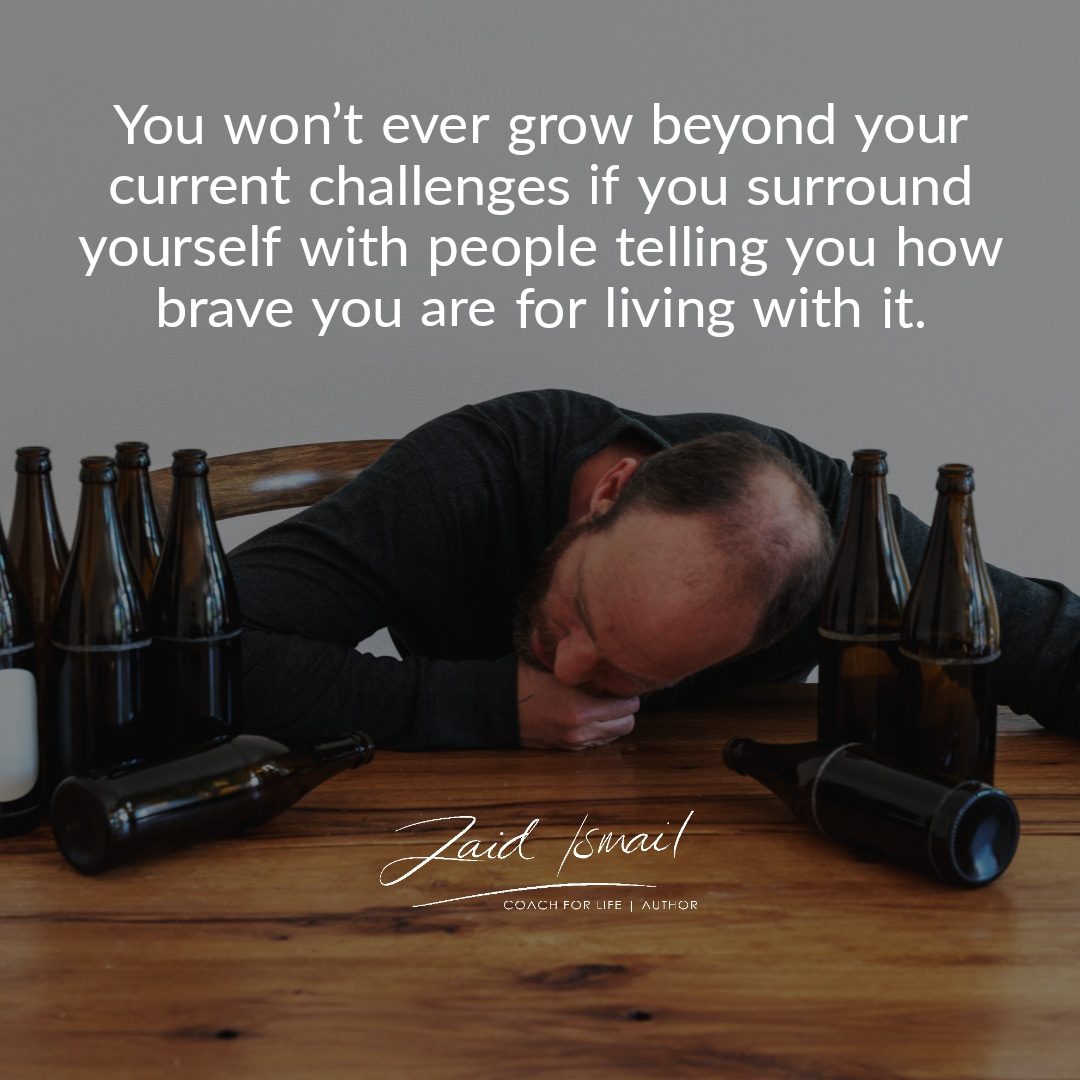
The need to be pacified about the struggles of our life is an indication of how much or how little we believe in ourselves to rise above it.
When we lose sight of our contribution towards our current state, we surrender to destiny or fate, and wait to be saved or celebrated for how strong we are for persevering.
Meanwhile, our inaction at changing, or breaking the cycles in which we’re caught, reflects our self-worth more than it reflects our bravery or resilience.
When the oppressed or the abused remain submissive, they choose to live with shame rather than fight with dignity.
That fight doesn’t have to be confrontational. Especially when we are physically incapable of subduing the other.
However, understanding what we’re doing to feed the cycle that is harming us is the beginning of changing what we contribute to such cycles.
This is not victim blaming. This is victim empowering.
The difference being that we don’t blame the victim for the oppressor’s actions, but we encourage the victim to reclaim their voice and their dignity, which in turn reduces the validation that the oppressor or abuser gains from their abuse.
Understanding the cycle is therefore paramount to effective action.
Action without understanding is like gambling with your life.
Seek to understand before you surrender to your reality.
Otherwise you’ll go through life believing you’re trapped, while not realising that there was always an exit strategy available to you.
It always starts with you.
#hope #expectation #sincerity #selfworth #selfawareness #mentalhealth #mentalhealthawareness #lifecoaching #zaidismail #loveyourself #lifegoals #motivation #optimism #purpose #companionship #relationshipgoals #narcissisticabuse #narcissism -
Are you who you think you are?
Most people see themselves through someone else’s eyes, without ever realising it.
Without exception, whenever we judge ourselves harshly, it’s because we’re measuring our worth based on what we think someone else will think of us rather than what we think of ourselves.
That someone else is most often a parent or significant other.
And the reason we see ourselves through such judgemental eyes is because we lost sight of who we want to be, and replaced it with wanting to be enough for someone else.
As a rule of thumb, whenever you find yourself reflecting on your achievements or the circumstances of your life within the context of good or bad, right or wrong, acceptable or unacceptable, and so on, it means that you are judging yourself based on an external standard.
When you embrace that external standard as your own aspirational goal, you’ll focus on understanding why you are not as effective as you’d like to be at living your life in that way, so that you can continue to strive towards that aspirational goal, rather than judging yourself harshly for failing to achieve it.
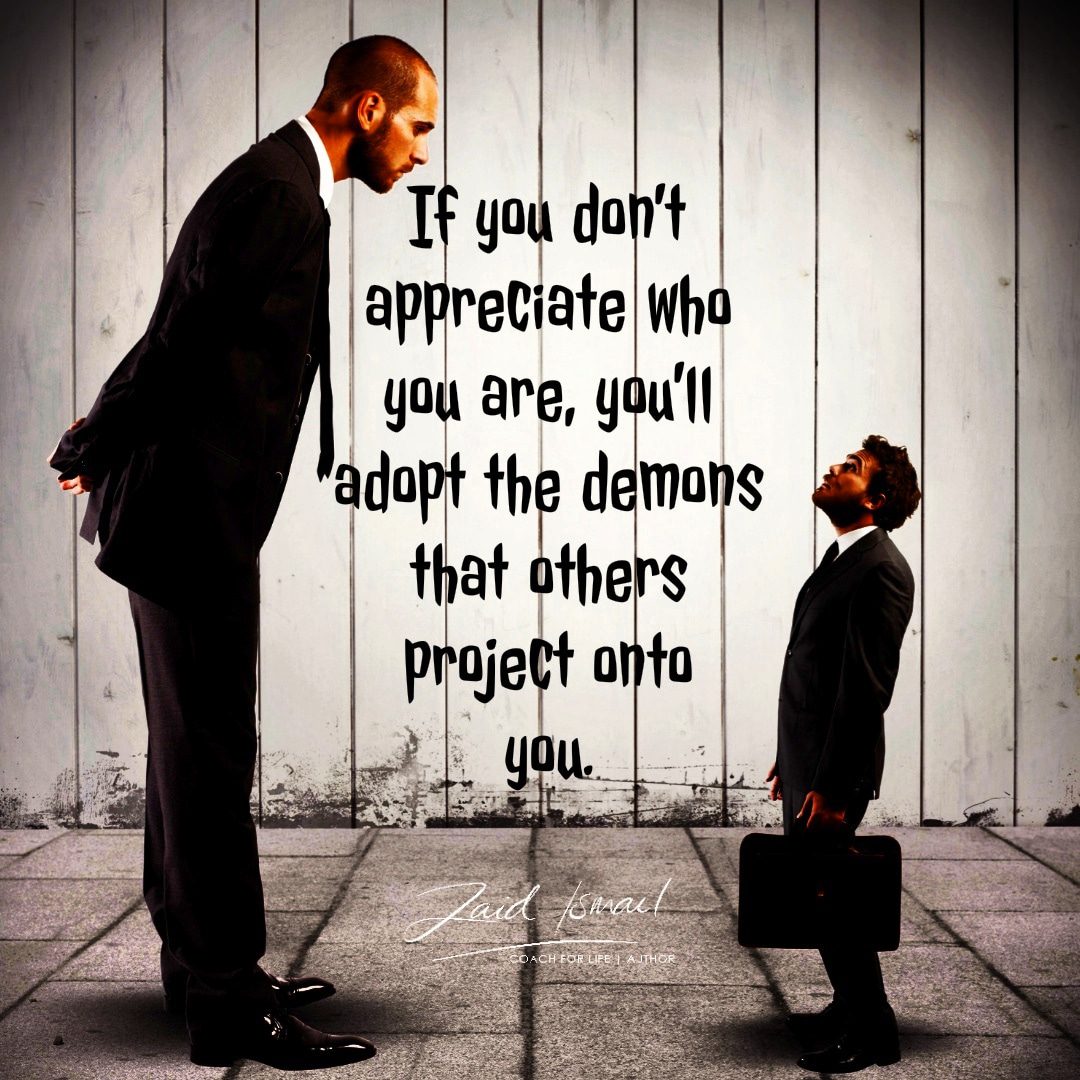
Remember: Judgement is what we think someone else thinks of us, whereas values is what we want to live by.
When you connect with the latter, you’ll be less likely to adopt the demons that accompany the judgement of others about who you are or what you’re worth, and you’ll find peace and joy in your efforts towards continually improving the quality of your life.
It always starts with you.
#selfworth #selfawareness #ownyourlife #theegosystem #mentalhealth #mentalhealthawareness #lifecoaching #zaidismail #loveyourself #lifegoals #motivation #optimism #purpose -
A path to insanity
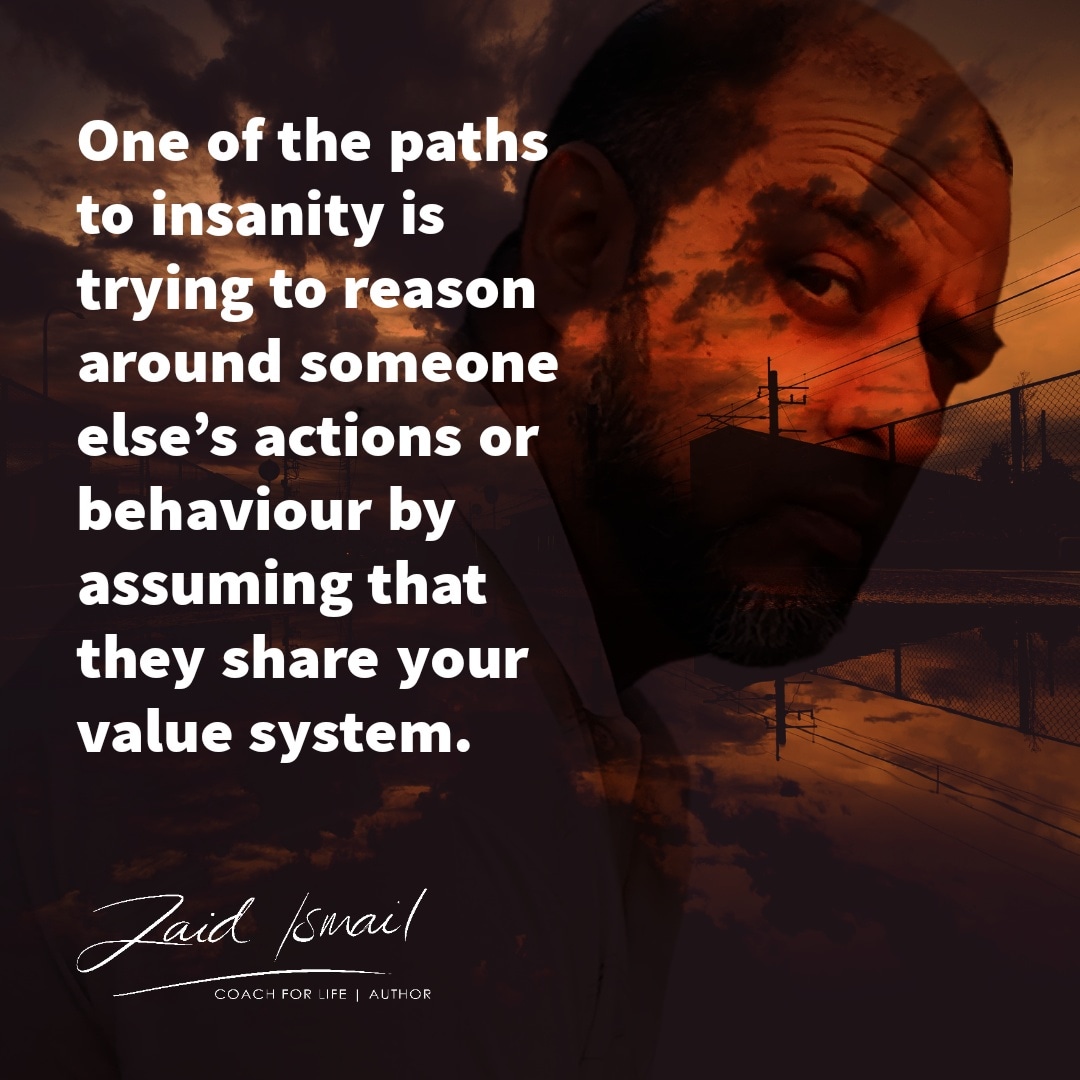
We work with the assumption that our partners and our children share the same values that we try to uphold in our lives.
This is rarely true.
While we may share the same frame of reference or even the same cultural norms, values are much more personal, and therefore unique.
Our personal value systems are shaped by what we take from life.
Note, what we take, not what we’re taught.
Our teachings form the frame of reference within which we live our lives.
However, what we place emphasis and priority on, and what flexibility we allow ourselves within that frame of reference is what shapes our unique value system.
For this reason, two siblings raised in the same home under the same rules of discipline, and with the same privilege and emotional access to their parents may adopt very different values because of what they assumed to be true about the motives or sincerity of their parents towards them.
The difference between the two is self-worth.
The important thing about self-worth is that it’s about how we feel about ourselves, and not how someone else feels about us.
No matter how much we convince ourselves that we feel how we feel because of how someone else treats us, it doesn’t change this fact.
Self-worth is about how we feel about ourselves.
How we develop this sense of self is a complex process that can change with life experiences, but until we’re aware of what we allow to influence how we feel about ourselves, we’ll blame the world for our unhappiness or misery.
It is this that we must bear in mind when we try to rationalise the behaviour of others when it conflicts with the value system that we thought we shared.
Self-worth or self-loathing is what makes the difference between authenticity and selling ourselves short to gain validation.
It always starts with you.
#selfworth #selfawareness #ownyourlife #selfmastery #mindfulness #personalpower #mentalhealth #mentalhealthawareness #lifecoaching #zaidismail #loveyourself #lifegoals #parenting #singleparenting #pursuitofhappiness -
Do what’s right, or else…
When raised with fear and compliance as the tool to ensure good behaviour, or religious subscription, we create validation-seeking individuals whose willingness to compromise on what is right will be driven by social acceptance.
Instilling values in our children, or living by our own values, must be grounded in a substantial appreciation for why it is valuable, and not why it is right.
When we focus on right and wrong, we focus on judging others rather than understanding them.
Arriving at a conclusion about whether something is right or wrong has its place.
But without understanding and an appreciation for the value of what we want to establish, compassion is lost, and harshness is assumed to be justified to uphold truth or morality.
It is counter-productive to use harshness to teach understanding.
And it’s an exercise in futility to ignore what influences you are working against when trying to instil, or live by such values.
Being mindful of two things is therefore critical towards maintaining your sanity.
Firstly, connect with purpose and substance to the values that you stand for by connecting it to the good that you want to create in the lives of those around you.
Secondly, be aware of your ability to influence the adoption of those values in the lives of those you care for.
Sometimes, the appeal of instant gratification, or social inclusion may render your influence impotent.
When that happens, take the time to plant the seed, but don’t exhaust yourself in nurturing it.
We’re all responsible for nurturing our own seeds of goodness in our lives.
Own Your Life.
#hope #expectation #sincerity #selfworth #selfawareness #mentalhealth #mentalhealthawareness #lifecoaching #zaidismail #loveyourself #lifegoals #parenting #singleparenting #gratitude -
That war within
Sometimes that village is a family, sometimes it’s a group, and sometimes it’s just one person who represents everything that the village stands for.
That child grows into the raging adult who destroys every wholesome thing, because they feel like no one deserves peace if they were denied love and acceptance.
When you treat the vulnerable, or the gentle one’s, with contempt, you create the same monsters that made you.
That’s how the raging adult spawns more troubled souls that are driven towards burning down their village, with each generation growing more destructive, until someone chooses self-respect over self-loathing.
The distraction of their rage prevents them, and us, from seeing their plea for love and acceptance.
It’s a war within that rages without, because what they feel is at odds with what they need, and despite their best efforts, they don’t know how to achieve it.
So, the shame that bubbles beneath the surface – the shame that they hide from the world about that internal war – drives them to behave in ways that appear to claim what they believe others will not care to give them.
Thus, they project their rage on any innocent being that expects them to be better than that, because they’re no longer children…and only children throw tantrums.
Adults don’t throw tantrums because they don’t need someone else to destroy for them.
They destroy others to feel significant, not because they want the destruction, but because it at least gives them reason to believe that they’re not invisible.
That they still have an impact.
That they will be taken seriously…or else…
Your anger at the world is yours to tame.
You either rage at those who don’t have what you need, or you create it yourself through the alchemy of your soul.
Because that’s what makes us human.
Not that we hurt, or that we love, but that we can create love in the midst of hate, and calm in the midst of chaos, without any aides but the attributes of who we are beyond the rage.
It always starts with you.
#ownyourlife #theegosystem #mentalhealth #mentalhealthawareness #lifecoaching #zaidismail #loveyourself #parenting #singleparenting #selfworth #selflove #selfloathing -
Whose pedestal is it?
When we see people for what we need them to be, rather than who they are, we elevate their position in our lives through no fault of their own.
When they fail to meet the expectations that we created because of that unrealistic perspective that we had of them, we feel betrayed and then blame them for hurting us.
This is yet another sign of a deficient self-worth.
Our need to be associated with something or someone of a favourable standing often leads to us exaggerating the good or the virtue in them, or it.
This is because when we believe that we’re not enough to earn the respect or social standing that we desire, then we find ways to appear more than who we are through associating with what others will respect or admire.
The irony is that our efforts to place others on pedestals is because we want company for placing ourselves on those pedestals so that we don’t appear arrogant or vain in claiming such standing for ourselves.
A healthy self-worth means that praise or support will be authentic, rather than opportunistic or insincere.
Sometimes we justify the insincerity by convincing ourselves that we just want others to feel good.
But when we shower praises on one who we believe isn’t truly praiseworthy, we’re doing it to feel good about being seen as generous and kind in spirit, and not because we want them to feel good.
We also deny them the opportunity to be better by instilling a false sense of confidence about who they are or what they’ve achieved.
Thus, the pedestals are built and destroyed the moment the lack of authenticity in our motives are exposed, or when they reveal, in an undeniable way, that they are not who we held them up to be.
Sincerity on our part, in such moments, will be reflected in how we understand and support them to be who we believe they’re capable of being, rather than judging them for letting us down.
It always starts with you.
#hope #expectation #sincerity #selfworth #selfawareness #mentalhealth #mentalhealthawareness #lifecoaching #zaidismail #loveyourself #lifegoals #motivation #optimism #selfloathing