If there is one piece of advice that will help you through the worst of times, this is it.
Internalise this, connect with it, make it your mantra if you must, but understand that forgiveness on its own, without acceptance, will leave you yearning for retribution or justice.
More than this, acceptance is only wishful thinking if not accompanied by understanding.
We need to understand the motives behind someone’s betrayal of trust, or their indiscretion, or even their neglect of what is important to us or else we’re left with believing that it was intentional towards us.
Most often, we treat others badly because of our demons that are provoked by what they need from us.
Even if we’re justified in treating them that way because of how they treated us, tit-for-tat is an indulgence of the ego and not an investment in rising above that which weighs us down.
Understanding doesn’t mean condoning, justifying, or defending bad behaviour. It simply lifts the burden of not knowing so that making peace with the experience becomes possible.
By seeking understanding, we immediately shift our focus to what they were struggling with rather than grappling with our lack of significance to them.
It is only through such understanding that we learn to accept that people’s actions are a reflection of who they are more than it is about what we mean to them.
And while we’re contemplating all this about others, we need to reflect on our own bad behaviour within the same context or else we will inevitably become like those whom we judge.
Judge less. Understand more.
Peace is within reach.
Otherwise bitterness will be your friend until you meet your end.
#forgiveness #acceptance #struggles #weakness #selfworth #selfawareness #pardon #dignity #sincerity #authenticity #mentalhealth #mentalhealthawareness #mentalhealthrecovery #ownyourlife #coachzaidismail
Category: relationships
-
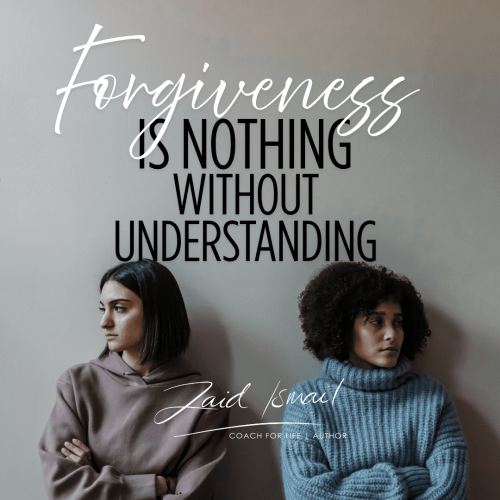
Forgiveness without understanding is virtue signalling
-

Raging into oblivion
The rage that we hold within us feels like a justified protest or demand for justice or fairness from those around us.
But rage is a master of distraction.
It is born in moments of legitimate duress, but continues long after.
The rage of being unheard in one moment leads to harshness when we feel misunderstood in a totally different moment.
Rage is the intensity of our demand to be treated with significance or respect, while not realising that rage undermines both, our significance and the respect we need from others.
Rage only ever achieves compliance from others while they may fear us in our moments of rage.
The moment those around us no longer fear us, rage becomes a tool that destroys what we’re trying to achieve, and isolates us from the ones who we wish would see us more clearly.
But we only rage because we don’t see ourselves clearly.
And that’s the greatest distraction that rage offers us.
It convinces us that we’re right and that everything that we see is wrong with others is good reason for us to rage.
And in those moments, we lose our connection with reality and replace it with a focus on who is taking our pain seriously while not realising that we’re causing pain, leaving them to see nothing more than a brute rather than a hurt soul.
Beyond the release of the anguish we hold within, rage offers no value at all in securing the peace or harmony that we want with those who matter to us.
Don’t only try to restrain your rage.
Instead, seek to understand why you feel that rage at all.
Otherwise your rage will grow to define you while you may think it’s defining your battle cry to the world.
#hope #expectation #sincerity #entitlement #gentleness #life #rage #anger #angermanagement #mindfulness #selfawareness #mentalhealth #mentalhealthawareness #mentalhealthrecovery #selfworth #herdmentality #wisdom #coachzaidismail #ownyourlife -
A bitter end
Holding on to bitterness for a past betrayal is like drinking poison and hoping that your betrayer will die.
Bitterness eats away at your peace while you hope that the intensity of your bitterness will somehow influence the karma of the person who treated you poorly.
If you had that much power, you’d have been able to enforce justice with them already.
The longer you hold on to the bitterness, the more harm you cause for yourself more than any harm that they may have imposed on you.
When you fixate on your reasons to feel bitter, you prevent yourself from considering whether your assumptions about their intentions or motives are true.
You also prevent yourself from seeing the impact of your bitterness on those around you who had nothing to do with that betrayal or hurt caused by someone else.
Sometimes people betray trust because their own fears are stronger than their convictions, and not necessarily because they deliberately wanted to use or hurt you.
Anger in the face of betrayal, even hurt, is understandable.
But just because it is understandable doesn’t mean it’s good for you.
Own how you feel.
Understand what you can do to handle such situations better in future.
Move on.
Life awaits.
#peace #bittersweet #bitterness #selfworth #selfawareness #selflove #selfloathing #selfharm #mentalhealth #mentalhealthawareness #mentalhealthrecovery #justice #remorse #brokenheart #coachzaidismail #ownyourlife -
Your intentions are never enough
There is often an unintended entitlement that sets in for those who are trying to make up for the impact of their behaviour on others.
The entitlement comes through in how we expect our efforts to be received.
If we apologise, we expect it to be accepted.
If we comfort, we expect them to feel comforted.
If we hug them, we expect them to hug us back.
The one who causes the offence does not get to decide how the offended must forgive or understand.
Until we connect with this reality, we will continue to downplay the impact that we have on others while believing that they just don’t understand or don’t care about how difficult it is for us.
When we caused harm, it stops being about us and starts being about those we harmed.
If we are sincere in our convictions to make right what we did wrong, we won’t feel entitled to our efforts being accepted. Instead, we’ll be focused on being more effective in our efforts to make things right.
That test of our conviction is what many fail, resulting in the offenders parading as victims and the offended being painted as unreasonable or cruel.
Check yourself when you apologise or try to make up for something you did wrong.
If you don’t, you will sour important relationships for all the wrong reasons while blaming them for your actions.
#coachzaidismail #gratitude #lifecoaching #mentalhealth #mentalhealthawareness #mentalhealthrecovery #ownyourlife #selfawareness #selfworth #theegosystem #zaidismail #narcissisticabuse #toxic #emotionalabuse -
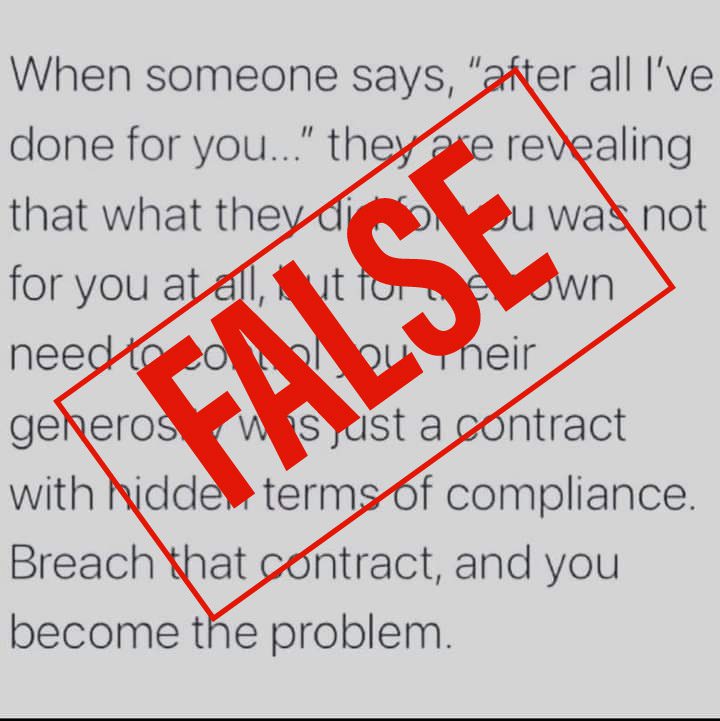
Mental health myth – Social contracts
People will have no reason to remind you about what they’ve done for you if they felt appreciated by you.
This popular meme encourages a selfish view of life and convinces us that we’re victims of manipulation rather than giving us reason to question if/how we may have wronged someone, or taken them for granted.
If this meme were true, then every parent who sacrifices their own joys and advancement in life for the benefit of their children will have no right to feel betrayed if they’re neglected by their children later in life.
It’s become fashionable to write people off just because we’re not getting what we need or want from them.
The fact that we feel entitled regardless of what they’re going through is often ignored.
But the circle of life is such that what we judge others about today, will meet us as a test under very different circumstances tomorrow.
When you write people off because of what they complain about regarding feeling hurt or betrayed by your actions towards them, you will remember them when someone you are convinced will always have your back turns around and walks away from you because they want something from life that they can’t get from you.
When someone says ‘after all I’ve done…’, step back, dismount your high horse, and consider why they may be feeling betrayed or used instead of getting defensive and assuming that they’re toxic.
How you respond to someone in their moment of duress is a reflection of who you are, and what you need from them.
That’s why abandoning family ties, cutting off parents, demanding divorce, and breaking social bonds has grown to define our self-care routine.
When we stop needing others, they become optional while we think it’s our right to live our best life regardless of their contribution towards getting us through our worst times when they could have been living their best life.
Be careful what advice you take from the Internet.
You could end up living your best life, alone.
#hope #expectation #sincerity #selfworth #selfawareness #mentalhealth #mentalhealthawareness #lifecoaching #zaidismail #theegosystem #ownyourlife #narcissisticabuse #narcissist -
Respect is not earned
The old saying of ‘respect is earned’ robs you of self respect and replaces it with entitlement.
How we treat others is a reflection of who we are, not who they are.
Our ability to self regulate our offering of respect to those who may treat us badly is a reflection of how much we need them to treat us well before we feel good about who we are.
In other words, the less grounded we are in who we are, the more likely it is that others will impact our moods, our temper, and our overall emotional wellbeing.
Trust, on the other hand, is earned through consistency of effort about what’s important.
Trust cannot be negotiated or contracted.
If we have reason to doubt someone showing up for us, we won’t trust that they will.
That reason is sometimes because of them being unreliable, but is also often because of how someone else in the past may have disappointed us or betrayed our trust when we needed a similar thing from them. Like comfort, support, or just being there for us.
If we go through life trusting recklessly while withholding respect to those who, in our eyes, don’t deserve it, we will find ourselves reeling from betrayal long after it has passed while disrespecting those who don’t understand our pain.
Problem is, even we won’t understand our pain, so we’ll never be able to communicate it in ways that will allow those close to us to understand why we’re raging.
It all starts with self respect and self worth.
Without that, you will need others to treat you well before you treat yourself well.
Own your life.
#hope #expectation #sincerity #selfworth #selfawareness #mentalhealth #mentalhealthawareness #lifecoaching #zaidismail #theegosystem #ownyourlife #narcissisticabuse #narcissist #rage #anger #angermanagement #marriage #divorce -
The absence of drama is not peace
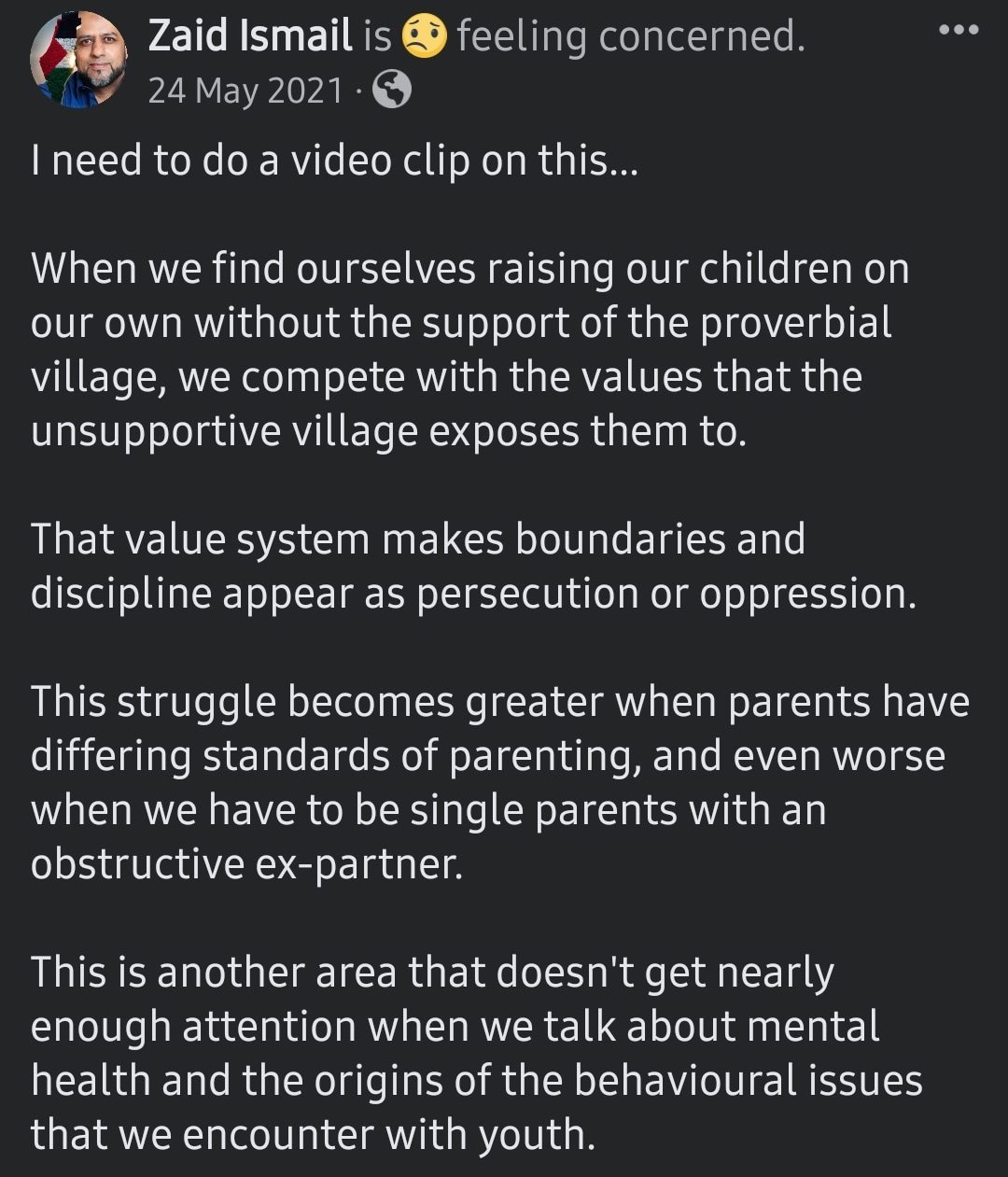
The struggle in countering the influence of a village of idiots will never be truly appreciated until we experience the impact of the dysfunction that it produces in our lives.
That impact usually only becomes evident when we’re facing upheaval that challenges any sensibility that we may rely on about life.
Parenting is largely a lost art with the opportunity to outsource a large chunk of it to social media making it easy to ‘cope’ in that way.
Losing ourselves to our own struggles that rage in our minds blinds us to the impact of our obliviousness to those around us.
The absence of drama is not peace, nor is it wholesome family time.
That is what social media and social distractions offer us. The absence of contention or conflict.
That’s how we lose sight of the values that we’re imparting without meaning to, because on the one hand, we’re validating social media as a legitimate source of learning how life works, while also confirming that such an approach to parenting or to sharing life’s moments and wisdom is all that we have available to offer.
We have greater impact through what we don’t do than what we do.
Unfortunately, we’re mostly too distracted by needing validation for what we do that we lose sight of our abdication of accountability for what we should do more of…or just what we should be doing in the first place. Period.
Our demons that distract us from what others need from us destroys more relationships than any real conflict that exists between two people.
Own your life before you end up destroying someone else’s.
#parenting #divorce #marriage #marriagegoals #lifecoaching #zaidismail #theegosystem #ownyourlife #relationshipgoals #singleparenting -
The struggle for self-worth
Our relationship with our father, whether they’re present or absent, still with us or passed on, shapes how we feel about ourselves more than any other influencing factor in our lives.
It’s not about whether they were good or bad as humans or as parents, but rather what we took from our experiences with them, or what we took from their absence.
A father who is absent because he has to work long hours to provide for his family, could still have a positive impact if he is not harsh and impatient with his children when he does have a few moments to share with them.
Similarly, a father who is present but always fixated on rules, boundaries, rituals, and the like, will create an emotional barrier between him and his children that will convince them that who they are doesn’t matter, and that what they achieve is all that matters.
That directly conflicts with our core human need to be of significance.
What we take, or what we believe to have been their motivation to be that way towards us in our early years, is what shapes how we show up for others in our later years.
Most people who have had a difficult relationship with their father know exactly how they don’t want to do things, or how they don’t want to be as parents, but that doesn’t mean that they know how to achieve what they want in their relationship with their children.
That’s how, without meaning to, we often become exactly like the parent/so that we once judged harshly for failing us as a parent.
The most effective way to break this cycle is to understand the true reasons why your father may not have been what you needed him to be despite his best intentions or efforts.
It’s only in seeing the demons of others that we will realise that how they showed up for us was not because of who we are, but rather because of how our needs from them provoked the demons that they were grappling with.
That’s how we learn from the shortcomings of others, rather than falling into the same deficiencies because we think we’re better than them.
See the human behind the role and you’ll feed the soul of those who desperately need it.
#parenting #narcissist #narcissisticabuse #lifecoaching #zaidismail #toxicparents