Category: relationships

  • The magic of accountability

    The magic of accountability

    Many people struggle with authenticity and finding a healthy balance in relationships because they are unaware of the impact of how they show up for themselves and for others. That lack of self-awareness is in a very huge way impacted by how we hold ourselves accountable for who we are.

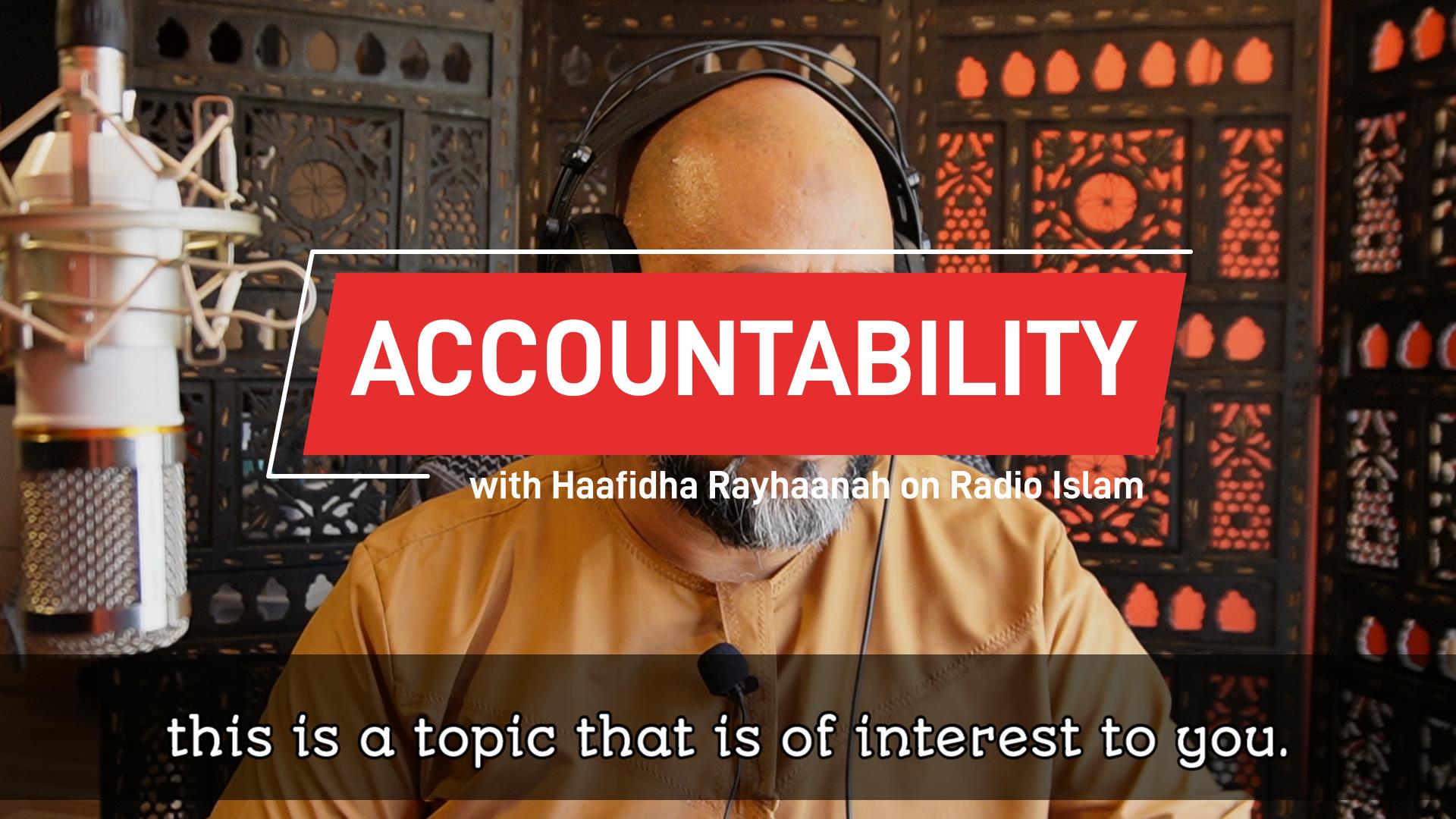
    In this interview with Haafidha Rayhaanah, I unpack the little known dynamics of the far reaching consequences of accountability in our relationship with ourselves, and with those around us.

    Remember, without accountability, you have absolutely nothing of substance in your relationship with anyone, including with life itself. Give yourself a fair chance to unlearn what has been holding you back for so long.

  • Heal yourself before you heal the world

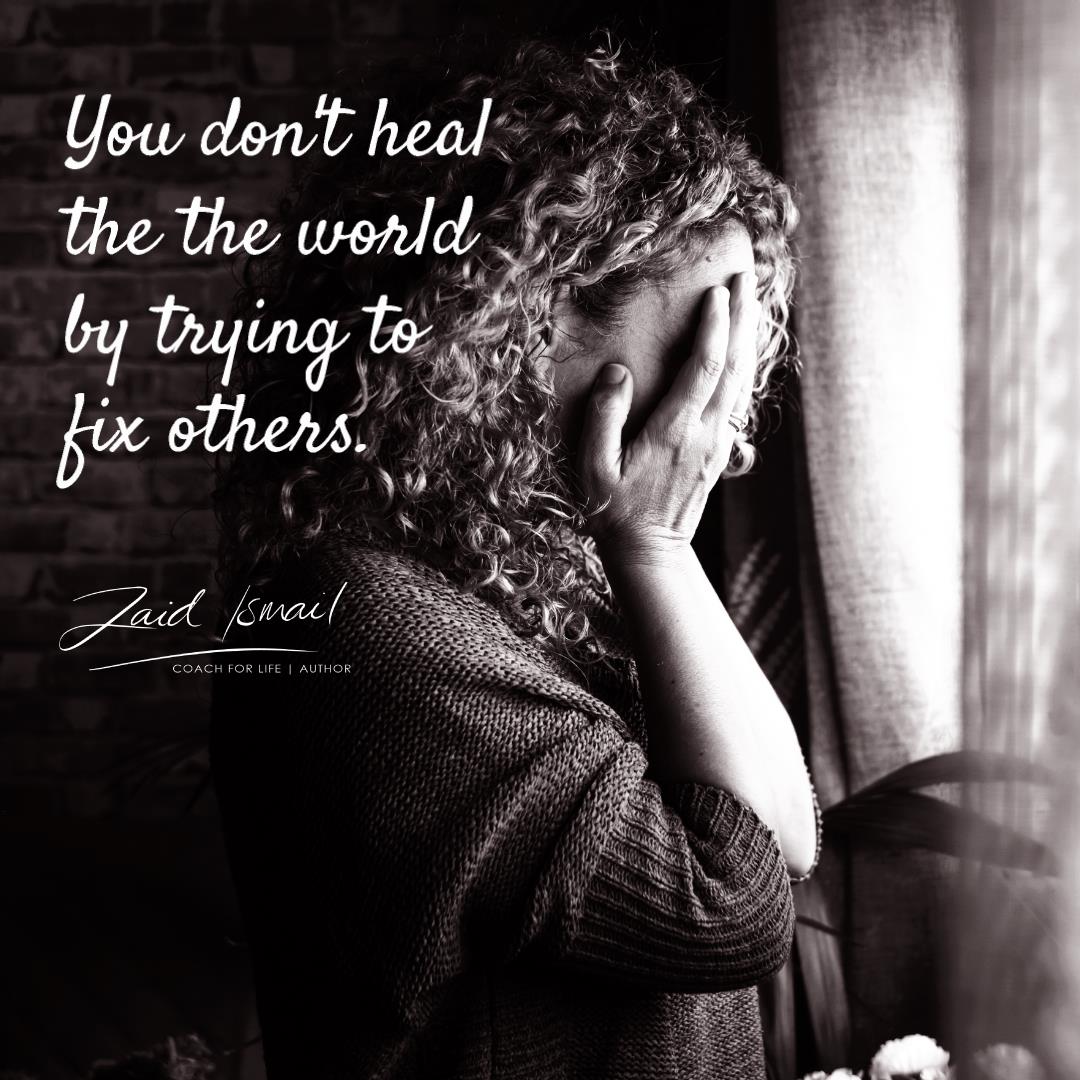
    Heal yourself before you heal the world

    When we’re in a problematic relationship, it becomes easy to focus on what others are doing wrong.

    This may be justified, or maybe not. Either way, it distracts us from our contribution towards that situation that we’re party to.

    That’s the important part. To recognise that we are either enabling or sustaining the cycle in which we’re caught.

    Focusing on what others need to change is only productive if we’re having a meaningful discussion with them about how we’re affected by their behaviour.

    Beyond that, it serves as nothing more than a distraction from how we conduct ourselves in response to their behaviour.

    The moment you go into such a situation assuming that you’re right and they’re wrong, you become part of the problem, if not the problem itself.

    Relationships are about finding a balance, not about finding a compromise.

    Compromises lead to scorekeeping and bitterness if either person thinks that they’re contributing more than the other.

    Stop compromising and start focusing on what you’re both wanting to create together.

    If you need them to make you feel complete, you’re horribly distracted from what you find lacking in yourself.

    Healthy relationships are formed when two people own their contribution towards the joint goals of the relationship and create space for each other relative to their strengths and weaknesses without judging each other for the same.

    If that sounds like a mouthful, or if it sounds complicated, then chances are very good that you’re getting it wrong, or you’re not acknowledging your contribution towards whatever frustrations or challenges you’re experiencing with your partner.

    Everyone wants to feel heard.

    Everyone wants to feel seen.

    Everyone wants to feel appreciated.

    Not just you.

    Keep that in mind the next time you approach addressing an issue with your partner and hopefully the outcome will result in understanding and a commitment towards mutual goals that will create a bond between you that you never experienced before.

  • Fallacious philosophies

    Fallacious philosophies

    This is incorrect on many levels. Most importantly, it suggests that our thoughts inspire the actions of others.

    That is patently incorrect.

    It also suggests that if we focus on positivity, we’re guaranteed to attract positivity.

    That is dangerously incorrect.

    We all wear masks of some kind.

    When someone offers us an opportunity to fill the gaps in our lives that those masks are intended to hide, we are attracted to them, and vice versa.

    A healing spirit will attract a hurt soul, and hurt souls often attract the generosity of a healing spirit.

    But that doesn’t mean that the one that is hurt will choose to be healed.

    Many find comfort in the affection and care that their hurt attracts.

    When that comfort defines their self worth, they will respond aggressively when expected to rise above it, or encouraged to heal from it.

    That’s when the masks fail them and the relationship breaks down.

    This law of attraction thinking is a fallacy that will harm more than it will heal.

    Be careful of what philosophy you buy into.

  • Own your life

    Own your life

    There are many unflattering adjectives that have been used to describe me over the years.

    Before life got real, it used to trouble me to think that others had a negative opinion of me despite my best efforts to be a decent human.

    It was a distraction that sometimes still gets the better of me. Fortunately, only in short bursts these days.

    I don’t assume that I’m never any of what they accuse me of.

    I know I’m entirely capable of being a difficult person, or even an abrasive and opinionated fool.

    But, I only reconsider my actions if I receive such feedback from someone who is willing to engage beyond the insult or the negative assumption.

    Everyone is opinionated. Many just don’t have the courage to speak plainly from fear of rejection or being unpopular.

    Those are the ones that I ignore.

    Not because I think I’m better than them, but because they have nothing of value that I can work with in my efforts to be better than who I was the moment before they shared their opinion about me.

    Without such a mindful consideration of what people think of me, I literally would have been six feet under in an unmarked grave from having taken my own life because of the bitterness that others project onto me when they’re not willing to face their own demons.

    My sanity and my life is mine to own.

    If I give up that accountability, I will be no more than an attention whore praying for acceptance by the spineless.

    Life is too short for such frivolity.

    Own your life. If you’re not owning it, someone else is.

  • Toxic blah blah

    Toxic blah blah

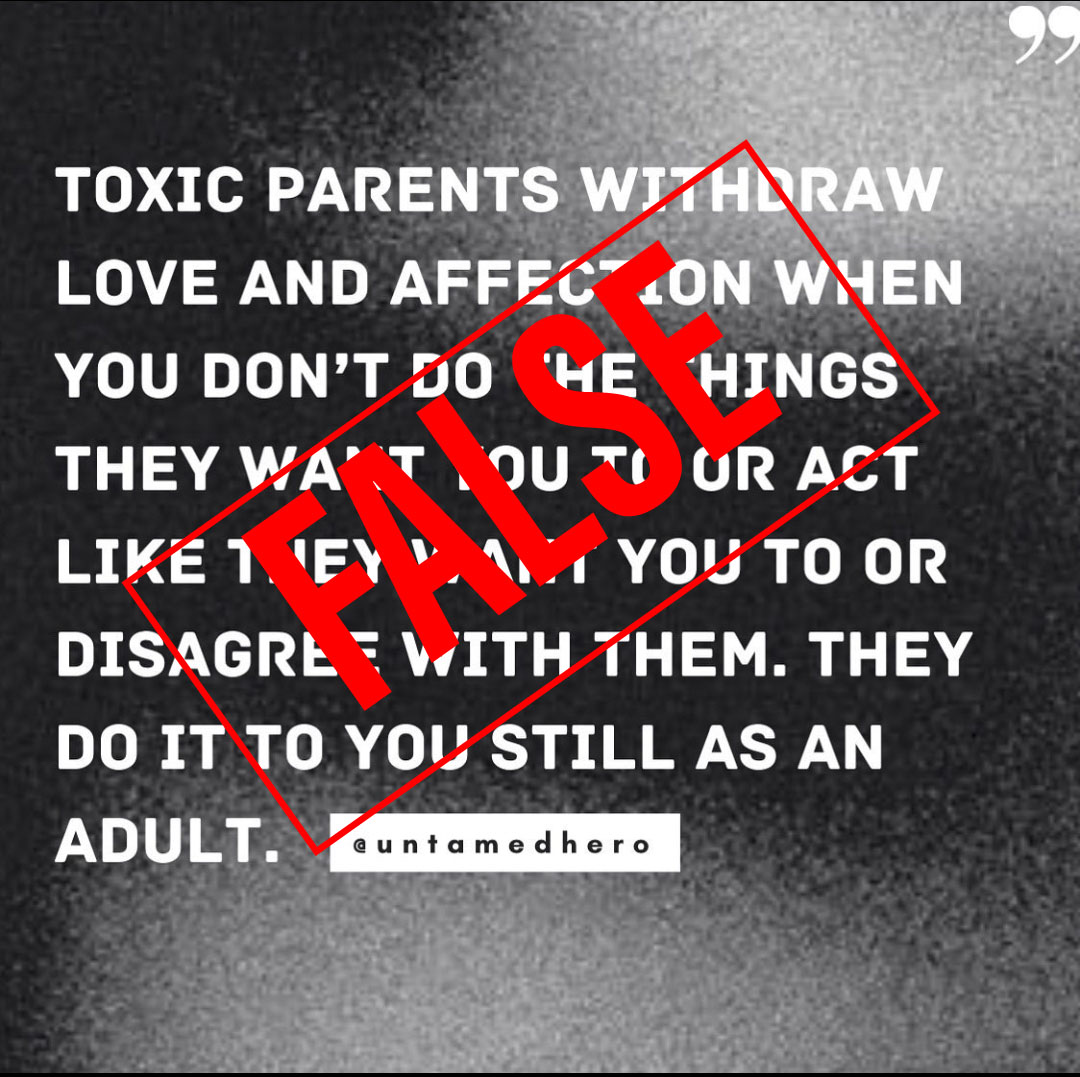
    The belief that people are toxic is self-serving.

    The belief that parents are toxic is a sign of ingratitude.

    The belief that others are not allowed to change how they behave towards you when you don’t honour what is important to them is entitlement.

    The belief that what is important to us is more important than those who raised us is probably the closest thing to a toxic trait that we’ll find.

    Societies that have withstood the test of time are the ones who honoured their elders and embraced the wisdom that was passed down to them.

    Adapting that wisdom to solve contemporary problems is the failing of the current generation of parents and children.

    People, not just parents, withdraw from relationships when they feel rejected, betrayed, dishonoured, disrespected, taken for granted, and more.

    If you hold your parents to that standard of supposed toxicity, be sure to apply the same definitions to your own behaviour.

    If you truly understood the effort, self-sacrifice, compromise of dreams and aspirations, and duress that a present parent must overcome to show up as a parent, you might understand why betrayal of trust, disrespect, or rejection hurts them enough to want to withdraw from the life of the child that they spent their life serving up to that point.

    It’s fashionable these days to judge parents harshly while believing that the new generation has a better understanding of what’s needed to make life work.

    Sadly, the current state of society proves otherwise.

    How does your judgement of the people who raised you stand up to the scrutiny of the ‘toxic’ label that you’re so willingly throwing around these days?

    You will be tested by that which you judge others about. Be careful.

    Arrogance is a slippery slope.

  • Deluded confidence

    Deluded confidence

    We treat others the way that we treat ourselves.

    If you struggle to understand what drives the emotional currents that you experience within yourself, look at the feedback that you’re receiving from those who stand to gain nothing from your downfall.

    Remember: The most important feedback is non-verbal.

    When we hold ourselves accountable for what we do or don’t do, we will hold other’s accountable for the commitments or claims that they make.

    When we give ourselves an easy pass, we’ll allow others to be flaky about their commitments towards us.

    We give what we have and we accept what we want must be tolerated about us.

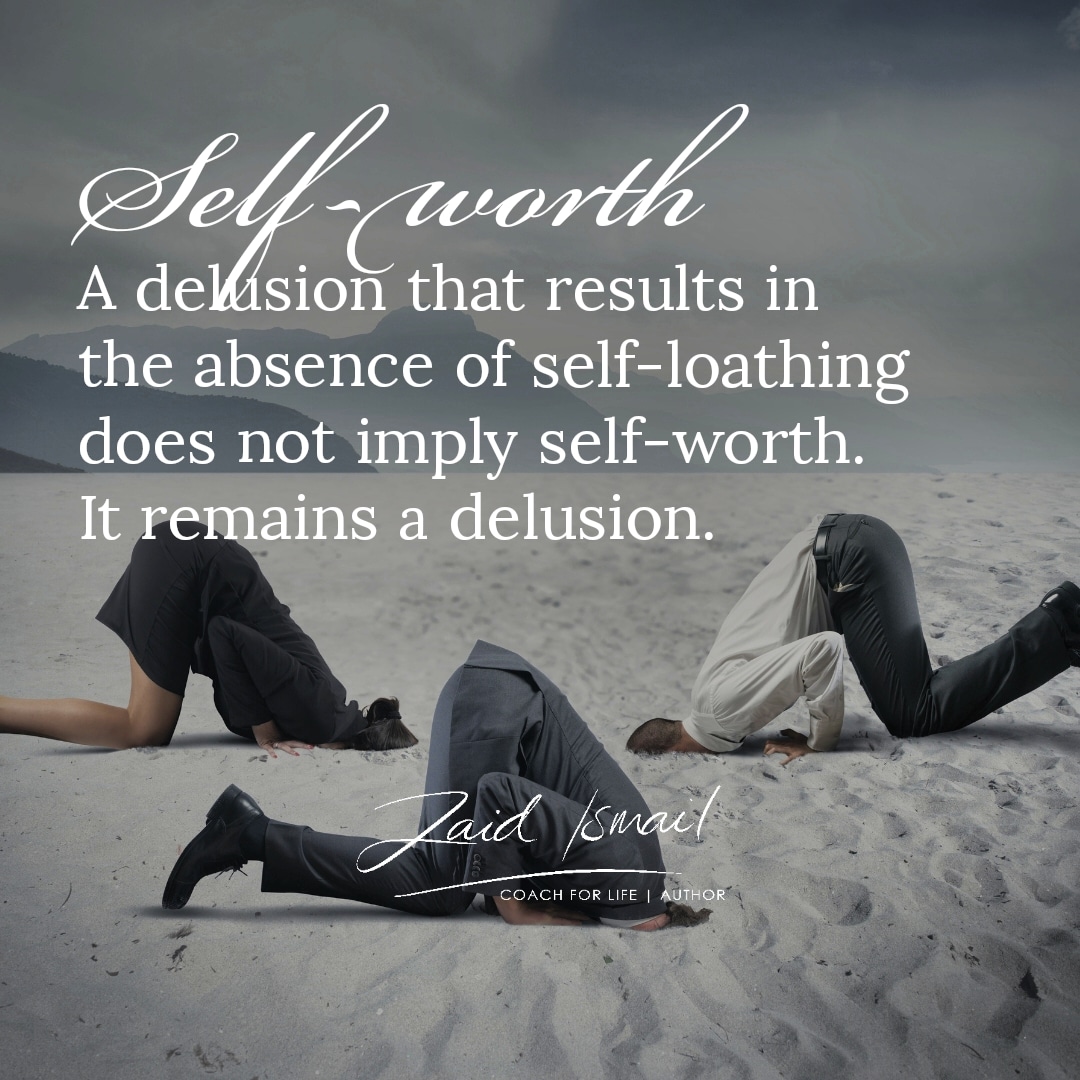
    So when we are filled with self-loathing while pretending to be at peace with and claim to be grateful for who we are, we will be harsh or unforgiving towards those who question our behaviour while being exceedingly gentle and generous with those who affirm our delusions.

    This is not about who is right or wrong, good or bad, noble or despicable.

    This is simply the way life works.

    You cannot give what you don’t have.

    Expecting it to be different will result in contention and stress within yourself as you struggle to find answers to what should not be problems, and it will strain relationships that matter because you will be that much more difficult to be understood.

    That lack of understanding from others, when observed through your delusions about who you are, will seem like rejection or confrontation because when we are unwilling to hold ourselves accountable for the state in which we find ourselves, we will feel attacked by anyone else holding us accountable for our contribution towards any problems in our relationship with them.

    The reasons for holding onto delusions, especially while knowing that those delusions conflict with reality, is a topic for another day.

    But first, we must be willing to test our assumptions about life and about others to ensure that we’re not deluded to begin with.

    It always starts with you.

  • You’re human. Be human.

    You’re human. Be human.

    We need to be careful with subscribing to a victim mindset.

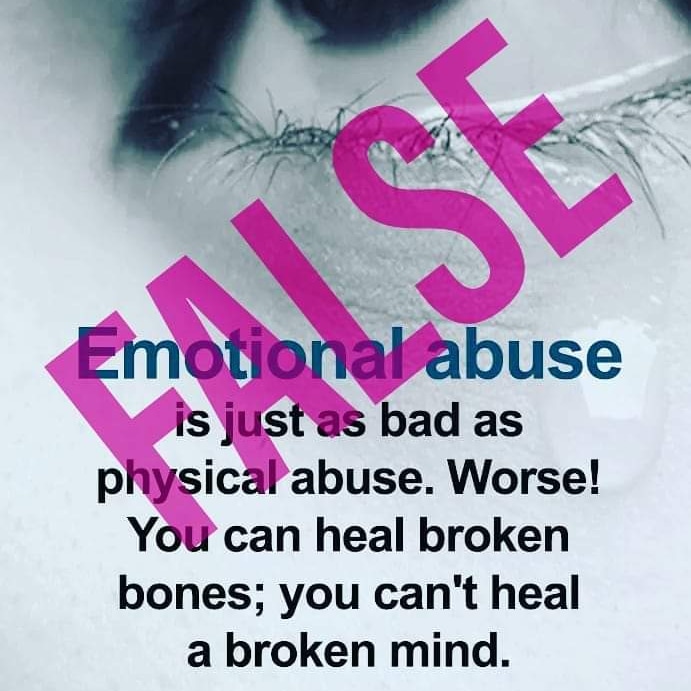
    Any form of abuse leaves emotional scars.

    But that doesn’t mean it breaks us.

    Nor does it mean that it’s impossible to heal from it.

    Don’t believe everything you read.

    No human is broken.

    And every mind can be healed.

    When we convince ourselves that we’re broken or that we can’t be healed, we create a self fulfilling prophecy, because what you set out to achieve is what you will achieve.

    Besides, it’s not the physical pain of physical abuse that sticks with us, it’s the mental and emotional anguish that it leaves that haunts us.

    Memes like the one above are well meaning, but they cause more harm to our mental health than they offer benefit or relief.

    Be careful what you take from the Internet.

    Good intentions have destroyed many lives.

    No matter how elaborate and sincere your effort at solving a problem may be, if you don’t understand the problem well enough, you will go about solving the wrong problem until you eventually convince yourself that the real problem cannot be solved.

    There is a solution for every problem except death. So if you’re not figuring it out, it means that you need more information and a fresh perspective of what you’re dealing with.

    Remember: No one is broken. No one is damaged. No one is beyond help. It takes a single moment of realisation to turn your entire world around.

  • Honour yourself

    Honour yourself

    Self-respect is more about who you want to be, rather than what you are willing to tolerate.

    Claiming your space while diminishing the contribution of others in your life is not self-respect, it’s unintended ingratitude.

    Self-respect is reflected in how you hold yourself accountable for the impact of your actions on others, and not just for your intentions towards them.

    It’s about showing up beyond words or explanations, and ensuring that your actions reflect your intentions, especially when the feedback you receive confirms that how you treated others is not what you had intended.

    But none of this is possible if you don’t have your own internal compass by which you hold yourself accountable.

    That compass is the values that you claim to stand for.

    When you lack that internal compass, you will be driven by how you feel in the presence of others.

    When our feelings dictate our reasons, we hold others accountable for what we took from them, or from life, without stopping to consider that maybe we were wrong.

    Maybe we understood things poorly, or interpreted things incorrectly.

    When feelings drive rationality, our struggle becomes our war cry and everyone around us becomes responsible for honouring how we feel regardless of the merits of our reasons for why we feel that way.

    That’s when we become oppressors while feeling oppressed.

    Self-respect is born when we choose who we want to be regardless of what bad behaviour others may deserve because of how we think they treated us.

    In that choice lies peace and the promise of contentment.

    Anything less will leave you a slave to society, or an oppressor towards those who fear your outbursts.

    Who do you want to be?