If you find yourself feeling easily judged about your life, you’re focused on how others perceive you, rather than what you think of yourself.
In fact, the moment you focus on what opinions others may have about your life or about who you are, it confirms that you are already judging yourself harshly.
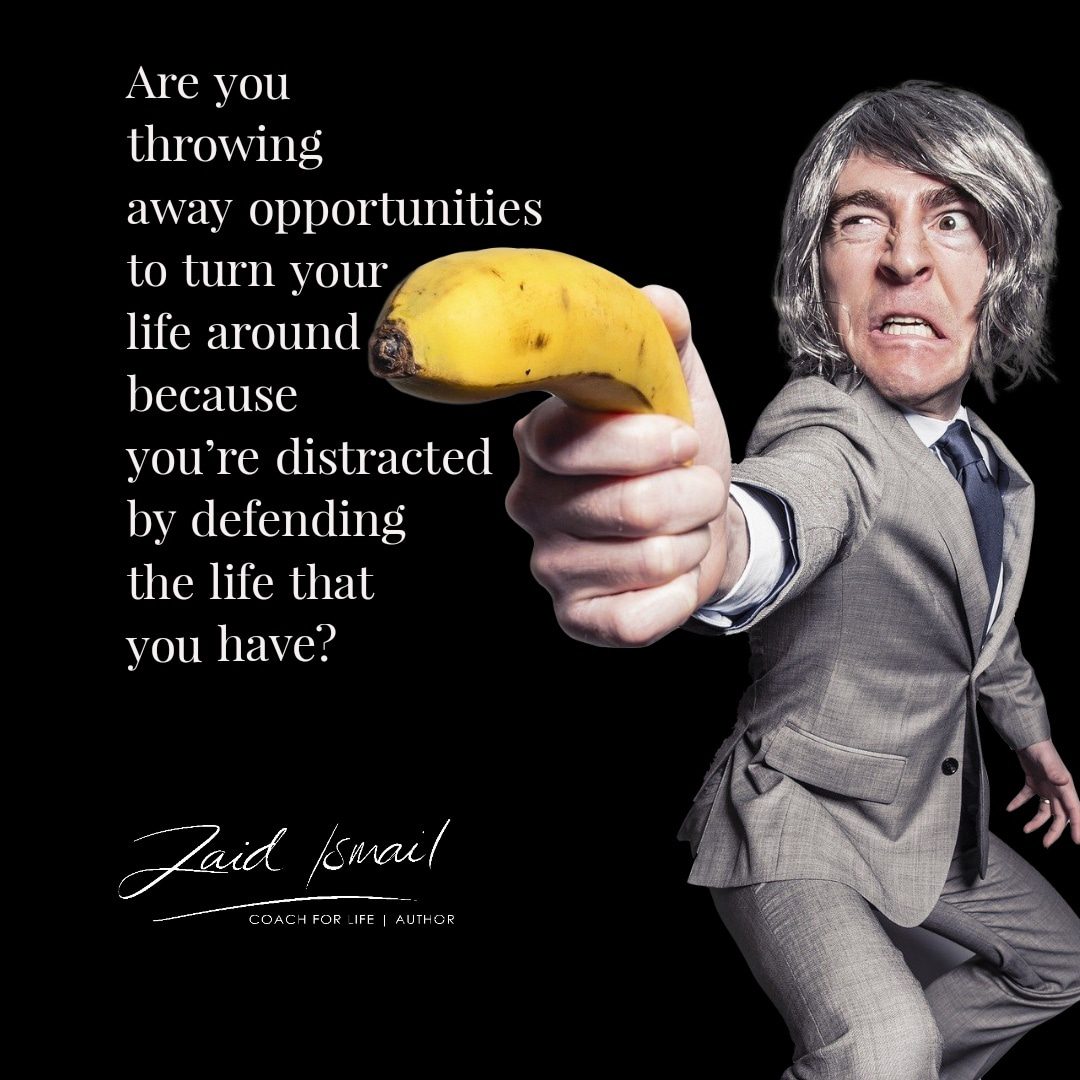
That insecurity distracts us from growing, and encourages us to defend and protect what we have.
While defending and protecting may seem necessary, or even admirable, it is driven by the fear of losing what we have, rather than allowing us to appreciate our ability to thrive despite what life has thrown at us.
There must be a healthy balance between the gratitude of what we have so that we maintain it responsibly, versus the belief that we are capable of constant improvement in the same way that we improved our lives over the years of struggle.
It’s a subtle but critical realisation that will make the difference between feeling burdened and irritable about the present, or grateful and energised about the future.
Take a moment to consider how much of your time and energy is invested in defending who you are or what you’ve achieved.
Now compare that to the amount of time and energy invested in recognising the opportunities you have to achieve even more.
Any sense of uneasiness or unhappiness at the thought of that is an indication of how much you’ve been taking yourself and your life for granted.
Own Your Life.
#hope #expectation #sincerity #selfworth #selfawareness #mentalhealth #mentalhealthawareness #mentalhealthrecovery #theegosystem #ownyourlife #lifecoaching #zaidismail #loveyourself #lifegoals #motivation #optimism #purpose
Category: Appreciation
-
Are you throwing away a good life?
-

Eat more humble pie
It only tastes like humble pie when we feel humiliated after being corrected.
Arrogance is the belief that we’re better…humility visits us when we realise that we’re not.
The root of arrogance is insecurity, but that’s a discussion for another day.
If we’re sincere about wanting to benefit others or wanting to create good for those around us, when we get it wrong and we’re corrected, we’ll appreciate it.
In such cases, we’ll eat gratitude pie, not humble pie, right?
So, when it feels like we’ve been made to eat humble pie, we need to consider what our intention was behind what we did before we got things wrong.
On the surface, our intentions always appear noble.
But it’s that appearance of nobility that distracts is from sincerity.
When connecting with or checking your intention, be sure to dig deeper than what you experienced in that moment.
It’s only when we connect with our intention, our true intention, that we’ll be able to recognise how others are not deliberately malicious or selfish in their actions.
Instead, it will allow us to connect with empathy to the emotional needs that they have.
That’s how we break cycles of unhealthy behaviours.
Perhaps if we eat more humble pie we’ll discover gratitude? 🤔
#selfworth #selfawareness #ownyourlife #selfmastery #mindfulness #personalpower #mentalhealth #mentalhealthawareness #mentalhealthrecovery #theegosystem #lifecoaching #zaidismail #loveyourself #lifegoals #motivation #optimism -
Who makes you feel worthy?
Confidence comes from caring less about what others think of you, and caring more about what you think of yourself.
The question is, do you know yourself well enough to have an informed opinion of who you are?
When we rely on others for more than just feedback and instead allow them to validate who we are, we essentially give them the power to define how we feel about ourselves.
Listening to what others think of you must be done with one single focus in mind.
It must be with the objective of determining whether or not the message that you intended was in fact the message that they received.
But that means that you must know what your message is.
What is your unique contribution?
Chances are good that a lot of the good that you do, you simply see it as duty or responsibility.
And yes, the outcome that we must achieve may be our responsibility or our duty towards others, but how we achieve that outcome and how we make them feel in the process is uniquely us.
When we lose sight of that, we lose ourselves to duty.
When we lose ourselves to duty, we feel worthless when our contribution is not appreciated, because our self-worth has grown to be defined by how much others acknowledge and appreciate our efforts towards them.
That’s when ingratitude for the self kicks in.
When we diminish who we are because we’re not validated by someone else, we essentially convince ourselves that all the good that we possess is worthless, because it’s not appreciated by one who probably doesn’t appreciate themselves either.
So. So you know yourself well enough to appreciate who you are? Or is your self-worth nothing more than an affirmation in the mirror?
#selfworth #selfawareness #ownyourlife #selfmastery #mindfulness #personalpower #mentalhealth #mentalhealthawareness #mentalhealthrecovery #theegosystem #lifecoaching #zaidismail #loveyourself #lifegoals #motivation #optimism #purpose -
Who goes first?
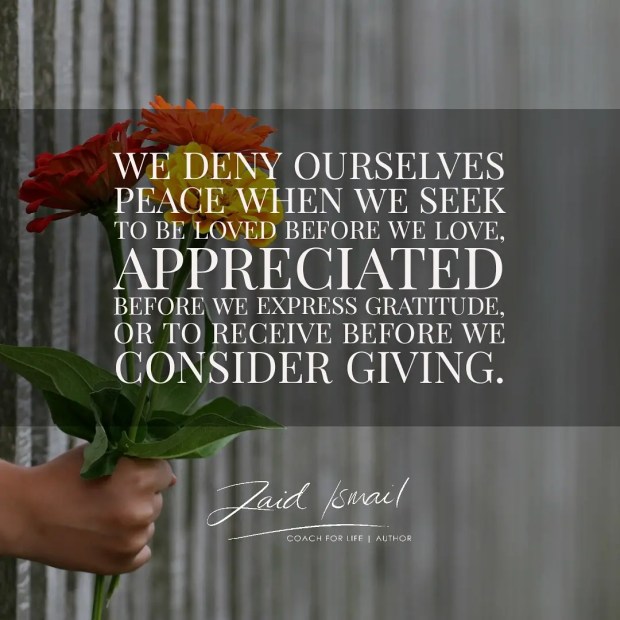
If you find yourself among people who constantly demand that you give without receiving, or love without expressing affection in return, guard your soul.
As much as we wish to fill the cups of others with goodness in this world, we must not deplete our own in the process.
By indulging such selfishness from others, you enable and encourage them to continue denying themselves the same peace that is elusive to you.
When we focus on how the bad behaviour of others is harming themselves, rather than only focusing on how it harms us, we take a huge step closer to breaking the cycle of harm instead of just challenging the behaviour.
The same way in which we’d love for someone to correct us when we don’t realise that we’re wrong because we don’t want to deliberately harm others, we must consider that someone behaving badly may not realise the impact of their actions.
But, unless we’re connected with true gratitude about who we are, we’ll feel attacked long before we try to understand the struggle of others.
Focus on building yourself up, so that you may be able to build up those around you.
If everyone is going to wait for everyone else to make the first gesture, we’ll all sit back believing we’re victims of each other, while not realising that we’re victims of our own self-worth.
#selfworth #selflove #selfawareness #selfrespect #mindfulness #theegosystem #mentalhealth #mentalhealthawareness #mentalhealthrecovery #ownyourshit #ownyourlife #abusiverelationships #badmarriage #selfishlove #lifecoaching #zaidismail -
What are you really waiting for?
In order to know what’s not right, you need to know what right would look like.
Or feel like.
Or taste like.
Just because you don’t know how to make it right, doesn’t mean you have to accept and live with what’s wrong.
But sitting back and growing frustrated at your condition without trusting yourself to know that it can or must be better is a self-imposed constraint over your happiness.
Think of your life as your favourite meal.
Eventually, as life happens, the free who prepared that meal for you leaves your life, or you leave theirs.
But, your new partner doesn’t know how, for example, your mom or dad, used to prepare that meal for you, so they try their best to make it the way that you like it.
Despite their best efforts, they just don’t get it right.
At that point, you have some choices to make:
1. Blame them for not doing enough
2. Understand that they can’t recreate something if they don’t have the knowledge or abilities to do so
3. Accept that your favourite meal cannot be recreated, so you need to discover a new favourite
4. Work with them in trying to figure out how to create it, so that together, you can once more create what you once loved
If you choose 4, you will also be creating space for you and your partner to discover something beautiful together.
You’ll have less reason to blame them for being inadequate, and more reason to play an active part in creating your joy with them, rather than holding them responsible for creating it for you.
The most important point being that we must avoid the assumption that if someone isn’t doing what we told them we want or need from them, that they’re withholding it out of spite or selfishness, when the truth is more likely to be that they honestly don’t know how because they didn’t have in their life what we had in ours.
This is how we begin to create space for new joy in our life, instead of wasting life away while lamenting the loss of what we once had.
#selfawareness #selfrespect #mindfulness #inspiration #goals #theegosystem #justbeyou #mentalhealth #mentalhealthawareness #mentalhealthrecovery #ownyourshit #ownyourlife #problemsolving #lifecoaching #zaidismail -
Gratitude spawns respect
Disrespect is often followed by discipline, or some other form of consequence management.
While there is a need to correct bad behaviour, we can either spend our lives correcting that behaviour, or we can recognise that it’s a symptom of something else.
That something else is the absence of gratitude.
No. Not gratitude for what we have. Because that’s the other mistake we make.
When we consider what we’re grateful for, we look around us, but rarely within.
This is true for all humans, children and adults alike.
Disrespect is a form of anger.
Anger is a defence mechanism used to demand significance when we feel insignificant.
Respond to the anger, and you lose sight of why there is insignificance.
Just like responding to the disrespect only will cause you to lose sight of the absence of gratitude within the one who is behaving disrespectfully.
That ingratitude is based on the belief that we’re not good enough. And we believe we’re not good enough only when we don’t value who we are, and what benefit others obtain from our contribution or our presence.
Remember, you cannot nurture something that you’re not aware of.
That’s why we take ourselves and others for granted, and end up being dismissive, disrespectful, or abusive, because we lost sight of the good within us, or them. Or both.
Photo credit : Adobe Stock
#selfworth #selfawareness #ownyourlife #selfmastery #mindfulness #personalpower #ownyourshit #mentalhealthrecovery #mentalhealth #mentalhealthawareness #lifecoaching #zaidismail #loveyourself #ownyourlife -
Fanning our rage
Fear is driven by need.
The moment we give up on the need, the fear subsides.
Our need to be significant to those who are significant to us drives most of the fears that may fan our rage at the world.
But only for as long as we still have hope that there is a chance for us to be significant to them.
When we give up on achieving that status in their lives, the fear subsides and gives way to an emptiness that carries with it no energy at all.
That emptiness feels like peace after a lifetime of struggle. But only until we realise that when that peace entered, hope departed.
Thus, the dulling of the soul begins.
Quietly receding, carefully subduing, and slowly disappearing from the lives of those we once courted.
Until, eventually, we successfully fade from our own life.
Some see it as a cowardly surrender. Or perhaps a convenient choice.
If only it was convenient to be invisible, more would choose that over self destruction, or suicide.
When we stop paying attention to those who seek us out, we surround ourselves with those we seek instead.
If we don’t find a balance between the two, we’ll find the isolation that accompanies being both, looking for a place to belong, but finding none.
Photo credit : Adobe Stock
#selfworth #selfawareness #ownyourlife #selfmastery #mindfulness #personalpower #ownyourshit #mentalhealthrecovery #mentalhealth #mentalhealthawareness #lifecoaching #zaidismail #loveyourself #companionship #soulfood #soulmates #foreverincomplete #fuckit -
Are you grateful for you?
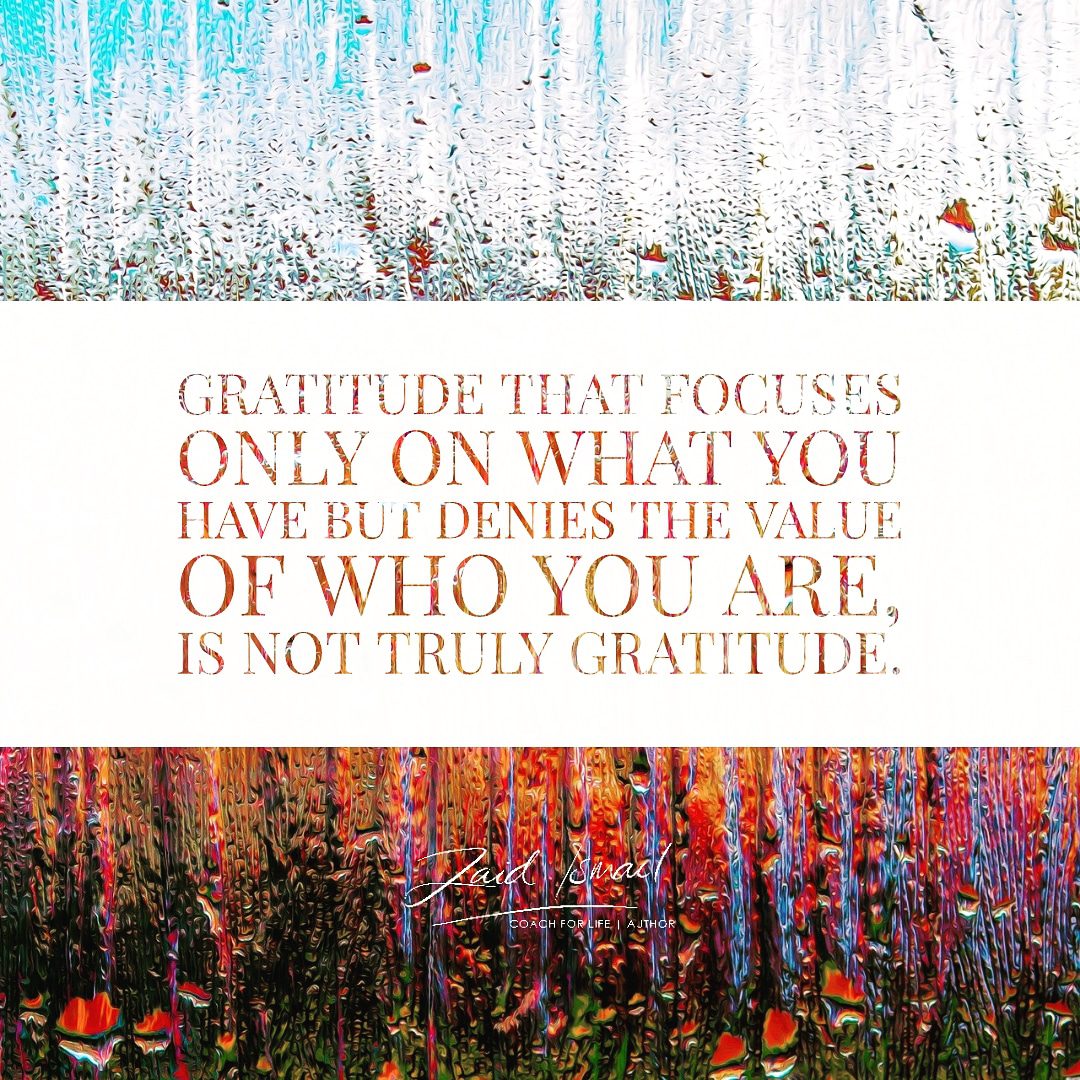
Whenever asked about gratitude, the inevitable response is one that is focused on everything we have around us.
Sometimes, we consider our health and our skills.
At other times we recognise the value of things not being as bad as they could have been.
And we convince ourselves that this is being grateful.
But how often do we stop to contemplate gratitude for the traits and attributes that we have which makes our appreciation of all of that possible?
How often do we stop to appreciate the essence of who we are, and the tough and selfless choices that we made under difficult circumstances, when we could easily have taken the selfish or easy way out?
This is not about judging the choices that we’ve made, but about recognising how we still showed up, with conviction, to do our best to make something good out of a bad situation.
You cannot nurture that which you don’t acknowledge to be true. So how are you going to nurture the value of who you are, if your gratitude is only focused on what you have?
Striking a balance between selfishness and gratitude for the self is what makes the difference between being defined by your struggles in life, versus defining the outcomes of the struggles of your life.
You won’t be able to determine the difference if you lack gratitude for who you are, and what your contribution is towards improving the state of your life, and the lives of those around you.
The next time you contemplate what you’re grateful for, be sure to include yourself in that moment of reflection.
Photo credit : Adobe Stock
#selfworth #selfawareness #ownyourlife #selfmastery #mindfulness #personalpower #ownyourshit #mentalhealthrecovery #mentalhealth #mentalhealthawareness #lifecoaching #zaidismail #loveyourself #gratitude #appreciation #compassion #kindness