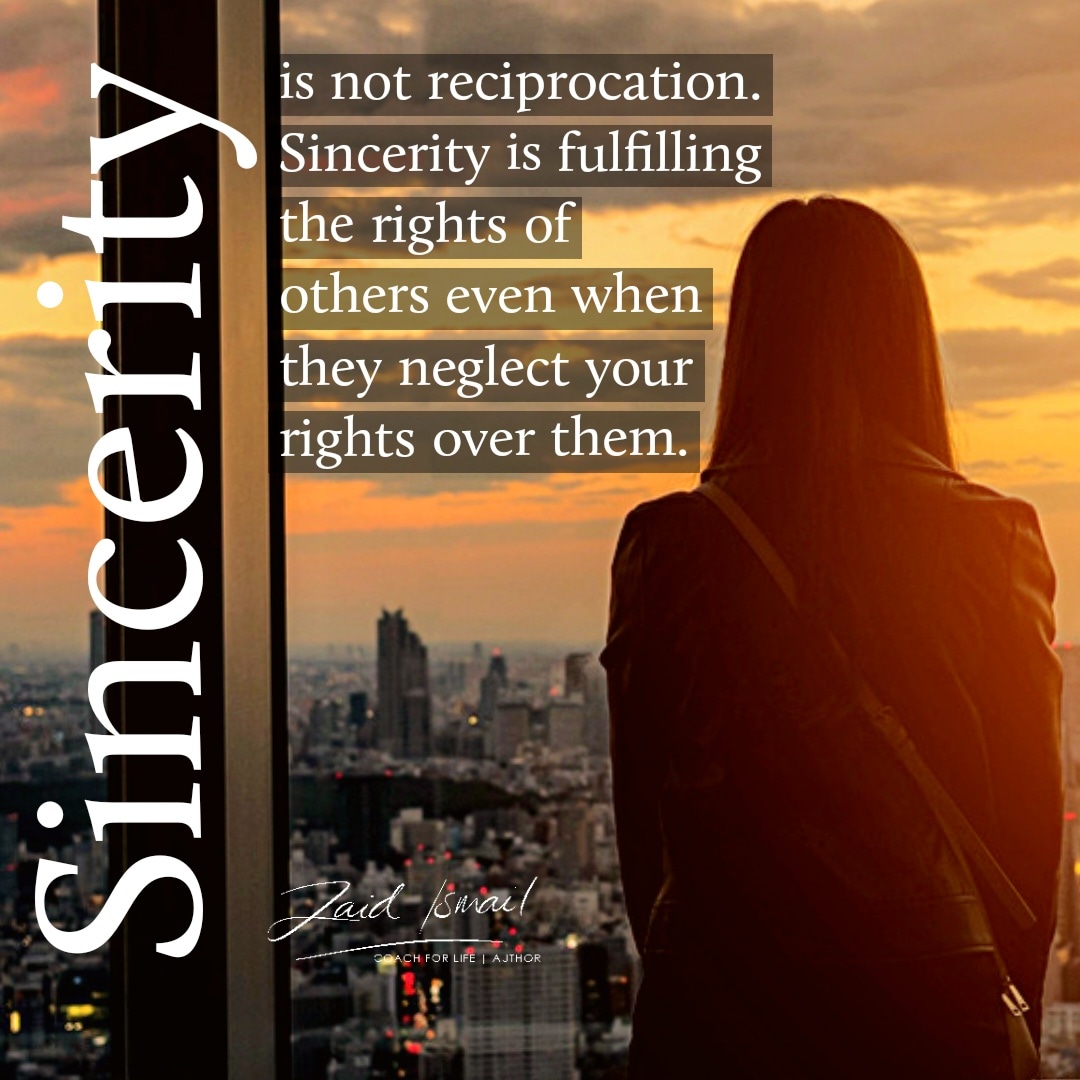
Our sincerity is tested when we’re faced with the opportunity to contribute in kindness, while being treated with disregard or ingratitude.
But it’s not our sincerity towards others that is tested.
It is the sincerity of our convictions about what we hold true as principles to live by.
We lose the best of who we are, when we abandon it in the face of neglect from others.
When we withhold our contribution because we’re afraid that it won’t be appreciated, or repaid in kind, we diminish who we are to become like who they are.
Of course, in everything, there must be moderation.
And the moderation in this is that we must be mindful of when our selfless contribution may be enabling their selfish behaviour, or validating their ingratitude.
So give without the expectation of receiving, but don’t give to the point where you exhaust yourself while feeding the ungrateful mindset of one who feels entitled without good cause.
Moderation is key in everything that you do, except your expression of gratitude.
And sometimes, that gratitude is expressed by withholding your contribution from others because you want them to experience gratitude for what they keep taking for granted before you continue to give.
It always starts with you.
#hope #expectation #sincerity #selfworth #selfawareness #mentalhealth #mentalhealthawareness #lifecoaching #zaidismail #loveyourself #lifegoals #motivation #optimism #purpose #companionship #compassion
Category: Appreciation
-
When your sincerity is tested
-

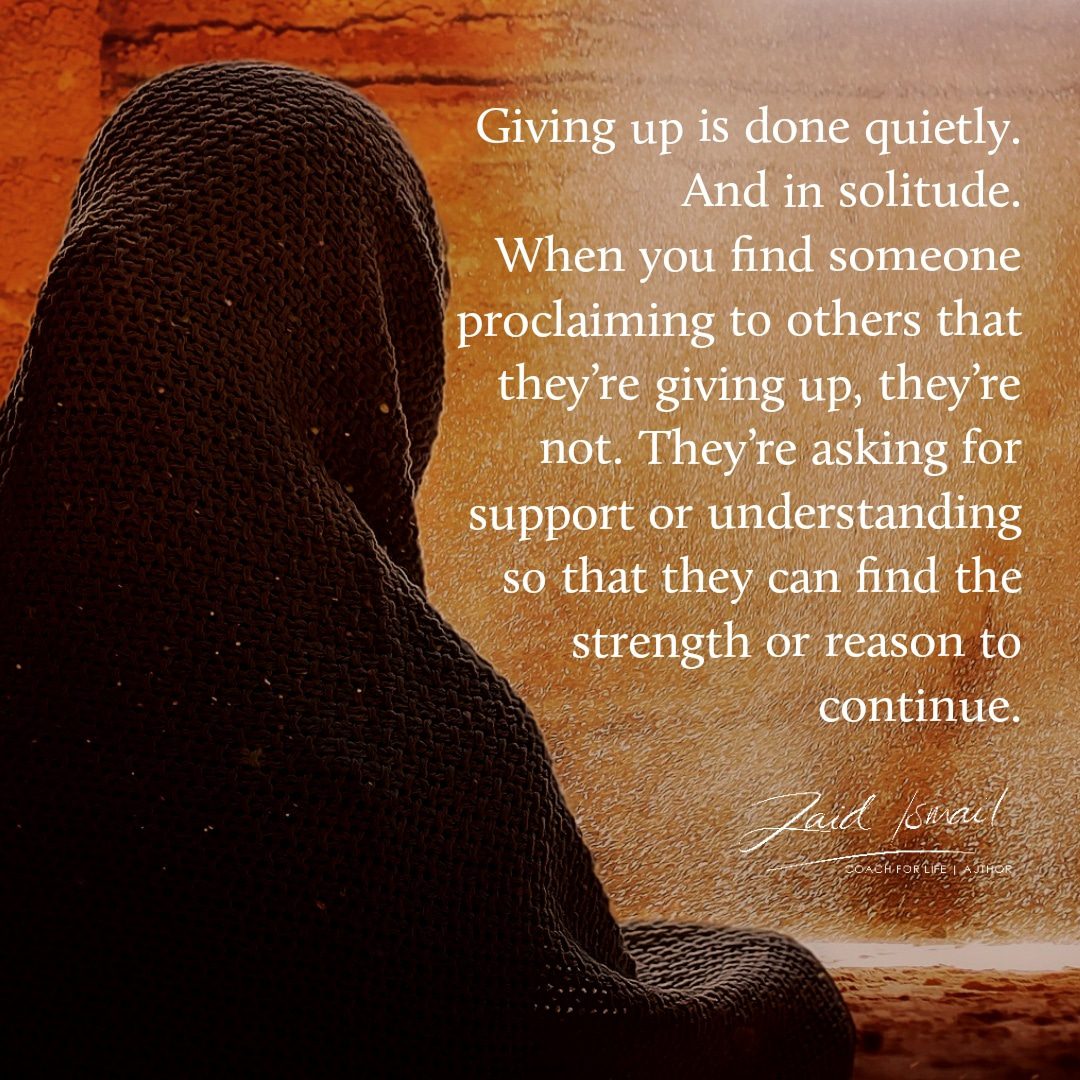
Dreams are abandoned in silence
No one celebrates their defeat, or their surrender.
When they appear to be doing so, they’re looking for empathy or assistance to overcome what they’re finding difficult to deal with.
Or they’re preemptively exposing their shame to deny others the opportunity to shame them.
Giving up loudly is a test or a plea to see if what we’re struggling with is important to those around us.
It’s a means to ask for help when asking for help feels like weakness, or vulnerability.
It’s a way of raising concern about something that we’re unhappy about in company from which we feel uncomfortable asking for assistance.
And we give up silently when we’re finally convinced that it really didn’t matter in the first place.
That’s when we go quietly, without a sound or a sign, but with resolve to leave it behind and move on.
Pay attention to what your loved ones are no longer complaining about, or not asking for help on.
Silence always holds more answers than shouting out loud.
#hope #expectation #sincerity #selfworth #selfawareness #mentalhealth #mentalhealthawareness #lifecoaching #zaidismail #loveyourself #lifegoals #motivation #optimism #purpose #theegosystem #ownyourlife -
Betrayed expectations
Without realising it, expectations create an underlying sense of entitlement regarding the outcomes that we want.
That entitlement is what influences our attitude and demeanour in how we approach things or relationships.
When we feel justified to have such expectations, we lose sight of the entitlement, which leads to the intensity of emotion that we experience when our expectations are not met.
That intensity of emotion is the sense of betrayal that we feel because entitlement is based on an assumed trust between us and the person who we believe was supposed to show up for us.
Problem is, most times, that expectation is in our heads and is unknown to the ones around us.
Sometimes we communicate it, but most times we don’t.
We need to trust the sincerity behind what significant others do for us, that’s why we are unlikely to tell them specifically what we need from them for two reasons.
Firstly, once we ask for something, we don’t know if they’re doing it out of obligation, or sincerity.
And secondly, we don’t want to appear needy or vulnerable, assuming that we’re even aware of the expectations that we have of them.
Mindfulness is key to healthy relationships. And healthy relationships are ones in which we can trust each other with our expectations of what’s important to us, without feeling like an imposition on the other.
How healthy are your relationships? And more importantly, how healthy is your relationship with yourself?
#selfworth #selfawareness #ownyourlife #selfmastery #mindfulness #personalpower #mentalhealth #mentalhealthawareness #lifecoaching #zaidismail #loveyourself #lifegoals #motivation #optimism #purpose #companionship #mentalhealthrecovery -
Gratitude starts with you
The very essence of gratitude lies in recognising the value of what we have.
That sounds obvious, yet so many take for granted the lives that they have while yearning for a life that feels out of reach.
The moment we long for something that isn’t there, we risk taking for granted that which is there.
When we focus on what we don’t have, we’ll be focused on the shortcomings and flaws of what we do have.
This applies to both people and things.
We grow distracted by what we believe we deserve when we don’t trust those around us to be concerned about what we need.
That lack of trust is due to many reasons, most of which relate to how we see ourselves.
But, most importantly, the underlying expectation that accompanies such a focus on what we believe we deserve means that we feel betrayed each time we don’t get what we need.
Expectation, by default, carries with it a sense of entitlement. That’s why we feel betrayed when our expectations are not met.
But back to gratitude. If you look at what you get from others, and you assume that it’s simply their duty or obligation to provide it, then you won’t appreciate the blessing contained in what they provide, regardless of their reasons for providing it.
That’s how we become ungrateful without meaning to.
That’s how life becomes transactional.
That’s how happiness and peace becomes elusive.
It always starts with you.
Own Your Life.
#hope #expectation #sincerity #selfworth #selfawareness #mentalhealth #mentalhealthawareness #mentalhealthrecovery #theegosystem #ownyourlife #lifecoaching #zaidismail #gratitude #appreciation -
Don’t test the ones you love. Love them.
Ever find that despite your best efforts, someone close to you just never appreciates what you do for them?
Ever feel like you’re having to fulfil their expectations in detail about how to do something the way that they want you to do it before they are satisfied with you?
Even then, when you do that thing exactly the way they wanted you to, they then question your sincerity.
“You only did it because I asked you to!”
Does that sound familiar?
Damned if you do and damned if you don’t.
The reason that they treat us that way, or even why we may treat others in that way is not because we’re questioning their sincerity, it’s because we doubt our significance to them.
When we feel insignificant, we test others, often in passive aggressive ways, to see if we’re really important to them.
The only reason we test them is because we don’t appreciate them. And then we hold them responsible for how we don’t appreciate ourselves either. That’s why we test them.
When we look for kindness to be packaged in a specific way, we lose sight of the kindness or affection that they offer of their own accord, in their own way.
When we expect others to express their appreciation, or affection towards us in a specific way, we not only diminish who they are, we also show ingratitude for their sincere efforts towards us.
Then, when they pull away because they feel unappreciated, or taken for granted, or worse, because they feel invisible, we convince ourselves that we were right about their insincerity to begin with.
Self-loathing is the root of most relationship problems.
Don’t hold your partner or significant others responsible for how you feel about yourself.
If you don’t appreciate who you are, you give others permission to take you for granted.
It always starts with you.
#hope #expectation #sincerity #selfworth #selfawareness #mentalhealth #mentalhealthawareness #mentalhealthrecovery #theegosystem #ownyourlife #lifecoaching #zaidismail #loveyourself #lifegoals #motivation #optimism #purpose -
The gift of who you are
It’s human to feel fatigued or despondent.
But, it’s not human to give up.
We’re wired to persevere. To overcome. To prevail. To improve what we have around us.
When we feel oppressed in our efforts to achieve these ends, we either grow despondent, or we grow aggressive.
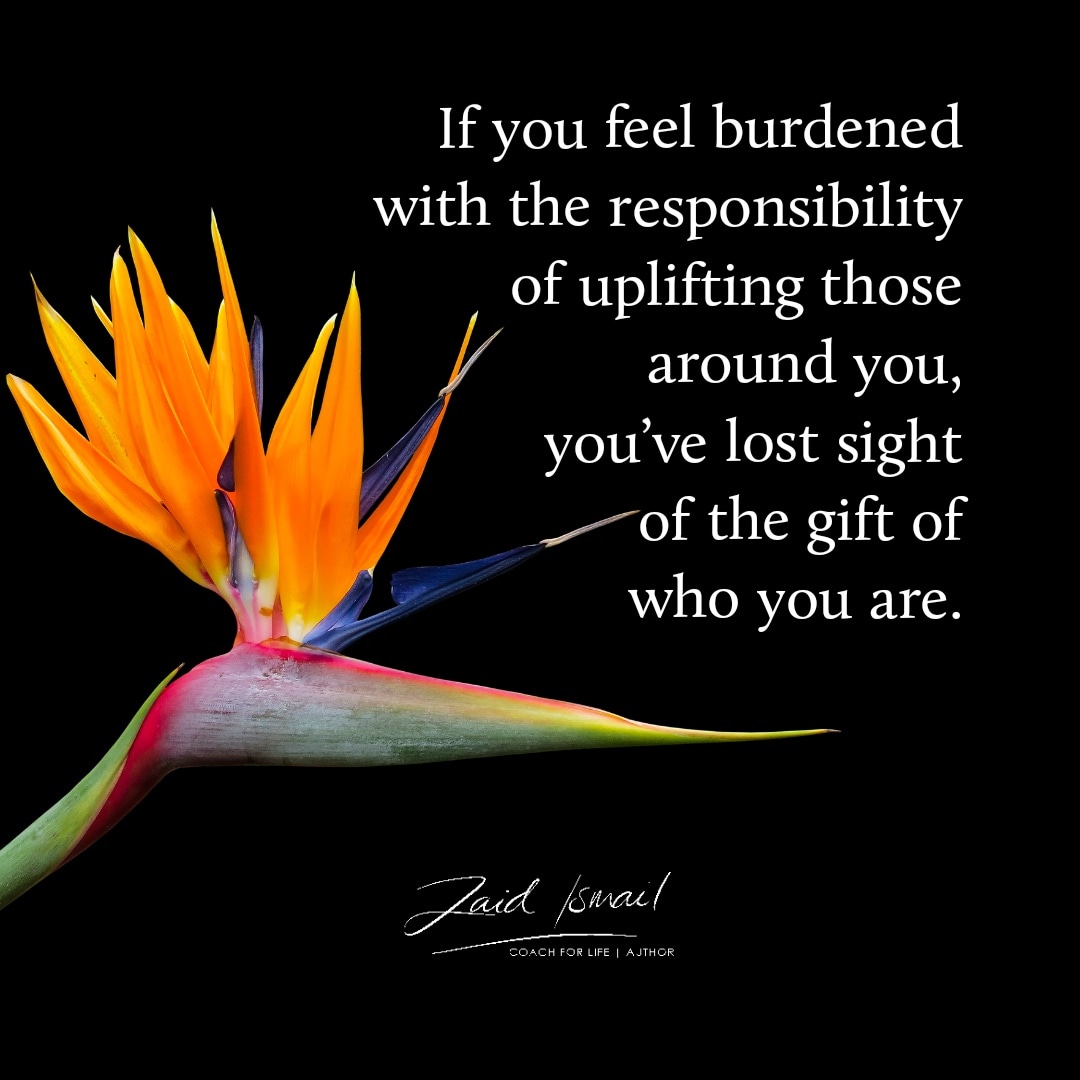
Both those reactions are an indication that we’ve lost sight of the gift of who we are.
When we feel burdened, we’re focused on whether our efforts will be appreciated, accepted, respected, or rejected, etc.
That means that we’re more focused on being significant in that moment, or in that relationship, rather than connecting with the value of what brings us joy that we want others to experience with us.
But, just like a gift, if we buy something for someone because we like it, without any concern about what they think of it, then we’re not really buying that gift for them, are we?
Similarly, when we find joy in living life a certain way, or connecting with an experience in a certain way, and we want to share that with others, our focus must be on how do we connect them to that experience. Not on whether they appreciate our efforts or trust our opinion about why that experience is important.
In other words, if your gift to someone is sincere, you don’t force them to like it. You put in the time and effort to understand what and how they would experience something they love, and try to gift it to them in that way. After all, it’s for them.
We find joy in connecting with others in that way.
The same must be true about offering the best of who you are to those around you.
Of course, you need to first appreciate who you are before you’ll be able to connect others to that joy within you that you want them to experience with you.
So, as always, the question is simple. Do you know yourself well enough to appreciate the gift that you hold within?
It always starts with you.
#hope #expectation #sincerity #selfworth #selfawareness #mentalhealth #mentalhealthawareness #mentalhealthrecovery #theegosystem #ownyourlife #lifecoaching #zaidismail #loveyourself #lifegoals #motivation #optimism #purpose -
Break the cycle
Character is what is built when we are faced with trials.
Beauty is what we appreciate when we emerge from those trials.
Those that have the greatest scars are the ones that appreciate life the most. But only if they don’t allow themselves to grow bitter in the process.
After hardship comes ease, provided we don’t hold on to past hurts and betrayals.
When we demand justice or retribution without understanding, we exchange places with those who oppressed us.
That’s how we grow to be like the one who hurt us, because we become defined by the hurt in the same way that their hurt drove them to hurt us.
The cycle is broken only when we seek to understand why, so that acceptance is possible, and forgiveness is sincere and not burdensome.
Otherwise, forgiveness becomes an indulgence of our ego, rather than a true effort towards moving forward with peace in our heart.
Break the cycle.
Seek to understand.
First your own pain.
Then only will you grow to understand the pain of others.
It always starts with you.
#hope #expectation #sincerity #selfworth #selfawareness #mentalhealth #mentalhealthawareness #mentalhealthrecovery #theegosystem #ownyourlife #lifecoaching #zaidismail #loveyourself #lifegoals #motivation #optimism #purpose #forgiveness -
Are you waiting for permission to be who you want to be?
Note, who you want to be, not what you want to be.
We’re so focused on what we want to be, what career, what achievements, what social standing, that we lose sight of who we want to be.
That’s how we become defined by what we are, or what goals we are pursuing.
Who we want to be refers to the kind of human we want to be.
It sounds simple enough. Everyone wants to be kind, generous, understanding, compassionate, benevolent, and so on.
There isn’t a single person that will say that they don’t want to be those things, and many who think that they are already that.
So why then are we not experiencing others the way that we all claim we are conducting ourselves?
It’s because we wait for permission to express kindness, understanding, and all those other beautiful attributes.
That permission comes in the form of needing others to behave a certain way, or to treat us the way that we want to be treated before we’ll be good and loving and understanding towards them.
That permission is what we get when we want to feel appreciated before we show gratitude, or we want to feel loved before we express affection. And so on.
When we wait for such permission, we become defined by how we are treated, and thus, we become part of the harshness or coldness that we experience in our lives.
So, who do you want to be?
Are you who you want to be, or are you waiting for permission to be that person?
Your life is yours to claim. It always starts with you.
#hope #expectation #sincerity #selfworth #selfawareness #mentalhealth #mentalhealthawareness #mentalhealthrecovery #theegosystem #ownyourlife #lifecoaching #zaidismail #loveyourself #lifegoals #motivation #optimism #purpose