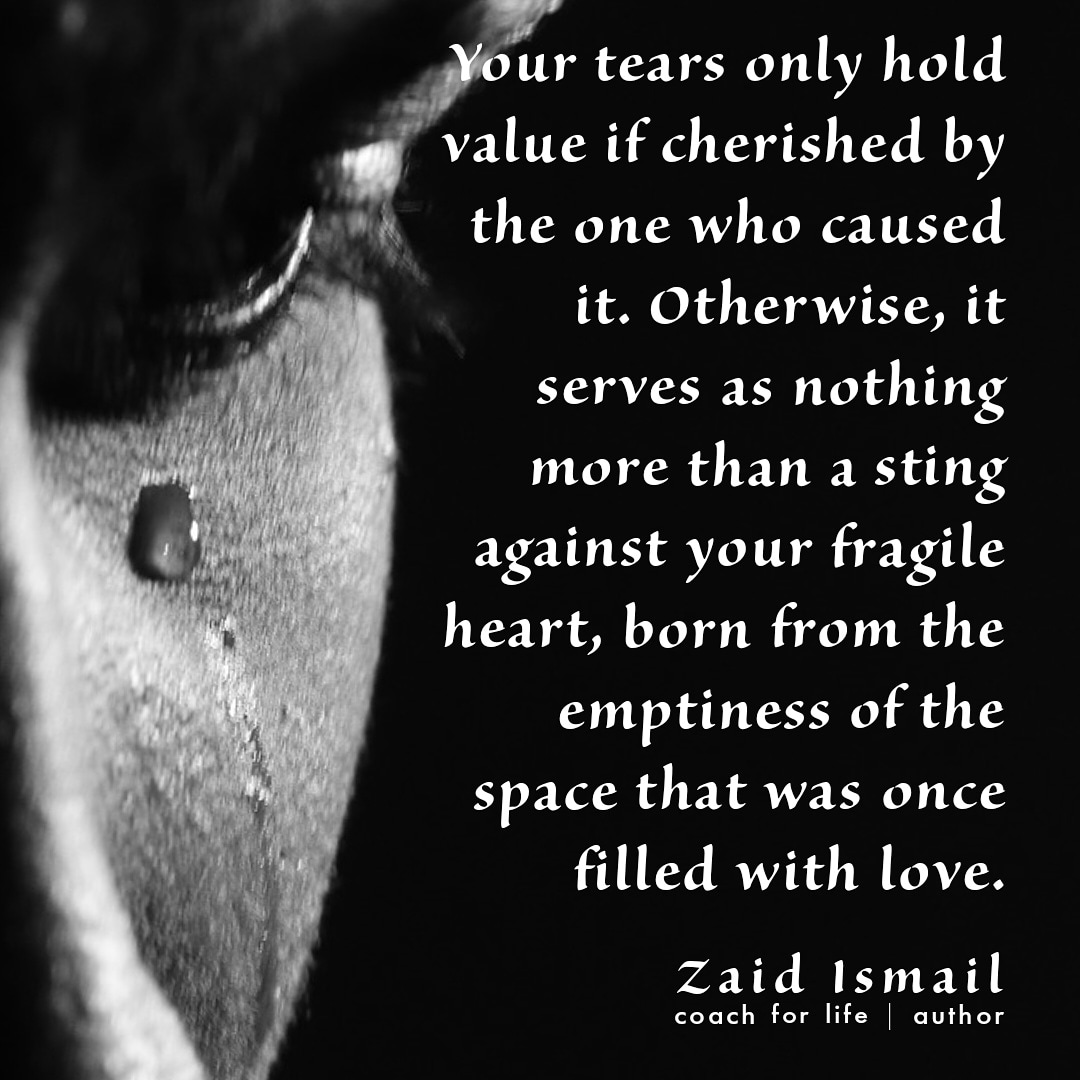
Sometimes your tears are a mourning of what was, and at other times it’s a yearning for what could have been.
More than this, it’s a path to the gentleness of your soul that is oppressed by the trials of life.
When your heart stops yearning for what was, or what you wish could be different, your tears begin to forge a new path. A path towards the hope that you struggle to subdue.
Just like rocks do not bleed, a hardened heart cannot cry. Beloved, take joy from the gentleness that you still possess despite the horrors of your past.
Any bitterness that we court denies us the joy that we deserve, and any joy that we court denies them the bitterness that they hoped to share.
Their bitterness is their heritage of a trial that is not yours to bear.
Breathe, beloved. Breathe. And know that your tears, if shed for them, holds no value for a hardened heart.
If tears must flow, let it flow to forge new paths of joy to replace the failed hopes of the past. But celebrate your tears as testament to the beauty of your soul, and not as regrets for having invested in a heart that was closed to joy.
Photo credit : Adobe Stock
#anincompletelovestory #love #romance #companionship #soulfood #soulmates #authorsofinstagram #romancenovel #mybeloved #zaidismail #lovestory #gbv #abusiverelationship #domesticviolence #selfworth #selflove #selfawareness #selfrespect #mentalhealth #mentalhealthawareness #mentalhealthrecovery
Tag: mybeloved
-
Rocks don’t bleed
-

Tainting a beautiful soul
Betrayal of trust always cuts deeper than any other wound that we endure in life.
A trust of the heart is an offering of the most sacred parts of who we are to those whom we believe will add to its beauty, and its peace.
When it is held sacred by the ones with whom we share it, it explodes into fountains of light, beautifying everything that it touches…including the hurts of the past.
When it is treated flippantly, it turns into caves of darkness, offering us protection from the shame of having had our sanctity violated by one so dear.
From deep within that cave, any light that enters threatens to disembowel what little dignity we have left.
Sometimes we flirt with that light, believing that it’s still possible to have the remnants of light in our soul join in the splendour of the beauty that we know is possible.
For a while, we grow bold, believing that the sanctity of us may yet be cherished by another. Until we’re reminded that it is that same trust that created the space for the darkness of another to snuff out our light.
So we withdraw. Any promises made to that point fade from view, and our trust becomes seasonal. Turning us into the darkness that seeks to destroy someone else’s light before they get a chance to destroy our own. Again.
It’s an unintended vengeance against other than the brute that ravaged our soul. But it carries with it the promise of safety, and the promise of once more being whole.
Thus, an unfulfilled vengeance, shreds a beautiful soul.
Photo credit : Adobe Stock
#love #vengeance #hate #betrayal #trust #companionship #soulfood #soulmates #anincompletelovestory #mybeloved #zaidismail #lovestory #authorsofinstagram #romancenovel #relationshipgoals #whatdreamsmaycome #narcissism #narcissisticabuse #mentalhealth -
The broken cup
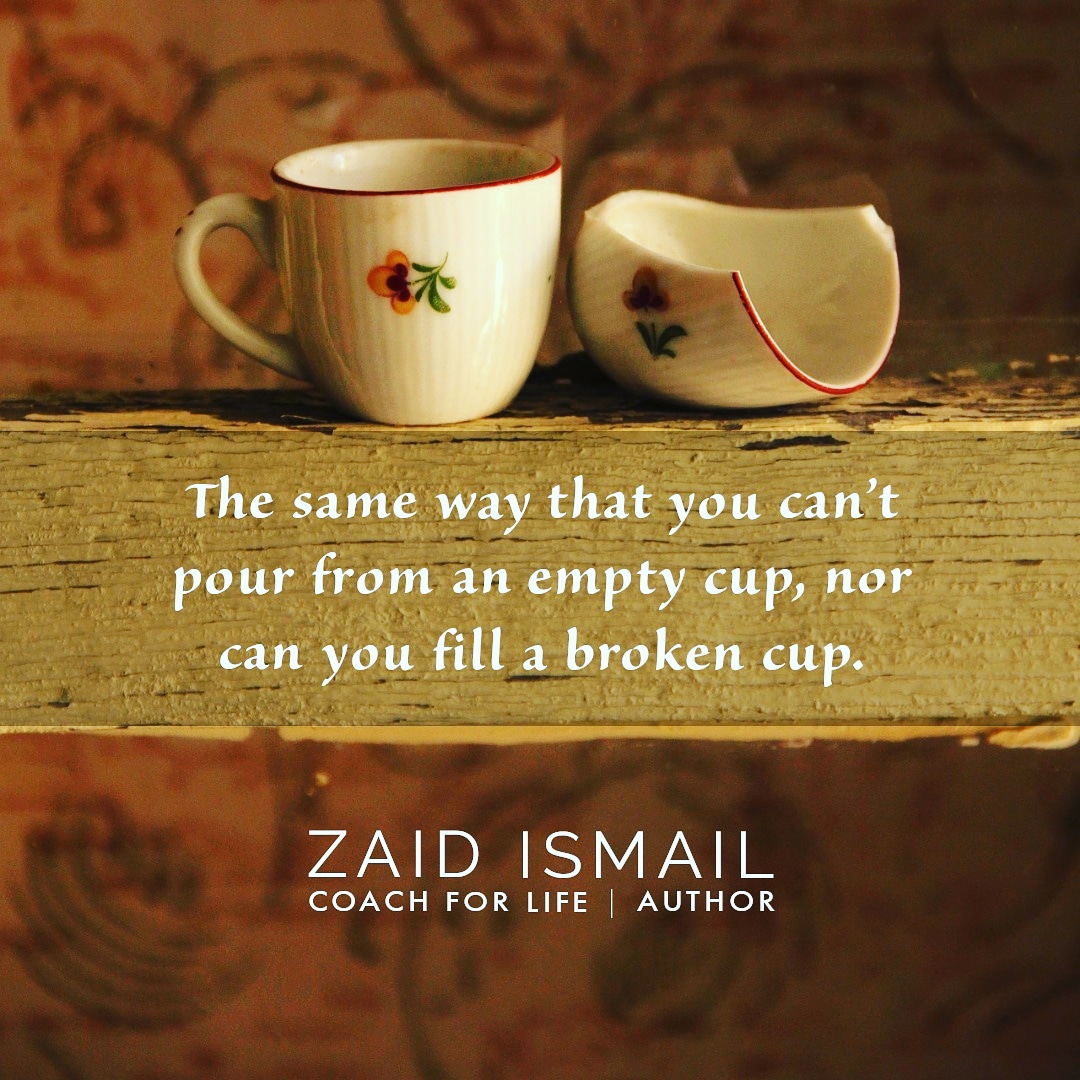
Too often, our focus is on how empty is our own cup.
Sometimes it takes a while before we realise that we’re not taking care of ourselves as we lose ourselves in our concern for others.
So we begin to focus on filling our cup so that the emotional fatigue can finally be overcome.
Sadly, we don’t stop to consider if we’re capable of filling our cup because we don’t realise that it may be broken.
Wounds from the past leave cracks and breaks in spaces that we hope others will mend, not realising that only we hold the key towards mending those cracks.
Sometimes, we don’t realise that someone we love may have a broken cup, and we exhaust ourselves in trying to fill their cup, believing ourselves to be inadequate in our efforts to make them feel loved enough to want to love us in return.
That’s why it’s important to heal before you try to find a home for your heart.
And equally important is the realisation that sometimes it’s not your inadequacy that makes it difficult for them to love you back, but rather their belief in not being worthy of your love that prevents them from embracing you.
Breathe, beloved…slow, rhythmic, deep breaths that fill those spaces left by the calloused hands that handled the most fragile parts of you.
Breathe. Be whole. And then return to love.
Photo credit : Adobe Stock
#hope #expectation #sincerity #selfworth #selfawareness #mentalhealth #mentalhealthawareness #mentalhealthrecovery #selflove #mybeloved #zaidismail #emptycup #anincompletelovestory #relationshipgoals #love #romance #companionship #soulfood #soulmates -
The struggle of faith
It is our belief in the value of something that drives us towards fighting to protect it.
We cherish that which we appreciate, and we appreciate that which we value.
Call it conviction in the value of the outcome, or belief in the beauty of its truth. Whatever it is, it is that unwavering faith in what we cherish as a truth that spawns the trials that we face when protecting or defending that truth.
As is often said, when you stand for nothing, you’ll fall for anything. What isn’t said often enough is that when you stand for something, you’ll be plagued by everything that is threatened by what you stand for.
Such is the burden of faith.
Whether it is faith in the divine, or faith in the beauty of creation, faith compels us to protect and nurture that which we hold dear.
For those who lack such faith, destroying or abusing what we cherish goes unnoticed, leaving us to contend with the destruction they leave in the path of their obliviousness.
We contend with their destruction because of our faith in the value of what they threaten to destroy.
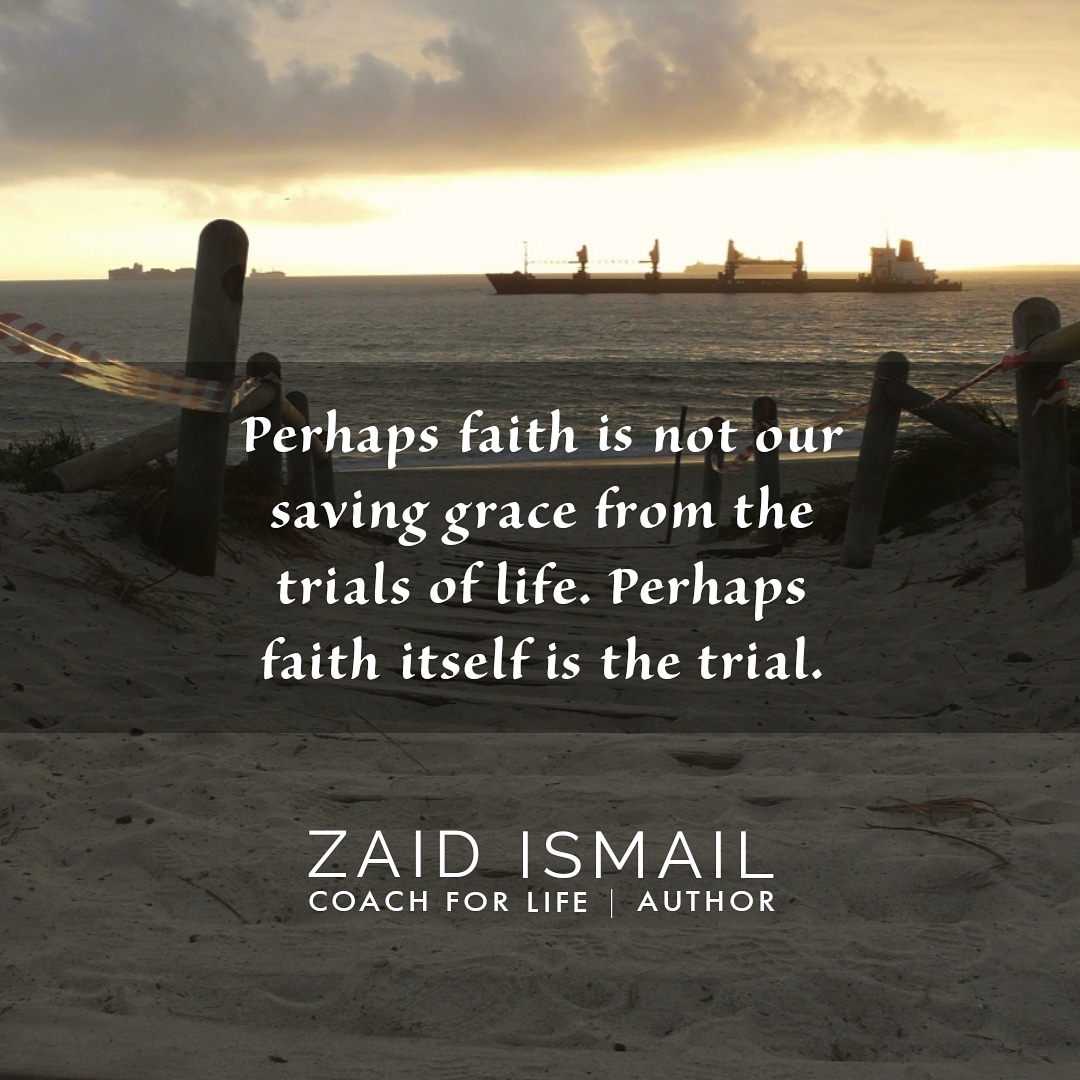
Thus, holding on to that faith becomes the trial itself, when letting go holds the promise of ease from those struggles.
But ease itself holds no value if it leaves a gaping hole where we once had fulfilment or joy.
That’s why we hold on to faith. Not because we are afraid of letting go, but because we are afraid of feeling empty, or unfulfilled, after having felt, even for a brief moment, complete.
#faith #hope #love #companionship #soulfood #soulmates #anincompletelovestory #mybeloved #zaidismail #authenticity #ownyourshit #ownyourlife #theegosystem #embracingME #motivation #optimism #mentalhealth #mentalhealthawareness #mentalhealthrecovery -
The personification of madness
Perspective, when shared, provides a sense of sanity and inclusion.
It convinces us that what we see is not a figment of our imagination, and therefore must be real.
Perception is what convinces us of our place in this world. It suggests that we belong in spaces where others see what we see.
Madness, is therefore the absence of such a shared perception.
Madness is what we feel when we search for familiarity in what appears obvious to us, or at least, what we wish others would see because of the beauty or the pain that it offers.
Not finding such familiarity isolates us in our own reality, leaving us questioning our grasp on what we once believed to be true.
Thus, the sane begin to appear insane, and the source of our sanity begins to feel like the source of our insanity.
Reality doesn’t exist. Only perception does.
The more we find others who hold a similar grasp of what we’re experiencing, what beauty we see in others, or what horror we see in the vile, the more comforted we feel about the experiences of our lives.
In the absence of such familiarity, insanity draws nearer as we question what we once were convinced to be an absolute truth, the sanctity of which we cannot even dare to think of abandoning.
It is at that moment that it feels like the world has gone mad, and that there just isn’t enough of us left to resurrect its sanity.
Perception, therefore, is what makes or breaks a life. Those who are skilled at holding on to their perception despite the reality around them conflicting with their perception, are the ones who ultimately appear insane.
It’s all relative. Until we try to understand that relativity, kindness will forever be elusive.
Photo info : A shipwreck in Cape Town that has often resonated with my perception of life. Firmly grounded in the earth, the relentless waves of madness around it, staring defiantly at the incessant storms that approach. Madness personified.
#hope #hopelessness #foolishness #romanticdelusions #relationshipgoals #realitysucks #mentalhealth #ownyourshit #mybeloved #zaidismail #madness #insanity #itdoesntmatter -
All that matters is right now…
Reminiscing about the good old days becomes a toxic trait when it distracts us from what we have now.
Our distracted state is what causes us to lose sight of what we have, so that at some future point, we may once more reminisce about what was.
Such an indulgence, when done in excess, convinces us that the best is over, leaving the future barren, with no inclination on our part to find opportunity for new growth, and greater joys.
Gratitude about the present moment is a result of appreciating what the past has contributed towards what we have, while reflecting on this inspires us about the possibility of what is to come.
At some point, we need to realise that this moment, right now, is the past that will create our present moment in the future.
Think about it. We’re so busy thinking of how good things once were, that we don’t realise that all we’re doing is giving ourselves reason to sit at some point in the future contemplating how much of our past was spent reminiscing about the past that came before that.
Sounds ludicrous? It is, because that’s how ludicrous it is when we abandon the future because we chose to hold on to the bitterness of the past.
The past, no matter how bad, does not dictate what the future holds. It only ever gives us a point of reference as to how much better things can be, and should be.
Breathe, beloved…breathe…and release the toxins of the past with every exhalation, so that you create space for the promise of joy that the future holds.
#hope #expectation #optimism #motivation #relationshipgoals #dreambig #lovelife #mybeloved #zaidismail #authenticity #ownyourshit #ownyourlife #theegosystem #embracingME -
Peace is not the absence of battles
When life feels overwhelming, the most effective way to slow things down is to choose our battles.
Prioritising what’s important over what’s urgent usually sets the tone for what we tolerate or invest our time in, versus what we ignore or postpone.
However, this only creates capacity to deal with new battles that may arise, it doesn’t create space for peace.
Peace often remains elusive because we’re still responding to what comes our way rather than shaping what we want from life.
More importantly, peace begins to feel like the absence of battles. It’s not.
The absence of battles is just a breather. A break from the struggle. But as long as we know the struggle is waiting for us the moment we finished taking our breather, we won’t experience peace.
Peace only becomes possible when we break the cycles that keeps inviting battles into our space.
Breaking that cycle means knowing what we’re doing to feed that cycle of struggles that keep weighing us down.
This demands emotional mindfulness, because it’s how we feel about what we’re facing that determines how we respond. As long as we focus only on the effectiveness of our response, we won’t be able to consciously choose to stop feeding the cycle that makes that response necessary.
It’s not as complicated as it sounds. And peace is very achievable, despite having had a lifetime of pain or hardship.
For more info, check out my website at zaidismail.com or reach out on WhatsApp at +27836599183 for affordable coaching that will bring the change that you so desperately want in your life.
Photo credit : Adobe Stock
#mentalhealth #mentalhealthawareness #mentalhealthrecovery #selfworth #selflove #selfawareness #selfrespect #mindfulness #inspiration #ownyourshit #ownyourlife #theegosystem #embracingME #mybeloved #zaidismail #peacefullife #peace -
It’s not always about you
With due to respect to the author of this quote, I totally disagree with this view. This is why.
It’s one thing to let someone know that you were hurt by something that they did or said. But it’s something totally different to blame them for hurting you.
When you make them aware of how you feel about what they did, that’s owning your response and creating an opportunity for them to understand the impact that they have on you.
When you insist that they hurt you, and deny them the right to say that they didn’t, you impose your belief on their intention behind what they did.
Why is this important? Simple. The moment you blame someone else for your emotional response, you don’t own your response and instead, you give up your power to own your life. In other words, you become a victim of everyone else’s actions.
Worse than this, you become the oppressor after feeling oppressed. Or the hurtful one after feeling hurt, because something completely innocent done by someone else becomes tainted with your trigger to that event. Or your bitterness about something that they are not responsible for.
The same way that you want your emotions to be honoured by others, you need to honour their emotions as well. And you do this by trying to understand why they may do something that is hurtful to you without making it about you.
Seek to understand. Like someone once told me, not all who claim to love, seek to understand. So just because you claim to love someone doesn’t give you the right to blame them for your hurt. That’s not love. That’s abuse. Abuse of the trust that they place in you.
You can do better than that.