When faced with a serious disagreement in their relationship, couples often turn to their own families or friends for advice or support.
This can be helpful if the people providing such support or advice are mature and objective, rather than loyal above all else.
Most often, family and friends will support us in our complaints against our partners, hoping to protect us from being taken for granted, or treated badly.
This is especially true if we come from a family that has very traditional roles that focus on duty and obligation, rather than mutual contribution towards making a home.
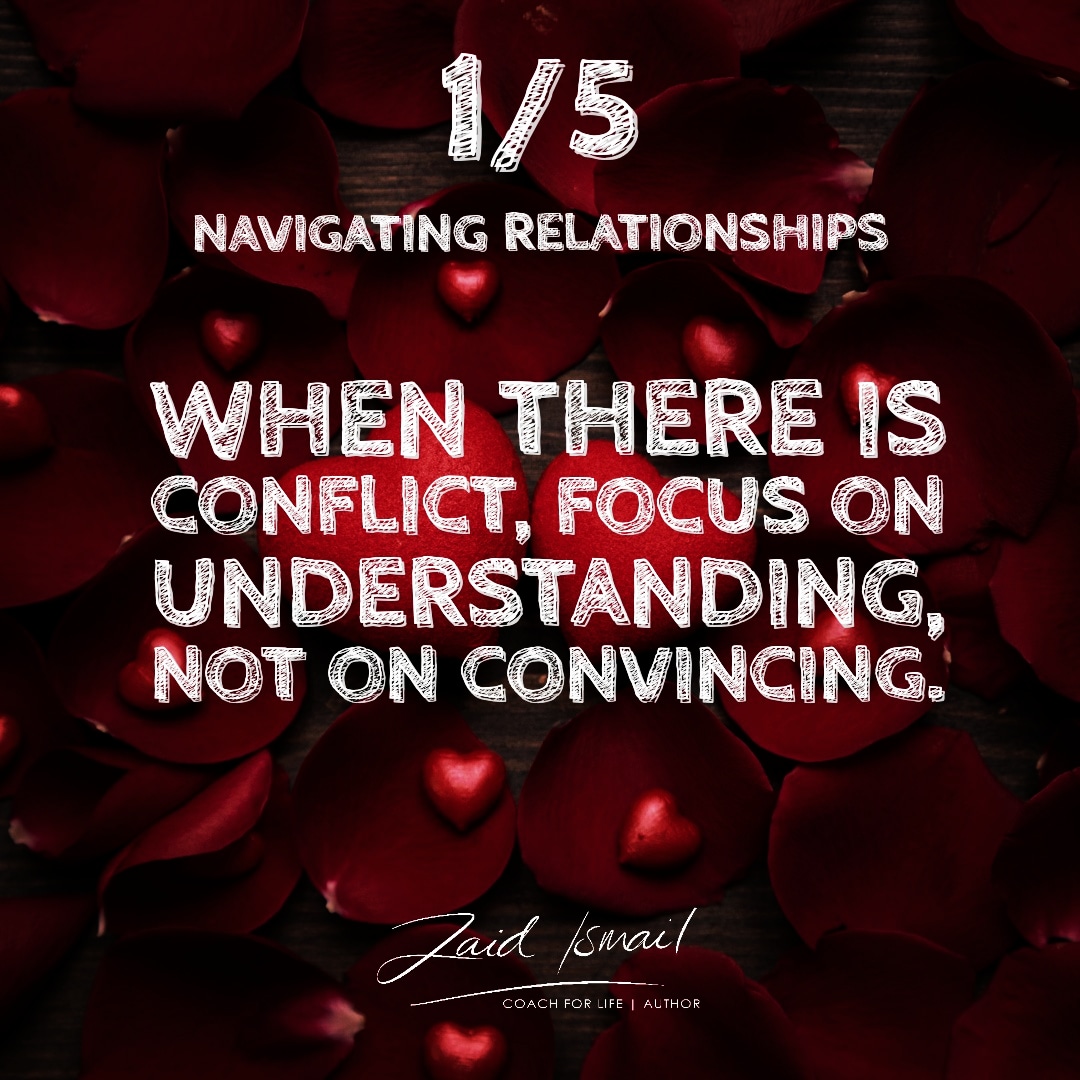
When we are troubled by something that our partner is doing, we must seek to understand why they’re doing that, rather than judging them and rallying support for our position against them.
If you don’t have such maturity and wisdom in your relationships or your support structures, it’s best to identify up front in the relationship who will be your go-to in such situations.
Even if it’s a counsellor, coach, or therapist, be sure to find someone that you both trust when times are good, because it’s very difficult to agree on something like this when times are bad.
If you focus on understanding, being understood will be easier to achieve.
That’s why we should develop a good understanding with our partner’s support structure so that we can trust them to be objective when we need to figure out such issues in the relationship, rather than slipping into victim mode and presenting ourselves as the neglected or abused one to our own support structures, which often contributes to the break down of the relationship, rather than making it stronger.
Choose your advisors carefully.
#relationshipgoals #marriageadvice #mentalhealth #mentalhealthawareness #lifecoaching #zaidismail #silenttreatment #companionship #soulfood #marriagecounselling #conflictmanagement
Tag: relationshipgoals
-
Navigating relationships – 1 of 5
-

Who defines your worth?
When our self-worth is low, we convince ourselves that we deserve pity and support for the state we’re in, because rising above it seems too daunting.
But it’s unlikely that we’ll realise that it’s a low self-worth driving such behaviour.
Instead, we’ll be convinced that the most important thing in the world is for the world to recognise just how difficult life is for us before we are willing to pick ourselves up and power through that last betrayal, or disappointment, or failed relationship.
The kind of thoughts that occupy our minds when in such a state include thoughts of preemptively defending ourselves against negative judgements about our life, or our lack of motivation, or our fear of commitment.
That’s how we start living inside our heads while believing that we’re just being realistic because we’ve learnt the harsh lessons after trusting one time too many, or being emotionally vulnerable to the wrong person.
The low self-worth is therefore a result of us losing sight of the good that we tried to contribute, despite the bad that we received in return.
It sets in when we convince ourselves that our best was not good enough, while ignoring the internal struggles that others were dealing with when we needed them to show up for us.
Our self-worth only suffers when we lose sight of the value of who we are, because we got distracted by the low self-worth of those around us.
When the need to protect yourself from the prying eyes of those who would judge you poorly triumphs over your need to aspire to achieve your dreams, you lose both, your self-esteem and your dreams.
Gratitude for the self is established through gratitude for the self. Not through the gratitude that others have for who you are.
It always starts with you.
#hope #expectation #sincerity #selfworth #selfawareness #mentalhealth #mentalhealthawareness #lifecoaching #zaidismail #loveyourself #lifegoals #motivation #optimism #purpose #mindfulness #relationshipgoals #companionship -
Have we forgotten how to love?
Most of us have forgotten how to truly love another.
Love has become so commercialised, that we confuse a mutual exchange of interest and benefits as love.
That’s why we end up believing that only as long as we’re getting what we need, do we have reason to feel loved.
Meanwhile, we lose sight of the struggles of those we love when they are at war within themselves.
If we truly love another, we must love what we believe is the true essence of who they are, so that when they stumble or err out of being human, we’ll be inclined to want to understand why, rather than to judge them harshly before pushing them away.
Such sincerity and conviction is only possible when we connect with our humanness.
But most of us go through life seeing ourselves through the eyes of our parents or grandparents, or some other figure whose validation we need, before we feel OK about ourselves.
The longer we live life this way, the more anxious and unfulfilled life will be, because everything will be driven by the fear of not being good enough, and not by the aspiration to be the best that we believe we are capable of being.
As long as we judge ourselves based on how we need to be accepted by others, we’ll never be able to truly connect with the good that may exist between us and our significant others.
That’s how life becomes a transaction, and love becomes fragile.
Self-awareness therefore precedes acceptance of who we are, and acceptance is only possible with understanding, which is the root of gratitude for what we’re capable of.
It always starts with you.
#hope #expectation #sincerity #selfworth #selfawareness #mentalhealth #mentalhealthawareness #lifecoaching #zaidismail #loveyourself #lifegoals #motivation #optimism #purpose #mindfulness #relationshipgoals #ownyourlife -
Cyclical abuse
At first, we remain in a bad relationship because we truly believe in the sincerity of the claims of our partner to want to improve, or to overcome what they’re struggling with.
After some time, if we’re not careful, our inability to get them to follow through will convince us that we’re not a good enough reason for them to be better.
When that continues for long enough, we begin to doubt our ability to be enough for anyone else, and thus find ourselves trapped in a cycle that we’re unintentionally sustaining.
Some may claim that they stay because it’s their way of expressing unconditional love.
Unconditional love, if it ever exists, is the sacrifice of one in favour of another. When you sacrifice yourself to compensate for the bad behaviour of someone else, that’s not love, that’s self loathing.
If you don’t love yourself, loving another becomes a cry for significance or acceptance, and love has nothing to do with it.
More importantly though, the choice of how to respond to bad or abusive behaviour is not binary. It’s not just about staying or leaving.
Between those two choices lies a number of ways to potentially break cycles of abuse, all of which requires a better understanding of why the abusive behaviour is the way in which the other person is trying to feel significant, or to rage at an injustice done to them in the past.
By understanding what drives their behaviour, we allow ourselves to see the human struggle behind the behaviour, rather than to judge the entirety of the human by their behaviour.
But this is only possible when we don’t feel inadequate about who we are in that situation.
A healthy self-esteem is therefore at the heart of truly breaking cycles of abuse, otherwise we may exit that situation, but we’re likely to be attracted to yet another cycle of abuse in our search for significance.
It always starts with you.
#abusiverelationship #selfworth #selfawareness #selflove #gratitude #appreciation #mentalhealth #mentalhealthawareness #mentalhealthrecovery #selfloathing #relationshipgoals #lifecoaching #zaidismail -
Whose war are you fighting?
When someone is at war within themselves, it’s unlikely that they will realise it.
If you’re not aware of the impact that they have on you, you’ll think that their frustration or anger is directed at you, when it’s really just their need to release the tension that they feel within.
Let the above cycle play out for long enough, and you’ll find yourself at war with yourself, wondering why you can never be enough for them.
And then you become the one at ease within yourself, and cause turmoil in the lives of others.
While your instinct, at some point, will convince you that you need to get out, you need to step back and consider why it is that someone else’s internal war affects you the way that it does.
If you don’t figure this part out, the risk of the cycle repeating itself in your next relationship, for entirely different reasons, is very high.
This is how old problems that are unresolved or not understood, become triggers in new relationships.
More importantly, by getting caught up in the turmoil of your partner’s war within themselves, it becomes impossible for you to help them to realise that they’re raging at the wrong target, if indeed they should be raging at all.
That’s why self-awareness is so important. Without it, not only can you not protect yourself from the turmoil around you, but you also won’t be of much use to significant others around you.
We all lose sight of who we are at some point, that’s why it’s pointless keeping score about who was there for whom, or who needs to change first, or what we need before we’re willing to make the effort. Because when we lose ourselves, it will not help us if others start keeping score in that way either.
It always starts with you.
Own Your Life.
#hope #expectation #sincerity #selfworth #selfawareness #mentalhealth #mentalhealthawareness #lifecoaching #zaidismail #loveyourself #lifegoals #motivation #optimism #relationshipgoals #companionship -
Looking a gift horse in the mouth
When we’re driven by aesthetics and appearances, social standing becomes more important than substance or authenticity.
We lose ourselves to the way we want to be perceived, rather than what we want to create.
We grow defined by how others treat us, or how well we can hide our flaws.
We pursue all the right things that hold the promise of a good life, but still feel empty and incomplete.
Religiosity replaces submission, and spirituality is lost to the show of goodwill.
When we focus on how we appear to others, or how we think they’ll judge or accept us, we’ll reject what is good for us, so that we can hold on to the hope of being good enough for them.
In the end, we lose ourselves, and thus any acceptance we receive from others becomes pointless.
The sweetness of life is lost when we reject who we are, because we’re afraid of being rejected by others.
That’s how soul mates pass each other like ships in the night, or companions drift apart like clouds after a storm.
The winds of distraction will guide us into places that are foreign to the needs of our soul.
Reclaim your life by connecting with the truth of who you are.
Own Your Life.
#hope #expectation #sincerity #selfworth #selfawareness #mentalhealth #mentalhealthawareness #lifecoaching #zaidismail #loveyourself #lifegoals #motivation #optimism #relationshipgoals #companionship #anincompletelovestory -
More ways to destroy trust…
Our consideration of trust is often limited to promises or follow through on something that was clearly agreed with another.
However, trust is broken in many ways, most of which are subtle and often unintended.
It’s these subtle breaches that leave us seething with anger or raging with tears while not knowing how to connect the betrayal that we feel with the specific conduct of another.
More than this, it also makes it that much more difficult to express ourselves clearly when they seem oblivious to the hurt or offence that they cause.
Connecting with why we feel betrayed makes it possible to process those feelings of betrayal in a more constructive way, and allows us to diminish the impact that it has on our sense of self.
Once we can reconcile in our minds what it is that drives us insane about the behaviour from those closest to us, it makes it easier to see their shortcomings as a reflection of who they are, rather than always assuming that they may take us for granted because of who we are.
That clarity of understanding and perspective could mean the difference between a life of angst and self-loathing, versus one of understanding and purposeful investment in those relationships that mean the most to you.
You cannot help those around you to slay their demons if you’re bringing your demons to the table.Here are 9 not-so-obvious ways in high we may be breaching the trust that others place in us :
1. Remaining silent when your words could have provided comfort or support
2. Deliberately avoiding a request for something that you know is important to someone
3. Withholding affection when you know it’s needed
4. Deliberately doing something that you know is offensive or hurtful to another
5. Being dishonest when relating your story, or withholding part of a story to avoid conflict or accountability
6. Being unnecessarily harsh without apologising for your conduct (or regularly repeating this behaviour after apologising each time)
7. Treating your obligations or commitments as optional or subject to your convenience
8. Demanding your rights from others but ignoring your responsibilities towards them
9. Dismissing the contribution that others make towards your life
It always starts with you.
Own Your Life.
#hope #expectation #sincerity #selfworth #selfawareness #mentalhealth #mentalhealthawareness #lifecoaching #zaidismail #loveyourself #lifegoals #motivation #optimism #purpose #companionship #compassion #trust #betrayal #relationshipgoals #ownyourlife -
Don’t trade your best for their worst
There is rarely a day that passes without me reading or hearing about someone who invested years, if not decades of their life, to people who were not invested in the relationship.
When the reality of that betrayal finally hits home, it destroys our spirit and convinces us that we’ve sacrificed the best years of our life while having nothing more to look forward to.
Nothing could be further from the truth.
The same way we were able to create beauty in such a desolate landscape, we must recognise that the best of us that we gave was simply the truth of who we were. And are.
The moment we discard that because it was discarded by an ingrate who was looking for servitude of their ego when they could have had love for their essence, we become ingrates just like them.
Don’t trade who you are for who they were. It’s never a fair trade. You owe yourself more than that.
And self-pity will only ever prevent you from being true to yourself.
Embrace the beauty of who you are despite the ugly of who they were.
That’s how we take back the gift that they discarded so that we may be able find a more fitting recipient.
As long as you’re breathing, there’s always hope.
#selfworth #selfawareness #ownyourlife #selfmastery #mindfulness #personalpower #mentalhealthrecovery #mentalhealth #mentalhealthawareness #lifecoaching #zaidismail #betrayal #narcissism #narcissisticabuse #relationshipgoals