Surely my sincere pursuit of happiness and enlightenment cannot be the cause of my own misery?
Why didn’t someone make me aware of it?
Why didn’t someone say something?
Why couldn’t they just understand what I was going through?
Even if all those questions are answered in the affirmative. it does not change the reality of the fact that it was choices, well-meaning but sometimes destructive choices that we made sincerely and with conviction that isolates the very blessing that we set out to acquire.
We are not only accountable for the choices that we recognise.
That is an easy accountability to accept.
We are especially accountable for the choices that we don’t realise we’re making.
It is accepting accountability for the choices that we did not intend to make that influences our authenticity and often, the quality of the relationships that contribute towards the joy and comfort that we experience in life.
Neglect these out of fear of being accountable for causing harm or pain, and you will find yourself troubled by consequences that seemingly have no good reason to happen to a good person.
And that, I believe, is one of the reasons why bad things happen to good people.
But, don’t forget. If this is true for you, if it’s true for those around you as well.
When we see others making decisions that may bring harm or offence to us, we need to consider the above in their favour.
We’re all human.
The more aware we are of our humanness, the more humane we’ll be towards others.
It always starts with you.
#hope #expectation #sincerity #selfworth #selfawareness #mentalhealth #mentalhealthawareness #mentalhealthrecovery #theegosystem #ownyourlife #lifecoaching #zaidismail #loveyourself #lifegoals #motivation #optimism #purpose
Blog
-

Own your choices. Own your life.
-

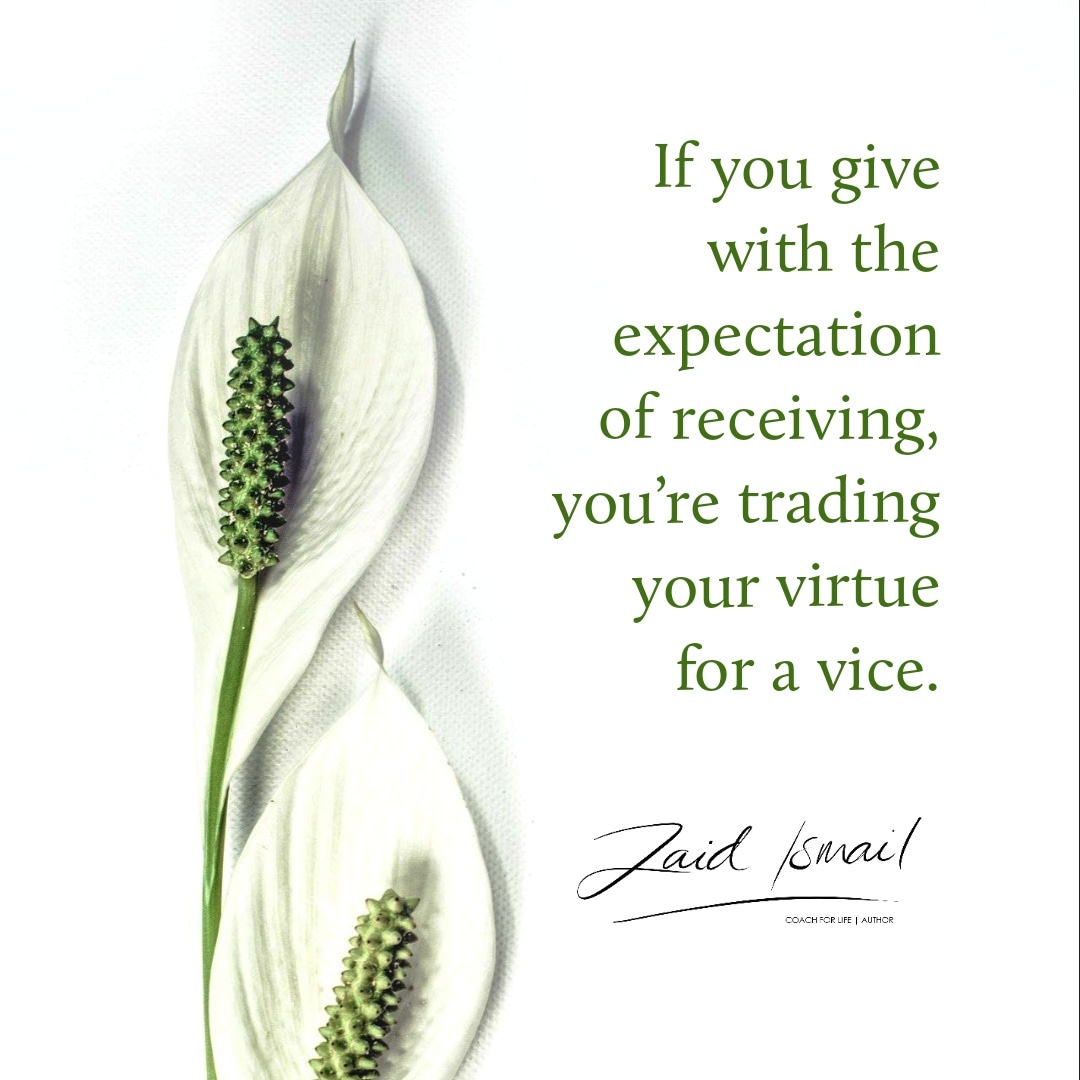
Don’t trade your virtues for vices
Don’t withhold the beauty of your spirit just because there is no one around to appreciate it.
Be who you are, and let others be who they choose to be.
The expectation of being treated the way we treat others is what causes much bitterness and anger.
It’s not worth it.
Give without the expectation of receiving. And when you don’t receive, give some more.
Waiting for others to return the favour before we do more, denies us the fulfilment of being who we are, while compromising our values to be who they are.
Remember, we cannot give what we don’t have.
When you withhold your gifts because you’re waiting for others to respond in kind first, you’re assuming that they have within them what drove you to give of yourself in the first place.
It’s a crazy cycle.
Break it by giving without the expectation of receiving from them in return.
That’s the secret to fulfilment and contentment in our lives.
When we expect something in return, we deny ourselves that fulfilment and we turn our good deeds into transactions.
When we transact with our virtues in that way, not only do we diminish the value of what we’ve done and who we are, but we also end up treating others the way that they’ve treated us.
That’s how we lose ourselves to our expectations from others.
It always starts with you.
#hope #expectation #sincerity #entitlement #gentleness #conviction #ownyourlife #theegosystem #mentalhealth #selfawareness #selfrespect #mindfulness #inspiration #philanthropy #generosityofspirit #givingback #lifecoaching #zaidismail #loveyourself #mentalhealthawareness #mentalhealthrecovery #mentalhealthmonth -
Faith is always there
Faith is often associated with spirituality, or religion.
But faith plays a role in our lives in ways we easily lose sight of.
When we trust someone, we have faith in them to do the right thing.
When we mistrust someone, we have reason to fear that they’ll do the wrong thing, meaning that we have more faith in them not doing the right thing.
Faith is always at play the moment we consider what we need from the next moment, the next day, or the next encounter with someone about something important.
If we lose sight of what we’re investing our faith in, we’ll focus on responding to our fear about the outcome potentially not being achieved, and our efforts will be driven towards mitigating the risk of that outcome.
Our faith from a spirituality perspective is our fall back position for when our faith in others may be betrayed.
But, if we only rely on our fall back position, we’ll prevent ourselves from having faith in those around us, giving them little reason to believe that we appreciate or trust them.
That’s how we create distance between ourselves and others, and often, use that as a reason to believe that we were right in not trusting them.
Meanwhile, they didn’t feel trusted. That’s why they created distance between them and us.
Being true to yourself despite the risk of being disappointed when you invest your faith or time in others, is what becomes possible when you truly connect with the value of who you are, and what you are passionate about leaving as your legacy in the lives of those around you.
When self-doubt creeps in, we withdraw our withhold or contribution, because we need others to validate our significance before we believe in ourselves.
It always starts with you. Own your life.
#hope #expectation #sincerity #selfworth #selfawareness #mentalhealth #mentalhealthawareness #mentalhealthrecovery #theegosystem #ownyourlife #lifecoaching #zaidismail #claimyourpower #selfdoubt -
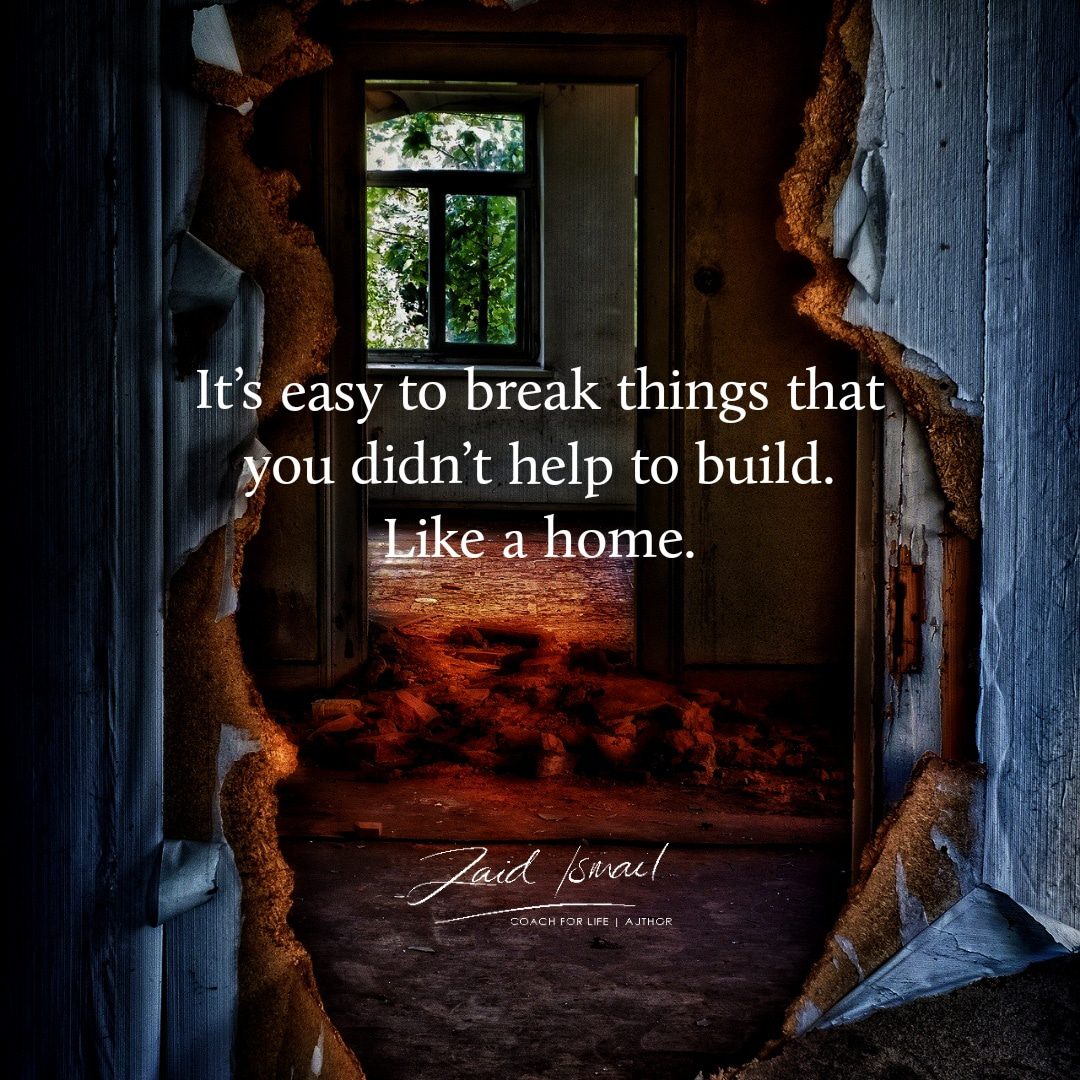
Home breakers
Those who live with the expectation of receiving what they need, rather than putting in the effort to create it with their own heart and hands, will take for granted that which others have exhausted themselves building.
Like a home. There are too many who expect to feel at home because of their material contribution, but don’t know what it takes to create that homely feeling.
Providing the house doesn’t make it a home. Nor does cleaning the house make it a home.
Buying the groceries doesn’t make an endearing family meal. Nor does cooking it.
What connects our efforts with the hearts of those around us is not in the material or dutiful contribution that we make. It’s in the love and appreciation that accompanies how we treat ourselves and them, that connects our hearts and creates a home.
Those who were raised in an environment where their responsibility was more important than their emotional needs will find it easier to judge the quality of their relationships based on what they get from it, rather than how they’re loved or appreciated.
True love and appreciation will automatically result in wanting to create that homely feeling, or that endearing family meal.
Without that love and appreciation, love becomes a transaction, and a check list of things to do so that we avoid blame when things go wrong.
The better we are at that check list, the more we believe we’re truly loving and appreciating life. Until we stop getting what we need.
But, as always, you can’t give what you don’t have.
If you treat yourself like a commodity, your affection for others will be based on the fear of not having them around, or not getting what you need from them.
Who they are and what they need will not feature at all. Sadly, you probably won’t even be aware of it when you’re in that state.
That’s why self awareness is so important. Because it always, always starts with you.
#hope #expectation #sincerity #selfworth #selfawareness #mentalhealth #mentalhealthawareness #mentalhealthrecovery #theegosystem #ownyourlife #lifecoaching #zaidismail #loveyourself #lifegoals #motivation #optimism #purpose #fatherhood #motherhood #parenting #relationshipgoals -
Judging bad behaviour
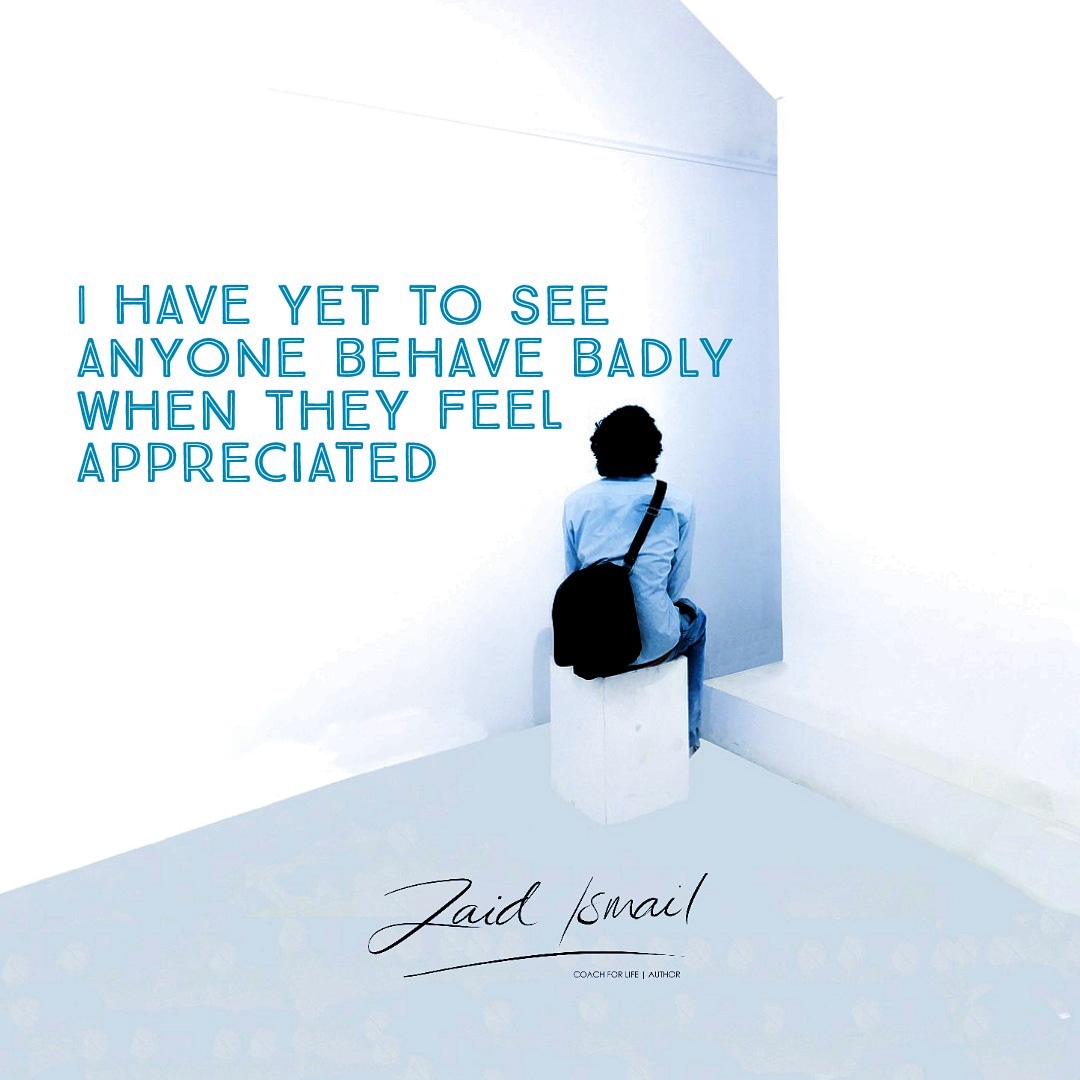
I have yet to meet someone who behaves poorly when they feel appreciated.
Yet, we’re most often focused on the poor behaviour instead of their feeling of insignificance.
The same is true for us.
Our anger, bitterness, or rebellion is simply an expression intended to reclaim our significance when significant others treat us as if we don’t matter. Or when we feel like we don’t matter to them.
This doesn’t excuse the behaviour, but hopefully, it prompts us to be more understanding rather than judgemental when we find ourselves faced with unacceptable behaviour from those around us.
It’s easier to judge others when being kind or understanding feels like weakness on our part, or if we’re afraid of condoning their behaviour.
Both those assumptions are based on our assumptions about what their intentions are behind their bad behaviour.
Consider that the next time you become aware of how you’ve chosen to judge someone.
Are you judging their behaviour because of what you don’t want to be associated with? Are you judging it because you expect them to be better than that? Or are you judging it because it undermines your role in their life?
Whichever one it is, judgement should be reserved for the courts, and understanding and compassion should drive our interactions with those around us so that we can encourage the best in them, rather than judge the worst in them.
And if you want to understand why you’re driven towards assumptions about what drives your behaviour, or the behaviour of those around you, get a copy of my book, The Egosystem.
It answers exactly such questions so that you might be able to find that elusive peace that you need within your soul.
#selfworth #selflove #selfawareness #selfrespect #mindfulness #theegosystem #mentalhealth #mentalhealthawareness #mentalhealthrecovery #ownyourlife #gratitude #compassion #understanding #lifecoaching #zaidismail #loveyourself #lifegoals #relationshipgoals -
Break the stigma. Stop the label.
I think it was Dr Wayne Dyer who said that if you change the way you look at things, the things you look at change.
This is true both positively and negatively.
Do you know someone who has a problem for every solution? Who sees doom and gloom at the happiest of moments? Who is preempting a negative outcome despite things going in their favour?
Do you think they have a mental illness, or have they just been hurt so many times before, that they are afraid to hope for a positive outcome? Are they simply protecting themselves from being let down again?
This is how we experience life when we finally give up hope about the future, or we give up hope about being appreciated.
That absence of hope is what causes us to feel depressed. Depression is a legitimate experience of human emotions after we’ve taken one too many hard knocks from life about something important to us.
The same is true for every other emotional experience.
Emotions are not deficiencies. They’re the essence of what makes us human.
If we ever hope to win this battle against a consistently declining quality of life, we need to stop referring to emotions as mental health, and we need to stop defining the duress that we experience in life as a mental illness.
We need to reconnect with the human behind the pain, instead of dehumanising them by denying the legitimacy of their emotional experience.
Break the stigma. Stop the labelling. Embrace the humanness.
#hope #expectation #sincerity #selfworth #selfawareness #mentalhealth #mentalhealthawareness #mentalhealthrecovery #theegosystem #ownyourlife #lifecoaching #zaidismail #loveyourself #lifegoals #motivation #optimism #purpose #grieving #death #failure #depression -
Let the voiceless speak for themselves
I see so many people speaking on behalf of others, often starting out with good intention, but later distorting that intention by projecting their own values on the ones whom they wish to uplift.
Despite our best intentions, we stifle the voices of others when we speak on their behalf.
Not to be confused with supporting the oppressed against the oppressors, it means that we must cease the hand of the oppressor while creating a platform for the oppressed to speak for themselves.
To give someone a voice is to ensure that they are independent of your voice.
The difference between guiding and supporting them versus speaking on their behalf is the difference between allowing them to claim their dignity, versus making them dependent on you for their dignity.
Anything less is a milder form of oppression and conflicts with the objective of uplifting others.
For this reason, don’t seek to be anyone else’s voice. Gift them with their own voice by building them up to speak for themselves.
#hope #expectation #sincerity #selfworth #selfawareness #mentalhealth #mentalhealthawareness #mentalhealthrecovery #theegosystem #ownyourlife #lifecoaching #zaidismail #claimyourpower
#claimyourvoice -
Cheat old age
We seek safety and comfort in planning our life, our vacations, or careers to the last degree when we are afraid of being out of control, or missing opportunities that may result in regret later on.
Like everything else, there is a place for planning in life.
But, when that planning denies you the spontaneity of grabbing opportunities that present themselves without warning, then it’s no longer planning. It’s a need for control.
And control is a defence mechanism to prevent ourselves from appearing incompetent because we’re afraid of what we don’t know or didn’t plan for.
Spontaneity, impulsiveness, passion. These are the attributes that we embrace when we’re confident that we can navigate life as it shows up.
What they say about travelling is true about life. Plan your trip, but go with the flow.
Look back on your life and notice how much of it was unpredictable. Yet, here you are.
Do you really need to control every aspect of your life, or have you proven, without meaning to, that you’re capable of navigating the unpredictable?
Live. Don’t just exist.
#hope #expectation #sincerity #selfworth #selfawareness #mentalhealth #mentalhealthawareness #mentalhealthrecovery #theegosystem #ownyourlife #lifecoaching #zaidismail #loveyourself #lifegoals #motivation #optimism #purpose