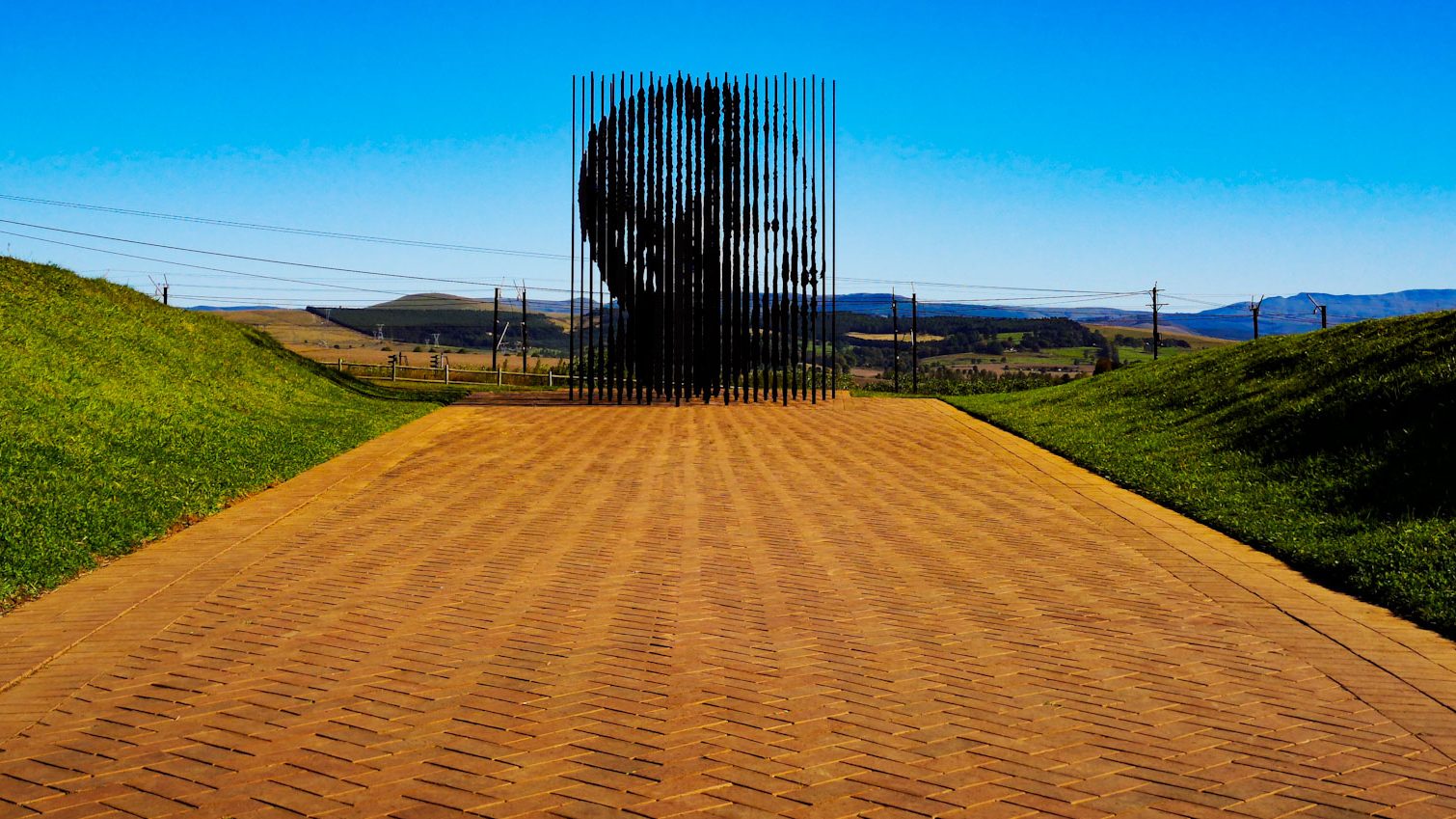
There is greatness in all of us.
Problem is, if we don’t get recognition from others about our greatness, we assume the greatness is not so great, instead of realising that they’re too distracted to notice.
That’s when we give up on that greatness and instead embrace something trivial that will attract their attention.
Then, when we get their attention, we assume we’ve achieved something great when in fact we just did something that is momentarily popular.
And that’s how we fail to change the world.
We grow old feeling like we were cheated out of greatness, but forget that we traded our greatness for acceptance and validation.
Be greater than that. You’ve got it in you to do it.
Photo credit: Naadirah Ismail
#hope #expectation #sincerity #selfworth #selfawareness #mentalhealth #mentalhealthawareness #mentalhealthrecovery #theegosystem #ownyourlife #ownyourshit #embracingME #motivation #optimism #greatness #mindset #mindbodysoul
Tag: ownyourlife
-

Embrace your greatness
-

Who says you’re not enough?
If you need to remind yourself that you’re enough, you convinced yourself that you weren’t enough.
No one can do that to you without your agreement or consent.
Reminders, or affirmations have their place in getting us back on track when we become distracted from the truth of who we are.
The moment we need to do either beyond a moment in time, it means that we stopped believing what was once a truth, and now need to find reason to convince ourselves that we’re capable of being that way again.
While there may be truth in that thought process, it also means that we’ve yet to believe that we are what we think we could be, and we therefore convince ourselves that it’s not true in the present moment, but may be true at some future point.
Again, this way of thinking simply reinforces the belief that we’re not who we want to be.
The question therefore is, by whose standard are we judging ourselves when we see ourselves as being less than who we think we are?
If we were judging ourselves by our own standard, our reflections would be an assessment of our growth, rather than a need to convince ourselves that we’re something or someone that we’re not.
#hope #expectation #sincerity #selfworth #selfawareness #mentalhealth #mentalhealthawareness #mentalhealthrecovery #theegosystem #ownyourlife #ownyourshit #embracingME #motivation #optimism #selflove #authenticity #affirmations -
Don’t be the victim oppressor
Every decision we take has an impact on us, and on those around us.
If we only consider one side of that equation, we’ll either become victims by denying ourselves of what we need in favour of pleasing everyone else, or we’ll become oppressors by pleasing ourselves and denying the rights of everyone else.
Finding a balance between the two brings us closer to experiencing joy in our lives.
When we find that we deny ourselves of what we need, it’s because we’re waiting for someone else to convince us that we’re worth it.
When we deny others what they need from us, we’re convinced that they don’t deserve us.
Both mindsets lead to an emptiness that is hard to understand.
Fulfilment and joy in life is found in striking a healthy balance between the two.
If you’re struggling to find that balance, check out my books, or connect with me for affordable life coaching sessions.
Video sessions available to wherever you are in the world.
More details on my website at zaidismail.com
#embracingME #mentalhealth #mentalhealthawareness #mentalhealthrecovery #selfworth #selflove #selfawareness #selfrespect #mindfulness #inspiration #ownyourshit #ownyourlife #theegosystem #balance #gratitude #joy -
The forgotten village idiot
This essay has been playing on my mind a lot lately.
Covid-19 has revealed the true nature of many, which only served to reinforce this notion.
Who puts a smile on the face of the village idiot?
The saddest part of this essay is that most who read the title thought it to be humorous.
From my book The Egosystem, it explores our relationship with those who give selflessly, while being forgotten.
This pandemic has highlighted the forgotten and the taken-for-granted, and it has diminished further the roles of others who are not deemed essential through need, but who maintain the wellbeing and spirit of others through quiet contribution.
I’ve always considered what this world would feel like if we didn’t label the purpose or the need that we have of others, and instead we were compelled to choose very deliberately each time what it is that we value about another before we are able to obtain benefit from them.
Would that be the cure for the pandemic of consumerism? Would it finally rid us of our inclination to see people as a means to an end?
Or is even that an ideal so far fetched that only the most naive would buy into it?
#hope #expectation #sincerity #entitlement #gentleness #life #rage #anger #mentalhealth #mentalhealthawareness #mentalhealthrecovery #selfworth #selflove #selfawareness #selfrespect #mindfulness #inspiration #ownyourshit #ownyourlife #theegosystem #embracingME -
Wisdom with purpose
Acquiring knowledge without implementing it is like hoping to quench your thirst while standing in the rain.
Seeking to understand is great, but only if we apply that understanding in the way we treat others.
Similarly, acquiring technical knowledge may feed our fascination, but fulfilment lies in using that knowledge to create something of substance that offers value to others.
I think it was Al Ghazzali that said, “Why accumulate more knowledge if you don’t practice on the knowledge that you have?”
#education #learning #knowledge #fulfilment #reward #lifegoals #motivation #optimism #mentalhealth #mindfulness #inspiration #ownyourshit #ownyourlife #theegosystem #embracingME -
You give what you have
I’ve had many interesting discussions with my kids about this topic recently. If they are dishonest about something, I make them aware of the fact that they will only find reason to be honest with others if they find it unacceptable to be dishonest with themselves. What we tolerate by ourselves towards ourselves is what we are capable of offering to others. Nothing more. Nothing less. The day you realise this is the day you’ll see the fears and weaknesses that drives others to behave badly towards you. It was never about you. It’s always about reflecting who they are. You were just the outlet that they felt safe enough to vent on.
You cannot give what you don’t have. If you lack self respect, you won’t be able to respect others. If you don’t appreciate what you have, you won’t express gratitude towards others. If you consistently feed yourself untruths about yourself or your behaviour, you will not trust the sincerity of others. And so it continues. The way we see ourselves is what informs our behaviour and interactions with the world. The more threatened we feel, the more aggressive we will be. So, the next time you see someone behaving badly, don’t judge them harshly, understand what they’re saying about how they value themselves, or how valued they feel by others. Judgement is a reflection of who we are, while understanding is a reflection of the purpose we wish to serve.
-
Why we need more idealists
I am an idealist. It attracts mockery, condescension, ridicule and any number of other derogatory and passive aggressive responses from people that want to appear a certain way. But I choose to be an idealist in spite of them. The alternate may be choosing to be a realist. However, experience has taught me that realists are focused on reacting to challenges and working with what they have. Seldom do they strive to create something larger than their current reality. That means they are effective at maintaining the status quo, not at improving the human condition beyond it’s current ideal state.
I could be a pragmatist. Insisting that only what is within my control is what I should assume to hold any influence or control over. Practical realities assume that we know everything about what it is that we’re faced with. We never do. Thus, pragmatists are a hindrance rather than a benefit.
The world is plagued with problems created by realists who demand that the only realistic view of the world is their view because they have tangible evidence to support their view. But, right there lies the problem. The tangible is what distracts us from the greatness that lies beyond it. When we focus on manipulating what we have into permutations of what we know, we lose sight of what more is possible.
I choose to be an idealist because it is our belief in the intangible possibility of being more than we are now that has always spurred us into action. Inspiration does not lie in what is known. What is known is quickly taken for granted because, well, it is known. It is obvious. It is commonly accepted for what it is. But look beyond the known, look at the possibility of creating a new reality out of the dysfunction that exists within the current reality and suddenly we re-frame what possibilities the world holds for us.
Not only do we see purpose beyond duty, but we see duty in being dreamers. Duty in believing that we are capable of more than what we have and who we are. But, we resign such thinking to material gains. To improving quality of life through comforts or accumulation of wealth, or occasionally through philanthropy. All that has its place, but it doesn’t alter the human condition, it only makes it more bearable.
I choose to apply my idealism to the state of the human condition. I choose to use it to inform my choices to see beyond the distractions of apparent evil, and instead to gain sight and understanding of the wounds that drive such evil. But this approach is an approach that is not favoured by many. It finds ridicule, and rejection, just like idealists do, because it rejects the right to vengeance and instead focuses on the need for understanding and correction.
Justice defined by victims will be justice entrenched in vengeance. Rarely do victims consider a reality beyond either vengeance or forgiveness. The entire landscape between those poles is ignored because in seeking to understand, it demands that we accept accountability for the effort needed to reach such understanding. It demands that we set aside our fury and our rage so that we can understand why we were just a convenient outlet for the filth or the abuse or the violence that someone else harboured within them. Provocation is only an acceptable excuse for retaliation in the case of self-defense. Beyond that, provocation is a demand for understanding and justice. Unfortunately, the one blinded by hate or anger is seeking retribution from anyone that resembles the source of their anger and hatred. At that moment, it doesn’t matter that the target is innocent, it only matters that within the mind of the aggressor, the target resembles or represents the threat that robbed them of their humanity at some point. Without seeking to understand this, we will create victims who will become survivors, but will not progress beyond that. That the aggressor must be punished for their aggression is a given. But even that in itself is not enough. That in itself will never fully realise the ideals of justice. For this reason, even when justice is served, many don’t feel the sense of peace that should accompany such justice.
As I stated many times before, survivors don’t enjoy the sweetness of life, they only enjoy the deferral of death. As long as we consider ourselves to be survivors, we remain defined by the event or experience that we survived. Thriving is impossible when we are rooted to a moment in the past. Letting go of that moment becomes difficult when we have yet to experience a sense of justice, or vengeance for what was done to us. For this reason, even those that forgive continue to hold on to the effects of that experience, but through forgiveness have only given up the desire for direct retribution. Often, such retribution is entrusted to a higher power that prevails beyond the realities of this world as we experience it.
There are no easy answers for idealists. But there are simple ones for realists, and pragmatists, because they see things in obvious tones, and absolutes. Anything beyond that is considered an indulgence of ideals that have no value. And perhaps there are moments when this may be true. When urgency demands that ideals be suspended and practical realities take precedence. But, what is the result when such an approach becomes the norm? What happens when the value of that immediacy of response underpins the belief that it is the only value that is achievable? Is that when we set aside humanity in favour of perceived justice? Is that when retribution replaces justice, and balance or harmony is replaced by perceived rights?
I am an idealist because I believe, with conviction, that we are capable of better than who we are today, or who we have been over the generations that passed. I am an idealist because I recognise the value of the principles that spurred on our predecessors that we now idolise, or at times follow blindly, but I do not follow blindly. I choose to reinterpret their principles within the context of my life, because I understand, without doubt, that if something is not growing, it is dying. This is also true for the human condition. As long as we stagnate in our growth by holding on to beliefs from a distant past without appreciating the value of the principles that underpinned those beliefs, our condition begins to wither away. And as it is with all withering, the resultant decomposition of values will reveal the worst of us, because we chose to stop pursuing the ideal of being the best of us.
-
Start before you’re ready!
Today I decided to take my own advice. I recorded my first video clip to share with my followers even though I wasn’t ready for it. But I cannot expect to grow in my skill at providing video content if I don’t start. So this was my beginning.
I needed to stop protecting myself from getting it wrong, because as long as I protected myself from that potential outcome, I prevented myself from growing beyond it. Hope you enjoy my first snippet! Much more to come…