I walked on the lawn with bare feet the other day.
For a moment my senses were teased and I felt grounded.
I gazed around the garden and looked past the sprouting indigenous trees, and instead noticed the chores left unfinished, or new ones that begged for my attention.
I walked on and paid little attention to them because the lawn felt so good beneath my feet.
In that moment I knew that even the reality of this world and all its worries could not rob me of the fascination of that moment.
But no sooner had that thought occurred that I found myself robbing myself of that which the world was unable to take from me.
That’s when I realised that I willingly give up that peace, or that moment of beauty, when I allow myself or others to contaminate it by worrying about that which I can’t change or influence in that very moment.
The most common cause of such worry is self-pity, feverish self-pity is driven by our belief that no one cares enough to share our load, or consider our needs.
Self-pity is driven by ingratitude.
That ingratitude is not only for what others contribute, in their own way, towards our lives, but especially ingratitude for how much value we’re able to contribute towards others if we didn’t worry about getting credit for it.
Focus on the value that you can create in the world around you, and your gratitude for who you are will create the peace in your heart that you’re so desperately in need of.
It always starts with you.
#hope #expectation #sincerity #selfworth #selfawareness #mentalhealth #mentalhealthawareness #mentalhealthrecovery #theegosystem #ownyourlife #lifecoaching #zaidismail #loveyourself #lifegoals #motivation #optimism #purpose #parenting
Tag: lifegoals
-

Your world. Your worries.
-

Don’t test the ones you love. Love them.
Ever find that despite your best efforts, someone close to you just never appreciates what you do for them?
Ever feel like you’re having to fulfil their expectations in detail about how to do something the way that they want you to do it before they are satisfied with you?
Even then, when you do that thing exactly the way they wanted you to, they then question your sincerity.
“You only did it because I asked you to!”
Does that sound familiar?
Damned if you do and damned if you don’t.
The reason that they treat us that way, or even why we may treat others in that way is not because we’re questioning their sincerity, it’s because we doubt our significance to them.
When we feel insignificant, we test others, often in passive aggressive ways, to see if we’re really important to them.
The only reason we test them is because we don’t appreciate them. And then we hold them responsible for how we don’t appreciate ourselves either. That’s why we test them.
When we look for kindness to be packaged in a specific way, we lose sight of the kindness or affection that they offer of their own accord, in their own way.
When we expect others to express their appreciation, or affection towards us in a specific way, we not only diminish who they are, we also show ingratitude for their sincere efforts towards us.
Then, when they pull away because they feel unappreciated, or taken for granted, or worse, because they feel invisible, we convince ourselves that we were right about their insincerity to begin with.
Self-loathing is the root of most relationship problems.
Don’t hold your partner or significant others responsible for how you feel about yourself.
If you don’t appreciate who you are, you give others permission to take you for granted.
It always starts with you.
#hope #expectation #sincerity #selfworth #selfawareness #mentalhealth #mentalhealthawareness #mentalhealthrecovery #theegosystem #ownyourlife #lifecoaching #zaidismail #loveyourself #lifegoals #motivation #optimism #purpose -
The gift of who you are
It’s human to feel fatigued or despondent.
But, it’s not human to give up.
We’re wired to persevere. To overcome. To prevail. To improve what we have around us.
When we feel oppressed in our efforts to achieve these ends, we either grow despondent, or we grow aggressive.
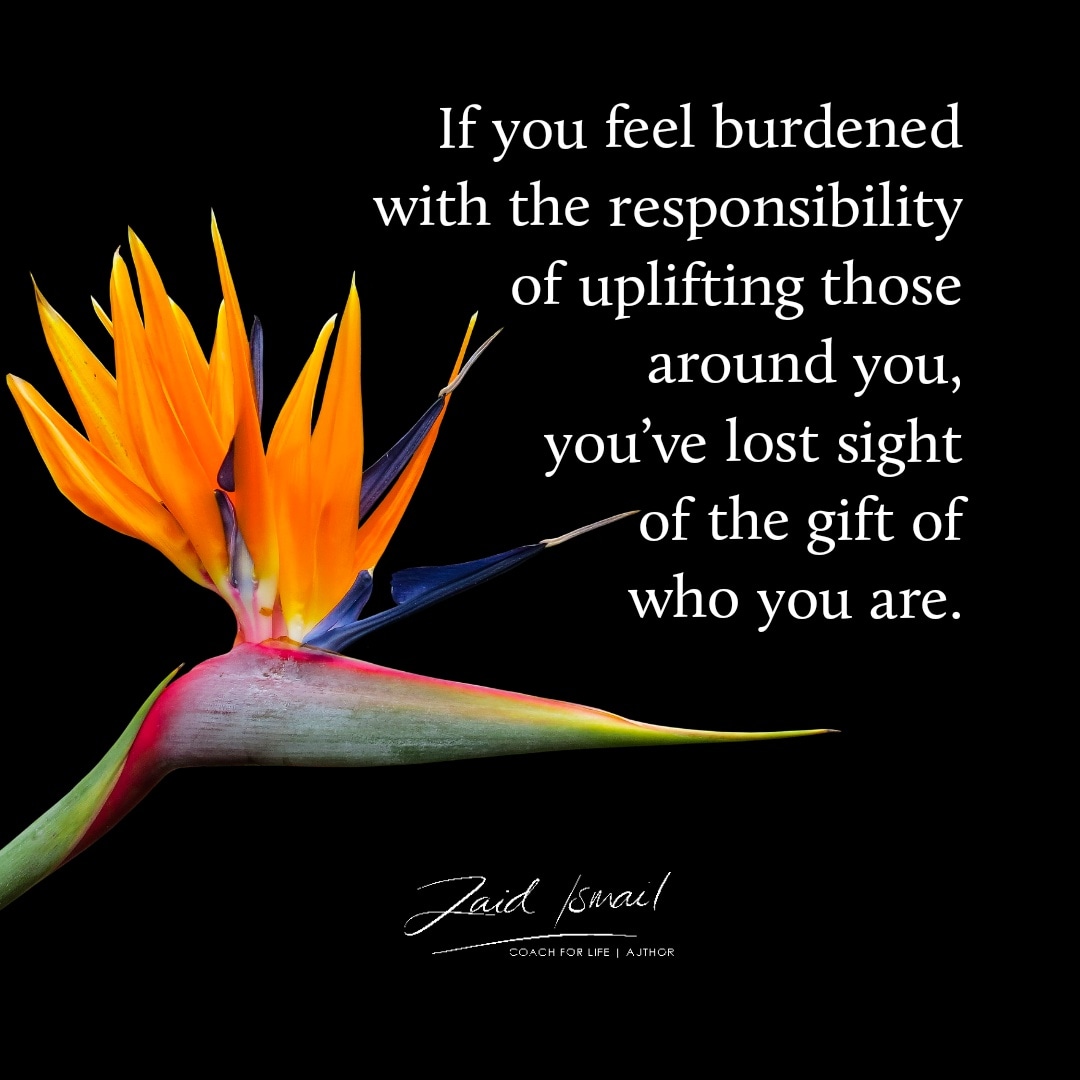
Both those reactions are an indication that we’ve lost sight of the gift of who we are.
When we feel burdened, we’re focused on whether our efforts will be appreciated, accepted, respected, or rejected, etc.
That means that we’re more focused on being significant in that moment, or in that relationship, rather than connecting with the value of what brings us joy that we want others to experience with us.
But, just like a gift, if we buy something for someone because we like it, without any concern about what they think of it, then we’re not really buying that gift for them, are we?
Similarly, when we find joy in living life a certain way, or connecting with an experience in a certain way, and we want to share that with others, our focus must be on how do we connect them to that experience. Not on whether they appreciate our efforts or trust our opinion about why that experience is important.
In other words, if your gift to someone is sincere, you don’t force them to like it. You put in the time and effort to understand what and how they would experience something they love, and try to gift it to them in that way. After all, it’s for them.
We find joy in connecting with others in that way.
The same must be true about offering the best of who you are to those around you.
Of course, you need to first appreciate who you are before you’ll be able to connect others to that joy within you that you want them to experience with you.
So, as always, the question is simple. Do you know yourself well enough to appreciate the gift that you hold within?
It always starts with you.
#hope #expectation #sincerity #selfworth #selfawareness #mentalhealth #mentalhealthawareness #mentalhealthrecovery #theegosystem #ownyourlife #lifecoaching #zaidismail #loveyourself #lifegoals #motivation #optimism #purpose -
The insincerity of self-loathing
As always, you cannot give what you don’t have.
You can’t give someone a smile if you don’t have one yourself.
Similarly, you cannot appreciate what you’re ungrateful for.
If you take yourself for granted, any appreciation that you express towards others is based on you wanting them to feel appreciated the way that you want to feel appreciated.
It’s about wanting them to have something that you believe you don’t have.
As magnanimous or noble as that seems, it’s a transaction.
It’s a judgement.
It’s insincere.
It’s manipulation.
Is there some good in it? Definitely. Because there is nothing so bad that there is no good in it.
But, it still means that the gratitude you express is hollow, and the one you hope to give reason to feel appreciated will eventually sense that emptiness of your sentiment.
It’s only when we truly and meaningfully connect with the value that we hold as humans, that we are able to recognise and connect with that value in others.
Until that point, all we’ll see is judgement and comparison about who has more than us, who deserves more, who we want must appreciate us, and so on.
Our expression of affection and gratitude becomes transactional because we want to be seen a certain way, or thought of in a certain way.
That’s not sincere appreciation. That’s transacting for significance.
The question is, how many of us know ourselves well enough to truly appreciate who we are, or do we only see ourselves as a means to an end for others?
How many of us are living martyrs?
It always starts with you.
#selfworth #selfawareness #ownyourlife #selfmastery #mindfulness #personalpower #mentalhealth #mentalhealthawareness #mentalhealthrecovery #theegosystem #lifecoaching #zaidismail #loveyourself #lifegoals #selfloathing #martyrsyndrome -
Own your choices. Own your life.
Surely my sincere pursuit of happiness and enlightenment cannot be the cause of my own misery?
Why didn’t someone make me aware of it?
Why didn’t someone say something?
Why couldn’t they just understand what I was going through?
Even if all those questions are answered in the affirmative. it does not change the reality of the fact that it was choices, well-meaning but sometimes destructive choices that we made sincerely and with conviction that isolates the very blessing that we set out to acquire.
We are not only accountable for the choices that we recognise.
That is an easy accountability to accept.
We are especially accountable for the choices that we don’t realise we’re making.
It is accepting accountability for the choices that we did not intend to make that influences our authenticity and often, the quality of the relationships that contribute towards the joy and comfort that we experience in life.
Neglect these out of fear of being accountable for causing harm or pain, and you will find yourself troubled by consequences that seemingly have no good reason to happen to a good person.
And that, I believe, is one of the reasons why bad things happen to good people.
But, don’t forget. If this is true for you, if it’s true for those around you as well.
When we see others making decisions that may bring harm or offence to us, we need to consider the above in their favour.
We’re all human.
The more aware we are of our humanness, the more humane we’ll be towards others.
It always starts with you.
#hope #expectation #sincerity #selfworth #selfawareness #mentalhealth #mentalhealthawareness #mentalhealthrecovery #theegosystem #ownyourlife #lifecoaching #zaidismail #loveyourself #lifegoals #motivation #optimism #purpose -
Home breakers
Those who live with the expectation of receiving what they need, rather than putting in the effort to create it with their own heart and hands, will take for granted that which others have exhausted themselves building.
Like a home. There are too many who expect to feel at home because of their material contribution, but don’t know what it takes to create that homely feeling.
Providing the house doesn’t make it a home. Nor does cleaning the house make it a home.
Buying the groceries doesn’t make an endearing family meal. Nor does cooking it.
What connects our efforts with the hearts of those around us is not in the material or dutiful contribution that we make. It’s in the love and appreciation that accompanies how we treat ourselves and them, that connects our hearts and creates a home.
Those who were raised in an environment where their responsibility was more important than their emotional needs will find it easier to judge the quality of their relationships based on what they get from it, rather than how they’re loved or appreciated.
True love and appreciation will automatically result in wanting to create that homely feeling, or that endearing family meal.
Without that love and appreciation, love becomes a transaction, and a check list of things to do so that we avoid blame when things go wrong.
The better we are at that check list, the more we believe we’re truly loving and appreciating life. Until we stop getting what we need.
But, as always, you can’t give what you don’t have.
If you treat yourself like a commodity, your affection for others will be based on the fear of not having them around, or not getting what you need from them.
Who they are and what they need will not feature at all. Sadly, you probably won’t even be aware of it when you’re in that state.
That’s why self awareness is so important. Because it always, always starts with you.
#hope #expectation #sincerity #selfworth #selfawareness #mentalhealth #mentalhealthawareness #mentalhealthrecovery #theegosystem #ownyourlife #lifecoaching #zaidismail #loveyourself #lifegoals #motivation #optimism #purpose #fatherhood #motherhood #parenting #relationshipgoals -
Judging bad behaviour
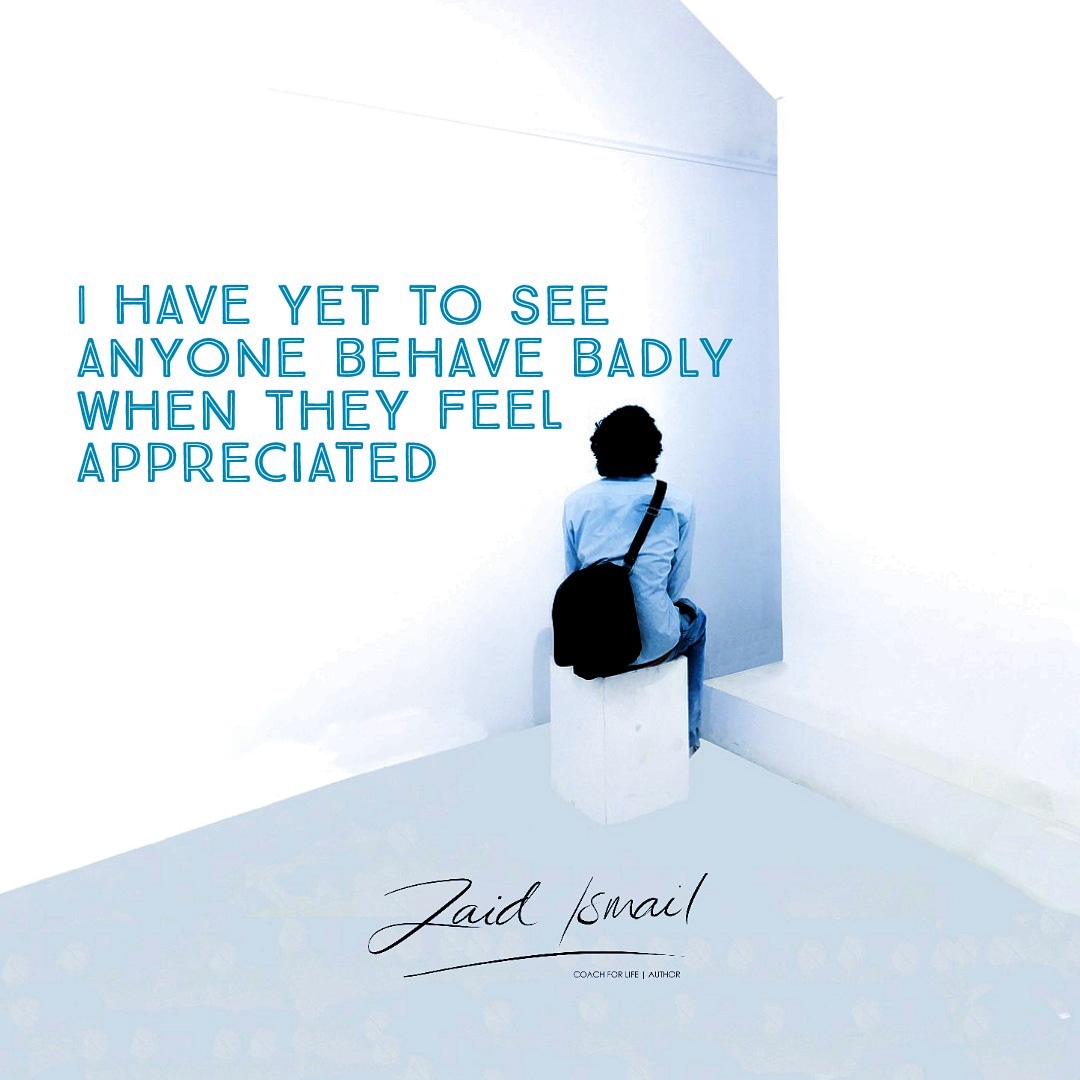
I have yet to meet someone who behaves poorly when they feel appreciated.
Yet, we’re most often focused on the poor behaviour instead of their feeling of insignificance.
The same is true for us.
Our anger, bitterness, or rebellion is simply an expression intended to reclaim our significance when significant others treat us as if we don’t matter. Or when we feel like we don’t matter to them.
This doesn’t excuse the behaviour, but hopefully, it prompts us to be more understanding rather than judgemental when we find ourselves faced with unacceptable behaviour from those around us.
It’s easier to judge others when being kind or understanding feels like weakness on our part, or if we’re afraid of condoning their behaviour.
Both those assumptions are based on our assumptions about what their intentions are behind their bad behaviour.
Consider that the next time you become aware of how you’ve chosen to judge someone.
Are you judging their behaviour because of what you don’t want to be associated with? Are you judging it because you expect them to be better than that? Or are you judging it because it undermines your role in their life?
Whichever one it is, judgement should be reserved for the courts, and understanding and compassion should drive our interactions with those around us so that we can encourage the best in them, rather than judge the worst in them.
And if you want to understand why you’re driven towards assumptions about what drives your behaviour, or the behaviour of those around you, get a copy of my book, The Egosystem.
It answers exactly such questions so that you might be able to find that elusive peace that you need within your soul.
#selfworth #selflove #selfawareness #selfrespect #mindfulness #theegosystem #mentalhealth #mentalhealthawareness #mentalhealthrecovery #ownyourlife #gratitude #compassion #understanding #lifecoaching #zaidismail #loveyourself #lifegoals #relationshipgoals -
Break the stigma. Stop the label.
I think it was Dr Wayne Dyer who said that if you change the way you look at things, the things you look at change.
This is true both positively and negatively.
Do you know someone who has a problem for every solution? Who sees doom and gloom at the happiest of moments? Who is preempting a negative outcome despite things going in their favour?
Do you think they have a mental illness, or have they just been hurt so many times before, that they are afraid to hope for a positive outcome? Are they simply protecting themselves from being let down again?
This is how we experience life when we finally give up hope about the future, or we give up hope about being appreciated.
That absence of hope is what causes us to feel depressed. Depression is a legitimate experience of human emotions after we’ve taken one too many hard knocks from life about something important to us.
The same is true for every other emotional experience.
Emotions are not deficiencies. They’re the essence of what makes us human.
If we ever hope to win this battle against a consistently declining quality of life, we need to stop referring to emotions as mental health, and we need to stop defining the duress that we experience in life as a mental illness.
We need to reconnect with the human behind the pain, instead of dehumanising them by denying the legitimacy of their emotional experience.
Break the stigma. Stop the labelling. Embrace the humanness.
#hope #expectation #sincerity #selfworth #selfawareness #mentalhealth #mentalhealthawareness #mentalhealthrecovery #theegosystem #ownyourlife #lifecoaching #zaidismail #loveyourself #lifegoals #motivation #optimism #purpose #grieving #death #failure #depression