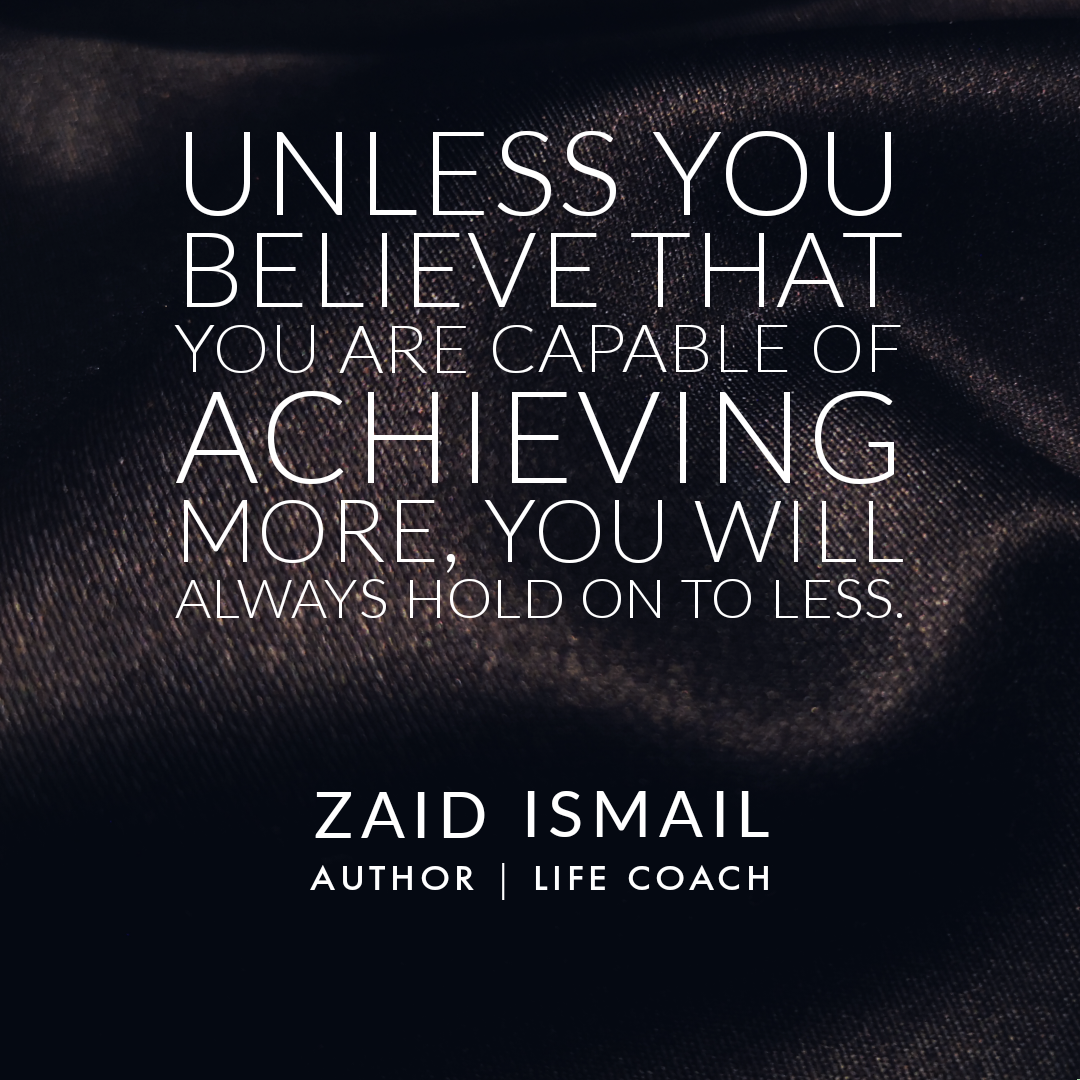
Unless you believe that you are capable of achieving more, you will always hold on to less.
That belief is more about feeling worthy than it is about ability.
Sometimes, we look at how our best efforts were received and assume that the negative outcomes bear testament to the value that we have to offer.
We then find reason to withhold our contribution in future without pausing to consider that perhaps we invested our efforts in someone who wasn’t ready to value what we shared.
But, it’s never that simple, is it?
Often, we continue to invest because we believe in the untapped beauty or value that we see in them.
It is that belief that anchors us in the ‘if only’ and ‘what if’ scenarios that play out in our heads, while blinding our hearts from the beauty that awaits if only we invested our efforts more wisely.
At such times, we must look to those who see our beauty, rather than fixating on those who deny their own.
It’s the only way to break the cycle that diminishes our contribution towards creating joy in our lives, and in the lives of those around us.
#hope #expectation #sincerity #selfworth #selfawareness #mentalhealth #mentalhealthawareness #mentalhealthrecovery #theegosystem #ownyourlife #ownyourshit #embracingME #mybeloved #zaidismail #narcissism #narcissisticabuse #narcissisticparents
Blog
-
Demand more…of yourself
-

Fleeting Thoughts X
If I were to write without restraint, would you see my soul or judge my sanity?
Sanity is elusive when it competes with the heart.
The heart is not satiated by the intellect, and the intellect cannot reason with the heart. They both swim in their own orbits.
Like the sun and the moon, each orbit complements the other and are never truly isolated in their purpose.
Purpose is recognised when we look beyond the fear and connect with the value that we hold within.
The value we hold within is only considered valuable if it is allowed to create something larger than the sum of our lives.
The sum of our lives must serve more than us, or else it feels inconsequential.
To be of consequence is the heart of fulfilment.
To share what we have is the root of fulfilment.
Gratitude is the fulfilment of fulfilment.
Fulfilment is denied when gratitude is withheld in the face of expectation.
Expectation threatens our composure when we doubt our significance.
Our composure is dependent on our perception of our flaws.
We focus on our flaws and ignore the one who appreciates those flaws to be the very reason why we’re enough because we doubt our significance.
Self-loathing is spawned by our belief that we’re flawed, rather than the reality that we’re human.
To see our humanness requires us to gaze upon ourselves with empathy.
Empathy is subdued through a life of dutiful servitude.
Servitude denies our right to need or to expect, but cherishes our responsibility to fulfil the needs and rights of others.
Rights and needs are most often claimed but seldom respected.
When we forsake our rights and subdue our needs, we lose the sweetness of life and focus validation from others instead.
Validation from others distills into bitterness as we grow aware of the conditional nature of such validation.
Bitterness is the fruit of shame, and shame is born from judgement.
Judgement demands that we view ourselves through the eyes of others, while wearing the lens of our own self-loathing.
It is through this contaminated frame of reference that we shape our contribution to the world, and then judge the world harshly for not recognising our effort.
Our contribution is first done selflessly, then selfishly. Trust is lost between the two motives.
When trust is lost, love is abandoned and hope departs.
When love and hope are absent, life’s passion is dulled, and servitude beckons.
Servitude is the true opium of the masses because servitude deflects attention away from our worth, and directs attention to our utility.
Utility is the saving grace of a life unfulfilled.
-
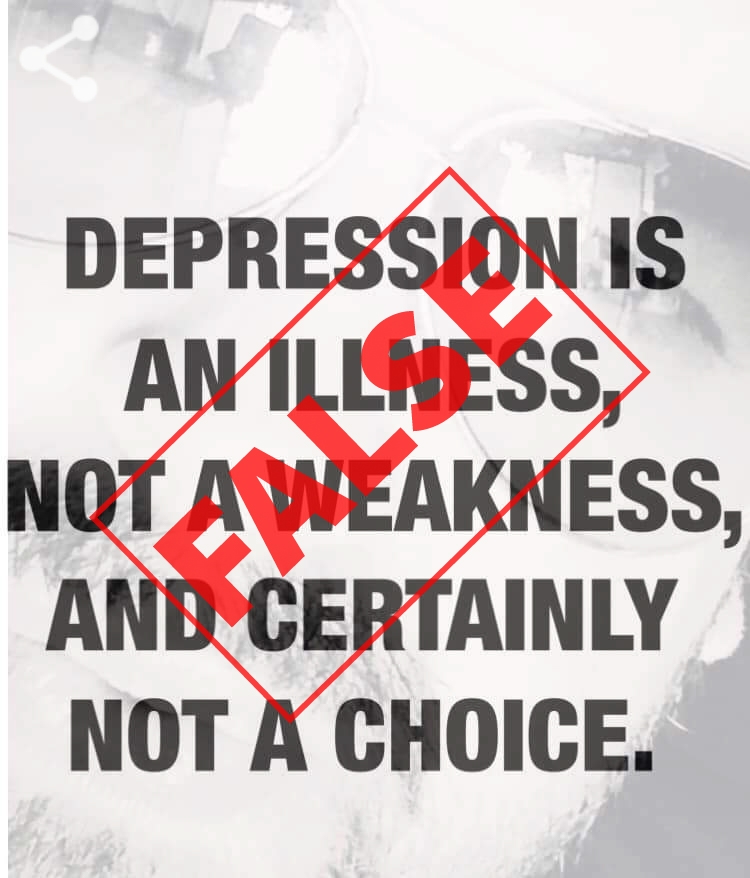
Depression is not an illness
I realise that this is a highly contentious point. But we must recognise the elephant in the room before we are able to deal with it.
The myth that depression is an illness causes more harm than the good it’s intended to achieve.
Depression is the absence of hope. Preceding that is the saturation of failed expectations from those we consider significant in our lives.
Like happiness, depression is not a choice. But, also like happiness, depression is an outcome of the collective choices that we make.
The more aware we are of those choices, and importantly the consequences of those choices, the more consciously we are able to make decisions to break the cycles that result from those choices.
The moment we label a human experience as an illness or a disorder, we create victims rather than masters of our emotional experience, thereby disempowering us in our efforts to rise above the unpleasant experiences of our lives.
Depression is not an illness. It is a legitimate human experience in response to bad experiences in life.
When we begin to recognise this, it becomes possible to reconnect with our humanity, rather than to surrender to an imagined illness.
#depression #narcissism #narcissisticabuse #emotionalabuse #mentalhealth #mentalhealthawareness #mentalhealthrecovery #selfworth #selflove #selfawareness #selfrespect #mindfulness #inspiration #ownyourshit #ownyourlife #theegosystem #embracingME #pursuitofhappiness #zaidismail -
Do more than survive
Those who respect your victim-hood do so because it makes them feel better about themselves.
They either feel more accomplished, or they find comfort in the familiarity of your struggle.
Sometimes it gives them purpose in their need to uplift others so that their lives feel more fulfilled.
Whether their intentions are good or not is not what’s important. The important point is that neither prompts you to rise above being a victim.
Those who support you in your moments of weakness or need but also encourage you to rise above it are the ones to cherish.
Before you take offence to what I’m saying, you need to realise that you’re only a victim when you allow the oppression of others to define your self worth, and to dictate your effort towards establishing a life worth living.
The moment you own your life and rise above the impact of that oppression, you’re no longer a victim, you’re a fighter! Not a survivor!
As long as you focus on surviving, you’re still defined by the moment of your oppression, even though you may have freed yourself from it.
Be more than the struggles of your life. It’s possible, and beautifully rewarding.
Photo credit : Naadirah Ismail
#hope #expectation #selfworth #selflove #selfawareness #selfrespect #mindfulness #inspiration #mybeloved #zaidismail #ownyourshit #ownyourlife #theegosystem #mentalhealth #mentalhealthawareness #mentalhealthrecovery #narcissism #narcissisticabuse #narcissisticparents -
Don’t sell yourself short
When you surrender your principles in exchange for affection, you give others permission to demand compromises rather than create understanding.
Worse than this, when you make such a compromise, you undermine your worth in the relationship by giving up what you believe in, not because you changed your beliefs, but because you wanted to be accepted.
Instead of upholding your truth, you settle for inclusion by those who don’t subscribe to your truth.
After some time, when the price of that inclusion begins to take its toll, you’ll find yourself adrift without your principles to anchor you, and with the realisation that they never really accepted you in the first place.
How could they if you didn’t reveal to them the truth of who you were?
That’s when life feels empty or burdensome, and anger becomes the tool through which we demand our significance in those relationships because we were hoping that at some point they would see our sacrifice and appreciate us for it, only to discover that our sacrifice was never important to begin with.
That anger is not always directed at those who didn’t appreciate us. Often, it’s directed at ourselves for not being good enough.
Think carefully before you compromise who you are just so that you can fit in. Every compromise comes at a cost. Be sure that you’re willing to pay the cost before you lose yourself in the process.
#selfworth #selfawareness #ownyourlife #selfmastery #mindfulness #personalpower #ownyourshit #mentalhealthrecovery #mentalhealth #mentalhealthawareness #lifecoaching #relationshipgoals #companionship #soulfood #soulmates -
More than mindfulness
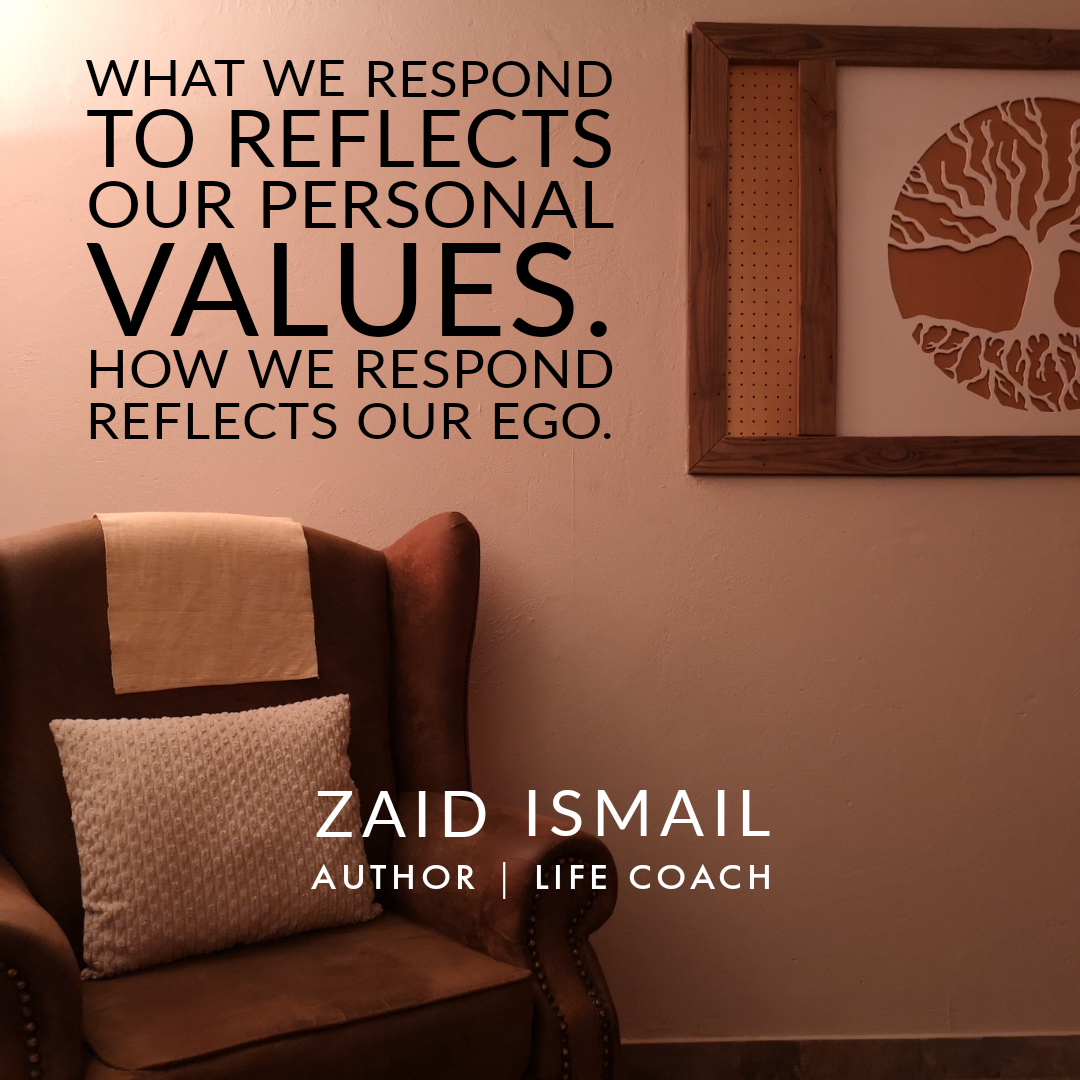
What we respond to reflects our personal values.
How we respond reflects our ego.
Emotional mindfulness is key to getting this right.
Situational mindfulness is knowing which battles to choose. That’s our value system that drives our choices.
Emotional mindfulness is being aware of how we feel when we choose our battles. That’s our self worth that comes into play.
Recognising the difference allows us to be more effective at achieving the positive outcomes that we hope for in life, rather than self-sabotaging because of our insecurities that may contaminate our tone in communicating what we feel strongly about.
Take your mindfulness to the next level.
More info on zaidismail.com.
#ownyourshit #ownyourlife #theegosystem #mentalhealth #mentalhealthawareness #mentalhealthrecovery #selfworth #selflove #selfawareness #selfrespect #mindfulness #inspiration #zaidismail #narcissism -
Poetry of old
“Poetry often belies the age of the poet,
but always reveals the struggles of the soul.
What we write of youth, applies to old.
But most would rather resist it,
Than bear the truth be told.
I’m in love with life.
But I hate the world.”
It’s possible to live life romantically, you know. Despite the horrors and pain that appear to be so pervasive in this world, perhaps romance is the ultimate rebellion against the cruelty of life.
Perhaps.
This is something that I wrote a few years ago, it still accurately describes my conflicted relationship with this world.
What you take from this, be it pessimistic, optimistic, or simply cynical, is a reflection of who you are and what your current relationship is with your world.
Yet, most will read into this what they believe to be true about me, not realising that what we see in others is a reflection of what we are hopeful, grateful, or bitter about in that moment.
How connected are you with your relationship with the world around you?
#poetry #romance #womansmonth #life #love #mybeloved #relationshipgoals #companionship #soulfood #soulmates #anincompletelovestory #zaidismail #lovestory #mentalhealth #mentalhealthawareness #mentalhealthrecovery -
Fear breeds sadness
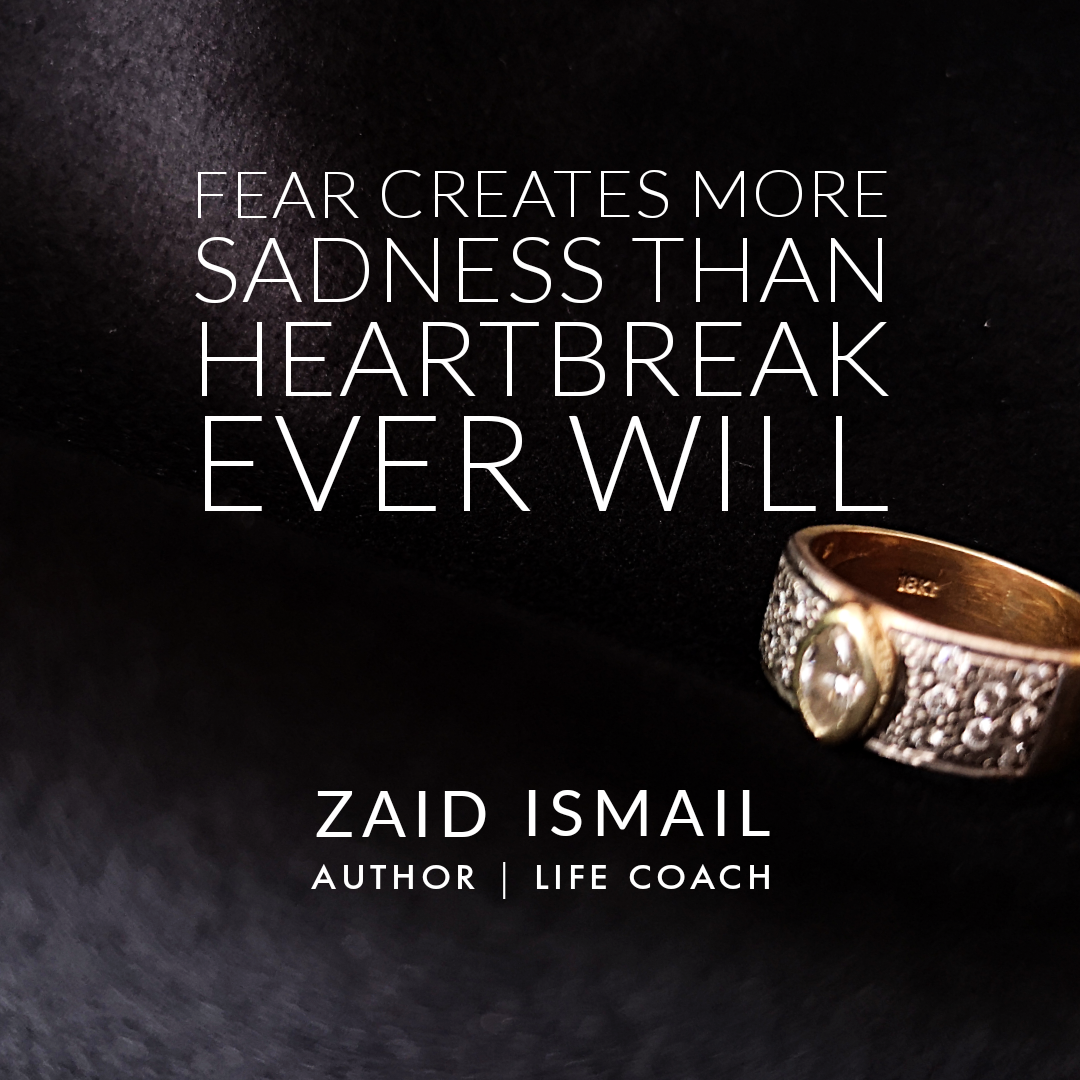
Fear creates more sadness than heartbreak ever will.
Fear keeps us anchored in a moment that has long since passed.
Fear convinces us that we need to be protected from what we previously experienced, while distracting us from the wisdom and strength that we gained from that experience.
Fear prompts us to look for signs and evidence that what we fear may once again be approaching, and distracts us from the signs and evidence that what we hope for is within reach.
Like everything that destroys, fear requires little effort because it is a self-sustaining cycle.
Hope, on the feet hand, requires courage.
Hope demands that we reconnect with who we are before that last bitter encounter.
Hope is not for the meek. When we succumb to fear, the meek prevail and life loses its sweetness.
#hope #expectation #sincerity #selfworth #selfawareness #mentalhealth #mentalhealthawareness #mentalhealthrecovery #theegosystem #ownyourlife #ownyourshit #embracingME #motivation #mybeloved #zaidismail #authenticity #lifecoaching #narcissisticpartner #narcissism #narcissisticabuse