When raised with fear and compliance as the tool to ensure good behaviour, or religious subscription, we create validation-seeking individuals whose willingness to compromise on what is right will be driven by social acceptance.
Instilling values in our children, or living by our own values, must be grounded in a substantial appreciation for why it is valuable, and not why it is right.
When we focus on right and wrong, we focus on judging others rather than understanding them.
Arriving at a conclusion about whether something is right or wrong has its place.
But without understanding and an appreciation for the value of what we want to establish, compassion is lost, and harshness is assumed to be justified to uphold truth or morality.
It is counter-productive to use harshness to teach understanding.
And it’s an exercise in futility to ignore what influences you are working against when trying to instil, or live by such values.
Being mindful of two things is therefore critical towards maintaining your sanity.
Firstly, connect with purpose and substance to the values that you stand for by connecting it to the good that you want to create in the lives of those around you.
Secondly, be aware of your ability to influence the adoption of those values in the lives of those you care for.
Sometimes, the appeal of instant gratification, or social inclusion may render your influence impotent.
When that happens, take the time to plant the seed, but don’t exhaust yourself in nurturing it.
We’re all responsible for nurturing our own seeds of goodness in our lives.
Own Your Life.
#hope #expectation #sincerity #selfworth #selfawareness #mentalhealth #mentalhealthawareness #lifecoaching #zaidismail #loveyourself #lifegoals #parenting #singleparenting #gratitude
Tag: parenting
-

Do what’s right, or else…
-

That war within
Sometimes that village is a family, sometimes it’s a group, and sometimes it’s just one person who represents everything that the village stands for.
That child grows into the raging adult who destroys every wholesome thing, because they feel like no one deserves peace if they were denied love and acceptance.
When you treat the vulnerable, or the gentle one’s, with contempt, you create the same monsters that made you.
That’s how the raging adult spawns more troubled souls that are driven towards burning down their village, with each generation growing more destructive, until someone chooses self-respect over self-loathing.
The distraction of their rage prevents them, and us, from seeing their plea for love and acceptance.
It’s a war within that rages without, because what they feel is at odds with what they need, and despite their best efforts, they don’t know how to achieve it.
So, the shame that bubbles beneath the surface – the shame that they hide from the world about that internal war – drives them to behave in ways that appear to claim what they believe others will not care to give them.
Thus, they project their rage on any innocent being that expects them to be better than that, because they’re no longer children…and only children throw tantrums.
Adults don’t throw tantrums because they don’t need someone else to destroy for them.
They destroy others to feel significant, not because they want the destruction, but because it at least gives them reason to believe that they’re not invisible.
That they still have an impact.
That they will be taken seriously…or else…
Your anger at the world is yours to tame.
You either rage at those who don’t have what you need, or you create it yourself through the alchemy of your soul.
Because that’s what makes us human.
Not that we hurt, or that we love, but that we can create love in the midst of hate, and calm in the midst of chaos, without any aides but the attributes of who we are beyond the rage.
It always starts with you.
#ownyourlife #theegosystem #mentalhealth #mentalhealthawareness #lifecoaching #zaidismail #loveyourself #parenting #singleparenting #selfworth #selflove #selfloathing -
Success at what cost?
The core of being human is the need to be significant to others, especially with significant others.
Our efforts to be successful feel empty and unfulfilling if we have no reason to believe that it positively impacts the lives of those around us.
So, we set out to be successful so that we can be valued, so that we can feel fulfilled or at least have reason to believe that we’re making a meaningful contribution towards the good around us.
But, what happens when we have an unhealthy self-esteem?
Our focus shifts from wanting to be of benefit, to being afraid of not being good enough.
To compensate for the fear of not being good enough, we focus on equipping ourselves as best we can to avoid failure.
Ethics and integrity become optional when what feels like survival overtakes our better judgement.
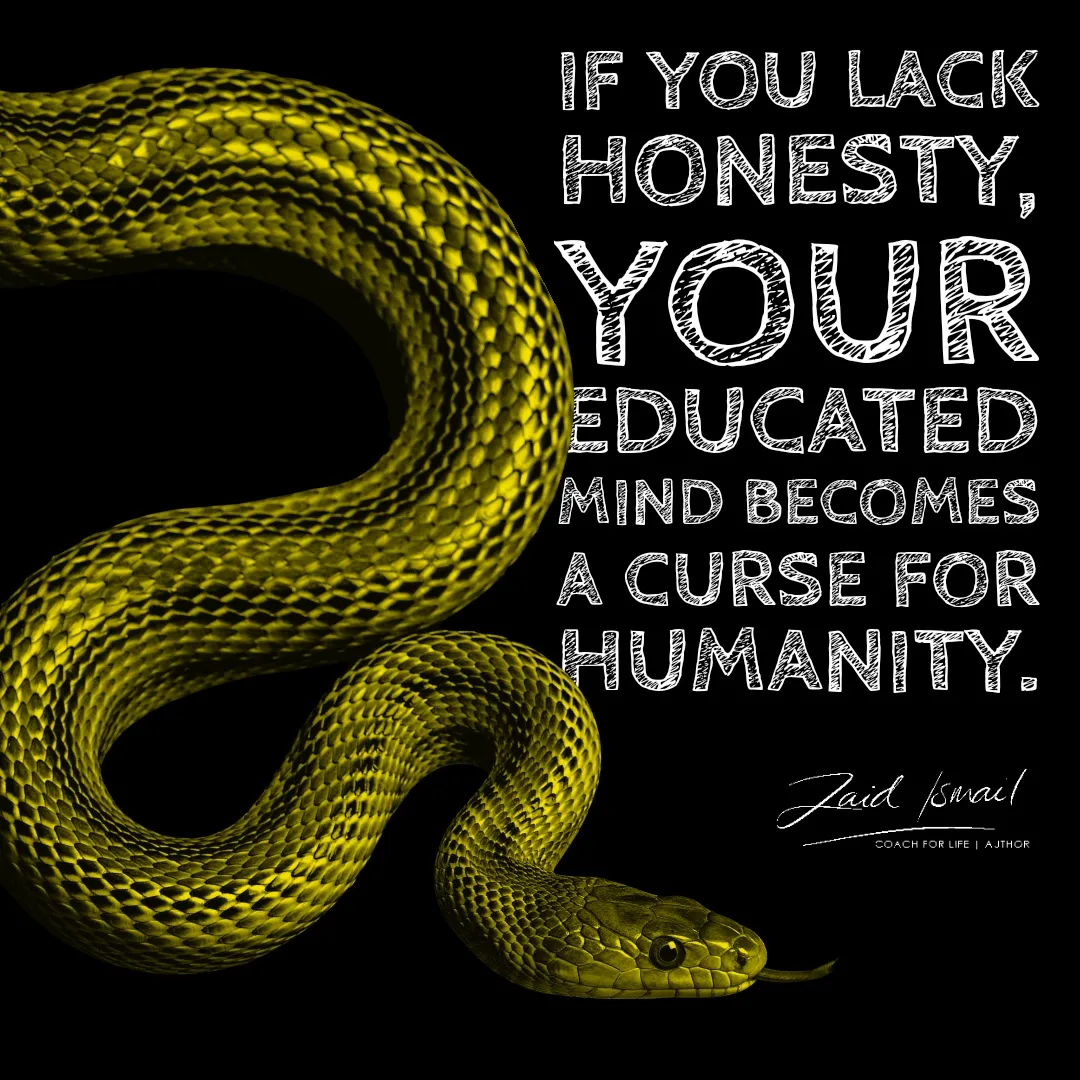
And in this way, our low self-worth becomes the basis on which we raise our children, convincing them about the importance of education, while setting loose boundaries for integrity.
Thus, by not understanding the state of their self-worth, we raise what appears to be narcissists while believing we’re raising responsible adults.
All because we exaggerated the importance of education compared to the emphasis that we placed on self-esteem and integrity.
No one intentionally or deliberately raises children with a low self-worth, but we cannot give what we don’t have.
That’s why, when we’re lacking in self-worth as adults, we compensae for it by focusing on equipping our children to fit into the world around them, rather than to define that world.
That’s how we place education and success above honesty and integrity, or sound character, while only intending good for our children. Or for ourselves.
This is yet another reason why the best gift you can give your child is not a good education, it’s a healthy self-esteem.
The rest will take care of itself.
#hope #expectation #sincerity #selfworth #selfawareness #mentalhealth #mentalhealthawareness #lifecoaching #zaidismail #loveyourself #lifegoals #motivation #optimism #purpose #education #parenting #narcissism -
Generational assumptions
One of the most common incorrect assumptions we make in life is assuming that others treat us badly because of who we are, and not because of their own demons.
This is especially true about how we feel about our relationship with one, or both of our parents.
Without realising it, two critical outcomes result from this incorrect assumption.
Firstly, we feel like victims in our lives because what we need from others always seems to be so elusive.
And secondly, it distracts us from the reality of the struggles that the other person, including our parents, may be going through.
When it comes to our parents, we easily lose sight of the human behind the role, until we eventually become parents and then judge them for not adequately preparing us for that role.
That’s how we inevitably make the same mistakes that they made because we lost sight of who we are.
If we connect with gratitude for who we are, and we focus on understanding, not judging why we may fall short from time to time, we’ll find it easier to connect with our humanness and in turn, with the humanness in others, rather than to judge them for not doing justice to their roles in our lives.
Generational cycles are not broken by trying to be better than those who came before.
It’s broken by seeking understanding of why they are the way that they are, so that through understanding them we can make better choices for ourselves.
When you ‘heal’ from your past, don’t abandon those who didn’t have more to give.
Treat them with the empathy and compassion that has been lacking in their lives so that they may also feel like significant humans who are not only valued for the role that they are expected to play in the lives of those around them.
This will improve our relationship with them, which in turn will improve the quality of life that we pass on to the next generation.
It always starts with you.
#hope #expectation #sincerity #selfworth #selfawareness #mentalhealth #mentalhealthawareness #lifecoaching #zaidismail #parenting #mentalhealthrecovery -
Allow them to learn
Sometimes, out of concern, we try to protect those we care about from mistakes that they are inclined to make.
We become the buffer between their bad decisions and the consequences thereof, so that they don’t find themselves in harm’s way.
This show of concern or compassion is good, as long as it doesn’t become their crutch in life, or ours.
If we’re not careful, we may give them reason to believe that they’ll always have a soft landing, or someone to bail them out.
By protecting them from the consequences of their decisions, you also prevent them from growing to appreciate why they should trust your advice and support.
However, choose carefully when to allow them to fall, because you don’t want to set yourself up for regret if there are long term consequences.
Focus on opportunities where the outcome or the impact can be contained or minimised.
The point is to allow them to learn from their decision making process, and not to maliciously prove a point that they should trust you more.
Always be focused on the benefit that you want to create for them, and not on the satisfaction that you need to feel when you point out that you were right.
Connect with compassion, not malice or bitterness.
This is especially true for parenting teens who are more inclined to demand control of decisions in their lives.
Not everything that they get wrong will hound them for the rest of their lives, so choose instances to teach such lessons based on the effort required for them to make right what they got wrong.
And sometimes, you’ll be surprised at how what you thought you needed to protect them from was actually beneficial for their growth.
#parenting #singleparenting #fatherhood #raisinggirls #daughters #mentalhealth #mentalhealthawareness #lifecoaching #zaidismail #enablingbehaviours -
Parents owning it
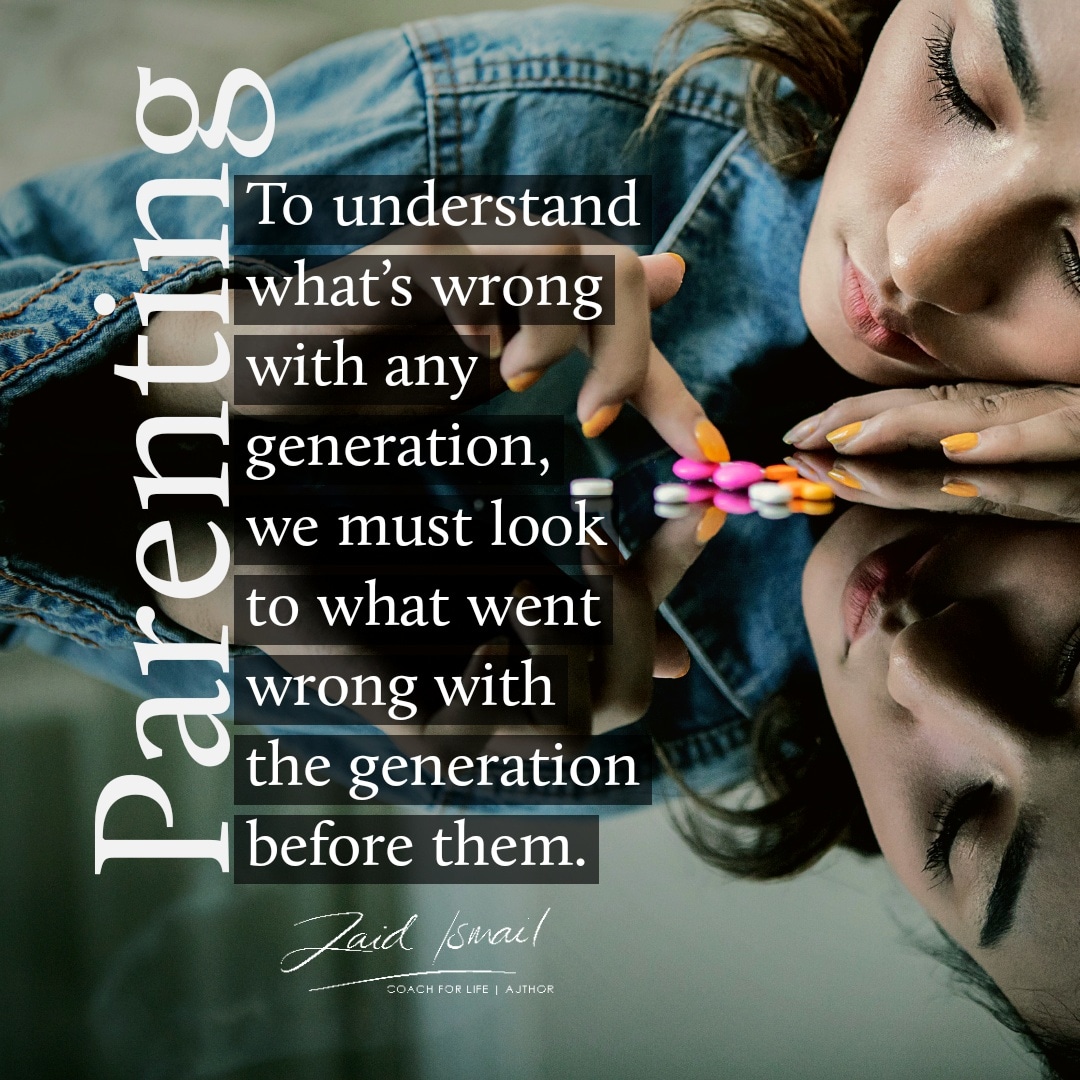
When we find cause for concern about a specific generation of humans, we must look to the generation before them for answers if we hope to address more than the symptoms of what is wrong.
None of us raised ourselves. Similarly, the troubled youth and many adults that we see struggling to make a good life did not raise themselves.
Understanding what was lacking in their upbringing is not shifting blame or justifying their behaviour.
Instead, it’s needed if we hope to break the cycle of generational trauma, or dysfunction that often seems to run in the gene pool of a given family unit.
It’s not the genes that are defective, but the common character traits and cultural inclinations that respond to the pressures of life in the same way that creates similar outcomes in each member’s life.
We cannot give what we don’t have, at least not until we’ve become aware of what we don’t have, so that we may finally acquire it through deliberate and conscious effort.
Until we reach such a level of self-awareness and understanding, we’ll keep chasing ghosts, or blaming the youth for being ungrateful or rebellious, or deliberately deviant.
If we didn’t acquire a healthy self-esteem during our childhood, we’ll likely spend most of our life struggling to feel significant, and behaving badly in the process.
Arts how it becomes that much more difficult for us to raise children with a healthy self-esteem. And the same applies to our parents when they raised us, and so on.
Parents who are struggling with the behaviour of their children need to reflect on their own feelings of self-worth without attaching shame to it.
It’s only in connecting with our own humanness that we’ll ever be able to connect with the humanness of others, especially our children.
It always starts with you.
#hope #expectation #sincerity #selfworth #selfawareness #mentalhealth #mentalhealthawareness #lifecoaching #zaidismail #parenting #singleparenting #drugabuse #addiction -
Raising humans
Parents are pretty much always well meaning, even when we behave like idiots.
We’re either trying to encourage our kids to be driven like us, or trying to raise them to be better than us.
And if we’re convinced that we’re not good for them, or that they deserve better, then we create distance between them and us because we are convinced that our presence may contaminate the wholesomeness of what they’re capable of being.
Either way, whether we’re present, absent, invested, or disinterested, the role that we play in their lives cannot be dismissed.
The more we’re given to our own fears and insecurities, the less justice we’ll do to raising them with a healthy sense of self.
Connecting with our fears and insecurities, and putting in the effort to understand ourselves better, is what will equip us to inspire our children to reach for their potential.
Otherwise, we’ll focus on discipline, good manners, decorum, and academic achievements, while hoping that they’ll somehow develop confidence and a healthy self-esteem simply through achieving good things.
Most often, this approach fails. It may produce functional adults, but it doesn’t produce emotionally grounded adults.
It emphasises the importance of duty and servitude, but it diminishes the importance of the human behind such attributes and achievements.
If you don’t have a healthy self-esteem, your battles will be projected onto your children, and it will contaminate their self-esteem in ways that will only become evident later in their lives.
Save yourself and them from a lifetime of internal struggle, and start dealing with your fears and insecurities in a meaningful way now.
Your future self will thank you for it, and so will your children.
It always starts with you.
#hope #expectation #sincerity #selfworth #selfawareness #mentalhealth #mentalhealthawareness #lifecoaching #zaidismail #loveyourself #parenting -
Ingratitude starts with you
We most often only realise that we’re ungrateful for a blessing that we have when it’s too late.
That’s when regret sets in and either spurs us on to improve our awareness of what we should be grateful for, or it makes us bitter for the loss that we experienced.
Gratitude is something that no one can instil in us.
Others may be able to give us something to be grateful for, but they can’t insert that gratitude into our hearts.
Gratitude is therefore something that we must connect with through our own way of valuing what we have.
But, valuing what and who we have in our lives becomes difficult, if not impossible, if we believe that we’re entitled to what they offer.
If we reduce the contribution of others to simply bring their duty, or the expectations of the role that they fulfil, we’ll inadvertently diminish our own value to simply being one of duty and responsibility as well.
We see ourselves through the same lenses that we use to judge the contribution of others in our lives.
When we regret the loss of something or someone because we took it for granted, we need to pause and reflect how much of who we are do we take for granted.
What do we recognise as cherishable traits or attributes about ourselves that we must nurture and protect from contamination?
Or do we take who we are for granted because we’ve grown so accustomed to trading and transacting with those around us?
This happens when we believe that what we do for others deserves reciprocation because we need something from them.
That’s how we lose sight of who we are, and the value that we are capable of creating in the lives of those around us because we want them to experience that value, and not because we need something from them in return.
You can’t give what you don’t have. That’s why ingratitude towards others begins with ingratitude towards yourself.
It always starts with you.
#hope #expectation #sincerity #selfworth #selfawareness #mentalhealth #mentalhealthawareness #lifecoaching #zaidismail #loveyourself #lifegoals #motivation #optimism #gratitude #appreciation #parenting