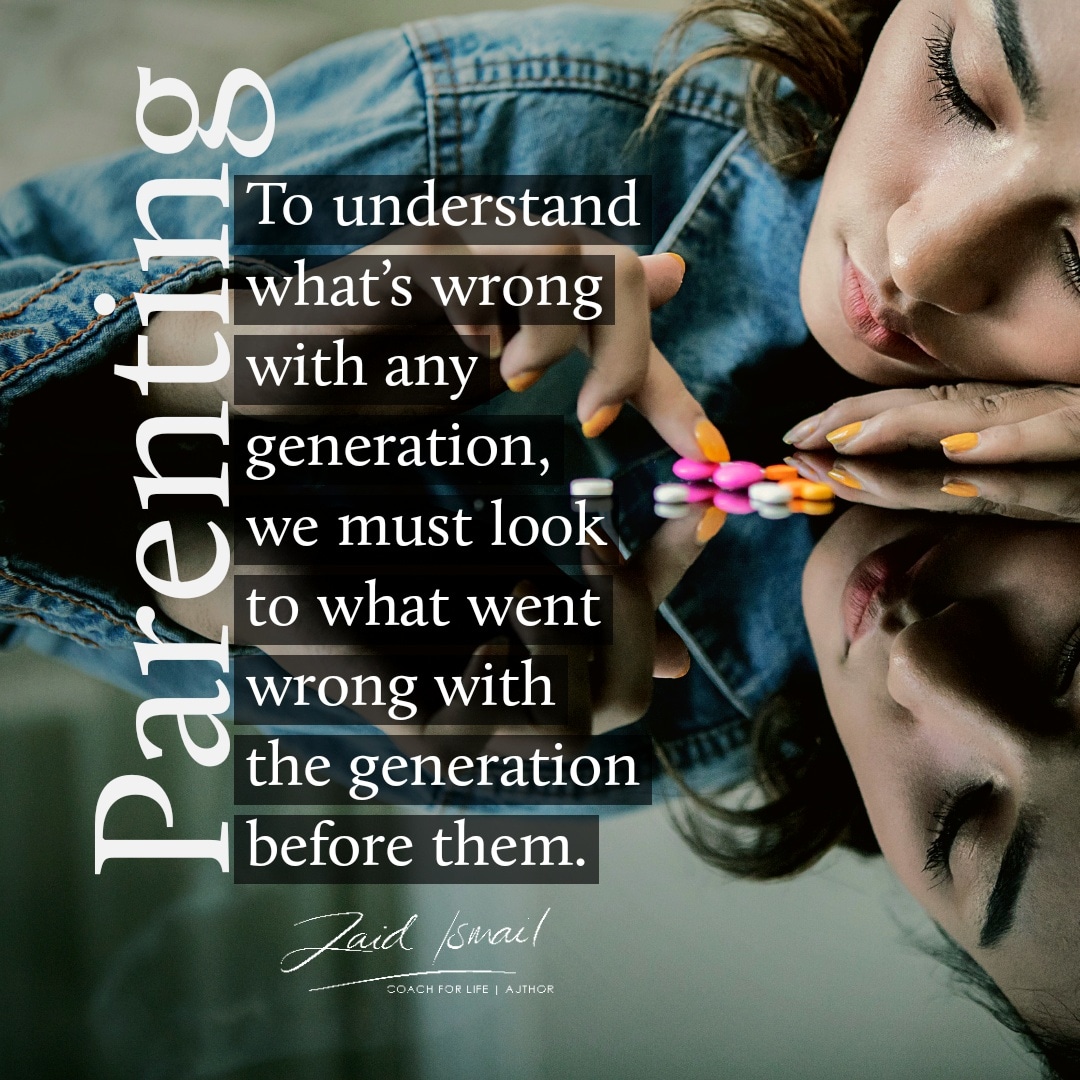
It’s not drugs that steal our children from us. Like us, they also need to feel significant.
Taking drugs is not just a bad habit. It’s a means to escape what we don’t want to deal with in the world around us.
Is it a bad decision? Absolutely. Because escaping something never resolves it, it only defers it to a later time.
But we all indulge in escapism of some kind, that’s why we have little to no communication in homes that centre around technology or social media, leaving the young ones struggling to find a space in which they belong, physically and emotionally.
The emotional connection that they then forge with fellow escapees is what makes drugs the escape of choice.
If we treat them as addicts, they will behave like addicts. If we deny what is lacking in their emotional make up, we’ll deny ourselves the opportunity to address it.
Addressing it doesn’t only benefit them, it also benefits us because the only reason that they would feel emotionally isolated is because we’re not emotionally accessible.
That means that we’re also denying ourselves the sweetness of life because if we’re emotionally unavailable, then we’re convinced that what is important to us is not important to anyone else.
That’s why we lose ourselves to duty and dismiss any demands to be emotionally available for those around us.
That’s how we create the environment that makes substance abuse or gambling, or other escapes attractive as a coping mechanism.
Break the cycle.
It always starts with you.
#drugs #addiction #narcissisticabuse #narcissisticparents #youth #selfworth #selflove #selfawareness #selfrespect #mindfulness #inspiration #lifecoaching #zaidismail #ownyourlife #theegosystem #mentalhealth #mentalhealthawareness #mentalhealthrecovery
Tag: addiction
-

Escaping addiction
-

Parents owning it
When we find cause for concern about a specific generation of humans, we must look to the generation before them for answers if we hope to address more than the symptoms of what is wrong.
None of us raised ourselves. Similarly, the troubled youth and many adults that we see struggling to make a good life did not raise themselves.
Understanding what was lacking in their upbringing is not shifting blame or justifying their behaviour.
Instead, it’s needed if we hope to break the cycle of generational trauma, or dysfunction that often seems to run in the gene pool of a given family unit.
It’s not the genes that are defective, but the common character traits and cultural inclinations that respond to the pressures of life in the same way that creates similar outcomes in each member’s life.
We cannot give what we don’t have, at least not until we’ve become aware of what we don’t have, so that we may finally acquire it through deliberate and conscious effort.
Until we reach such a level of self-awareness and understanding, we’ll keep chasing ghosts, or blaming the youth for being ungrateful or rebellious, or deliberately deviant.
If we didn’t acquire a healthy self-esteem during our childhood, we’ll likely spend most of our life struggling to feel significant, and behaving badly in the process.
Arts how it becomes that much more difficult for us to raise children with a healthy self-esteem. And the same applies to our parents when they raised us, and so on.
Parents who are struggling with the behaviour of their children need to reflect on their own feelings of self-worth without attaching shame to it.
It’s only in connecting with our own humanness that we’ll ever be able to connect with the humanness of others, especially our children.
It always starts with you.
#hope #expectation #sincerity #selfworth #selfawareness #mentalhealth #mentalhealthawareness #lifecoaching #zaidismail #parenting #singleparenting #drugabuse #addiction -
Escaping emotionally abusive homes
Trigger warning. Unpopular opinion. Tough love ahead.
It’s not drugs that steal our children from us. Like us, they also need to feel significant.
Taking drugs is not just a bad habit. It’s a means to escape what we don’t want to deal with in the world around us.
Is it a bad decision? Absolutely. Because escaping something never resolves it, it only defers it to a later time.
But, we cannot give what we don’t have. So we can’t give understanding if we don’t understand ourselves.
Escapism is the pastime of the masses, that’s why we have little to no communication in homes that centre around technology or social media, leaving the young ones struggling to find a space in which they belong, physically and emotionally.
The emotional connection that they then forge with fellow escapees is what makes drugs the escape of choice.
If we treat them as addicts, they will behave like addicts. If we deny what is lacking in their emotional make up, we’ll deny ourselves the opportunity to address it.
It’s never easy. Because we can’t give what we don’t have. That’s why we must invest in ourselves so that we are capable of doing right by those around us. What is your escape?
#drugs #addiction #narcissisticabuse #narcissisticparents #youth #selfworth #selflove #selfawareness #selfrespect #mindfulness #inspiration #ownyourshit #ownyourlife #theegosystem #mentalhealth #mentalhealthawareness #mentalhealthrecovery #embracingME