Tag: narcissism

  • The victim-hood of self-loathing

    The victim-hood of self-loathing

    No good deed goes unpunished. I was reminded of this in recent days when the bitterness of a self-loathing human distracted me from what is important about life. It’s not the bitterness that was jarring. It’s the intensity, and the immensity of the self-loathing that has become the battle cry of too many that jarred me most.

    The delusion that doing good attracts goodness adds to the mind-numbing effort of being human. We don’t attract what we do or what we give, we attract those who are most in need of what we’re offering.

    That’s why the vapid seek the wholesome.

    The weak seek the strong.

    The self-loathing seek the grateful.

    And the cursed seek the blessed.

    But the twist is a terrible one. Just because you’re self-loathing doesn’t mean that you’re not blessed. It just means that you will not see in yourself what others see in you.

    It’s easy to lose yourself to the bitterness of a world full of ingrates disguised as humans parading as the wounded selfless ones. But in that lies the clue to recognise the twist of that dagger of self-loathing before it is inserted into your tender flesh.

    The selfless, the truly selfless, never parade.

    The ones who wear their heart on their sleeves, their struggle on banners of goodness and humility, and their inaction as a claim to exhaustion from their reality are the ones who are ungrateful for who they are and what they have. That’s why they look for validation for what they parade in sometimes subtle tones, but most often in blatant distortions of their reality.

    Naivety is the knife that you drive into your own gut when you trust blindly, serve loyally without question or wisdom, and when you surrender who you are for who you believe you must be.

    Joy is ephemeral when not shared. It becomes a fleeting moment celebrated privately when what we honour comes to pass, but is just as quickly set aside because it doesn’t really matter if we don’t matter. It is this core of being human that turns our humanness into a frailty that is exploited by the self-loathing.

    Self-loathing is born from our assumption that we are incapable of what is needed to earn affection or inclusion. Such an assumption demands that we must present our best case to defend our pitiful state before others see us as pitiful or lacking. That’s when our struggle grows to define us. That’s when we need everyone to revere our struggle and not dare to advise us to rise above it because rising above it becomes a threat to our sense of self.

    If we don’t recognise the self-loathing in others, we’ll exhaust ourselves to the point of depletion in our efforts to be enough for them, or to inspire them to be better, or to believe in them until they begin to believe in themselves, while never holding them accountable for their ingratitude for everything that the have, and all that they are.

    If we don’t recognise the self-loathing in others, we’ll assume that they’re victims of life, while losing sight of the victims of their carnage as they go through life taking from everyone but always having reason not to reciprocate in equal measure. That’s how a healthy self-esteem in one who is sincere in uplifting another can easily be exchanged for crippling self-doubt after struggling to understand why we may never be enough for one who seems so full of potential if only…If only they see themselves the way that we see them.

    Self-loathing doesn’t create space for such realisation because self-loathing is the abdication of accountability for who we choose to be. Without accountability, there can be no healthy self-esteem because we need accountability to take a stand for what we stand for before we will ever experience the self-respect that results from standing for something that we believe to be important, rather than chasing things that make us important to others.

    Self-loathing is the ultimate barometer of gratitude, or more accurately, ingratitude. If we can’t be grateful for who we are, how can we possibly be grateful towards others for what they do? We cannot give what we don’t have. Which means that we can only give what we have. That is how our behaviour, when understood clearly, reflects the light or the darkness that we court within.

  • You are your own worst victim

    You are your own worst victim

    The victim mindset wreaks the most destruction and creates the worst of oppressors.

    The victim mindset is established when we find ourselves nursing wounds of experiences and betrayals that have long since passed.

    The victim mindset is nurtured when we are emotionally impacted by the behaviour of those who play no meaningful role in our life.

    The victim mindset becomes more deeply entrenched when we expect others to make up for our experiences from long before we ever knew them.

    The victim mindset is the most debilitating, demoralising, and destructive mindset of them all because it takes offence from being challenged, insult from observation, or feels attacked when advised.

    The victim mindset is set firmly on the belief that we are defined by how others treat us, or treated us.

    The victim mindset denies us the mindfulness and accountability needed to own our life because we’re waiting for our perceived injustices to be remedied before we allow ourselves to move on.

    The victim mindset confuses meaningful action with blind rage.

    The victim mindset destroys, but never creates anything of benefit.

    The victim mindset wastes away life while lamenting the past.

    The victim mindset is a corruption of the soul that fails to separate the moment of being a victim with what we hold onto from the experience long after the experience has passed.

    While we’re caught up in that victim mindset, we lose sight of how many around us become victims of our rage, our neglect, our self-consumed approach to life, and our abdication of responsibility in how we’re supposed to show up for them.

    The victim mindset therefore spawns more victims, and the only way to rise above it is to own it and want to be more than that.

    When you claim your rights before you honour your responsibilities, you’re in a victim state of mind, and you cause oppression while using your feeling of oppression to justify your behaviour.

    It always starts with you.

  • Woe is me…or is it?

    Woe is me…or is it?

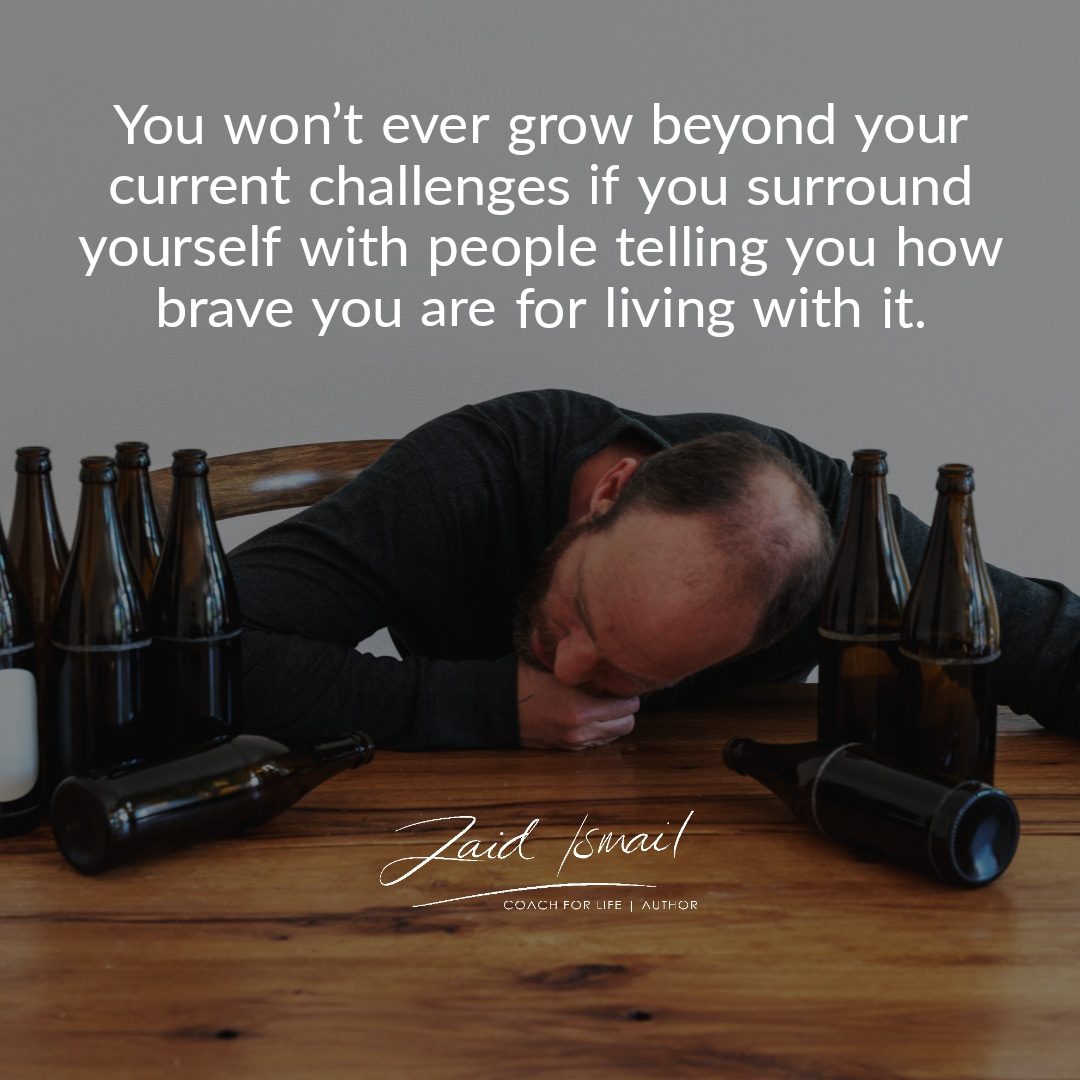
    The need to be pacified about the struggles of our life is an indication of how much or how little we believe in ourselves to rise above it.

    When we lose sight of our contribution towards our current state, we surrender to destiny or fate, and wait to be saved or celebrated for how strong we are for persevering.

    Meanwhile, our inaction at changing, or breaking the cycles in which we’re caught, reflects our self-worth more than it reflects our bravery or resilience.

    When the oppressed or the abused remain submissive, they choose to live with shame rather than fight with dignity.

    That fight doesn’t have to be confrontational. Especially when we are physically incapable of subduing the other.

    However, understanding what we’re doing to feed the cycle that is harming us is the beginning of changing what we contribute to such cycles.

    This is not victim blaming. This is victim empowering.

    The difference being that we don’t blame the victim for the oppressor’s actions, but we encourage the victim to reclaim their voice and their dignity, which in turn reduces the validation that the oppressor or abuser gains from their abuse.

    Understanding the cycle is therefore paramount to effective action.

    Action without understanding is like gambling with your life.

    Seek to understand before you surrender to your reality.

    Otherwise you’ll go through life believing you’re trapped, while not realising that there was always an exit strategy available to you.

    It always starts with you.

  • Wow! Look at me now…

    Wow! Look at me now…

    Of all the things that test our resolve, the acquisition of knowledge is the most important.

    It’s easy to get lost in the praise and social elevation that accompanies achievements such as professional qualifications, religious standing, or even business success.

    And because each of it demands a lot of personal sacrifice and discipline, the feeling of entitlement to its rewards takes root without much effort at all.

    Especially since there are many who would treat us with privilege because of their need to be associated with such social standing, or success.

    However, that’s when we lose ourselves to the trinkets and luxuries that accompanies such success.

    That’s when we lose ourselves to the power and influence that such social standing offers.

    That’s when the true tests of our convictions and our value systems present themselves.

    Not only does it matter how we treat people after enjoying such accomplishments, but more importantly, how we utilise the resources that we have access to, including the social structures of privilege that we belong to, that determines the true value of our accomplishments.

    A healthy self-esteem is the only grounding point to prevent such erosion of values or ethical standing.

    A healthy self-esteem, not an inflated ego, is what will keep us focused on how much more good we can achieve, or value we can create for those who cannot benefit us, so that we don’t squander our success or opportunities on self-enrichment or extravagance of lifestyle.

    The sweetness of life lies in the upliftment of others.

    It’s the only accomplishment that doesn’t leave us chasing for validation or acceptance.

    It’s rooted in gratitude for who we are and what we have.

    Without such gratitude, we forever chase opportunities to subdue the fear of inadequacy.

    It always starts with you.

  • Destroying peace to find peace

    Destroying peace to find peace

    Rage is a destructive demand for significance when we believe that who we are is not enough to be important to those we love.

    The anger that spurs on the rage is a defence mechanism to protect ourselves from becoming invisible.

    We try, in our own little futile ways, to be enough without being able to express ourselves the way others may expect, which leaves us feeling unappreciated when they don’t realise how difficult even that little expression was for us.

    That’s when we feel the rage build up, because we’re reduced to love languages, and token gestures that define how we must express ourselves, when all we want is to just be appreciated for who we are.

    But, that feeling of frustration at not being able to express our emotions in a healthier way was instilled in us long before our adult years.

    Therefore, the rage at our partners or children is simply years of bottled up anger at never being enough, or never feeling heard or seen, by those we relied on most to make us feel safe, and whole.

    It is our invisibility in childhood that creates our demands from the world as adults.

    It is our feelings of inadequacy as children, that fans the rage of abuse and marital rape in our adult years.

    It is our obliviousness to the value of who we are, despite the failings of our parent/s, that keeps us raging at innocent ones who had nothing to do with the nurturing of our insecurities in childhood.

    That’s how we end up repeating the very cycles that destroyed our sense of self.

    When you judge your parents harshly for what they didn’t give you, you fail to see their humanness.

    The very same humanness that you fail to see in yourself, that causes you to rage at the world, instead of appreciating the beauty and peace that it offers.

    You cannot give what you don’t have.

    And you cannot grow if you’re waiting for others to treat you right before you let go of the rage.

    It always starts with you.

  • Honourable destruction

    Honourable destruction

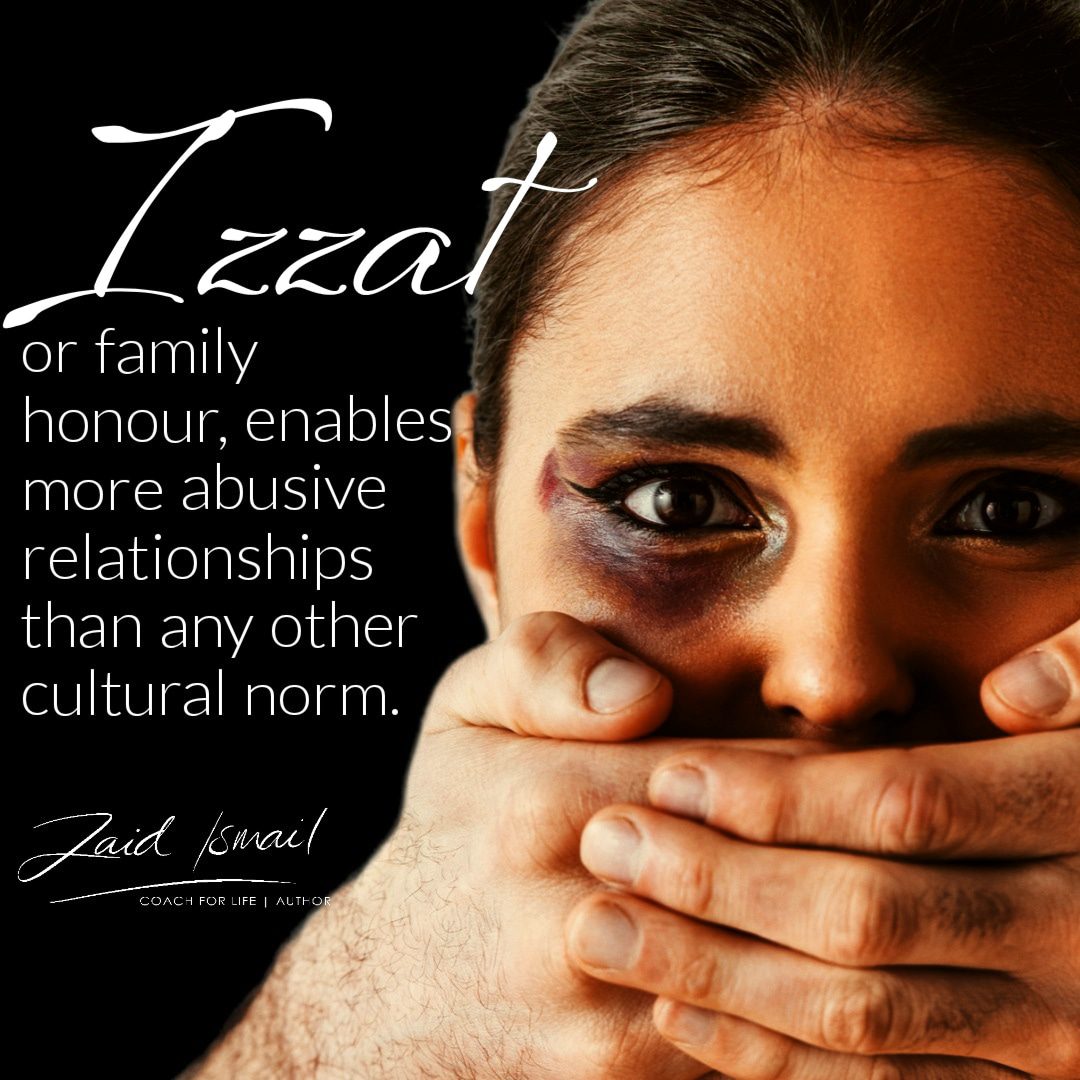
    When honour is confused with social standing, abuse becomes an acceptable form of saving face.

    Beyond considerations of family honour, this toxic cultural practice convinces the individual that infidelity becomes excusable because divorce is deplorable.

    It convinces the brute of the justification of their rage when their partner rejects dehumanising practices by their in-laws.

    It replaces ideals of honour and virtue with ideals of being celebrated by the community for the facade that we create of an empty shell of a life.

    It teaches our children that what others think of you is always more important than what you think of yourself.

    Because we’ve convinced ourselves that it is the village that gives us relevance, we’ve lost sight of how toxic that village has become.

    Izzat is the excuse for marital rape, because our rights are infinitely more important than our responsibilities.

    Izzat is the excuse for honour killings, because appearing weak is assumed to be caving in to justice, while upholding injustice.

    Izzat has eroded the foundation of society, in all societies and not just the Indian culture, because women are seen as symbols of the grandeur of men, and men have grown to be defined by how much his woman raises his stature.

    And in the war for self-worth, the physically weak suffer most, while the physically strong destroy the people around them because they don’t know how to deal with their weakness.

    Break the cycle.

    Own Your Life.

  • ‘Sorry’ isn’t the hardest part

    ‘Sorry’ isn’t the hardest part

    The only thing worse than an insincere apology is the apology that is offered with a demand that it be accepted.

    The most important part of an apology is not that it is made, but that it is authentic.

    Not just sincere. Authentic.

    If an apology is limited to a text message, or a few words uttered, but has no meaningful effort behind it to remedy the offence or harm that was caused, then it isn’t an apology. It’s manipulation.

    When we demand that our apology result in a change in attitude from the one that was offended because the apology is supposed to put the offence behind us, it’s not an apology, it’s manipulation.

    When we apologise but take offence or become defensive when the impact of our behaviour needs to be discussed by the one we offended, then we didn’t apologise, we were just ‘doing the right thing’. That’s manipulation.

    When we are sincere in regretting the harm or offence that we caused, an apology will be the smallest action that we take to make up for what we did.

    If we’re sincere, an apology will only mark the first step in our effort to regain the trust and confidence, or the good standing that we had with someone, because they are important to us, and not just because they didn’t deserve what we did, or we feel self-righteous in owning up to being wrong.

    On the flip-side, needing someone to admit fault and repeatedly apologise for something that they’ve already shown remorse for is not accepting their apology. Nor is it sincere reciprocation of their efforts to remedy the breach in the relationship.

    It’s revenge aimed at inflicting the same harm or offence that we felt from their behaviour.

    Whether justified or not, it reflects what we value more. The relationship that we have with them, and how much we value who they are, or being seen as the victim of their mistake.

    Be authentic. If not, you’re simply manipulating your way through life.

    It always starts with you.

  • But is it abuse?

    But is it abuse?

    If the widespread belief that silent treatment is emotional abuse is to be accepted, then we must also consider the form of abuse that its counter behaviour imposes.

    Silent treatment is not an assault on the senses and it doesn’t demand a response. The impact on the recipient of silent treatment is therefore dependent on what the recipient needs to feel validated or visible in that relationship.

    It also means that the reason for the dysfunctional communication has to be considered beyond just the withholding of communication from one of the parties.

    However, with nagging, it is an assault on the senses and has an inherent demand for a response.

    Nagging is based on the assumption of insensitivity or unwillingness on the part of our partner, rather than trying to understand why the first or second request for something was not or could not have been agreed to, or why they see no point in repeatedly acknowledging the same point.

    The important point is therefore not about whether it is or is not abuse, but rather why the communication has broken down to the point of such behaviours being the only means to express dissatisfaction with our partners.

    Claims of abuse are counter-productive unless either party is physically prevented from walking away from such forms of ‘abuse’ .

    The focus should therefore be on creating understanding about why communication has broken down, rather than supporting one partner against the other.

    No one nags or remains silent if they believe that their reasonable voice will be appreciated.