Owning your life doesn’t mean controlling every aspect of your life.
Instead, it means that you are mindful about what and who you allow to influence your decisions and outcomes in your life.
Like most things in life, moderation is important.
Knowing when to take the reins and when to have it over to someone who knows better is key to growth and happiness.
The need to control everything about our lives is driven by fear, rather than inspiration or ambition.
Also, when we choose to control, we also prevent good and sincere advisors from guiding us.
Control is fear based because we need predictability, which is driven by our belief that we are incapable of dealing with unexpected changes.
It’s that belief that we need to challenge when we want to own our life. Because our belief that we’re incapable of dealing with change places control in the circumstances around us, and causes us to react to everything, rather than to own our response.
#lifecoaching #zaidismail #loveyourself #ownyourshit #selfworth #selfawareness #mentalhealth #mentalhealthawareness #mentalhealthrecovery #theegosystem #ownyourlife #selfdoubt #selfmastery
Tag: loveyourself
-

Own your life
-

Self pity destroys everything
Self pity destroys the very life that we wish we had.
It is spawned by the belief that the future holds nothing for us, because the injustices of our past remain unavenged, or unappreciated.
Without realising it, we become defined by our struggle, and lose ourselves in the process.
Until we are faced with one who sees the beauty and the potential that we’ve lost sight of.
Sadly, at that point, we feel torn between hope and shame.
Hope that what we wanted all this time is finally reachable, and fear that our inadequacy may be discovered, leaving us abandoned or rejected once more.
Because, if we were discarded when we gave off our best, surely we’ll be rejected or judged harshly now that we’re at our worst.
At least, that is what we have convinced ourselves is true because of our fixation on the brutality of our past.
That’s the root cause of the self pity that now destroys any good that threatens to expose our vulnerability, our neediness, or our shortcomings that gave someone we once trusted enough reason to reject us.
Until we realise that it was our choice, albeit an innocent and unintended choice, to be defined by our struggles, we’ll assume that anyone expecting more from us, or believing in us, is an attempt to undermine the struggle that we have endured, and continue to battle.
That’s how self pity creates the vicious cycles of repeat abandonment, while we convince ourselves that the subsequent abandonment justifies our need to protect ourselves from rejection.
If you’re struggling to break this cycle, reach out via my website at zaidismail.com or on WhatsApp at +27836599183 and let’s create the life that you’ve always wanted. And deserve.
#selfworth #selfawareness #selfpity #selfloathing #selflove #mentalhealth #mentalhealthawareness #mentalhealthrecovery #lifecoaching #zaidismail #loveyourself #ownyourshit -
Gratitude spawns respect
Disrespect is often followed by discipline, or some other form of consequence management.
While there is a need to correct bad behaviour, we can either spend our lives correcting that behaviour, or we can recognise that it’s a symptom of something else.
That something else is the absence of gratitude.
No. Not gratitude for what we have. Because that’s the other mistake we make.
When we consider what we’re grateful for, we look around us, but rarely within.
This is true for all humans, children and adults alike.
Disrespect is a form of anger.
Anger is a defence mechanism used to demand significance when we feel insignificant.
Respond to the anger, and you lose sight of why there is insignificance.
Just like responding to the disrespect only will cause you to lose sight of the absence of gratitude within the one who is behaving disrespectfully.
That ingratitude is based on the belief that we’re not good enough. And we believe we’re not good enough only when we don’t value who we are, and what benefit others obtain from our contribution or our presence.
Remember, you cannot nurture something that you’re not aware of.
That’s why we take ourselves and others for granted, and end up being dismissive, disrespectful, or abusive, because we lost sight of the good within us, or them. Or both.
Photo credit : Adobe Stock
#selfworth #selfawareness #ownyourlife #selfmastery #mindfulness #personalpower #ownyourshit #mentalhealthrecovery #mentalhealth #mentalhealthawareness #lifecoaching #zaidismail #loveyourself #ownyourlife -
Fanning our rage
Fear is driven by need.
The moment we give up on the need, the fear subsides.
Our need to be significant to those who are significant to us drives most of the fears that may fan our rage at the world.
But only for as long as we still have hope that there is a chance for us to be significant to them.
When we give up on achieving that status in their lives, the fear subsides and gives way to an emptiness that carries with it no energy at all.
That emptiness feels like peace after a lifetime of struggle. But only until we realise that when that peace entered, hope departed.
Thus, the dulling of the soul begins.
Quietly receding, carefully subduing, and slowly disappearing from the lives of those we once courted.
Until, eventually, we successfully fade from our own life.
Some see it as a cowardly surrender. Or perhaps a convenient choice.
If only it was convenient to be invisible, more would choose that over self destruction, or suicide.
When we stop paying attention to those who seek us out, we surround ourselves with those we seek instead.
If we don’t find a balance between the two, we’ll find the isolation that accompanies being both, looking for a place to belong, but finding none.
Photo credit : Adobe Stock
#selfworth #selfawareness #ownyourlife #selfmastery #mindfulness #personalpower #ownyourshit #mentalhealthrecovery #mentalhealth #mentalhealthawareness #lifecoaching #zaidismail #loveyourself #companionship #soulfood #soulmates #foreverincomplete #fuckit -
Are you grateful for you?
Whenever asked about gratitude, the inevitable response is one that is focused on everything we have around us.
Sometimes, we consider our health and our skills.
At other times we recognise the value of things not being as bad as they could have been.
And we convince ourselves that this is being grateful.
But how often do we stop to contemplate gratitude for the traits and attributes that we have which makes our appreciation of all of that possible?
How often do we stop to appreciate the essence of who we are, and the tough and selfless choices that we made under difficult circumstances, when we could easily have taken the selfish or easy way out?
This is not about judging the choices that we’ve made, but about recognising how we still showed up, with conviction, to do our best to make something good out of a bad situation.
You cannot nurture that which you don’t acknowledge to be true. So how are you going to nurture the value of who you are, if your gratitude is only focused on what you have?
Striking a balance between selfishness and gratitude for the self is what makes the difference between being defined by your struggles in life, versus defining the outcomes of the struggles of your life.
You won’t be able to determine the difference if you lack gratitude for who you are, and what your contribution is towards improving the state of your life, and the lives of those around you.
The next time you contemplate what you’re grateful for, be sure to include yourself in that moment of reflection.
Photo credit : Adobe Stock
#selfworth #selfawareness #ownyourlife #selfmastery #mindfulness #personalpower #ownyourshit #mentalhealthrecovery #mentalhealth #mentalhealthawareness #lifecoaching #zaidismail #loveyourself #gratitude #appreciation #compassion #kindness -
Recognise your demons
Some of the most disheartening moments we may experience include trying to help someone we care about while they reject our efforts.
The harder we try, the more they resist.
The more persistent we are, the greater their anger or bitterness towards us.
Most often, it’s not because of who we are or what we’re trying to do.
Most often, it’s because we represent the source of the shame that they are grappling with.
When someone feels inadequate, or like a failure, being around those who are composed, or appear successful feels like a threat to them because it risks highlighting their lack of achievement.
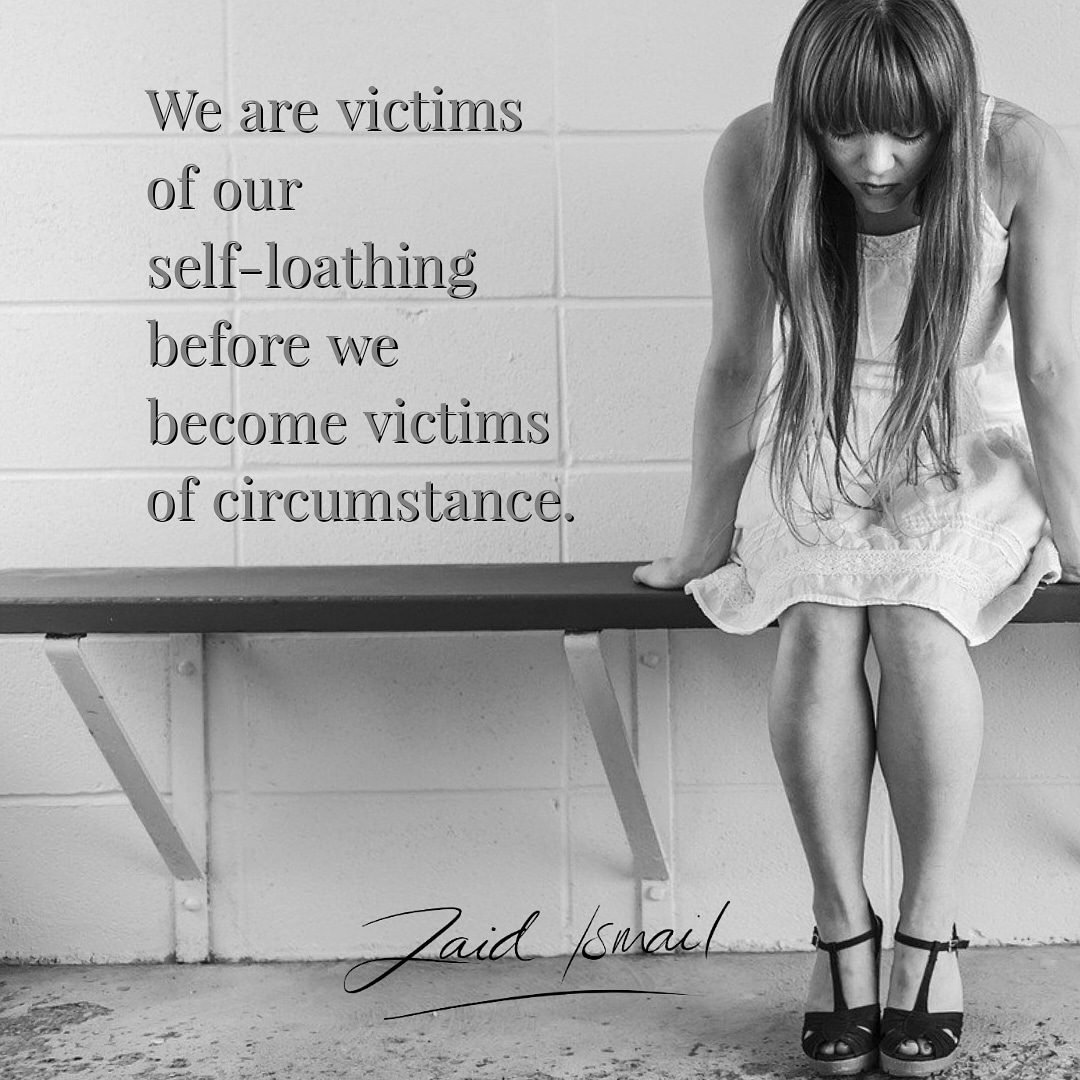
Sometimes, just being a good person while standing next to a self-loathing person is enough to bring out the rage in them.
Not because we tried to make them feel bad about their state, but because in our presence, their reasons for self-loathing were intensified.
Despite our best intentions in that moment, if we don’t realise that we represent what they detest about themselves, we’ll blame ourselves for not being good enough, when in fact the opposite was true.
As much as we may want to fight the demons of the ones we love, we must understand that some demons are a creation of their own minds, and can therefore only be fought themselves, or with those who don’t appear as a threat to revealing their shame.
If you need assistance in supporting someone you love through such an episode in their lives, or if you are the one grappling with this, reach out via my website at zaidismail.com or on WhatsApp at +27836599183 and together we can create the life that you’ve always wanted.
Photo credit : Adobe Stock
#selfworth #selfawareness #ownyourlife #selfmastery #mindfulness #personalpower #ownyourshit #mentalhealthrecovery #mentalhealth #mentalhealthawareness #lifecoaching #zaidismail #loveyourself #selfloathing #emotionalmindfulness -
Celebrate your humanness
Tears are not weakness because it takes strength to embrace your humanness.
The worst brutes lack the courage to be human because appearing unaffected by others is their idea of strength.
Sadly, such a show of strength seals their hearts to emotion and blinds their eyes to the harshness that they exhale, creating distance between them and those they wish to have closer.
They convince themselves that their cold exterior is needed to protect themselves from hurt while not realising that they created the self fulfilling prophecy that hurts them.
When comparing yourself against such emotional detachment, it’s easy to believe that you’re weak for feeling something that leaves them untouched.
No. The weakness is in them.
Strength is found in knowing that your humanness doesn’t define your resilience.
Being human makes makes resilience a beautiful trait.
Without it, life loses its sweetness, and resilience becomes a cold comfort without fulfilment.
Photo credit : Adobe Stock
#selfworth #selfawareness #ownyourlife #selfmastery #mindfulness #personalpower #ownyourshit #mentalhealthrecovery #mentalhealth #mentalhealthawareness #lifecoaching #zaidismail #loveyourself #emototionalattachment #coldheart -
Own your self-worth
Before we can allow the world to define us, we have to first give up what we believe to be true about ourselves.
I’ve seen so many test their significance in the lives of significant others, and when they don’t get the affection or inclusion that they want, they readily assume that it’s because they’re not good enough.
Why are we so inclined towards questioning our value, instead of seeing the complete human in the other person?
To see that complete human, we can’t dehumanise them by assuming that they are free of the self-doubt or insecurities that we may be struggling with.
We all just conceal our faults through different defences.
One of those defences is to appear aloof or uninterested in response to a show of affection from others because we’re afraid of rejection or disappointment.
We protect ourselves by only allowing safe options into our personal space.
Remember: if you appear too confident or composed in front of another, they may see it as a threat to revealing their lack of confidence.
Think about that the next time you don’t get the warm reception you were hoping for and decide to convince yourself that you weren’t good enough.
Everyone has their demons that they’re struggling with. Don’t always make it about yourself.
Photo credit : Adobe Stock
#selfworth #selfawareness #ownyourlife #selfmastery #mindfulness #personalpower #ownyourshit #mentalhealthrecovery #mentalhealth #mentalhealthawareness #lifecoaching #zaidismail #loveyourself