⚠️ Trigger warning ⚠️ archive post.
Blaming chemicals for your emotional state is like blaming the overflowing rivers for the rain.
Smile, and you generate feel good hormones even if you don’t have a good reason to smile.
That’s science, not conjecture. If you don’t believe me, Google the science of a smile. And while you’re at it, Google neuroplasticity to see how your brain REACTS to new information and experiences, and does not create those perspectives.
Don’t dehumanise the human experience by labelling it as an illness.
Take back your agency by understanding why you may feel the way that you do.
Stop judging yourself or others harshly for being human.
I wish we’d realise that by defining the human experience as an illness, we effectively dehumanise the human experiencing it.
Think about that the next time you convince yourself or others that their reasons for experiencing an intensity of emotions is due to chemicals and not because their life experiences and perspectives warrant such a reaction.
It’s time to start understanding, instead of judging harshly, or abdicating responsibility for who we are.
Every emotional experience has a legitimate basis within the context of our life.
Whether we’re correct or incorrect about why we feel that way doesn’t change the fact that we, in our mind, have reason to feel that way.
Understand that, connect the dots to your experiences, and suddenly an overwhelming emotion becomes a source of information to work with rather than to fear or to suppress it.
Own your life before it owns you.
#mentalhealth #mentalhealthawareness #mentalhealthrecovery #selfworth #selflove #selfawareness #selfrespect #mindfulness #theegosystem #ownyourlife #neuroplasticity #coachzaidismail #zaidismail #traumacounselling
Category: Self Worth
-
Feeling triggered?
-

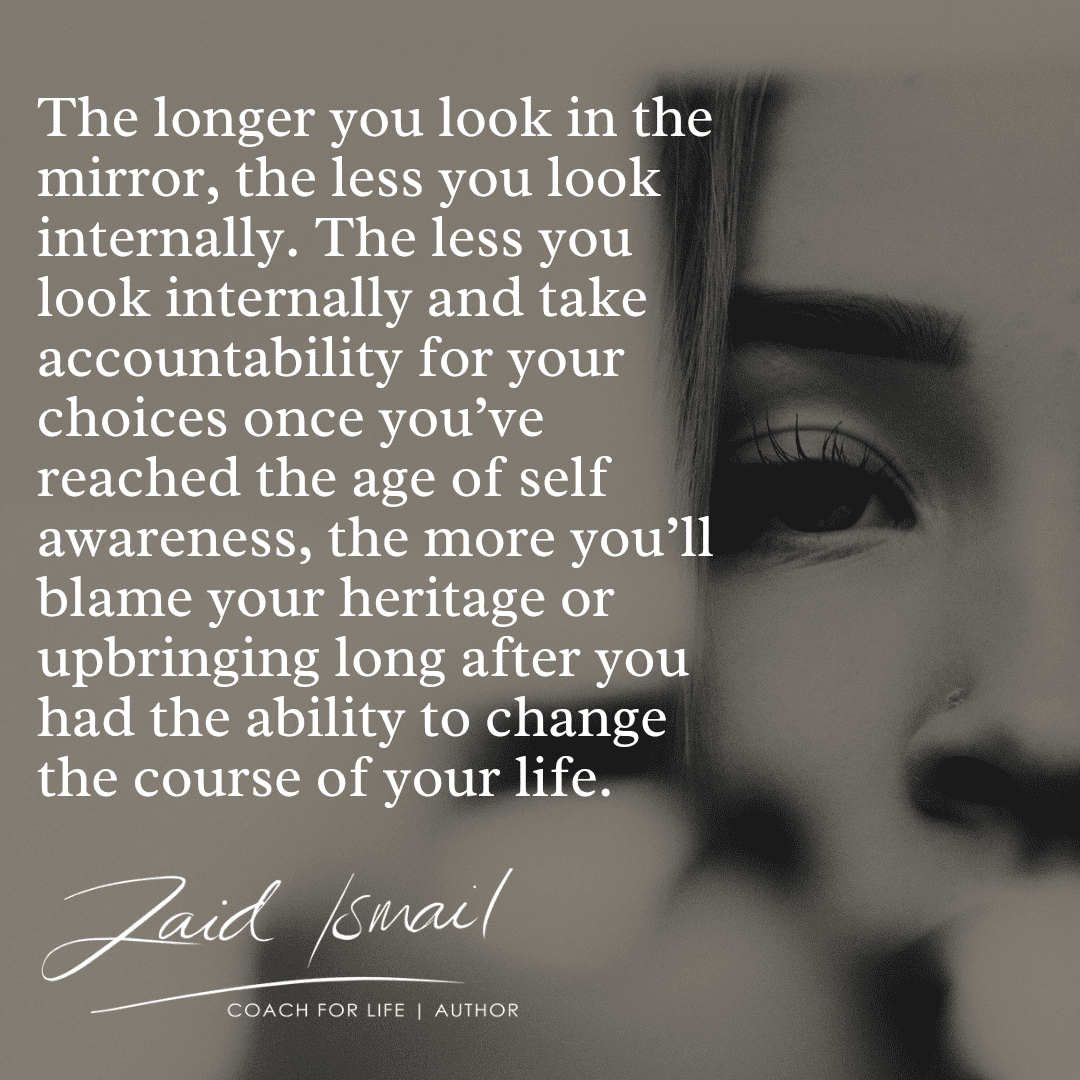
Stop looking in that mirror
We rarely look in the mirror to see ourselves.
Most often, we look to see what we think others see when they look at us.
This focus on how we appear distracts us from who we want to be.
Reflection on the events of our lives that have shaped our expectations and aspirations don’t happen while looking in the mirror.
At best, the mirror offers a frame within which to judge ourselves, both kindly or harshly.
But that we need the mirror to judge remains true.
We change the course of life when we focus on the effectiveness and wisdom that informs our actions.
Those are most clearly seen through our honest observation of the impact we have versus the impact we hoped to have.
Falling short of our aspirations is a reason to recalibrate our efforts and methods, never a reason to judge ourselves into giving up.
Look in the mirror only for as long as is needed to remember who you are.
Any longer, and you’ll lose yourself to who you want others see when they look at you.
Or worse, you’ll see yourself through the eyes of those who don’t understand you.
Stop looking in that mirror and embrace your life.
#coachzaidismail #gratitude #lifecoaching #mentalhealth #mentalhealthawareness #mentalhealthrecovery #ownyourlife #selfawareness #selfworth #theegosystem #zaidismail #narcissisticabuse #toxic #emotionalabuse -
Good intentions are not enough
Believing in the universe waiting to serve you is no different than believing that the world revolves around your every need.
Good intentions do not automatically result in beneficial outcomes. In fact, it too often results in harm.
There’s a reason for the popularity of that old proverb that says that the road to hell is paved with good intentions.
Understand why your methods may not be effective in achieving what you intend to achieve, and you’ll find yourself less reliant on whispering to the universe and more confident in owning your life.
Good intentions are never enough.
Never have been enough.
Never will be enough.
Until you are willing to own the methods, the behaviours, the actions that you carry out to fulfil your intentions, you’ll always have reason to believe that life is working against you, or that others don’t appreciate you. Etc.
Own your life before it owns you.
#coachzaidismail #gratitude #lifecoaching #mentalhealth #mentalhealthawareness #mentalhealthrecovery #ownyourlife #selfawareness #selfworth #theegosystem #zaidismail #narcissisticabuse #toxic #emotionalabuse -
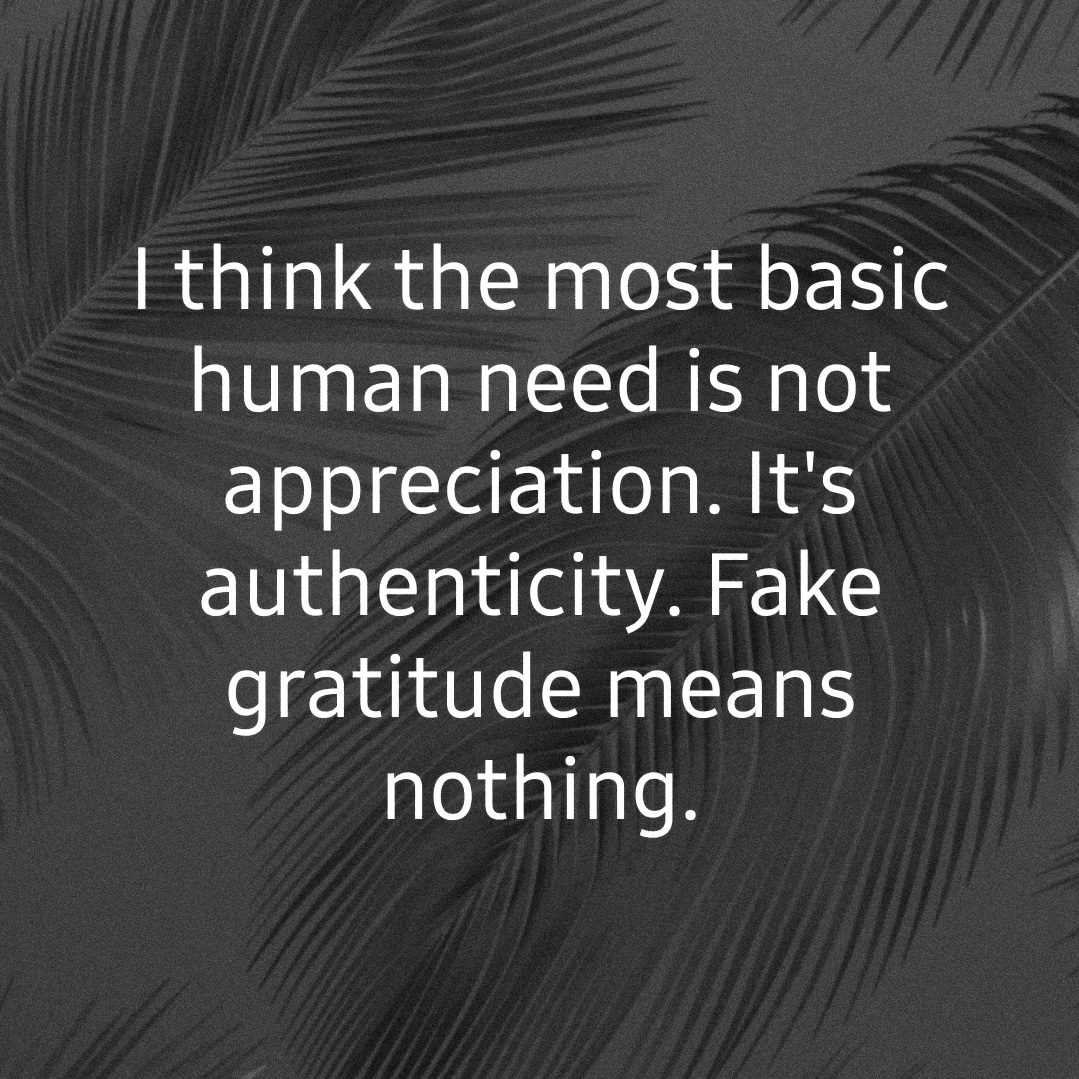
Authentic gratitude
This is for the ‘attitude of gratitude’ crowd.
It’s for the ones who believe that gratitude is an act.
A gesture.
A token word of appreciation.
A polite mannerism.
A show of acknowledgement.
A gift prompted by an event.
It’s not.
Authentic gratitude is what you do and how you show up for those whom you claim to appreciate on those special occasions.
Gratitude is about valuing what is important to those whom you claim to value.
It is about what you do with the privilege and favour enabled by those who serve and/or support you.
Gratitude is a state of being.
It is a way of life.
It is a way of living without deliberately trying.
It is a consequence of the belief in the virtue and the goodness of what benefit you are capable of being to those around you, not because they deserve it but because you’re capable of it.
Authenticity is rare.
That’s why most use gestures and expressions of gratitude as a commodity with which to transact for significance.
Appreciation is not gratitude.
Gratitude is reflected in what you do with, or about what you claim to appreciate.
You cannot be truly grateful for others if you take yourself for granted.
#ownyourlife #mentalhealth #zaidismail #theegosystem #mentalhealthawareness #lifecoaching #coachzaidismail #selfworth #zaidismail #gratitude #appreciation -
Do you really love yourself?
What does ingratitude towards yourself look like?
I think it looks like this…
You focus on your aesthetic to feel better about your internal conversation.
You live loud with everything you do and possess because you’re concerned about how others perceive you.
You beat yourself up in private, but present yourself as confident and bold in public.
You over compensate to make space for people who treat you as an option, but go out of your way to exclude people who have high expectations of you.
You comfort yourself by preempting how others may judge you by telling yourself that they don’t know what you’ve been through.
You withhold your contribution of support or assistance if you don’t think others deserve it.
Your internal conversation is harsh resulting in health issues that you then use to seek pity from those around you for your self-imposed struggle.
You try to save others from your opinion of their lives believing that you’re doing it because you’re a good person, while not realising that you’re projecting your struggle onto them so that you can feel valued.
You take your time and your comforts for granted, always procrastinating on your own goals but over investing in assisting others to achieve their goals.
You see self-sacrifice without healthy boundaries as a virtuous way of life, and lose sight of the impact of such behaviour on your health and wellbeing, and on those who care about you.
If you find yourself growing angry or agitated at this list, chances are, you are feeling judged or attacked.
That’s a clear sign of how much the opinions of others about you holds more weight than your opinion of yourself.
A healthy self-worth is not a narrative. It’s not an internal dialogue. Nor is it a set of tools or methods.
A healthy self-worth is a state of being, and is only recognised in hindsight.
It is only through reflecting on how we handled situations that we are able to consciously determine if that is true to who we are or not.
If not, we focus on understanding what drove us towards such behaviour so that we become aware of the reasons for our behaviour rather than simply judging ourselves for behaving in that way.
Awareness is the critical step towards self improvement.
And self improvement is impossible if every piece of criticism or negative feedback makes you defensive. -
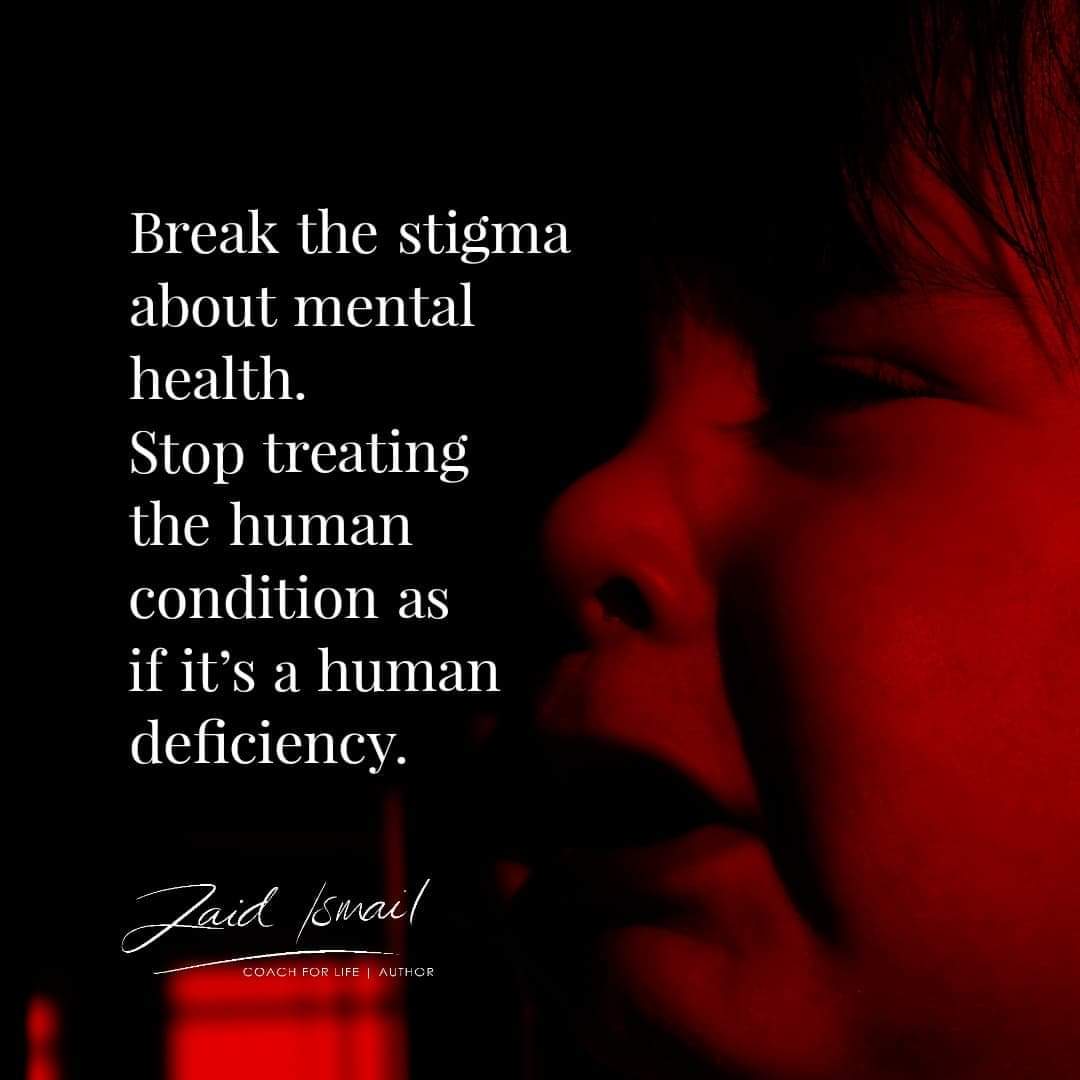
Break the stigma
I think it was Dr Wayne Dyer who said that if you change the way you look at things, the things you look at change.
This is true both positively and negatively.
Do you know someone who has a problem for every solution? Who sees doom and gloom at the happiest of moments? Who is preempting a negative outcome despite things going in their favour?
Do you think they have a mental illness, or have they just been hurt so many times before, that they are afraid to hope for a positive outcome? Are they simply protecting themselves from being let down again?
This is how we experience life when we finally give up hope about the future, or we give up hope about being appreciated.
That absence of hope is what causes us to feel depressed. Depression is a legitimate experience of human emotions after we’ve taken one too many hard knocks from life about something important to us.
The same is true for every other emotional experience.
Emotions are not deficiencies. They’re the essence of what makes us human.
If we ever hope to win this battle against a consistently declining quality of life, we need to stop referring to emotions as mental health, and we need to stop defining the duress that we experience in life as a mental illness.
We need to reconnect with the human behind the pain, instead of dehumanising them by denying the legitimacy of their emotional experience.
Break the stigma. Stop the labelling. Embrace the humanness.
#hope #expectation #sincerity #selfworth #selfawareness #mentalhealth #mentalhealthawareness #mentalhealthrecovery #theegosystem #ownyourlife #lifecoaching #zaidismail #loveyourself #lifegoals #motivation #optimism #purpose #grieving #death #failure #depression -
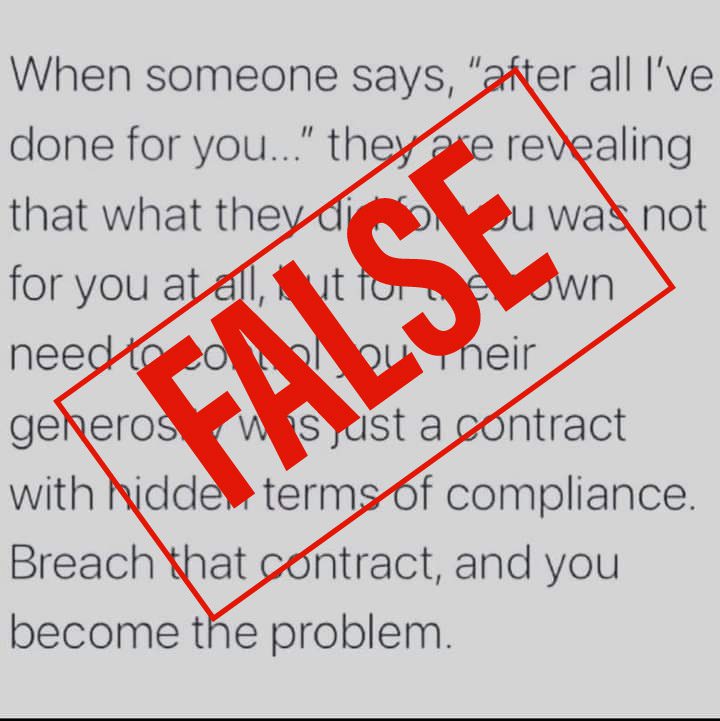
Mental health myth – Social contracts
People will have no reason to remind you about what they’ve done for you if they felt appreciated by you.
This popular meme encourages a selfish view of life and convinces us that we’re victims of manipulation rather than giving us reason to question if/how we may have wronged someone, or taken them for granted.
If this meme were true, then every parent who sacrifices their own joys and advancement in life for the benefit of their children will have no right to feel betrayed if they’re neglected by their children later in life.
It’s become fashionable to write people off just because we’re not getting what we need or want from them.
The fact that we feel entitled regardless of what they’re going through is often ignored.
But the circle of life is such that what we judge others about today, will meet us as a test under very different circumstances tomorrow.
When you write people off because of what they complain about regarding feeling hurt or betrayed by your actions towards them, you will remember them when someone you are convinced will always have your back turns around and walks away from you because they want something from life that they can’t get from you.
When someone says ‘after all I’ve done…’, step back, dismount your high horse, and consider why they may be feeling betrayed or used instead of getting defensive and assuming that they’re toxic.
How you respond to someone in their moment of duress is a reflection of who you are, and what you need from them.
That’s why abandoning family ties, cutting off parents, demanding divorce, and breaking social bonds has grown to define our self-care routine.
When we stop needing others, they become optional while we think it’s our right to live our best life regardless of their contribution towards getting us through our worst times when they could have been living their best life.
Be careful what advice you take from the Internet.
You could end up living your best life, alone.
#hope #expectation #sincerity #selfworth #selfawareness #mentalhealth #mentalhealthawareness #lifecoaching #zaidismail #theegosystem #ownyourlife #narcissisticabuse #narcissist -
Respect is not earned
The old saying of ‘respect is earned’ robs you of self respect and replaces it with entitlement.
How we treat others is a reflection of who we are, not who they are.
Our ability to self regulate our offering of respect to those who may treat us badly is a reflection of how much we need them to treat us well before we feel good about who we are.
In other words, the less grounded we are in who we are, the more likely it is that others will impact our moods, our temper, and our overall emotional wellbeing.
Trust, on the other hand, is earned through consistency of effort about what’s important.
Trust cannot be negotiated or contracted.
If we have reason to doubt someone showing up for us, we won’t trust that they will.
That reason is sometimes because of them being unreliable, but is also often because of how someone else in the past may have disappointed us or betrayed our trust when we needed a similar thing from them. Like comfort, support, or just being there for us.
If we go through life trusting recklessly while withholding respect to those who, in our eyes, don’t deserve it, we will find ourselves reeling from betrayal long after it has passed while disrespecting those who don’t understand our pain.
Problem is, even we won’t understand our pain, so we’ll never be able to communicate it in ways that will allow those close to us to understand why we’re raging.
It all starts with self respect and self worth.
Without that, you will need others to treat you well before you treat yourself well.
Own your life.
#hope #expectation #sincerity #selfworth #selfawareness #mentalhealth #mentalhealthawareness #lifecoaching #zaidismail #theegosystem #ownyourlife #narcissisticabuse #narcissist #rage #anger #angermanagement #marriage #divorce