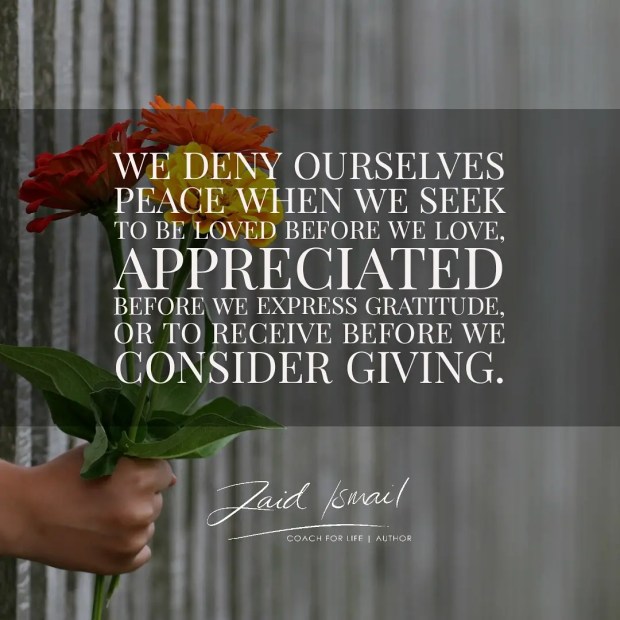
If you find yourself among people who constantly demand that you give without receiving, or love without expressing affection in return, guard your soul.
As much as we wish to fill the cups of others with goodness in this world, we must not deplete our own in the process.
By indulging such selfishness from others, you enable and encourage them to continue denying themselves the same peace that is elusive to you.
When we focus on how the bad behaviour of others is harming themselves, rather than only focusing on how it harms us, we take a huge step closer to breaking the cycle of harm instead of just challenging the behaviour.
The same way in which we’d love for someone to correct us when we don’t realise that we’re wrong because we don’t want to deliberately harm others, we must consider that someone behaving badly may not realise the impact of their actions.
But, unless we’re connected with true gratitude about who we are, we’ll feel attacked long before we try to understand the struggle of others.
Focus on building yourself up, so that you may be able to build up those around you.
If everyone is going to wait for everyone else to make the first gesture, we’ll all sit back believing we’re victims of each other, while not realising that we’re victims of our own self-worth.
#selfworth #selflove #selfawareness #selfrespect #mindfulness #theegosystem #mentalhealth #mentalhealthawareness #mentalhealthrecovery #ownyourshit #ownyourlife #abusiverelationships #badmarriage #selfishlove #lifecoaching #zaidismail
Tag: selfworth
-
Who goes first?
-

Never lose hope
There are three expectations that I’ve found to ravage the soul. They are :
1. The expectation of respect from those whom you respect
2. The expectation of appreciation from those for whom you sacrifice and serve
3. The expectation of honesty from those whom you trust
If not for these three expectations, much of this world’s bitterness would be eliminated.Contrary to meme wisdom, it is impossible to live without expectations from others.
Not only is it impossible, but without expectations, much of life’s sweetness is lost.
Trusting our partners or significant others to fulfill the expectations that we have of them cements the bond of trust in our relationship with them, and vice versa.
Failed expectations feel like betrayal because expectations, by definition, carry with them a sense of entitlement to being treated a certain way by those closest to us.
When we become distracted by that feeling of betrayal, we become defensive or aggressive in demanding what we need, rather than seeking to understand why we’re not getting it.
When we focus on what we have a right to expect from others, we become defined by how they honour those expectations. That’s how we risk losing ourselves to such relationships.
When expectations fail, focus on hope instead.
Hope is what creates opportunities for us to be the best that we can be, while creating space for others to discover how to be their best as well.
Never lose hope. And always be mindful of the expectations that you have.
It will save your sanity, if not your soul.
#hope #expectation #sincerity #selfworth #selfawareness #mentalhealth #mentalhealthawareness #mentalhealthrecovery #theegosystem #ownyourlife #lifecoaching #zaidismail #loveyourself #lifegoals #motivation #optimism -
Why judge yourself?
“By those who consider the whole of me, I may be judged fairly. But by those who remain invested in only a single moment of time from a distant memory, they will only be able to judge an abstract moment of what I’ve lived.” (Excerpt from my essay A Long Drive With Me)
On the face of it, this is an obvious and common truth that we all experience at some point.
It’s easy to recognise when someone is judging us based on a single moment, or a single mistake from a long time ago.
Their reason for holding on to such experiences is most often more about them wanting to protect themselves from going through it again, than it is about assuming that we’re incapable of being better.
But, there’s a more sinister side to this.
How many of us judge ourselves harshly because of that one mistake that we made a long time ago?
Do you still see yourself through your teenage eyes?
Or maybe you see yourself through the eyes of the one who first betrayed your love?
Perhaps you even still see yourself through the eyes of the family or the community that rejected you?
Whichever is true, when you hold on to being defined by a moment from your past, not only do you convince yourself that you are incapable of being better than that, but you also actively prevent yourself from growing from the experience.
There is no shortage of people who would see fit to judge us, and the ultimate judgement of our lives will come in due course.
Why put your life on hold over thinking either one, instead of living your best life?
#selfworth #selfawareness #ownyourlife #selfmastery #mindfulness #personalpower #mentalhealth #mentalhealthawareness #mentalhealthrecovery #theegosystem #lifecoaching #zaidismail #loveyourself #lifegoals #motivation #optimism -
You give what you have
What we believe is true about ourselves is what we are capable of offering to others.
Nothing more.
Nothing less.
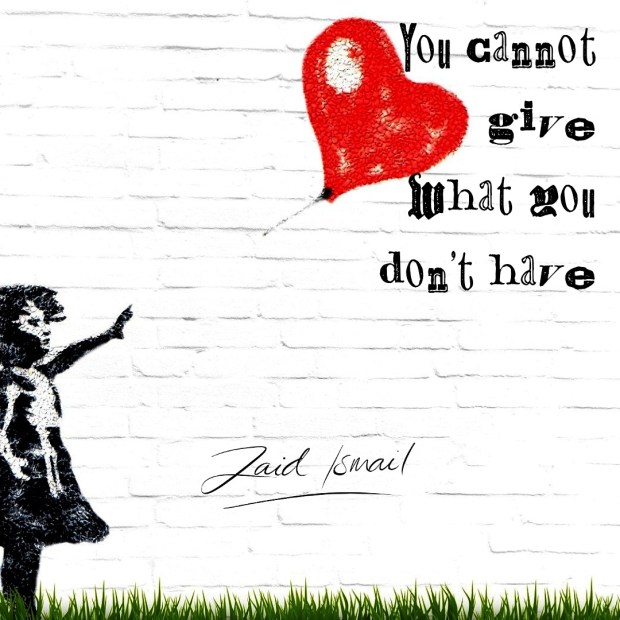
You cannot give what you don’t have.
The day you realise this is the day you’ll see the fears and weaknesses that drives others to behave badly towards you.
It was never about you.
It’s always about reflecting who they are.
If you lack self respect, it will be difficult to respect others.
If you don’t appreciate what you have, you won’t express gratitude towards others.
If you are dishonest with yourself about who you truly are, you’ll struggle to trust the sincerity of others.
And so it continues.
The way we see ourselves is what informs our behaviour and interactions with the world.
The more threatened we feel, the more aggressive we will be.
The next time you see someone behaving badly, don’t judge them harshly, understand what they’re saying about how they value themselves, or how valued they feel by you.
Then, respond to their underlying vulnerability in a reassuring way, rather than always reacting to their bad behaviour.
Break the cycle.
#hope #expectation #sincerity #selfworth #selflove #selfawareness #selfrespect #mindfulness #inspiration #ownyourshit #ownyourlife #theegosystem #integrity #introspection #lifecoaching #zaidismail #loveyourself #mentalhealth #mentalhealthawareness #mentalhealthrecovery -
Suicide is avoidable
This is a reminder for those who think that everyone who wears their heart on their sleeves, or are just looking for attention.
It may not be healthy, but it’s their way of drawing attention to their struggle that they need help with.
How we respond either enables the unhealthy expression, diminishes their efforts to be heard, or uplifts them through creating understanding about how they may be able to rise above it.
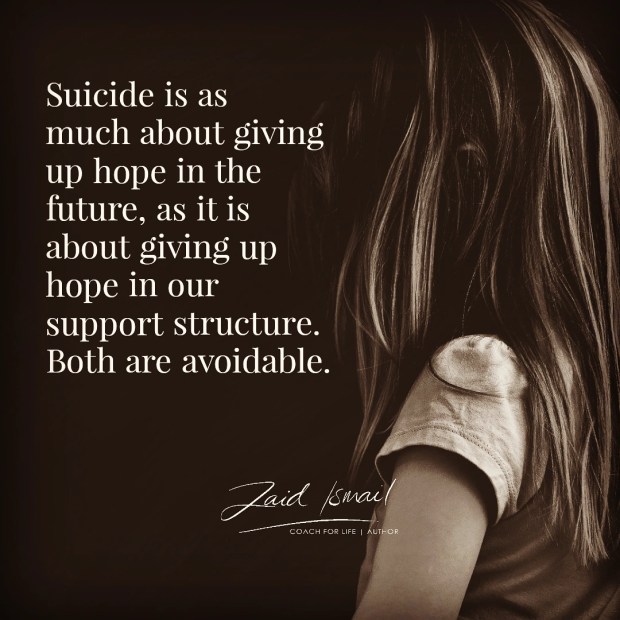
Death by suicide is avoidable, and so is depression.
Both just need a small dose of kindness and understanding.
Don’t go venting at strangers.
If you need to vent, vent with people that know you so that they have no reason to believe that your frustration is a definition of THEIR worth.
So, if you see someone you don’t know venting, don’t respond with anger.
Break the cycle.
And if it’s someone you do know, let them vent without feeling a need to stop them.
Once they’re done, then try to find out what’s really going on.
No one behaves rationally in the midst of their rage.
But if they’re harming someone in the process, then intervene in the most calm way possible.
Don’t escalate the situation further.
And remember, it takes a village…if you don’t have a village to support your efforts, pace yourself and adjust your expectations of what you’re capable of in line with your reality.
You can’t pour from an empty cup.
So start by being kind to yourself, before you sacrifice yourself in the service of others.
#hope #expectation #sincerity #selfworth #selfawareness #mentalhealth #mentalhealthawareness #mentalhealthrecovery #theegosystem #ownyourlife #lifecoaching #zaidismail #loveyourself #suicideprevention #suicideawarness #depression -
What are you waiting for?
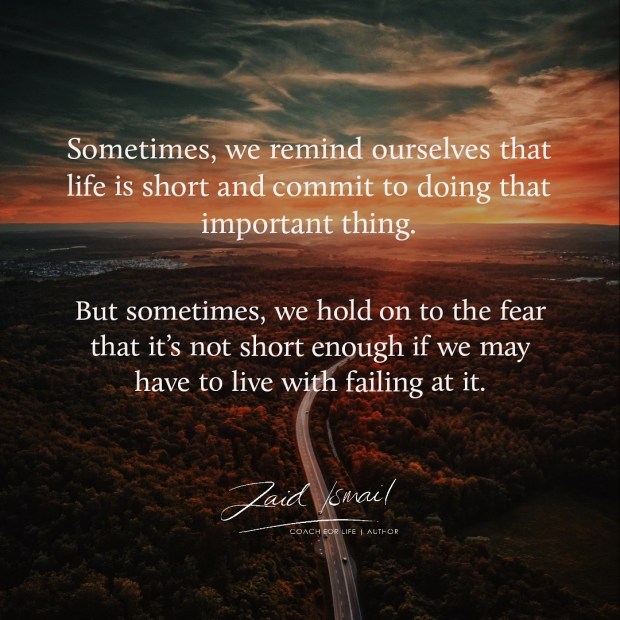
When we find ourselves waiting for just the right moment, or that right feeling, or the perfect setting, or the ideal opportunity to present itself before we do something, we’re afraid of failure.
If we know, with understanding and rational thought, why we are not ready for something, that’s different.
When we have no real reason to put something off but we hesitate and make excuses, that’s when we’re not yet convinced about the value in what we want to do, or our ability to be successful at it.
Looking for reason without deliberate effort or purpose is how we pacify ourselves in our efforts to avoid failure.
When we focus on the value that we wish to create, and we accept that we are always learning something new even in spaces where we are very confident about our abilities, we will find the conviction to take action rather than to avoid failure.
The only reason failure weighs down on us so much is because we are defined by how others may judge us.
If you find yourself in such a head space, you need to reflect on why the opinions of others are more important than your opinion of yourself.
Improve your opinion of yourself, and it will be easier to take advice, learn from your mistakes, and grow from failure.
Own your life, or else someone else will.
#hope #expectation #sincerity #selfworth #selfawareness #mentalhealth #mentalhealthawareness #mentalhealthrecovery #selflove #lifecoaching #zaidismail #loveyourself #motivation #optimism #ownyourlife -
Rise
People that respect your victim-hood do so because it makes them feel better about themselves.
It doesn’t mean that they are malicious or have bad intentions. But they most likely don’t even realise it themselves.
In fact, you may be supporting others in ways that comfort you more than it helps them.
When we find familiarity in our struggles that others share, we risk polarising towards those who make us feel better about where we are, rather than seeking out those who may be able to guide us towards uplifting ourselves out of that space.
That’s one of the difficulties of being in a victim head space without realising it. We become really good at making others feel OK about their weakness while believing that we’re supporting them to overcome it.
Before you take offence to what I’m saying, you need to realise that you’re only a victim when you allow the oppression of others to define your self worth, and to dictate your effort towards establishing a life worth living.
The moment you own your life and rise above the impact of that oppression, you’re no longer a victim, you’re a fighter!
Not a survivor! A fighter!
You lose the sweetness of life when you focus on coping as best as you can.
That’s why you must always strive to rise above, to overcome, to prevail, and never to surrender or cope with what life throws at you.
You only get one shot at life.
Make it count.
#hope #expectation #sincerity #selfworth #selfawareness #mentalhealth #mentalhealthawareness #mentalhealthrecovery #theegosystem #ownyourlife #lifecoaching #zaidismail #loveyourself #motivation #optimism -
How to abandon your dreams
Failure only threatens is if we feel defined by the outcome of our efforts in trying to achieve our goals.
Sometimes those goals are small things that influence the daily quality of our lives, and sometimes it’s big things that shape our future.
The source of fearing failure is in our need to be respected by those around us.
The only time we will be disrespected or diminished when we fail at something is when we surround ourselves with those who themselves are defined by how others see them.
In such environments, mediocrity and tradition will be sacred. Playing it safe will be considered responsible. And being risk averse will be considered maturity.
If the life that you seek is one without failure, without change, and without discovering who you truly are, then such environments are perfect for you.
But, as humans, we are restless in spirit, and adventurous in nature. We are driven by knowing that we left our mark and we improved the state of the world in the short time that we were here.
Mediocrity, conformance, and restraint therefore goes against our nature.
When we fight our nature from fear of exclusion or rejection, it’s only a matter of time before our health suffers, and our spirits will be dulled.
That’s how dreams are lost and hope is abandoned.
You owe it to yourself, and the next generation, to be true to the value that you are capable of creating in this world beyond just maintaining the status quo.
Live inspired.
#hope #expectation #sincerity #selfworth #selfawareness #mentalhealth #mentalhealthawareness #mentalhealthrecovery #selfrespect #mindfulness #inspiration #motivation #optimism #ownyourshit #ownyourlife #theegosystem #lifecoaching #zaidismail #lifegoals