It’s impossible to go through life without trusting others.
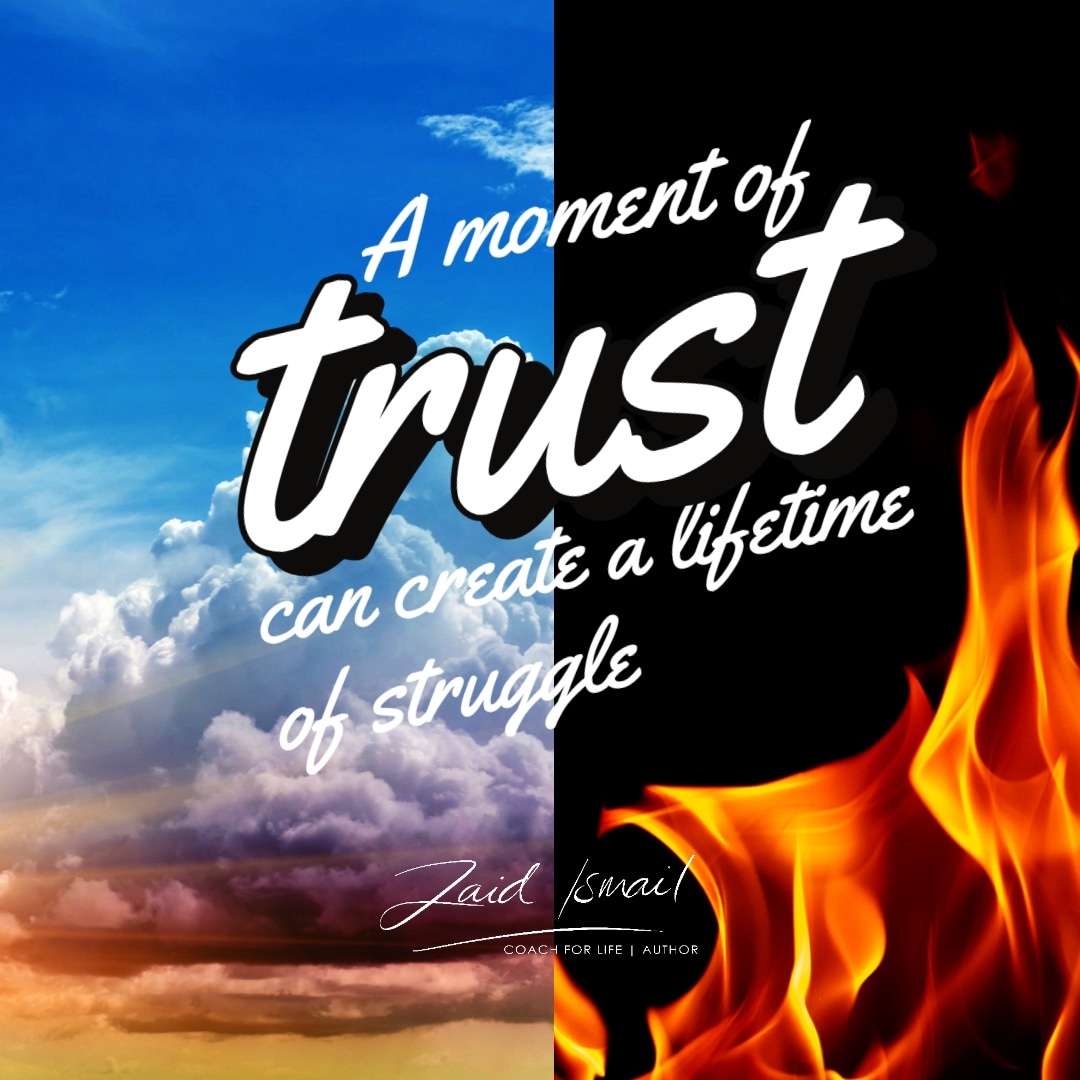
But, if we’re not careful, the trust that we invest in others could result in consequences that create a struggle for the rest of our lives.
Most often, when choosing a partner, we focus on how trustworthy they are in the present circumstances, but have no idea how they will be should circumstances change.
Equally so, we often have no idea how we may cope under duress should our circumstances change.
That’s when things get complicated, or when things outside of our control bring out the worst in us.
99% of relationships encounter issues because of a change in external circumstances that brings out a side of our partner, or us, that we never thought possible.
In that moment of duress, we either expect them to be understanding and supportive, no matter what, or we expect them to be consistent in their love and trust towards us, no matter what. All depending on who is going through the trying circumstance.
That’s when trust is tested.
Navigating such circumstances become that much more complicated when we assume that they were dishonest about who they were, or what they stood for.
The reality is that most of us fail the consistency test when we encounter unexpected duress as a result of a change in circumstances. This includes the simple change between being in a courtship versus being married.
The change in role results in a change in expectations, which is what provokes insecurities that we never knew we had.
If we don’t have a healthy support structure to help us through that transition, and if we’re not open to advice when we experience such challenges, we set ourselves up for a lifetime of pain because of the belief that we were betrayed, or that we’re not understood.
Be careful with how you rely on trust to get you through life. Most often, it’s not trust that is the issue but inflexible expectations based on insecurity.
Own Your Life.
#selfworth #selfawareness #ownyourlife #theegosystem #mentalhealth #mentalhealthawareness #lifecoaching #zaidismail #trust #authenticity #expectation
Tag: selfworth
-
A moment of trust
-

The destruction of self-deprecation
In our efforts to subdue our ego, many resort to self-deprecation.
Sometimes we put ourselves down to test if anyone will be willing to disagree with us, thereby hoping to receive acknowledgement or appreciation that would otherwise not be forthcoming.
At other times, we put ourselves down because we try to convince ourselves that we should not expect more from those around us.
In both instances, we know, deep down inside, that we are being dishonest with ourselves.
However, when we are convinced of our inadequacy, or truly believe that we’re not worth more or good enough, that’s when we become saturated with ingratitude.
The reason we become convinced of our lowly state is not because of who we know ourselves to be. It’s because we constantly judge ourselves by how much others accept or approve of who we are.
If we reject ourselves, we become more reliant on validation from others.
Worse still, if we reject ourselves, we rarely fulfil the rights of others because we don’t believe that we’ll be good enough, so we avoid the rejection by not contributing in the way that is expected from us.
On the surface, we may appear obstinate or selfish, but the truth beneath the surface is that we’re simply putting up our defences to avoid our shame from being revealed. That is, the shame of what we think we’re lacking in.
Gratitude for the self cannot be inserted by anyone else.
No amount of validation from others will establish such gratitude. If anything, external validation will risk taking ourselves for granted because we’ll lose ourselves to doing things for show or praise, rather than sincerity.
Be careful of the slippery slope of ingratitude.
It destroys more lives than any other vice we may have.
#gratitude #selfworth #selfawareness #ownyourlife #selfmastery #mindfulness #mentalhealth #mentalhealthawareness #lifecoaching #zaidismail #authenticity #bestlife -
Looking a gift horse in the mouth
When we’re driven by aesthetics and appearances, social standing becomes more important than substance or authenticity.
We lose ourselves to the way we want to be perceived, rather than what we want to create.
We grow defined by how others treat us, or how well we can hide our flaws.
We pursue all the right things that hold the promise of a good life, but still feel empty and incomplete.
Religiosity replaces submission, and spirituality is lost to the show of goodwill.
When we focus on how we appear to others, or how we think they’ll judge or accept us, we’ll reject what is good for us, so that we can hold on to the hope of being good enough for them.
In the end, we lose ourselves, and thus any acceptance we receive from others becomes pointless.
The sweetness of life is lost when we reject who we are, because we’re afraid of being rejected by others.
That’s how soul mates pass each other like ships in the night, or companions drift apart like clouds after a storm.
The winds of distraction will guide us into places that are foreign to the needs of our soul.
Reclaim your life by connecting with the truth of who you are.
Own Your Life.
#hope #expectation #sincerity #selfworth #selfawareness #mentalhealth #mentalhealthawareness #lifecoaching #zaidismail #loveyourself #lifegoals #motivation #optimism #relationshipgoals #companionship #anincompletelovestory -
Raising humans
Parents are pretty much always well meaning, even when we behave like idiots.
We’re either trying to encourage our kids to be driven like us, or trying to raise them to be better than us.
And if we’re convinced that we’re not good for them, or that they deserve better, then we create distance between them and us because we are convinced that our presence may contaminate the wholesomeness of what they’re capable of being.
Either way, whether we’re present, absent, invested, or disinterested, the role that we play in their lives cannot be dismissed.
The more we’re given to our own fears and insecurities, the less justice we’ll do to raising them with a healthy sense of self.
Connecting with our fears and insecurities, and putting in the effort to understand ourselves better, is what will equip us to inspire our children to reach for their potential.
Otherwise, we’ll focus on discipline, good manners, decorum, and academic achievements, while hoping that they’ll somehow develop confidence and a healthy self-esteem simply through achieving good things.
Most often, this approach fails. It may produce functional adults, but it doesn’t produce emotionally grounded adults.
It emphasises the importance of duty and servitude, but it diminishes the importance of the human behind such attributes and achievements.
If you don’t have a healthy self-esteem, your battles will be projected onto your children, and it will contaminate their self-esteem in ways that will only become evident later in their lives.
Save yourself and them from a lifetime of internal struggle, and start dealing with your fears and insecurities in a meaningful way now.
Your future self will thank you for it, and so will your children.
It always starts with you.
#hope #expectation #sincerity #selfworth #selfawareness #mentalhealth #mentalhealthawareness #lifecoaching #zaidismail #loveyourself #parenting -
Gratitude is the sister of faith
When faced with trials, there are too many who surrender to coping with such trials instead of persevering to overcome them.
Purposeful perseverence is called for when we find ourselves in situations that are weighing us down.
No matter how little our resources or ability to influence the outcomes, using that little that we have while having faith that we will rise above it is what will slowly build the momentum to finally overcome the trying circumstances.
The moment we diminish even the little that we have or the little influence that we can bring to bear on the situation, we risk falling into ingratitude.
Ingratitude is the enemy of faith.
When we diminish who we are because of the way that others treat us, or because we convince ourselves that we are undeserving of better, we take ourselves for granted and give up any opportunity to improve the condition of our lives.
Faith is not born out of certainty, nor out of favourable conditions.
It is tested during moments of hardship, and is often taken for granted during moments of ease.
Thus, gratitude and faith become companions, because when we live with ingratitude for who we are, we will find ourselves in situations that will test our faith.
And the more we live with gratitude, not only for what we have but especially for who we are, despite the weight of life, we will always find comfort in knowing that we are capable of navigating the trials of life while having faith that ease will follow the hardship.
It is only through connecting with gratitude that we recognise the ease that followed the many hardships and trials of life, while ingratitude leaves us focusing on the persistent trials that followed those periods of ease.
Thus, a grateful heart connects with the reality that ‘this too shall pass’, because they continue to purposefully persevere in persuing good, despite not always having it within themselves to immediately overcome the bad.
It always starts with you.
Own Your Life.
#hope #expectation #sincerity #selfworth #selfawareness #mentalhealth #mentalhealthawareness #lifecoaching #zaidismail #loveyourself #lifegoals #motivation #optimism #purpose #gratitude #faith -
Do you hate apologising?
Ever reject an apology from someone only to be told, “Well, I apologised. So if you don’t accept my apology, then that’s your problem, not mine.”
Or something similar?
When you apologise and expect your apology to be accepted, you’re not apologising, you’re demanding that the other person just move on without any redress to the impact that your offence had on them.
An apology is more than just an acknowledgement of wrongdoing.
An apology, when sincere, must focus on assuring the other person of two things.
Firstly, that there is real remorse or regret about the way in which you conducted yourself.
And secondly, that you want to make up for the impact that it had on them.
If either of these are lacking, it’s not an apology. It’s simply a means to pacify your own conscience, and at best, it’s a formality.
Relationships can often be salvaged through sincere remorse for the mistakes that we make.
But, if we feel weak for admitting fault, then we have work to do on how we feel about ourselves, and it has nothing to do with how the other person may or may not respond to our apology.
If you find it difficult to apologise, chances are good that you’re also keeping score about who committed how many offences compared to the other.
Either way, it means that you live with the fear of being inadequate.
It always starts with you…and what you think of yourself.
Own Your Life.
#hope #expectation #sincerity #selfworth #selfawareness #mentalhealth #mentalhealthawareness #lifecoaching #zaidismail #sincerity #mentalhealthrecovery -
Good vs bad manipulation
Sometimes we choose to maintain the peace by giving of ourselves despite not wanting to.
Sometimes, we don’t want to deal with the upheaval that follows not doing what someone wants, so we do it anyway.
Sometimes, we’re afraid of the repercussions of not complying, so we comply despite not believing in what we’re doing.
Each time we compromise who we are or what we stand for to achieve an amicable or peaceful outcome, we lose ourselves to those outcomes.
It may seem to offer short term gains, but in the long term, it destroys our sense of self.
We all find ourselves in situations where such manipulation is required at some point because the timing is just not right to deal with what needs to be addressed.
The key is to be aware of why we’re choosing this approach, versus believing that it’s the only approach that will get us what we need, or want.
And the same is true for others who appear to be manipulative by nature.
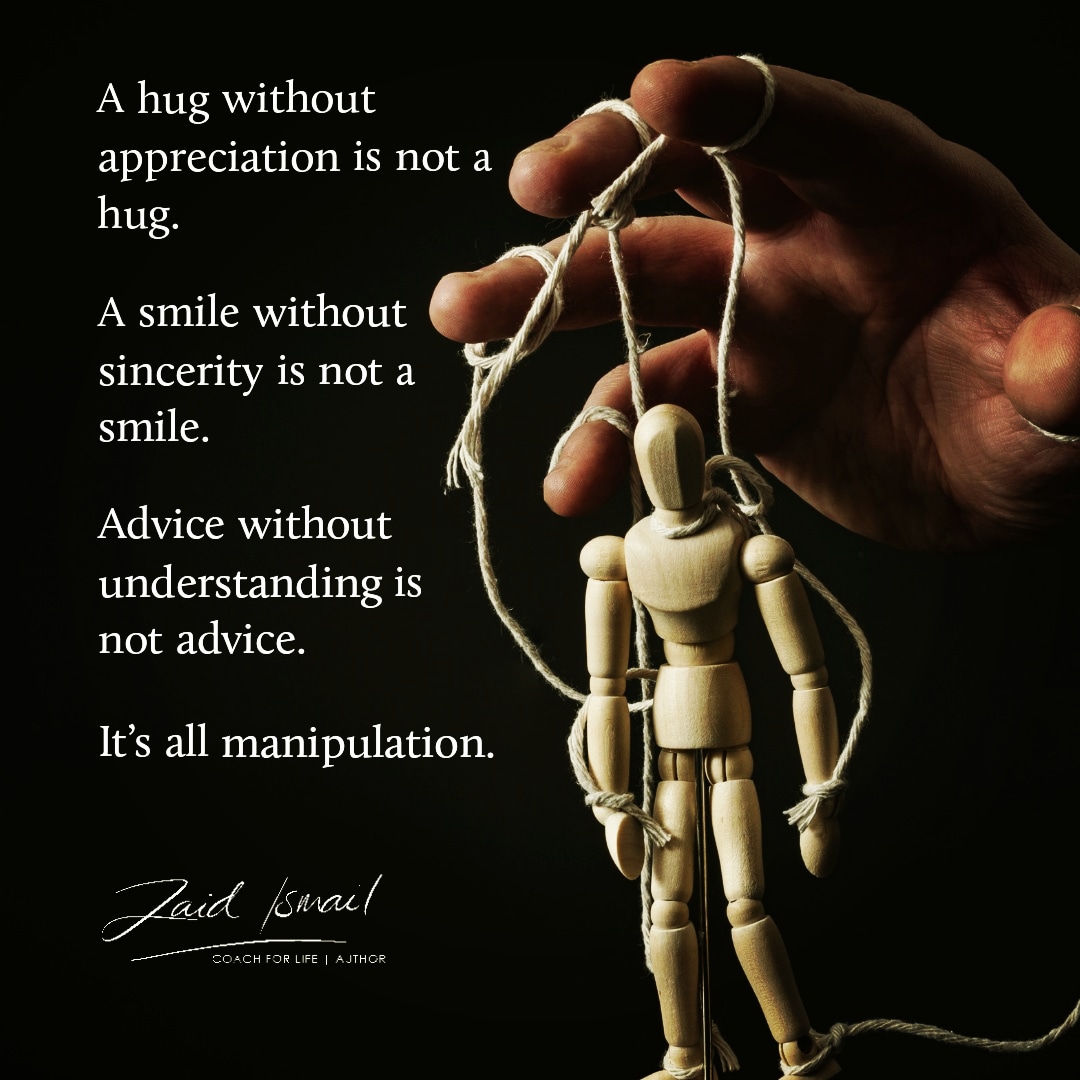
It’s simply the fear of negative outcomes that has convinced them that who they are will never be good enough, so manipulation is the only way to maintain significance or to fulfil their emotional needs.
We’re all built with the exact same emotional needs.
We just lose our way for different reasons.
Self-awareness leads to understanding, and understanding is the cornerstone of compassion.
Therefore, we must always seek to understand our own conduct under similar circumstances, before we seek to judge others.
It always starts with…you.
#hope #expectation #sincerity #selfworth #selfawareness #mentalhealth #mentalhealthawareness #lifecoaching #zaidismail #compassion #mentalhealthrecovery -
Enjoying the deferral of death
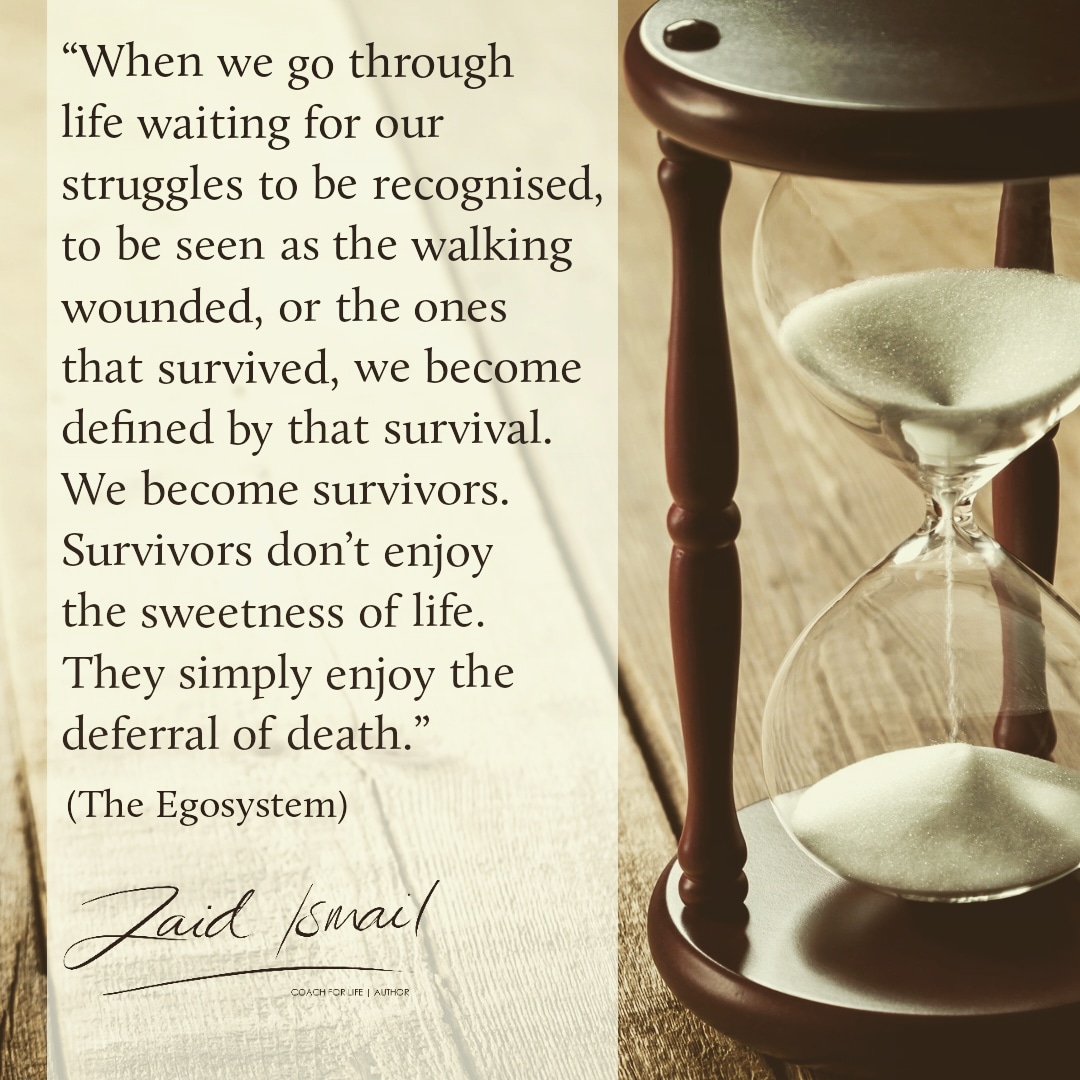
“When we go through life waiting for our struggles to be recognised, to be seen as the walking wounded, or the ones that survived, we become defined by that survival. We become survivors. Survivors don’t enjoy the sweetness of life. They simply enjoy the deferral of death.” From The Egosystem in the chapter titled Recognise My Struggle.
When we lack appreciation for who we are, we seek that validation from those around us by highlighting our struggles so that they may admire our strength or resolve.
When we focus on reciprocation, we find reason to emphasise what we do for others, often by mentioning it to anyone that will listen, because again, we lack appreciation for who we are and therefore go out in search of validating the good that we do for others, hoping that it will give us reason to feel worthy.
We wear the badge of martyrdom when we feel sorry for ourselves, believing that we’re not appreciated or valued, and that our only value to those around us is in how we serve them.
These are a few examples of how we diminish the value of what we do because we’re trading it for recognition or praise, rather than doing it because we believe in the value of what we do.
When we mention the good that we do, we become distracted by the praise, and we lose sight of the dignity of those we assisted by mentioning their neediness while highlighting our generosity.
At the heart of it all is a low self-esteem.
Once we reach the age of awareness, our self-esteem is no longer inherited from our parents. It’s defined by our gratitude for who we are and what we have.
The survivor mindset undermines gratitude because it anchors our focus on everything that we need to overcome, while distracting us from everything that is good and wholesome, or blessed in our lives.
That’s when the sweetness of life is lost, and feeling good about ourselves becomes dependent on how others acknowledge or praise the good that we do, or the struggles that we overcome.
At which point will we pause to consider how blessed we are to have the ability and the resources to overcome those very same struggles?
It always starts with you.
#hope #expectation #sincerity #selfworth #selfawareness #mentalhealth #mentalhealthawareness #lifecoaching #zaidismail #loveyourself #lifegoals #motivation #optimism #purpose #gratitude