When you find yourself putting your dreams on hold because you’re waiting for others to confirm that it’s a feasible project, or that you’re capable of achieving it, know that it’s not a dream. It’s simply a wish.
Dreams can either be an indulgence of escapism, or it can be a seed of passion.
Most use it as escapism to wish away the state of their lives, while believing that they’re oppressed by not having the opportunity to pursue their dreams.
Unless you are being physically restrained from making that big change, or taking that next step, your dream is yours to claim, or yours to abandon.
By the way, there’s nothing wrong with escapism, or daydreaming.
As long as you accept the purpose behind such moments and you don’t use it as reason to blame others for the lack of passion or progress in your life.
Caution: If you chase your dreams at the expense of important relationships, no matter how much your success will be celebrated by strangers, success will feel hollow.
So strike a balance between pursuing your dreams while being sure not to shut significant others out of your journey towards achieving it.
Moderation in everything.
Remember, once you’re successful, it’s a lot more difficult to determine who is sincere towards you, versus who is using you for your wealth or status.
So leave the door open for those around you to join you on your journey when they’re ready, but don’t stand at the doorway waiting for them before you pass through it.
Success is most enjoyed when we can share it with those we love. Otherwise, we’ll find it at our is never enough as we continue to seek fulfilment in achieving more, because we have no joy in what has already been achieved.
#hope #expectation #sincerity #selfworth #selfawareness #mentalhealth #mentalhealthawareness #lifecoaching #zaidismail #loveyourself #lifegoals #motivation #optimism #purpose #mindfulness #inspiration
Tag: loveyourself
-

Own your dream
-

The enemy of mindfulness
We find ourselves in a state of duress, or stress, when we lose sight of what we can influence, whi fee helpless in the face of everything that we think is out of our control.
Whenever we’re faced with a problem, we either focus on mitigating the impact of the problem on us, or we focus on the opportunities to overcome the problem.
When we convince ourselves that the problem is bigger than us, and we also believe that walking away from it is not an option, or possible, we slip into a victim state of mind that weighs us down.
As a side note, whenever something appears impossible to resolve, it means that we have gaps in our understanding about what’s causing it to occur.
At that point, we should set out to seek a better understanding of the problem, rather than persisting in trying to find an answer with the limited information that we have.
This is the kind of thinking that needs to be applied when we’re faced with challenges in our lives.
The most common reason for feeling overwhelmed by life is because the assumptions that we made over the years about our significance or our ability to influence important relationships have grown to become the truths by which we live.
So we don’t even think of questioning those assumptions, despite circumstances having changed over the years, and more importantly, despite us having grown over the same period.
Becoming aware of these assumptions that we make when trying to solve any problem is the first critical step towards searching for answers.
But, mindfulness is needed to regain such perspective, and mindfulness is lost to the victim mindset.
The victim mindset is one that leaves us feeling defensive, or defenseless. Reclaiming your ability to positively influence the outcomes of your life then becomes the important problem to solve.
It always starts with you.
#hope #expectation #sincerity #selfworth #selfawareness #mentalhealth #mentalhealthawareness #lifecoaching #zaidismail #loveyourself #lifegoals #motivation #optimism #purpose #mindfulness #inspiration #personalp -
Success at what cost?
The core of being human is the need to be significant to others, especially with significant others.
Our efforts to be successful feel empty and unfulfilling if we have no reason to believe that it positively impacts the lives of those around us.
So, we set out to be successful so that we can be valued, so that we can feel fulfilled or at least have reason to believe that we’re making a meaningful contribution towards the good around us.
But, what happens when we have an unhealthy self-esteem?
Our focus shifts from wanting to be of benefit, to being afraid of not being good enough.
To compensate for the fear of not being good enough, we focus on equipping ourselves as best we can to avoid failure.
Ethics and integrity become optional when what feels like survival overtakes our better judgement.
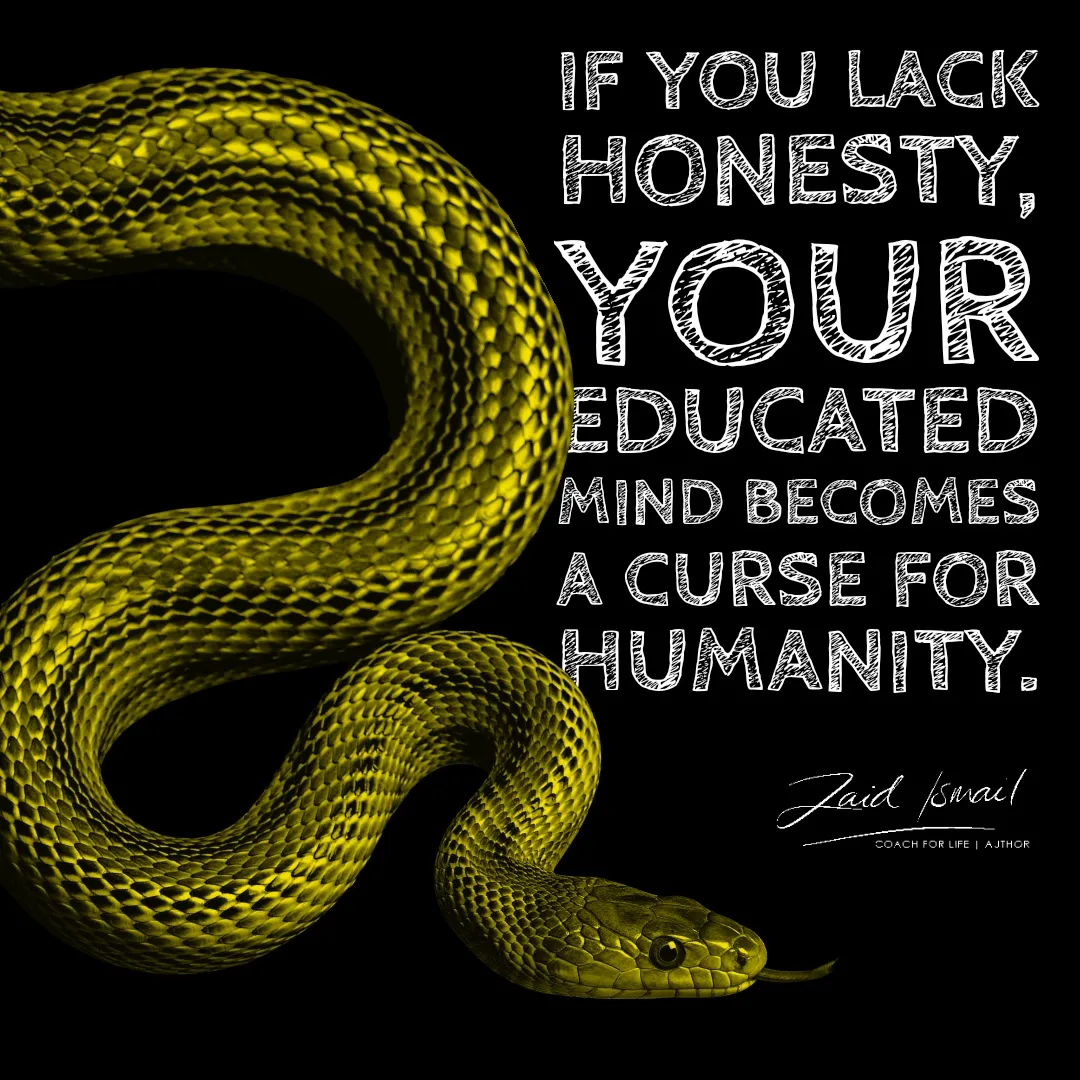
And in this way, our low self-worth becomes the basis on which we raise our children, convincing them about the importance of education, while setting loose boundaries for integrity.
Thus, by not understanding the state of their self-worth, we raise what appears to be narcissists while believing we’re raising responsible adults.
All because we exaggerated the importance of education compared to the emphasis that we placed on self-esteem and integrity.
No one intentionally or deliberately raises children with a low self-worth, but we cannot give what we don’t have.
That’s why, when we’re lacking in self-worth as adults, we compensae for it by focusing on equipping our children to fit into the world around them, rather than to define that world.
That’s how we place education and success above honesty and integrity, or sound character, while only intending good for our children. Or for ourselves.
This is yet another reason why the best gift you can give your child is not a good education, it’s a healthy self-esteem.
The rest will take care of itself.
#hope #expectation #sincerity #selfworth #selfawareness #mentalhealth #mentalhealthawareness #lifecoaching #zaidismail #loveyourself #lifegoals #motivation #optimism #purpose #education #parenting #narcissism -
Are you grateful for you?
Trying is something that you do when you’re unsure of your ability to do it.
Trying relates to the process of developing the skills or understanding to accomplish something, and not to the outcome itself.
When we try to do something, it means that we don’t believe that we’re capable of doing it yet. Otherwise, we’d just do it.
This is true when it comes to accepting who we are.
If we’re trying to, it means that we don’t.
If we don’t, it means that we’re rejecting parts of who we are, or sadly at times, it means that we’re rejecting the whole of who we are.
That’s what happens when we live our lives by comparing ourselves to what we see in others.
Rather than admire them as inspirational, we judge ourselves as inferior.
That’s when illness sets in. Illnesses of the heart, and of the body.
Chronic illnesses result from a sustained rejection of what we dislike about ourselves, or what we believe is not good enough about who we are based on how others treat us.
That rejection that we feel towards ourselves or our life is an indication of the ingratitude that we hold within.
Ingratitude is at the heart of unhappiness because it focuses on what we don’t have, and diminishes the value of what we do have.
When we find ourselves in such a space, it’s time to introspect about what defines how we feel about ourselves and the life that we have.
It always starts with you.
#hope #expectation #sincerity #selfworth #selfawareness #mentalhealth #mentalhealthawareness #lifecoaching #zaidismail #loveyourself #lifegoals #motivation #optimism #purpose #gratitude -
Empty apologies
“Hey, I apologised. If you don’t accept my apology, that’s your problem, not mine.”
Did someone say this to you after offending you or treating you badly?
Maybe you felt you had reason to say it to someone else that rejected your apology?
The moment we demand that our apology must be enough, we’re not interested in the hurt or offence that we caused, nor the trust that we may have damaged. We’re only interested in preventing the other person from having reason to be displeased with us.
As we know, apologies mean nothing without sincere remorse, or a change in behaviour.
And if we have sincere remorse about what we did, we won’t expect others to be OK with what happened just because we think they should be OK.
We’ll focus on sincerely understanding why it affected, or continues to affect them, and we’ll put in the effort to reestablish the trust that we broke or tainted.
If we don’t, it means that we’re stuck in self-pity rather than appreciating the impact that we have in the lives of those around us.
This is yet another way in which self-pity prevents us from realising our significance to others, and vice versa, because we’re so fixated on how bad we have it, or how we feel unappreciated, that we lose sight of how much we take them for granted.
It always starts with you.
#hope #expectation #sincerity #selfworth #selfawareness #ownyourlife #selfmastery #mindfulness #personalpower #mentalhealth #mentalhealthawareness #lifecoaching #zaidismail #loveyourself -
We all want to be enough
We all need to feel like we’re enough…
Enough to comfort those we love and care for…
Enough to inspire them to rise above their trials…
Enough to instil hope in them when they feel deflated…
And more.
Most importantly, we prevent those who care for us from being all this to us when we’re filled with self-loathing, self-pity, or when we feel like a burden to them.
In the same way that we behave badly when we feel unappreciated, others behave badly towards us when their efforts to uplif us feels futile.
Without realising it, our low self-worth destroys the self-worth of those around us because we give them reason to feel inadequate.
But because we’re filled with self-pity, or self-loathing, or because we are stuck in a victim mindset, we assume that we cannot possibly have such an impact on those around us.
That’s when we create and feed the very cycles that weigh us down.
Because we convince those who care for us that they are insignificant compared to the trials of our life, and thus, we convince them that they’re not good enough to comfort those that they care for.
We’re often our own worst enemies without realising it.
It always starts with you.
#hope #expectation #sincerity #selfworth #selfawareness #mentalhealth #mentalhealthawareness #lifecoaching #zaidismail #loveyourself #lifegoals #motivation #optimism #purpose #ownyourlife -
Whose war are you fighting?
When someone is at war within themselves, it’s unlikely that they will realise it.
If you’re not aware of the impact that they have on you, you’ll think that their frustration or anger is directed at you, when it’s really just their need to release the tension that they feel within.
Let the above cycle play out for long enough, and you’ll find yourself at war with yourself, wondering why you can never be enough for them.
And then you become the one at ease within yourself, and cause turmoil in the lives of others.
While your instinct, at some point, will convince you that you need to get out, you need to step back and consider why it is that someone else’s internal war affects you the way that it does.
If you don’t figure this part out, the risk of the cycle repeating itself in your next relationship, for entirely different reasons, is very high.
This is how old problems that are unresolved or not understood, become triggers in new relationships.
More importantly, by getting caught up in the turmoil of your partner’s war within themselves, it becomes impossible for you to help them to realise that they’re raging at the wrong target, if indeed they should be raging at all.
That’s why self-awareness is so important. Without it, not only can you not protect yourself from the turmoil around you, but you also won’t be of much use to significant others around you.
We all lose sight of who we are at some point, that’s why it’s pointless keeping score about who was there for whom, or who needs to change first, or what we need before we’re willing to make the effort. Because when we lose ourselves, it will not help us if others start keeping score in that way either.
It always starts with you.
Own Your Life.
#hope #expectation #sincerity #selfworth #selfawareness #mentalhealth #mentalhealthawareness #lifecoaching #zaidismail #loveyourself #lifegoals #motivation #optimism #relationshipgoals #companionship -
Respond with poetry
Responding in kind to the trials of life only gives those trials more power.
Instead, be the eternal romantic.
Look for the starry sky in the darkness, or the glow of the sunshine behind those grey clouds.
Romance is not about sharing a moment with another.
Romance is about embracing a moment for yourself despite the ugly around you.
Be romantic without waiting for permission.
Let your response to life be the poetry that uplifts the world.
There are enough prose writers out there.
We need more poetry…
More beauty…
More sincerity…
More authenticity…
Prose is our need to be heard, to be validated, and to be seen.
Poetry is our gift of everything that is beautiful and gratifying about life.
If you have the ability to create goodness and peace, that is your ability to write poetry on the timeline of your life.
Be poetic. Be romantic. Be you.
Own Your Life.
#hope #expectation #sincerity #selfworth #selfawareness #mentalhealth #mentalhealthawareness #lifecoaching #zaidismail #loveyourself #lifegoals #motivation #optimism #purpose #personalpower #poetry #romance