When home is elusive, the world feels ominous.
A journey to a place you’ve never been holds the promise of peace, despite never having known what peace feels like.
It’s a cry of the soul, in tones and words that no one seems to understand.
But you keep crying, and you keep trying, because something deep inside convinces you that there must be more than this.
If only it was possible to know why this never felt enough, it would be so much easier to figure out why home is still worth searching for.
The impossible dream that is too important to abandon, but too wholesome to feel worthy of it.
It truly is a long longing, for something we imagine would finally reach the deep, dark recesses of our being, and offer it the light it has been yearning since our first breath.
Will the yearning remain even after our last breath?
Or is hope for fools who dare to dream despite living a recurrent nightmare?
#hope #expectation #dreams #whatdreamsmaycome #home #peace #rest #mentalhealth #mentalhealthawareness #mentalhealthrecovery #selfworth #selflove #selfawareness #selfrespect #mindfulness #inspiration #zaidismail #mybeloved #depression #suicide #ownyourshit #ownyourlife #theegosystem #embracingME
Tag: depression
-

The impossible dream
-

Need help to de-stress?
We all need different things at different times in life.
It’s part of the growth cycle.
From beginning to realise what we’re really dealing with, to finding ways to cope with it, to choosing to rise above it, and finally, to no longer be defined by what was once weighing us down.
These are important stages to be mindful of when choosing your coach.
Choosing poorly could lead you in the wrong direction, or make you complacent about where you are.
The most important choice you can make in life is choosing between wanting to feel better about where you’re at, versus choosing to rise above your current challenges.
If you need help choosing, try the free 30 minute consultation offered to new clients. Get the free voucher details in the product description below.
#lifecoaching #counselling #therapy #depression #stress #anxiety #mentalhealth #mentalhealthawareness #mentalhealthrecovery #theegosystem #ownyourlife #ownyourshit #embracingME #motivation #optimism -
It’s time to rethink mental health
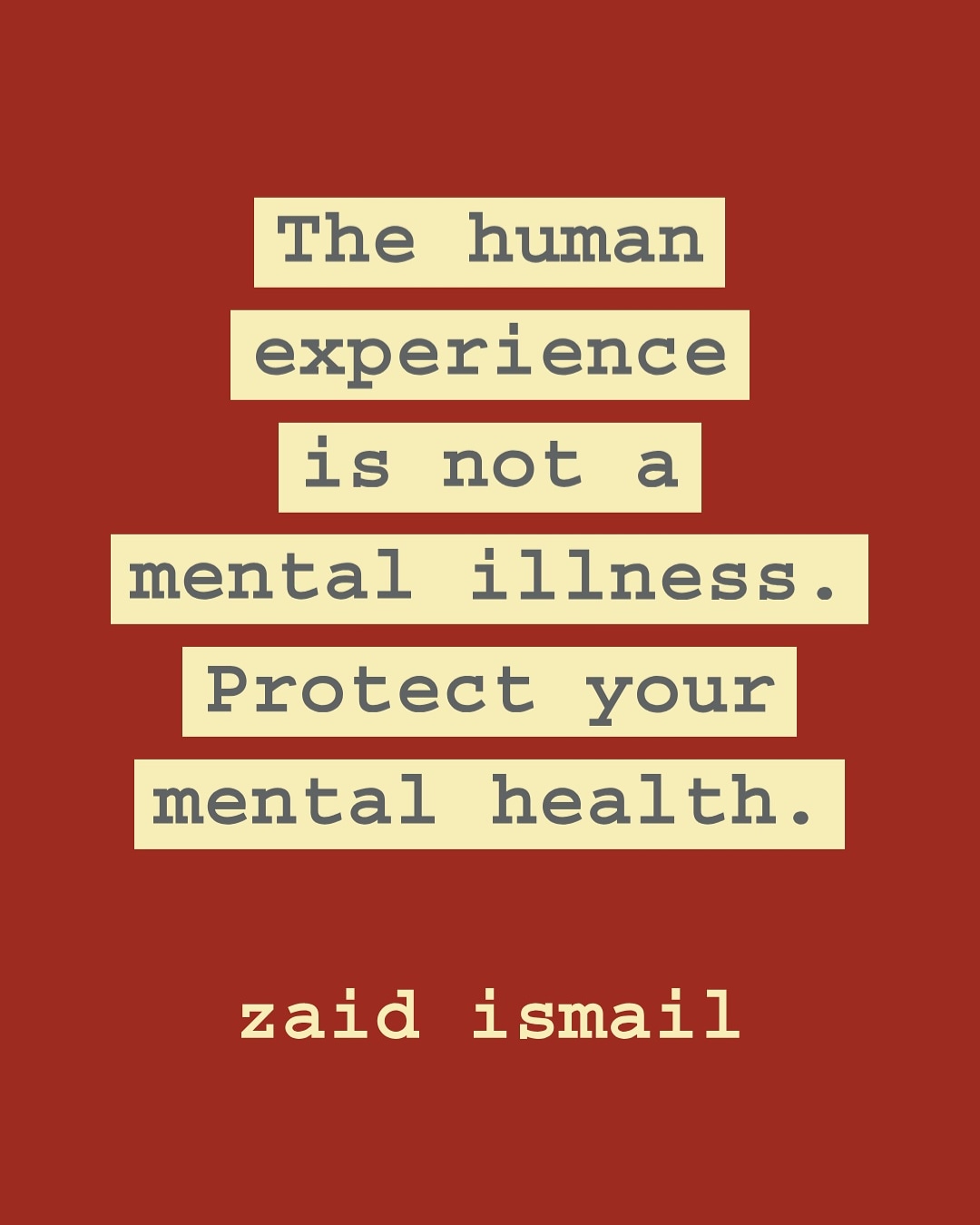
The human experience is not an illness. Protect your mental health. Don’t allow your reality to be labelled as something other than what it is. It is your experience of the ups and downs in your life. When you find yourself with more bad days than good days, it’s because you need to do something differently. Mental health is about hope. The more hope we have for experiencing joy tomorrow, the better our mental health today. When you find hope is scarce, or difficult to hold onto, reconnect with your passion and your principles, and trust that it’s not hope that dies, but just our distracted state that makes it difficult for us to sometimes find. Gently clear away the distractions, and reconnecting with hope will come naturally.
#worldmentalhealthday #mentalhealthday #mentalhealth #mentalhealthawareness #mentalhealthrecovery #selfworth #selflove #selfawareness #selfrespect #mindfulness #theegosystem #reflection #hope #dreams #depression #suicideprevention #suicide -
Watch “UNISA Radio Interview (Aug ’19)” on YouTube
Listen in for a discussion on why my latest book is so important in changing the narrative of the mental health issues that are spiralling out of control. It’s only once we gain a fresh perspective on old challenges that we can hope to find new ways of resolving them.
-
Depression is not…
I saw an illustration this morning that showed a man walking with a heavy shadow weighing him down. From one tile to the next the shadow grew bigger and more daunting until eventually it got inside him turning the inside of his body into a dark cave, with a little figure of him sitting helplessly in a corner inside his body. When asked by someone else how he was doing, he simply replied that he was fine, while apparently hiding the darkness inside of him. Many who have experienced, or are experiencing depression can relate to this illustration, but not enough take the more important lesson from it. Park that thought for now.
The good thing about the recent focus on Mental Health is that they are not calling it Mental Disorders as often as they used to. I take hope wherever I can find it because this is one topic that if ever there was profiteering from the misery of others, this would be it. When trying to sell a product we generally appeal to one of three things. We appeal to vanity, we appeal to convenience, or we play on fears. Mental health is very much in the last category and is currently a multi-billion dollar industry worldwide.
The first point therefore is that depression is definitely good for business. Turning every supposedly imperfect emotional state into a disorder was the goal of the American Psychiatric Association as far back as the early 1970’s. It is for this reason that we now even have a pill to deal with shyness or modesty because we have been led to believe that it is a social anxiety disorder. As dreadful as that seems, it is hardly the worst thing about the depression industry.
Buying into this mentality provides the convenience of abdicating accountability for the uninformed or downright poor choices that we make in life. Take that accountability away and replace it with a pill, and you have a patient for life. Worse than this, you give others an excuse to claim that they are victims of an external force and can therefore not overcome this state by making better choices. Instead, medication and psychotherapy is needed. Good parenting and healthy friendships have nothing to do with it, or at least that is what they would have you believe.
We then refocus our goals on individual needs and blame society for stifling us, and in the process once again abdicate responsibility for the contribution to those around us that would build the healthy society that we all yearn for, while complaining about the cruel world that we live in. Cruel world dynamics then create more opportunity for new pills and lifestyle diseases, and suddenly the overwhelming number of health problems related to depression adds weight to the farce that depression is something we suffer from as an illness.
Back to that illustration, what we fail to realise is that the more we nurture the depressive state (that overbearing shadow of darkness) the more it will grow. Again, a choice that we make to either deal with the source of our dissatisfaction, or accept it for what it is if we are unable to change it. Unfortunately, most wait for it to miraculously change without any effort on their part, and in the process convince themselves that the universe hates them which is why they are not getting what they need to be happy.
That was deliberately flippant because if reading that angers you, then you are more likely to be predisposed to depression or feelings of oppression because you see weakness of resolve as being imposed on the individual by society, rather than seeing that the weak resolve of individuals is what allows society to define the self worth of the individual. By showing sympathy and compassion for unhealthy behaviour, we teach people that such behaviour is not their fault.
We teach them that poor choices are not because they were naive, but rather because someone else was manipulative or dishonest. As much as that is true, the resultant impact on us is directly related to what we continue to expect from them, and not what they continue to do to us. Waiting for an abusive parent or partner to be wholesome before we believe we are worthy is like putting a loaded gun in the hands of a psychopath and asking them to have mercy on us.
Our lack of conviction in what is acceptable versus what is intolerable for society to thrive as a collective and not as individual indulgences is exactly what enables the bullies, the manipulators, the deceitful, and the immoral among us. Deferring our accountability for the consequences of the choices that we’ve made in life simply emboldens the toxic ones and vilifies the victims into a state of shame or…depression.
Everyone gets it wrong. Often! But our insistence on viewing the success of others through idealistic lenses because we need to believe that we are unworthy simply provides us with comfort when we fail, because persisting in the face of adversity is only possible with the heroes among us. Like one philosopher so eloquently stated, each time we create a hero, we diminish our own capacity for greatness. Be careful who you create as a hero in your mind.
P. S. If you know which philosopher it was that said that, please let me know because I can’t seem to find the source to give due credit for it. I suspect it was Henry Thoreau but I could be mistaken.
-
Finding Balance (Part 2)
I need to step back from my life in order to regain an objective view (if that’s possible) of whether or not I am investing my time, energy, and resources as effectively as possible. Recently I’ve been contemplating how easily distracting it is to be coping well while losing sight of the fact that in coping we end up reacting, rather than owning.
Life happens based on what we perceive as being a priority. As we invest in those priorities, be they people or material outcomes, they increase or decrease in value for us. When we find ourselves enjoying success in any of them, we invest more. If we find a sense of fulfilment or joy in them, we invest more. Eventually, we focus on the success and the outcomes and how that makes us feel, while forgetting to question whether or not the investment is still in line with our original purpose for making the investment. In other words, we end up investing in our ego as the priority, with the original objective becoming a secondary concern.
It’s this cycle that I’m weary of. I pause for brief moments at times, and sometimes I’m caused to pause by health or other events, and in that brief moment I notice how little of my life is firmly in hand. Not from a controlling perspective, but from a deliberate investment perspective. How much of what I do am I doing because it is what I intended or needed to do, versus how much of it is purely because I am responding out of obligation or habit?
Part of the challenge of surrounding yourself with people that either don’t know you as well as they need to (often through no fault of their own but because of how inaccessible certain parts of us are) is that we have less sources of objective but meaningful criticism. This is exacerbated when we find ourselves surrounded by those that are at a life stage that we may have passed, or because they respect or admire us so much that they see no fault. When this becomes the make up of our social circles, be it significant others or professional acquaintances, we risk becoming heroes in our own minds.
The balance that eludes me is that despite being significantly productive by average standards, I am nagged with thoughts that I am not achieving nearly as much as I am capable of doing. The clutter, the noise, the distractions, and even the productive moments are so loosely strung together that the thread is almost invisible. Gaining visibility of that thread that pulls it all together will allow me to determine if its my own thread, or am I just a bead on someone else’s necklace? [That’s a weird analogy but I’m going to leave it there for now].
I need my own string of pearls. Costume jewellery (or junk jewellery as I prefer to call it) is far too easy to acquire and model into designs that are sparkly in appearance but lacking in true value. I need to ensure that the design of my life is in line with my understanding of the higher purpose that I profess to serve. Living responsively pacifies the yearning for movement in life, but it does little for the need for purpose. It’s for this reason that we sometimes find ourselves swamped with responsibility and inclusion, with no shortage of social contribution or familial relations, yet feel empty or unfulfilled.
More than being appreciated, I think we each have a deeper desire for leaving a legacy. That legacy is not materialistic in nature. Materialism satisfies the ego, not the spirit. The legacy has to testify to the improvement of the quality of life of others, or else our existence remains a commodity, or entirely inconsequential. Being inconsequential tears away at souls more often than we realise. It comes disguised as lacking in influence, or waiting for love, or even hoping for specific outcomes that are beyond our realistic reach. When our will to acquire that which remains elusive eventually fades, that’s when the feelings of being inconsequential set in; followed promptly by depression, self-loathing, lack of motivation, and often self-harm (not always with a blade either).
To avoid these pitfalls, I need to take time to step back, to observe and to account for the way in which my life is being expended. I see it as a traditional scale with the weight of my contribution to others on one side, and my extraction of benefit or personal gain on the other. The former must always be heavier, but never so heavy that it bottoms out. If it bottoms out, it means that I have failed to show due appreciation for myself, and for the abilities I have to contribute towards others. It means that I’ve become a martyr rather than a champion, or a pawn rather than a participant. And if the latter is weighed down, it means that I have become self-indulgent, quite possibly seeing others with contempt, ungrateful for what I have or receive, and a liability rather than an asset to society.
The quiet moments are needed for this to re-form to a shape that is wholesome and beneficial without detracting from the reality of my life. The outcome cannot be a dreamy one. It cannot be so superficial or esoteric that it offers little to no tangible value to those around me, or me. Instead, it must be substantial enough to encourage a recalibration of those areas of my life that are excessive in nature, or investment. It must provide a semblance of solace, and a tone that harmonises, without detracting from the responsibility that I have to act under circumstances that are not of my choosing nor of my preference.
Finding that balance, in many ways, embellishes the purpose of life. In fact, without it, there can be no purpose worth pursuing.
-
Recognise My Struggle
Following on from my contemplations of the impact of our ego and pride on our ability to accept change in our lives, another trend appears to emerge from the same cycle. That trend relates to our need to be significant in the lives of those that influenced our lives at a point in time when our identity was still being formed. Significance takes many forms and is hardly limited to just being able to play a meaningful role in the life of another. That is the easy part. You either find that acceptance or you don’t. If you don’t, you feel rejected and betrayed and you choose to hold on to that as a defining moment, or you choose to let it go and move on.
The more difficult part is when we don’t play a meaningful role any longer in their lives, but still desire to be perceived more positively by them. This is significantly more damaging than the previous scenario of rejection because we pretty much set ourselves up for failure in the process. The less meaningful our role in someone’s life, the less likely we are to influence their perception of us. Worse still, it assumes that they still care about how they perceive us. In other words, we still assume that they notice or care about our development and progress in life.
Problem is, more often than not, they don’t. More often than not, they’ve moved on and we’re still stuck in a moment in time that has long since become insignificant for them. They’ve either made peace about it, or chances are it probably never meant as much to them as it did to us. And so we set out on that hamster wheel trying to turn it faster than we did the day before hoping that someone will notice the improved performance, while not realising that the sum total of their interest is really just whether or not the wheel is turning. But we assume that their interest must be more than that because of the gravity we placed on the influence they yielded in our lives. That’s a burden of responsibility on them that only exists in our minds and probably never even occurred to them.
So we have choices. Several choices. We could impose ourselves in their space, bare our souls, and hope they reciprocate and appreciate so that our struggle to please or impress them receives some validation. Or we could recognise that maybe the emphasis of that experience may have been exaggerated in our own minds because we had nothing more significant as an influence in our life at that time. Or, we could let go of it all and simply focus on progressing our development because it’s taking us in a direction that we consciously choose for ourselves, regardless of the past experiences that may have prompted us in that direction. Most don’t even consider the last option because of how fixated they are on meeting expectations that are formed only in their own minds.
Given how blatantly destructive this cycle can be, I’m compelled to believe that there must be something more that drives this behaviour. More than just the fulfilment of an aspiration rooted in a past relationship or past lifetime. I think that something more is related to our need to be recognised for what we achieve. It’s like the proverbial tree that falls in the forest. If no one is around to witness it, its fall from grace is meaningless. There is no regret or sympathy, or even a simple recollection of its moments of glory when it stood tall and provided shade and beauty. Fortunately for us trees are beautiful independent of our appreciation of them.
The same is true for people whose focus is internal rather than external. They are not driven by validation, but rather by contribution. Conviction to serve because it resonates with their principles, rather than desire to be celebrated because it resonates with their ego. I guess the point is, the more we need to be recognised for the struggle we’ve endured, even if that struggle is simply a figment of our own imagination, we will find reasons to emphasise the remnants of that struggle at every turn until someone validates the strength it took for us to rise above it in spite of the gravity of it. That validation becomes ever more significant to us when we allow ourselves to be defined by the events of our lives, rather than our contribution towards the lives of others.
Self-worth. It’s the one thing that drives us to do the most destructive things, mostly to ourselves before we do it to others. Those that fight the realisation of that low self-worth most fiercely are the ones that become more abrasive and abusive towards others around them. Those that succumb to it without feeling worthy of overcoming it recede and become mutes in the landscape of life. They are the placeholders among us. They are available to be solicited but do not themselves actively contribute. Their inclusion in such solicitation is what appeases their ego enough to give them reason to continue restraining their individual expression from fear of reducing their chances of being included. They are constrained in their thinking and focus their efforts on fulfilling expectations falsely believing that they are serving a greater good, while in reality are too afraid to serve independently.
When we go through life waiting for our struggles to be recognised, to be seen as the walking wounded, or the ones that survived, we become defined by that survival. We become survivors. Survivors don’t enjoy the sweetness of life. They simply enjoy the deferral of death.
-
The Ingratitude of Depression
During the period in my life when I was diagnosed as being clinically depressed, the thoughts that pervaded my consciousness were always focused on what went wrong, what didn’t work out, why it would be futile to try again, and so on. I felt abused and despondent, let down and betrayed. I looked around for an understanding glance, let alone an embrace, and all I saw were judging eyes and detached hearts. There were some that acted out of obligation, and others that meant well but didn’t have the capacity to contribute meaningfully, and then there was me. Isolated in my thoughts and frustrated at the cycle that kept leaving me on my butt.
The prescribed medication helped nothing except to give me a locked jaw and a dulled mind. When I emerged from my medicated state my reality remained unaltered, and my options were still bleak. It took a while before I realised that being a victim was a statement of ingratitude. As long as I saw myself as a victim, I discounted my blessings. Any acknowledgement of my blessings was always within the context of how little it mattered in the absence of everything else that I believed I was denied. I despised my state of being, and I was intensely unhappy with the way I was conducting myself.
Despite it not being a primary concern at the time, I remained aware of the responsibilities that I had towards those around me, although it was focused on the material and physical contributions from my side and little else. Meeting people with a cheerful disposition was optional, and being pleasant when being dutiful would suffice was a state that I seldom chose for myself. My dominant state was one of being occupied with thoughts of my unhappiness with the world, and with those around me that contributed to everything that I was denied. Those that didn’t speak when their words would have made a difference I saw as cowards and hypocrites, and often as opportunists. But even they were beside the point.
Remaining in a state of depression denied those around me of my non-material contributions that they had a right to. A pleasant environment, a sense of appreciation, a visible gratitude for their presence and contribution in my life, and so much more. It sounds contradictory relative to my complaints, but the truth is that even those that stay out of obligation contribute towards my experiences in ways I mostly only realise much later in life. One story that always comes to mind on this subject is from a workshop facilitator I met very early in my career. I remember him saying that his father was his greatest influence in life. His father used to spend every day all week sitting in his favourite armchair and reading the newspaper without any meaningful engagement with him. It was that persistent sight each day that inspired him to not be like his father. In the absence of that poor example, he may have followed the mainstream and never achieved any great moments.
But more importantly, it was his choice to take something positive from that experience that made the difference. His father failed him in his right to guidance, a sharing of wisdom, healthy debates and meaningful interactions that would feed a healthy self-esteem, but in the absence of that, he did not allow the actions of his father to define him. He moved on and pursued a greater purpose in spite of his upbringing. And that is what remaining in a state of depression denies us. It denies us the ability to pursue those greater callings, that higher purpose, that vision that seems so beautifully out of reach. In our state of depression, we not only deny the reality of that which we have reason to be grateful for, but we also deny those around us the motivation or reason to be grateful for their lot as well. We will never exist in isolation even when we isolate ourselves. The very nature of our birth tethers us to the human race.
But there is a rub in all this. As nonsensical as it may sound, neither is happiness nor depression a choice. Instead, they’re both outcomes of pursuing or abandoning a greater purpose respectively. When we lose sight of our purpose, or at least the pursuit of the same, we will find ourselves suppressing our needs for being associated with something greater than our selves, all the while convincing ourselves that we’re incapable or undeserving, only to be faced with the brutal reality of our betrayal while struggling to hold on to the last breaths of our existence.