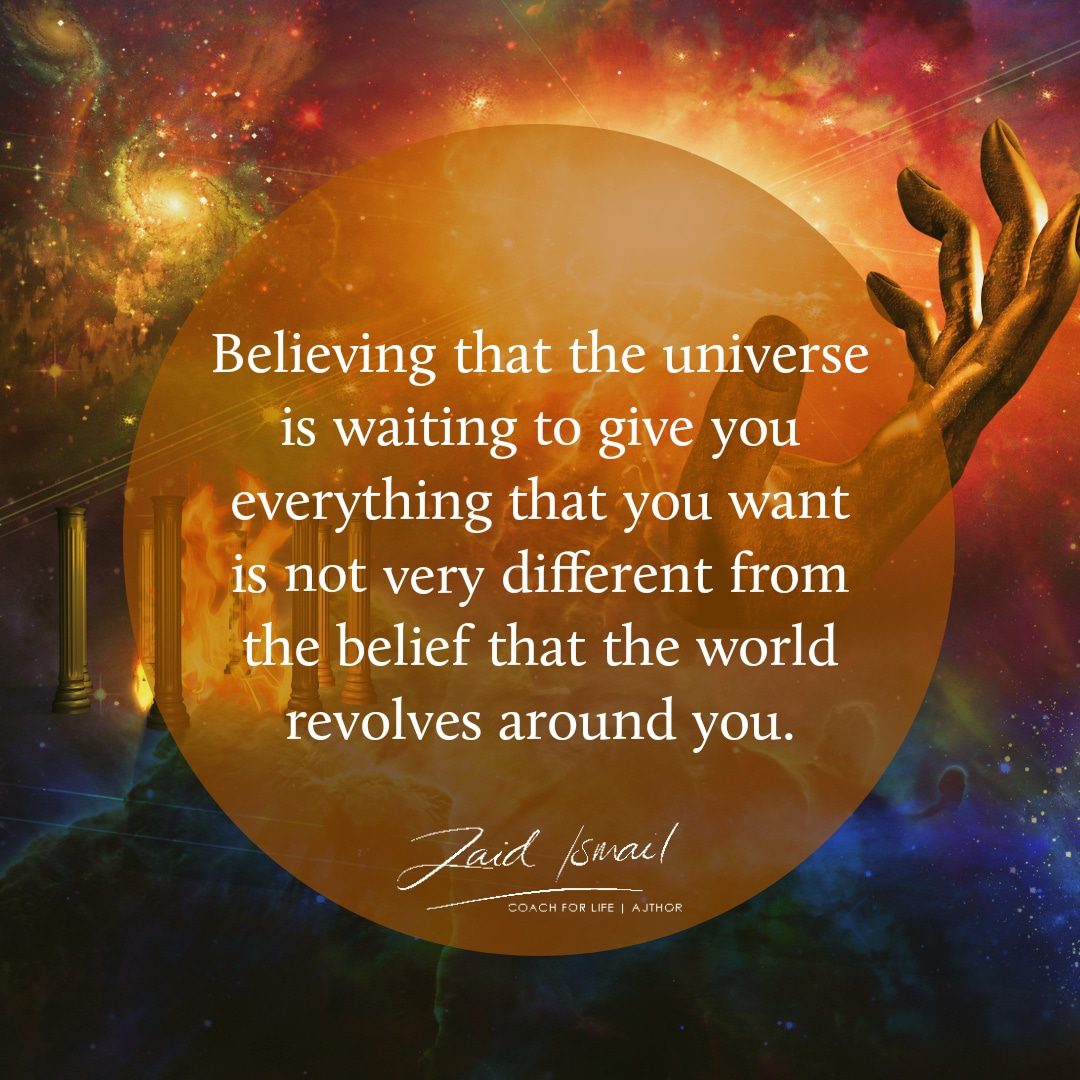
Whenever I hear things like the universe is waiting to give you everything that you want, or manifest what you desire in your life through positive thinking, or put it out there and the universe will answer, I wonder if the proponents of such philosophies would like to tell that to the toddler that was raped, the innocent boy child that was sodomised, or the ones grieving the loss of a loved one in a senseless act of violence. And the list goes on.
The approach to life that is embodied in this philosophy causes more harm than good because it denies the rights of those around us as we wait to have our needs fulfilled, while diminishing our accountability in fulfilling their rights over us because…well…they shouldn’t expect it from us, they should wait for the universe to answer, not so?
Before you think I’m being whimsical or disrespectful about such beliefs, consider this.
At the heart of such a belief system is wishful thinking. Quite literally.
In the absence of gratitude for what we have, we’ll wish for things that we don’t have.
In the absence of gratitude for who we are, we’ll wait for others (a.k.a. the universe) to make us feel worthy or significant.
Without exception, through almost 3 decades of working with people, every single time that I encountered this philosophy, the individual was avoiding the reality of a painful experience or memory that they didn’t know how to process, or found too difficult to even contemplate.
While we have compassion for the victim of such experiences, we must also consider the victims of such victims.
Life happens, often in terrible ways, to all of us. Measuring who has it better or worse is a futile exercise, because relative to the context of each person’s life, their experiences carry with it whatever impact it carries.
So we don’t dismiss that impact. But we also don’t create space for such events to define our quality of life or our contribution towards the lives of others long after the event has passed, because that diminishes the value of what we have, in favour of what we once lost.
#hope #expectation #sincerity #selfworth #selfawareness #mentalhealth #mentalhealthawareness #lifecoaching #zaidismail
Tag: sincerity
-
The harm of wishful thinking
-

More ways to destroy trust…
Our consideration of trust is often limited to promises or follow through on something that was clearly agreed with another.
However, trust is broken in many ways, most of which are subtle and often unintended.
It’s these subtle breaches that leave us seething with anger or raging with tears while not knowing how to connect the betrayal that we feel with the specific conduct of another.
More than this, it also makes it that much more difficult to express ourselves clearly when they seem oblivious to the hurt or offence that they cause.
Connecting with why we feel betrayed makes it possible to process those feelings of betrayal in a more constructive way, and allows us to diminish the impact that it has on our sense of self.
Once we can reconcile in our minds what it is that drives us insane about the behaviour from those closest to us, it makes it easier to see their shortcomings as a reflection of who they are, rather than always assuming that they may take us for granted because of who we are.
That clarity of understanding and perspective could mean the difference between a life of angst and self-loathing, versus one of understanding and purposeful investment in those relationships that mean the most to you.
You cannot help those around you to slay their demons if you’re bringing your demons to the table.Here are 9 not-so-obvious ways in high we may be breaching the trust that others place in us :
1. Remaining silent when your words could have provided comfort or support
2. Deliberately avoiding a request for something that you know is important to someone
3. Withholding affection when you know it’s needed
4. Deliberately doing something that you know is offensive or hurtful to another
5. Being dishonest when relating your story, or withholding part of a story to avoid conflict or accountability
6. Being unnecessarily harsh without apologising for your conduct (or regularly repeating this behaviour after apologising each time)
7. Treating your obligations or commitments as optional or subject to your convenience
8. Demanding your rights from others but ignoring your responsibilities towards them
9. Dismissing the contribution that others make towards your life
It always starts with you.
Own Your Life.
#hope #expectation #sincerity #selfworth #selfawareness #mentalhealth #mentalhealthawareness #lifecoaching #zaidismail #loveyourself #lifegoals #motivation #optimism #purpose #companionship #compassion #trust #betrayal #relationshipgoals #ownyourlife -
Do you appreciate you?
When we surrender to what we believe was preordained for us, we give up our ability to influence its outcomes.
That giving up creates a self-fulfilling prophecy by allowing things to progress in its current path without any effort to disrupt it, convincing us that we were right about it being preordained.
For this reason, we sometimes allow relationships to degrade to a point of no return because we were convinced that our input or contribution would not change what appeared to be inevitable.
Gratitude is critical in this process.
Not gratitude for what we have when we’re faced with loss, but gratitude for what we are capable of when faced with challenges.
Sometimes, when you take yourself for granted during your moments of ease, you’ll find yourself forced to dig deep and connect with who you are in moments of strife.
That period of taking yourself for granted is what contributed in some meaningful way towards the strife that followed.
While we will never know with certainty what to expect from others, we must connect with mindfulness to what the consequences of our choices are, or will be.
This mindfulness is only possible when we acknowledge the value of who we are.
That acknowledgement is the root of gratitude, or ingratitude, depending on whether we appreciate who we are, or judge ourselves harshly for supposedly not being good enough.
You cannot nurture, maintain, or grow something if you don’t connect with the value that it offers.
Thus, when you lack gratitude for who you are and what positive attributes and traits you possess, you will be incapable of contributing meaningfully towards the upliftment of your life and the lives of those around you.
That is how the victim mindset slowly sets in, leaving us to believe that our struggle is a definition of our strength and perseverance, while not realising how much of it is in fact self-imposed because of ingratitude.
It always starts with you.
#hope #expectation #sincerity #selfworth #selfawareness #mentalhealth #mentalhealthawareness #lifecoaching #zaidismail #loveyourself #lifegoals #motivation #optimism #purpose #destiny #fate -
Ingratitude starts with you
We most often only realise that we’re ungrateful for a blessing that we have when it’s too late.
That’s when regret sets in and either spurs us on to improve our awareness of what we should be grateful for, or it makes us bitter for the loss that we experienced.
Gratitude is something that no one can instil in us.
Others may be able to give us something to be grateful for, but they can’t insert that gratitude into our hearts.
Gratitude is therefore something that we must connect with through our own way of valuing what we have.
But, valuing what and who we have in our lives becomes difficult, if not impossible, if we believe that we’re entitled to what they offer.
If we reduce the contribution of others to simply bring their duty, or the expectations of the role that they fulfil, we’ll inadvertently diminish our own value to simply being one of duty and responsibility as well.
We see ourselves through the same lenses that we use to judge the contribution of others in our lives.
When we regret the loss of something or someone because we took it for granted, we need to pause and reflect how much of who we are do we take for granted.
What do we recognise as cherishable traits or attributes about ourselves that we must nurture and protect from contamination?
Or do we take who we are for granted because we’ve grown so accustomed to trading and transacting with those around us?
This happens when we believe that what we do for others deserves reciprocation because we need something from them.
That’s how we lose sight of who we are, and the value that we are capable of creating in the lives of those around us because we want them to experience that value, and not because we need something from them in return.
You can’t give what you don’t have. That’s why ingratitude towards others begins with ingratitude towards yourself.
It always starts with you.
#hope #expectation #sincerity #selfworth #selfawareness #mentalhealth #mentalhealthawareness #lifecoaching #zaidismail #loveyourself #lifegoals #motivation #optimism #gratitude #appreciation #parenting -
Self-help guides are not sustainable
For those who believe that my books are self-help guides and are expecting instructions for life from it, this may clarify my approach for you.
The above photo is from The Egosystem p.25. I don’t believe in prescriptive exercises or methods when advising others about how to navigate the challenges in their lives.
Such prescriptive approaches assume that others are like us, and that their lives are like ours.
It also assumes that they have access to the same resources and support structures as we do, and that they interpret the events of their lives in the same way that we would.
None of that is true.
We’re each unique in our relationship with the world around us. That’s why a prescriptive approach will never be sustainable.
It may provide interim relief, but it will not be sustainable the moment your circumstances change.
Creating understanding and awareness about why you are who you are, and why you feel the way that you do allows you to choose your responses to life more mindfully, and in a way that is uniquely you.
Otherwise all we’re doing is creating mini-me versions of coaches and therapists and counsellors in the lives of our clients.
How does that help anyone? 🤔
Own Your Life.
#hope #expectation #sincerity #selfworth #selfawareness #mentalhealth #mentalhealthawareness #lifecoaching #zaidismail #loveyourself #lifegoals #motivation #optimism #purpose #mindfulness #personalpower -
When sincerity is tested
Like the old saying goes, talk is cheap, and actions speak louder than words.
It’s easy to say the right thing, especially when times are good and what we’re committing to is convenient.
However, when our commitments pull us between what we want for ourselves versus what we committed to doing for someone else, that’s when our sincerity is tested.
But what defines our sincerity?
Is it how we want to appear to others or how we live by the values that we stand for?
The moment we’re focused on what others think of us, we play to the responses that we want from them, even when we’re doing something good.
The problem with this is that without realising it, our motivation slowly shifts from living by our values to how we are perceived by others.
That’s the beginning of how we lose ourselves to the attention that we get from others.
More than this, the lower our self-respect, the more inclined we’ll be to say the right thing while finding it difficult to do the right thing.
That’s when making excuses for our behaviour becomes easy when others challenge us about the commitments that we haven’t honoured.
This is an indication of a low level of self-respect.
Self-respect is tainted when we lack gratitude for who we are.
The more we dismiss the value of who we are, the more we’ll need validation from others. Hence the unhealthy cycle of focusing on what others think of us, versus being true to who we are.
We’ll only be true to who we are if we truly value who we are.
For this reason, don’t expect sincerity or consistency from one who is self-loathing. And realise that you are self-loathing when you struggle to be consistent or to follow through on the commitments that you make to others.
It always starts with you.
#sincerity #action #conviction #mentalhealth #mentalhealthawareness #mentalhealthrecovery #selfawareness #selfrespect #mindfulness #inspiration #selfworth #lifecoaching #zaidismail #loveyourself -
Dishonesty is the thief of peace
We focus too much on how others treat us, and too little on how we treat ourselves.
Honesty is one of those things that we find distasteful and repulsive when someone withholds it from us, but we overlook it when we do it to ourselves.
When we’re dishonest with ourselves, we find ways to justify that dishonesty.
That justification comes in the form of avoiding tough discussions, surrounding ourselves with people we find agreeable, and avoiding those who will challenge us when what we say doesn’t resonate with how we behave.
That’s how we end up running away from the harsh truths that we prefer not to face, until eventually we become convinced that our running away is in fact our struggle to create a better life for ourselves.
We convince ourselves that the circles that agree with us are in fact the ones who care, while most often they’re also running away from their own lives, looking for familiarity in their quest to find their ‘tribe’.
We must choose our company wisely. But we must also choose it sincerely.
Like a wound, avoiding the truth of who we are or what we’re responsible for, only creates fertile ground for such realities to become festering wounds that slowly rupture and destroy the very peace that we set out to achieve.
That’s how the past that is not resolved, haunts the future that we’re desperately in need of.
You owe yourself honesty and sincerity before anyone else owes it to you.
It always starts with you.
#hope #expectation #sincerity #selfworth #selfawareness #mentalhealth #mentalhealthawareness #lifecoaching #zaidismail #loveyourself #lifegoals #motivation #optimism #purpose #companionship #compassion -
When your sincerity is tested
Our sincerity is tested when we’re faced with the opportunity to contribute in kindness, while being treated with disregard or ingratitude.
But it’s not our sincerity towards others that is tested.
It is the sincerity of our convictions about what we hold true as principles to live by.
We lose the best of who we are, when we abandon it in the face of neglect from others.
When we withhold our contribution because we’re afraid that it won’t be appreciated, or repaid in kind, we diminish who we are to become like who they are.
Of course, in everything, there must be moderation.
And the moderation in this is that we must be mindful of when our selfless contribution may be enabling their selfish behaviour, or validating their ingratitude.
So give without the expectation of receiving, but don’t give to the point where you exhaust yourself while feeding the ungrateful mindset of one who feels entitled without good cause.
Moderation is key in everything that you do, except your expression of gratitude.
And sometimes, that gratitude is expressed by withholding your contribution from others because you want them to experience gratitude for what they keep taking for granted before you continue to give.
It always starts with you.
#hope #expectation #sincerity #selfworth #selfawareness #mentalhealth #mentalhealthawareness #lifecoaching #zaidismail #loveyourself #lifegoals #motivation #optimism #purpose #companionship #compassion